Proteins
Dried Scallop
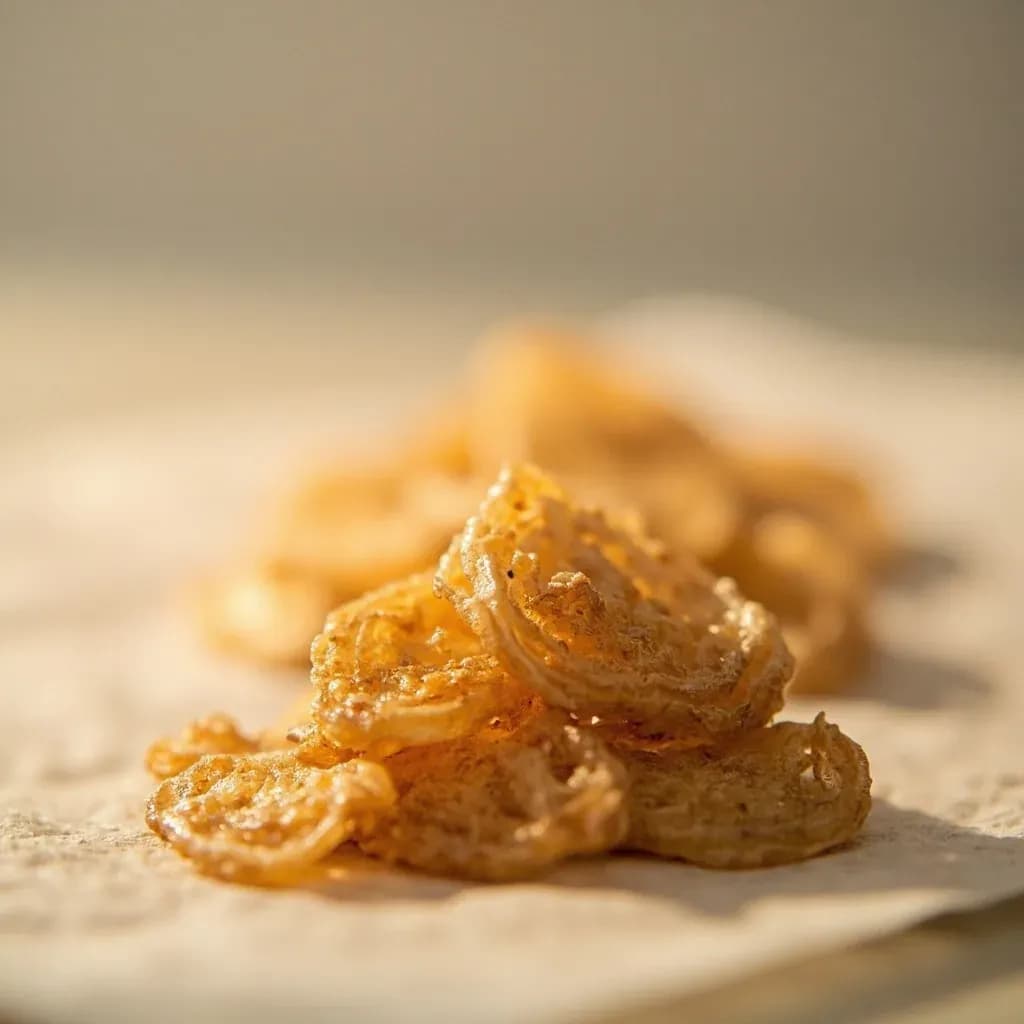
Sun-dried scallop adductor muscle (conpoy) prized for intense umami in Chinese cooking.
Dried scallops, known as conpoy, are the sun-dried adductor muscle of scallops and a luxury ingredient in Cantonese cuisine. Rehydrated and shredded, they lend concentrated sweet-savory umami to congee, soups, XO sauce, and rice dishes. Their flavor is far more intense and aromatic than fresh scallops.
Dried scallop—known as conpoy in Cantonese and kanso in Japanese—is the sun-dried adductor muscle of the scallop, a single small muscle that does the heavy work of opening and closing the shell. After harvesting, the muscles are cleaned, split open, and left to dry in the sun for two to four weeks, a process that concentrates the seafood's natural glutamates to extraordinary levels. The result is one of the most potent umami delivery systems in any kitchen: a tiny piece can flavor an entire pot of congee or soup with a deep, savory backbone threaded with subtle sweetness and mineral ocean notes. Unlike dried shrimp or other preserved seafood, dried scallops rehydrate quickly and cleanly, yielding both a tender, slightly chewy muscle and a highly aromatic soaking liquid that traditional Cantonese cooks call conpoy water—a liquid gold that forms the base of countless soups, porridges, and braises.
The quality hierarchy is straightforward to understand but has real consequences in the kitchen. Japanese Hokkaido scallops command the highest prices for good reason: the cold northern waters produce large muscles with a golden-yellow color, a sweeter profile, and a more delicate aroma than their Chinese counterparts. Chinese conpoy, particularly from Dalian and Qingdao, tends toward a deeper orange hue and a more assertively savory, almost meaty flavor that Cantonese cooks prize for dishes where the scallop shares the stage with bold partners. Within both origins, grade AA or Grade A denotes uniform color, no blemishes, and the ability to produce a clear, viscous soaking liquid—an important quality marker. Commercial-grade scallops work perfectly well in stocks and braises where appearance matters less, but their darker color and stronger oxidation spots mark them as the budget option.
One of the most practical things to understand about dried scallops is that the soaking liquid is not a byproduct—it is the product. The water-soluble glutamates and nucleotides that make this ingredient so valuable dissolve readily during rehydration, and that liquid carries concentrated flavor that no amount of fresh scallop can match. Traditional recipes build flavor by adding dried scallops early in long-cooking preparations like congee, soups, or braises, allowing them to slowly release their essence. For dishes where texture is the point—steamed fish with scallops on top, stir-fried vegetables, or a quick sauté—the scallops go in near the end, rehydrated just enough to be tender. The same scallop, the same ingredient, deployed differently depending on the goal.
- Measured in
- g
- Storage
- Pantry
Allergens
Types & varieties
Premium grade; large, golden-yellow, sweeter and more aromatic than Chinese varieties. Most expensive. Often labeled by count per kan (600g).
Traditional Cantonese product; smaller than Japanese varieties, deeper orange color, more intensely savory. Dalian and Qingdao are key production areas.
Top grade; uniform golden color, no blemishes, strong aroma, yields clear viscous soaking liquid.
Smaller, darker, may have slight oxidation spots. Functional for stocks and braises but less prized for presentations.
Over 5cm diameter; rare and expensive. Often used whole as garnish for premium dishes.
Pre-shredded for convenience; faster rehydration but slightly less flavorful than whole pieces.
Understanding Rehydration
The rehydration process determines whether dried scallops become an exceptional ingredient or a disappointing one. The goal is to restore the muscle to a tender, slightly springy texture—similar to a cooked but not overcooked fresh scallop—while preserving as much of the soaking liquid's flavor as possible. Temperature is the key variable: room-temperature water works reliably but slowly, especially for larger grades. Warm water at 40–50°C accelerates the process without causing the proteins to tighten and turn rubbery, which is what happens in genuinely hot water. Never use boiling water. For most applications, a 45-minute soak in warm water is sufficient for medium scallops; check at 30 minutes and continue until pliable. The scallop is ready when it bends slightly without breaking and has regained a pale, almost translucent quality.
The soaking liquid deserves equal attention. After rehydration, pour the liquid through a fine mesh strainer or cheesecloth to remove any sediment. This amber, slightly viscous liquid smells intensely of the sea and carries the dissolved glutamates that make dried scallops special. Use it immediately in whatever dish is on your stove, or refrigerate for up to three days or freeze for months. A single cup of conpoy water can transform a pot of plain rice porridge into something with genuine depth.
Once rehydrated, the scallop muscle can be used whole, torn along the grain into shreds, or sliced, depending on the dish. Tearing by hand produces cleaner edges than cutting, as the natural fiber separation creates a more pleasing texture in stir-fries and garnishes. The center tendon, if present, can be removed as it remains tough even after extended soaking.
- Use 40–50°C water for faster rehydration without rubbery texture
- Never discard the soaking liquid; strain and use as concentrated seafood stock
- Tear rehydrated scallops by hand along the grain for better texture
- Check small scallops at 30 minutes, large at 90 minutes to 2 hours
- Remove any remaining center tendon before serving
The Cantonese Conpoy Water Tradition
In traditional Cantonese households, conpoy water is a pantry staple as fundamental as stock or aromatics. Making it is simple: place a handful of dried scallops in a bowl, cover with warm water, and let them rehydrate for an hour. The resulting liquid—strained, golden, and intensely flavored—is used as the cooking liquid for congee, as the braising liquid for tofu skin rolls, or simply as a flavor base for winter melon soup. Some cooks add a slice of ginger or a few drops of rice wine to the soaking water to brighten the flavor, though high-quality scallops need no such correction.
The practice extends beyond convenience: using conpoy water instead of plain water or commercial stock adds a layer of umami complexity that is specifically marine, savory, and clean. In restaurants that make their own stocks, dried scallops are often one of several umami anchors alongside dried shrimp, pork stock, and sometimes even a bit of Jinhua ham. The difference between a stock made with and without conpoy water is immediately apparent to anyone who tastes both side by side.
- Soak 5–8 large dried scallops in 2 cups warm water for 1 hour to make conpoy water
- Use conpoy water as the cooking liquid for congee, soups, and braises
- Add a slice of ginger to the soaking water for a brighter flavor if desired
- Conpoy water can be frozen in ice cube trays for convenient portioning
- High-quality scallops produce a clear, slightly viscous soaking liquid with a sweet, oceanic aroma—cloudy liquid indicates lower grade or contamination
Common uses
Tips & pitfalls
- Soak in warm (40–50°C) water rather than hot—hot water tightens proteins and creates a rubbery texture that cannot be recovered
- Never discard the soaking liquid; strain it through cheesecloth and use it as a concentrated seafood stock in soups, congee, or braises
- Tear rehydrated scallops by hand along the grain for cleaner texture than cutting; the fibers separate naturally
- Store opened dried scallops in an airtight container with a piece of dried ginger or silica gel packet to prevent moisture and insect contamination
- If scallops smell slightly fishy or muddy, soak in cold water with 1 tablespoon of rice wine for 10 minutes to remove impurities
- Add dried scallops early in long-cooking dishes (soups, braises, congee) to allow gradual flavor release; add near the end for stir-fries to preserve texture
- Press rehydrated scallops gently with paper towels before searing or sautéing to prevent moisture splattering
- Quality indicator: premium dried scallops produce a clear, slightly viscous soaking liquid with a sweet, oceanic aroma; discard any that produce murky or off-smelling liquid
Nutrition
Nutrition
No USDA FoodData Central match for Dried Scallop yet. We surface a per-100 g profile once a generic whole-food entry is matched and verified.
In the shops
Matched grocery products
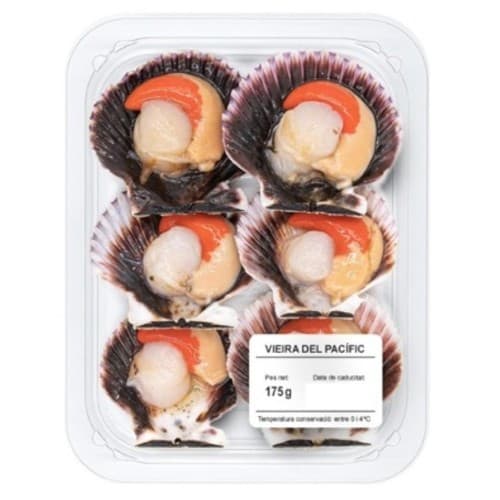 €7.99
€7.99Pacific Scallop
ud · Bonpreu
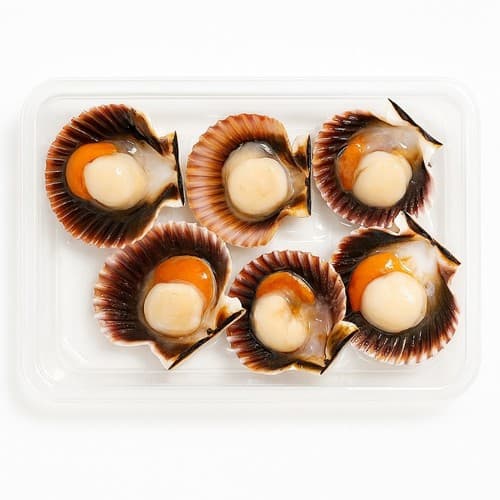 €5.85
€5.85Scallop Half Shell
EUROPACIFICO · kg · Bonpreu
Good to know
- Common names
- Conpoy (Cantonese), Kanso (Japanese), dried scallop
- Species used
- Patinopecten yessoensis (Japanese scallop); also Argopecten irradians (bay scallop)
- Part used
- Adductor muscle only; one muscle per scallop
- Processing
- Harvested, cleaned, split open, and sun-dried for 2–4 weeks
- Origin
- Northeastern China (Liaoning, Shandong provinces) and Hokkaido, Japan
- Flavor profile
- Intensely savory, deeply umami, with subtle sweetness and mineral ocean undertones
- Rehydration ratio
- Approximately 1:3 to 1:5 by weight; doubles to triples in size when fully rehydrated
- Soak time
- 30 minutes (small) to 2 hours (jumbo) in room-temperature or warm water; 40–50°C ideal for faster rehydration without damage
- Shelf life
- 1–2 years sealed; up to 6 months after opening if refrigerated in an airtight container
- Price factors
- Size (grade), origin, color (golden preferred), and texture
Substitutes
- Dried shrimp — Smaller, stronger shrimp flavor; use 1.5× the amount. Not a 1:1 flavor match but functionally similar in stocks and sauces.
- Fresh scallops — Mild by comparison; need to be cooked briefly. Can be seared or added to stocks but won't provide the same depth. Use 3× the dried amount.
- Dried oysters (hai yau) — Similar umami intensity, different marine flavor. Swap 1:1 in stocks and braises.
- Bonito flakes — For Japanese preparations only; different flavor profile (smoky, fishy) but adds comparable umami to soups and sauces.
- Fermented soybean paste (douchi) — Not a direct substitute; can add depth to savory dishes but lacks the clean seafood character of dried scallops.
Pairs with
Also called
Conpoy · 瑤柱
Related
Egg
The kitchen's everything ingredient — bind, leaven, enrich, or fry
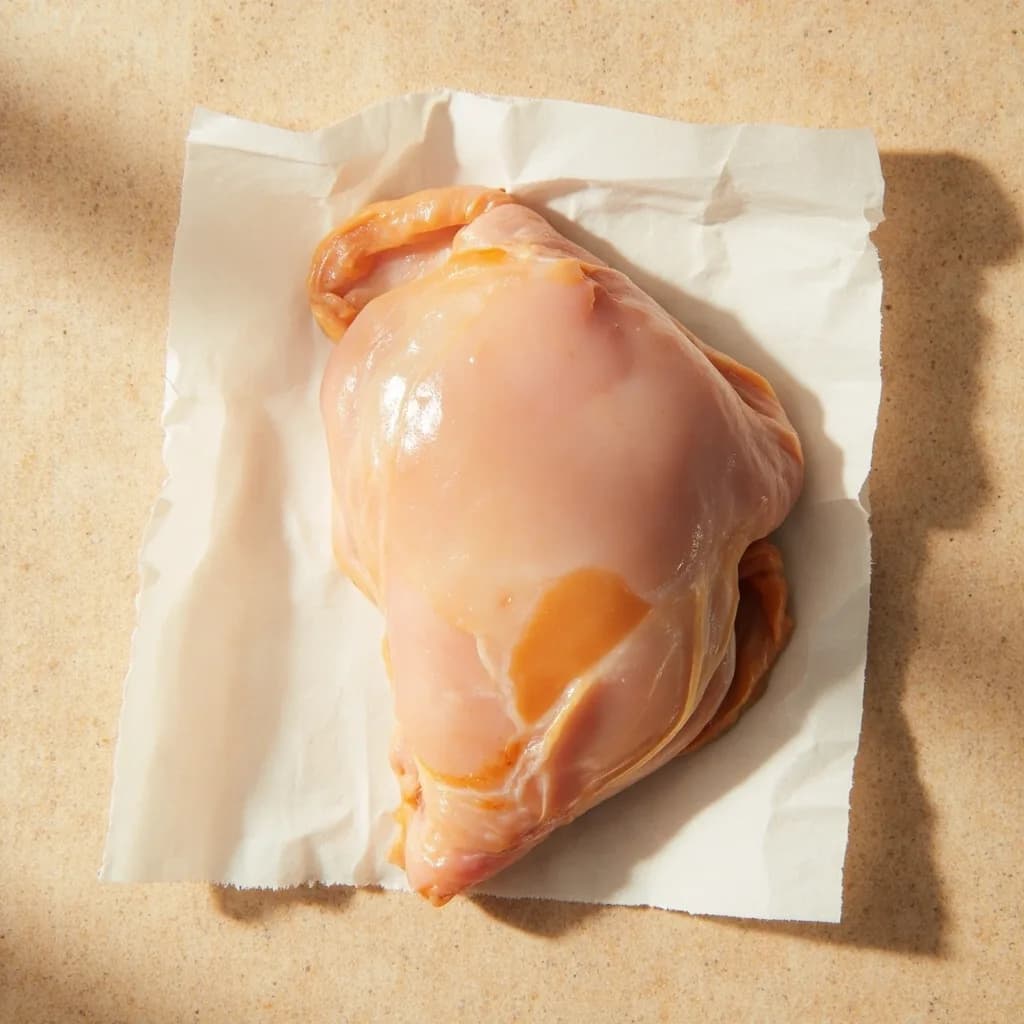
Chicken Breast
Lean, quick-cooking white meat for everyday dinners

Ground Beef
Versatile minced beef for burgers, ragù, tacos, and meatballs
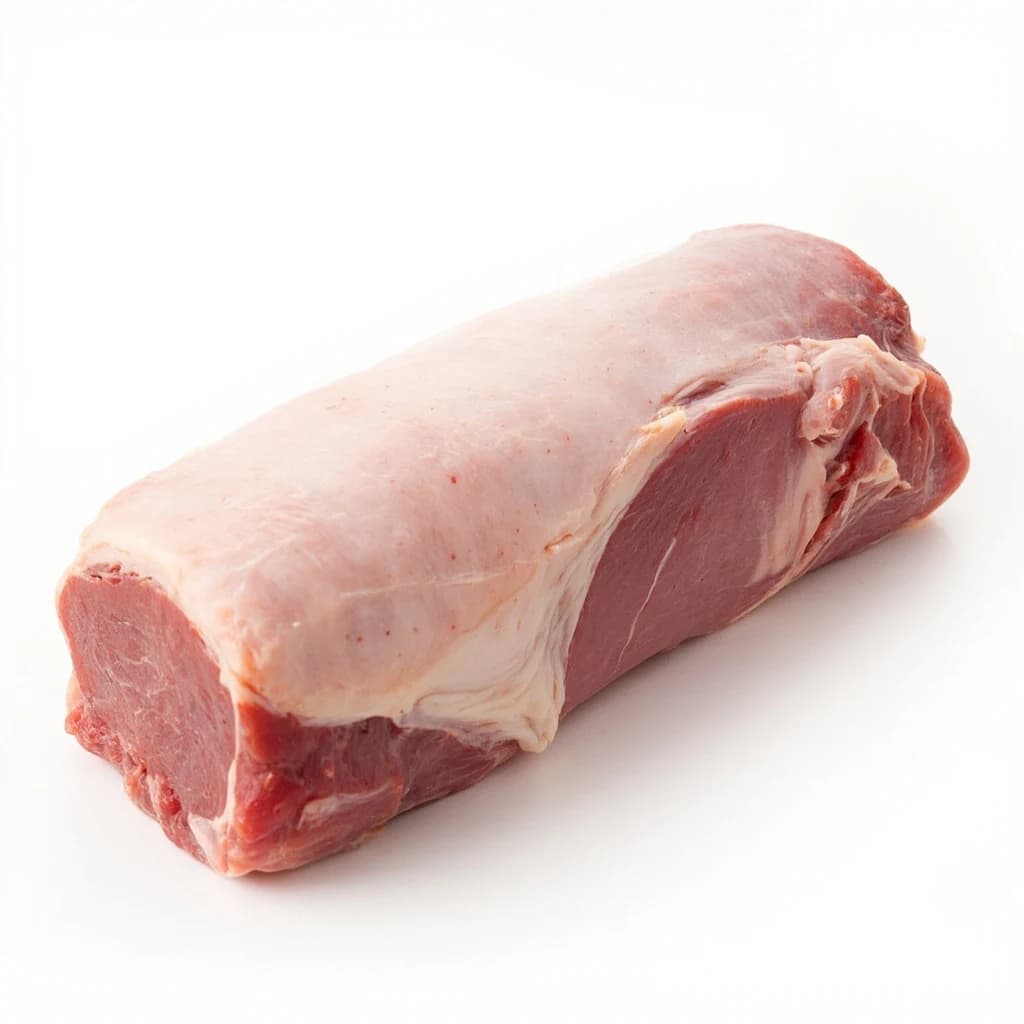
Pork Loin
Lean, tender roasting cut that stays juicy with care
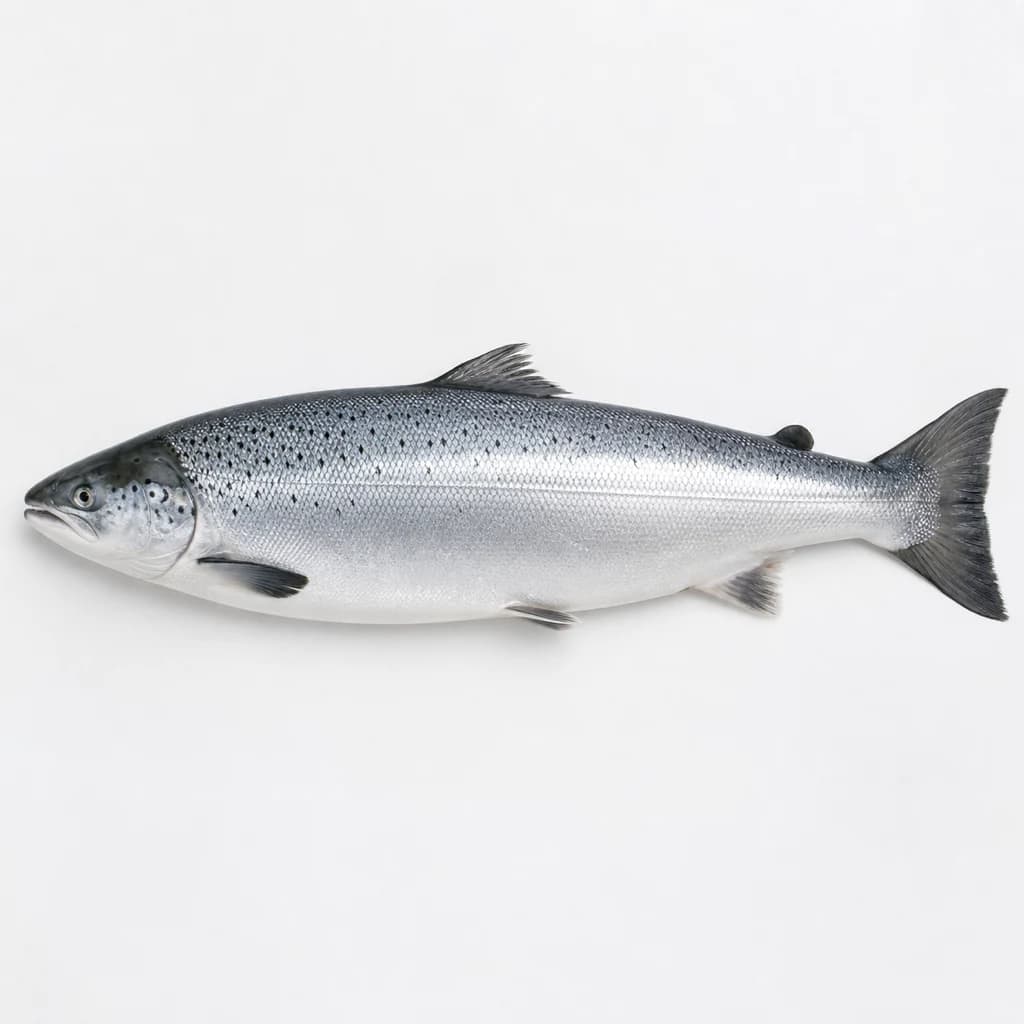
Salmon
Rich, rosy fish that roasts, grills, or cures beautifully

Egg White
Pure protein that whips to airy peaks for meringue and more
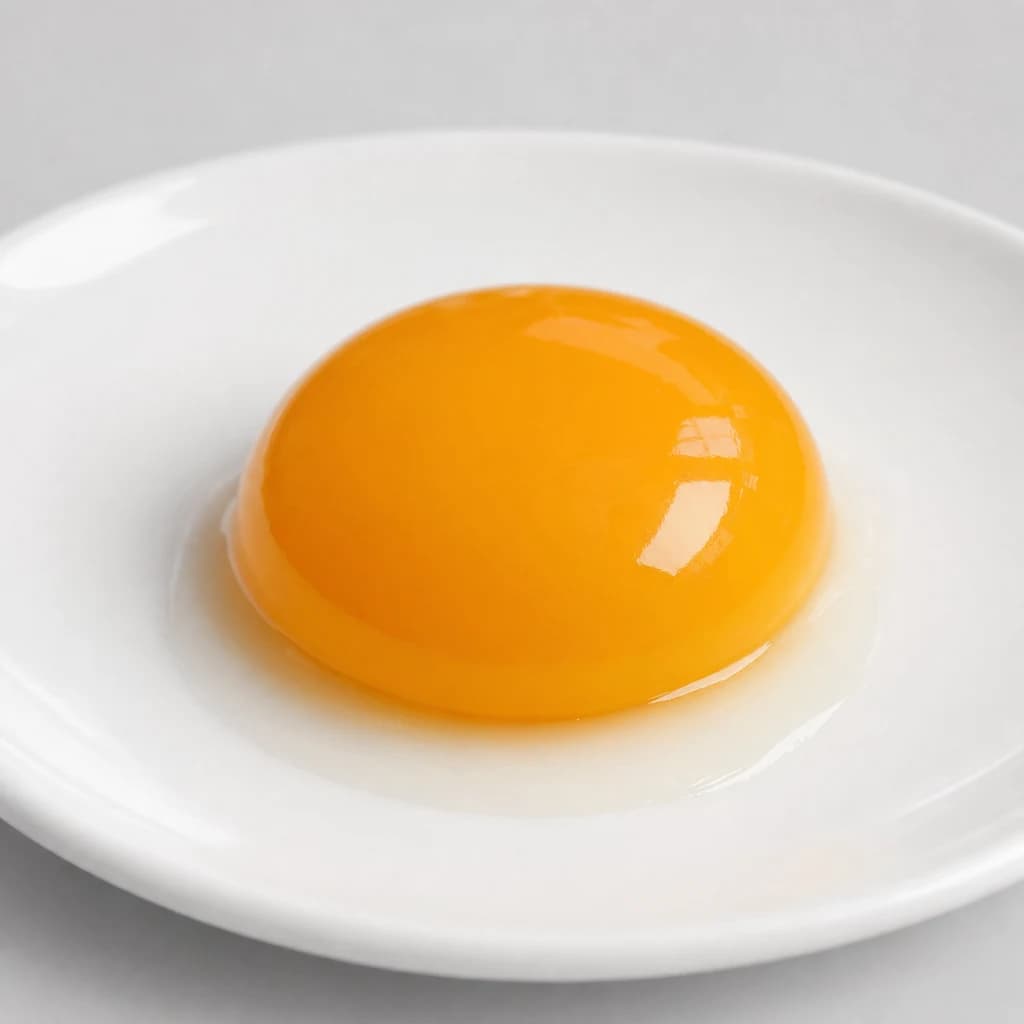
Egg Yolk
Rich, golden yolk for custards, mayonnaise, and pasta

Quail Egg
Tiny, speckled eggs for garnishing and elegant bites