Proteins
Dried Oyster
Sun-dried oysters with concentrated sweetness for Chinese festive dishes.
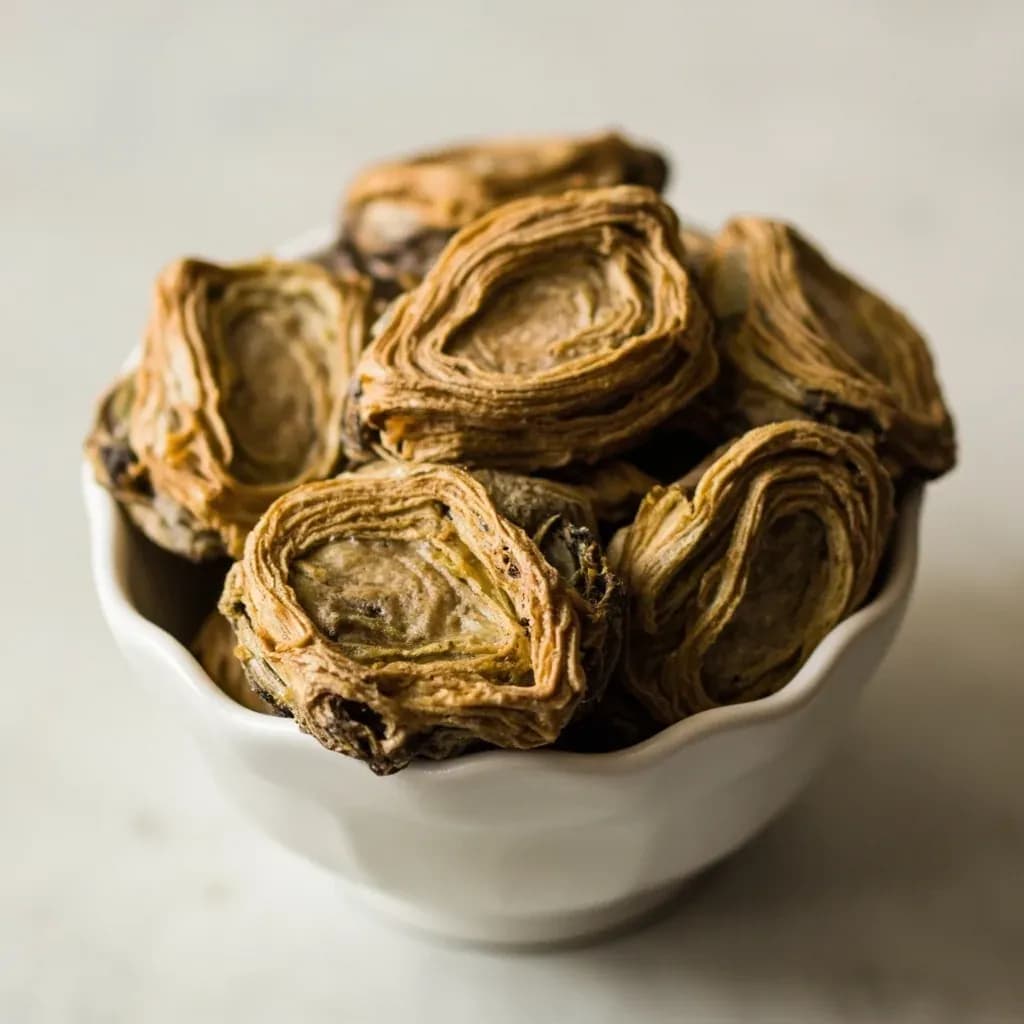
Dried oysters (蠔豉) are oysters that have been dried to concentrate their sweet, briny umami. Rehydrated, they are braised with pork and vegetables, especially for Lunar New Year, where their name puns on good fortune. The drying deepens the flavor far beyond fresh oysters.
Dried oysters are fresh oysters cleaned, blanched, and sun-dried for 2–4 days until they develop a leathery, golden-brown exterior with intensely concentrated flavor. The Maillard reaction during drying creates new savory umami compounds absent in raw oysters—deep, briny sweetness that makes these bivalves indispensable in Cantonese and broader East Asian cooking. Unlike fresh oysters, dried oysters are never eaten alone; they function as a concentrated flavor base anchoring soups, congee, braises, and stuffings.
Quality hierarchy centers on size: smaller specimens (under 2 cm) command premium prices and are reserved for ceremonial dishes like Lunar New Year congee and wedding banquets where their delicate texture can be appreciated whole. Larger dried oysters (over 3 cm) are more practical for stir-fries when sliced thin. In Cantonese culture, dried oysters—called hao si yu—phonetically evoke "good affairs remain," making them a traditional auspicious ingredient symbolizing continuity and prosperity.
When purchasing, select uniformly golden-brown specimens free of white spots indicating improper drying; avoid any with a rancid fishy smell. Properly dried oysters should have no salt crystals on the surface. Some producers briefly fry the oysters in oil before packaging—these require no soaking and can be crumbled directly into dishes. A faint sweet aroma upon rehydration indicates proper drying; a sour smell signals spoilage.
- Measured in
- g
- Storage
- Pantry
Allergens
Types & varieties
Premium small-sized, intensely fragrant, from Zhanjiang region
From Guangxi coastal region; medium size, balanced flavor
Traditional production area; medium-to-large, firm texture
Smaller, often saltier; common in Vietnamese cooking
Dried mussel, not oyster, but used similarly in Korean soups
Common uses
Tips & pitfalls
- For standard dried oysters, soak in plain water—the soaking liquid becomes a flavorful stock for soups, braises, or congee; do not discard it
- Press rehydrated oysters gently between paper towels before slicing to remove excess liquid
- For congee, add rehydrated oysters in the last 20 minutes of cooking to prevent them from disintegrating into mush
- Store with a desiccant packet to prevent moisture absorption and mold development
- Select uniform golden-brown color; avoid any with white spots (improper drying) or a fishy-rancid smell
- Large dried oysters are better sliced thin for stir-fries; small ones are best left whole for congee or braising
- Do not confuse dried oysters with dried scallops (conpoy)—scallops are sweeter, more delicate, and require longer soaking
- Some dried oysters are pre-fried in oil before packaging—these need no soaking and can be crumbled directly into dishes
Nutrition
Energy
138 kJ · per 100 g
Where the calories come from
Protein
3.3g
7% DV
Carbs
6.1g
2% DV
Fat
0.4g
1% DV
Fiber
2.3g
8% DV
Sugars
1.1g
of which
Sodium
18mg
1% DV
Source · USDA FoodData Central · approx. Mushrooms, oyster, raw
View on FDC →In the shops
Matched grocery products
No matched grocery products for Dried Oyster yet.
Good to know
- Type
- Preserved seafood (dried bivalve mollusk)
- Primary Origin
- Coastal Guangdong province, China; also Fujian, Zhejiang, East China Sea coast
- Processing
- Fresh oysters cleaned, blanched, sun-dried 2–4 days to leathery, golden-brown texture
- Flavor Profile
- Intensely savory, briny, subtly sweet; strong umami character absent in fresh oysters
- Shelf Life
- 6–12 months pantry (airtight, cool dark); 2 years refrigerated
- Rehydration Time
- 30 minutes to 2 hours in room-temperature water; reserve soaking liquid
- Yield
- Triples in weight when fully rehydrated
- Common Sizes
- Small (under 2 cm, most prized); medium (2–3 cm); large (over 3 cm)
Substitutes
- Dried Scallops (Conpoy) — Similar savory intensity but slightly sweeter; use 1:1 ratio; requires longer soaking (1–2 hours)
- Dried Shrimp — Different texture but provides comparable umami; use half the amount as flavor is saltier
- Fresh Oysters — 3–4 fresh oysters per dried oyster; less concentrated flavor, no rehydration needed
- Kelp (Kombu) — For vegetarian dishes; adds umami but lacks the briny oyster character; use 10 cm piece per serving
Pairs with
Also called
蠔豉 · Ho See · Conpoy Oyster
Related
Egg
The kitchen's everything ingredient — bind, leaven, enrich, or fry
Chicken Breast
Lean, quick-cooking white meat for everyday dinners

Ground Beef
Versatile minced beef for burgers, ragù, tacos, and meatballs
Pork Loin
Lean, tender roasting cut that stays juicy with care
Salmon
Rich, rosy fish that roasts, grills, or cures beautifully

Egg White
Pure protein that whips to airy peaks for meringue and more
Egg Yolk
Rich, golden yolk for custards, mayonnaise, and pasta

Quail Egg
Tiny, speckled eggs for garnishing and elegant bites