Proteins
Frozen Pollock Fillet
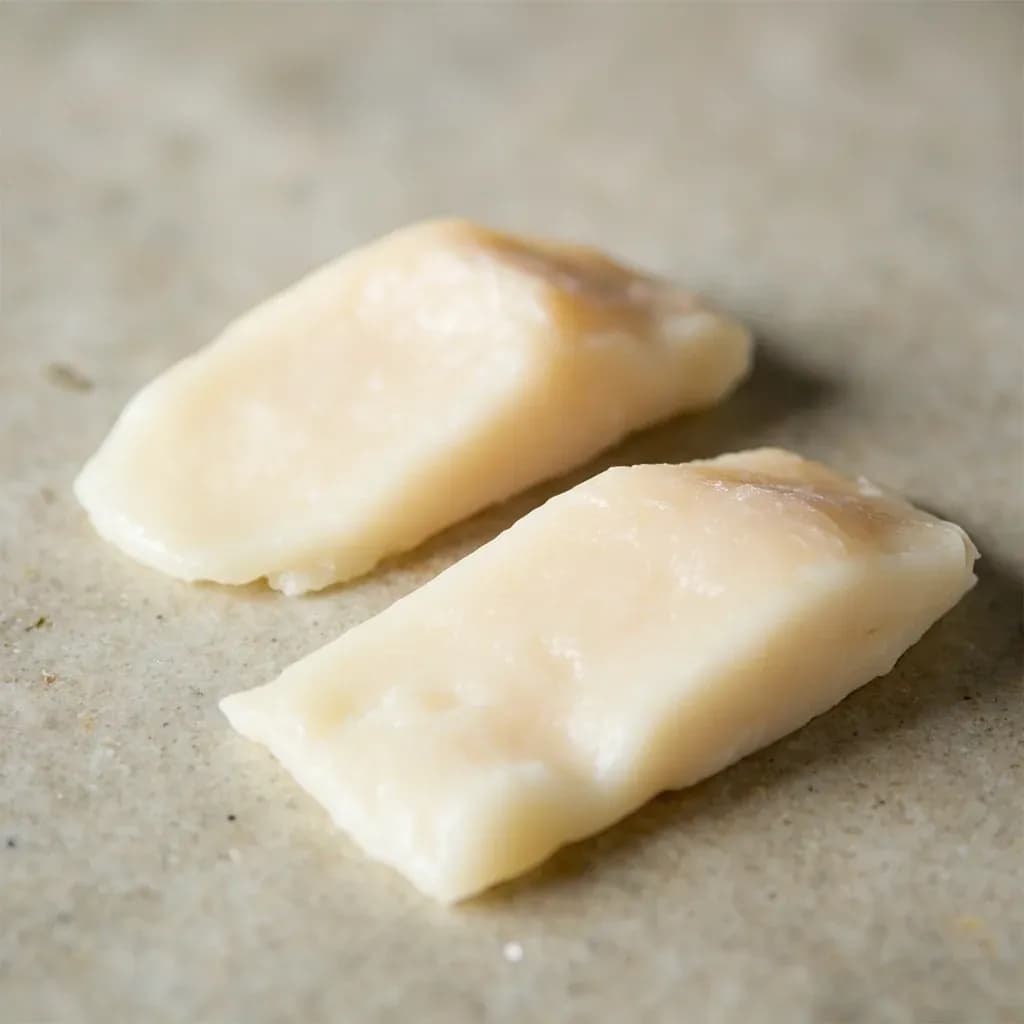
Frozen mild white pollock fillets, a budget staple for breading and baking.
Frozen pollock fillets are mild, flaky white fish frozen at sea for convenience and affordability. A workhorse for fish sticks, fish and chips, and weeknight bakes, pollock has a clean flavor that takes well to breading and seasoning. Thawing in the fridge before cooking helps keep the delicate flesh from going watery.
Frozen pollock fillets belong to the cod family and represent one of the most abundant and sustainable white fish sources in the world. Alaska pollock, the dominant frozen variety, is flash-frozen at sea within hours of harvest—a process that often preserves superior flavor and texture compared to "fresh" fish that may have endured multiple freeze-thaw cycles during transit. The flesh is pearl-white with a medium-firm, tender flake that holds together well under breading or in soups. Pollock occupies a middle ground among white fish: milder than cod but with more character than tilapia, making it forgiving enough for inexperienced cooks yet versatile enough for serious applications.
Its defining characteristic is leanness—less than 1g fat per 100g—which makes it healthy but also prone to drying if overcooked. This mildness is an asset: pollock readily absorbs bold seasonings and sauces without fighting back, making it a workhorse for everything from classic fish and chips to elegant baked preparations with brown butter and capers. The frozen format delivers consistency; IQF (individually quick frozen) fillets eliminate the guesswork of freshness dating and provide portion control that fresh fish rarely offers. Commercial vessels freeze pollock at -40°F within minutes of catching, locking in moisture and flavor. "Fresh" pollock in most markets was almost certainly previously frozen, then thawed for display—and may have been refrozen if not sold quickly. Always check for ice crystals, freezer burn, or a rancid smell as signs of poor frozen storage, but a well-frozen pollock fillet will outperform a questionable "fresh" one nearly every time.
- Measured in
- g
- Storage
- Freezer
Allergens
Types & varieties
Most common frozen variety; mildest flavor, excellent for breading, fish sticks, and processed products. Source: Bering Sea and Gulf of Alaska.
Slightly firmer texture, more pronounced flavor than Alaska pollock. Better suited for grilling and assertive marinades.
Closely related species; darker flesh, stronger flavor. Excellent in traditional fish pies, baked preparations, and curries.
Common uses
Tips & pitfalls
- Thaw overnight in the refrigerator on a paper towel-lined plate to catch any released moisture. If quick-thawing under cold running water, cook immediately afterward—surface cells damage faster with this method.
- Pat fillets completely dry with paper towels before seasoning, breading, or searing. Surface moisture is the enemy of crisp coating and proper browning.
- Season the flesh side generously; salt draws out excess moisture and helps the flesh firm up slightly before cooking, enhancing texture and flavor.
- Add 1–2 tablespoons of milk, white wine, or broth to your baking dish when roasting to create steam and prevent the lean flesh from drying out.
- Remove from heat when the flesh turns opaque throughout and flakes at the thickest point. Pollock goes from perfectly done to dry quickly—carryover cooking will bring it to proper temperature.
- Test doneness at the thickest point with a fork; the flesh should turn fully opaque and reach an internal temperature of 130°F (54°C) for optimal results, as carryover will bring it to the safe serving temperature of 145°F (63°C).
- For superior breading adhesion: dust lightly with flour (tap off excess), dip in beaten egg, then coat with breadcrumbs. The flour creates a barrier that prevents the egg from sliding off and the breadcrumbs from falling away.
- Frozen IQF fillets often deliver more consistent quality than "fresh" fillets in display cases, which may have been previously frozen and refrozen during transit.
Nutrition
Energy
385 kJ · per 100 g
Where the calories come from
Protein
16.8g
34% DV
Carbs
0g
0% DV
Fat
2.3g
3% DV
Fiber
0g
0% DV
Sodium
40mg
2% DV
Source · USDA FoodData Central · Fish, sucker, white, raw
View on FDC →In the shops
Matched grocery products
No matched grocery products for Frozen Pollock Fillet yet.
Good to know
- Scientific Name
- Theragra chalcogramma (Alaska pollock); Pollachius pollachius (European pollock)
- Flavor
- Mild, slightly sweet, clean; subtler than cod with a hint of sea taste
- Texture
- Medium-firm, tender and flaky; holds together well for breading and soups
- Form
- IQF skinless fillets; also available skin-on and as block-frozen portions
- Protein
- 18–20g per 100g; complete protein with all essential amino acids
- Fat
- Less than 1g per 100g; very lean—cooking consideration for moisture management
- Yield
- 15–20% moisture loss when cooked; 1 lb raw yields about 12–13 oz cooked
- Shelf Life
- Frozen at 0°F (-18°C): 3–6 months; thawed in refrigerator: 1–2 days
- Mercury Level
- Low; FDA "Best Choice" category among white fish
- Sustainability
- Alaska pollock is one of the world's most well-managed fisheries; MSC certified options available
Substitutes
- Cod (Atlantic or Pacific) — Most similar texture and mildness; slightly firmer with a touch more sweetness. Direct 1:1 substitution.
- Haddock — Very similar flakiness and mildness; slightly sweeter undertone. Excellent in fish and chips applications.
- Hake (Silver or White) — Comparable mild flavor and cooking behavior; may be slightly softer. Good for baking and poaching.
- Whiting (Silver Hake) — Lighter, more delicate texture. Best for quick-cook applications like pan-searing. Direct 1:1 substitution.
- Tilapia — Milder and slightly sweeter; firmer, denser texture. Works in most pollock applications; adjust seasoning as tilapia takes less well to bold flavors.
- Pacific Cod — Better texture match than Atlantic cod for breading applications; similar mild flavor profile.
Pairs with
Also called
Frozen Pollock · Frozen White Fish
Related

Egg
The kitchen's everything ingredient — bind, leaven, enrich, or fry

Chicken Breast
Lean, quick-cooking white meat for everyday dinners

Ground Beef
Versatile minced beef for burgers, ragù, tacos, and meatballs

Pork Loin
Lean, tender roasting cut that stays juicy with care

Salmon
Rich, rosy fish that roasts, grills, or cures beautifully

Egg White
Pure protein that whips to airy peaks for meringue and more

Egg Yolk
Rich, golden yolk for custards, mayonnaise, and pasta

Quail Egg
Tiny, speckled eggs for garnishing and elegant bites