Proteins
Frozen Shrimp
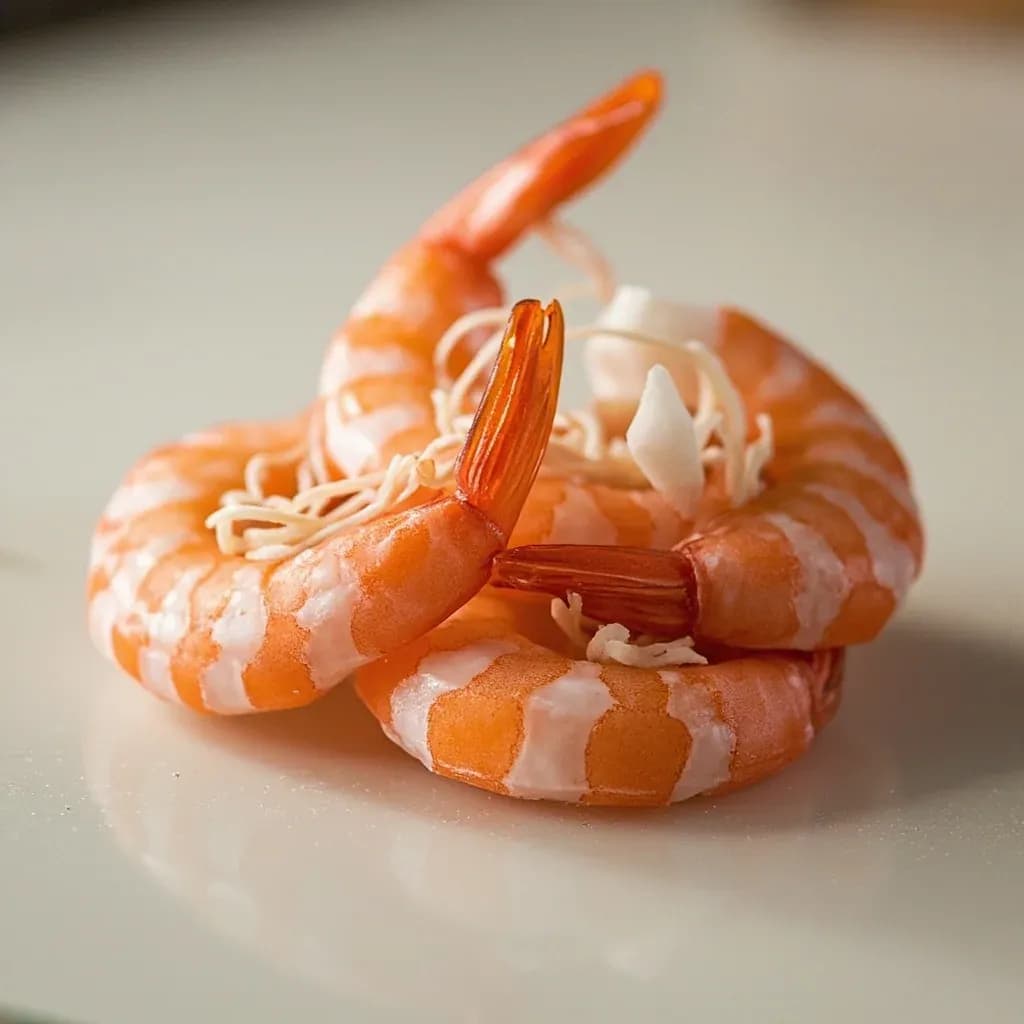
Flash-frozen shrimp, a convenient year-round seafood staple.
Frozen shrimp are shrimp flash-frozen shortly after catch, sold shell-on or peeled and deveined. They thaw quickly and are used in stir-fries, pastas, curries, and boils, offering reliable seafood far from the coast. Freezing at sea often keeps them fresher than 'fresh' previously frozen shrimp at the counter.
Flash-freezing transforms delicate shellfish into a kitchen workhorse that performs reliably year-round. Shrimp are processed immediately after catch—either individually quick frozen (IQF) or block frozen—halting enzymatic activity and bacterial growth at peak freshness. What retailers label "fresh" shrimp often traveled 7–10 days through the cold chain and may have been previously frozen and thawed. Frozen-at-sea shrimp frequently deliver better flavor and texture than counter "fresh" product.
The IQF method solved the portion-control problem: each shrimp freezes separately, so you thaw exactly what you need. The shell—whether intact or removed—protects the delicate flesh from freezer burn and acts as an insulator during cooking, retaining moisture and flavor. Sizes range from tiny 61-70 per pound (ideal for fried applications and salads) to impressively large 16-20 per pound (suited for grilling and special presentations). Most shrimp fall into two broad categories: farm-raised species (dominated by whiteleg and black tiger shrimp) with consistent year-round availability and mild flavor, or wild-caught varieties (including pink, northern, brown, and rock shrimp) with more pronounced sweetness and seasonal availability.
Cooking is quick and forgiving—shrimp turn from translucent to opaque pink in 2–4 minutes depending on size—but they are unforgiving about overcooking. Sustainability matters: farmed production supplies roughly 55% of global consumption, with whiteleg shrimp dominating due to efficient feed conversion. Look for ASC-certified farm-raised or MSC-certified wild-caught options. Some frozen shrimp are treated with sodium tripolyphosphate (STP) as a cryoprotectant—this adds sodium and can affect texture—so read labels and seek untreated options when available.
- Measured in
- g
- Storage
- Freezer
Allergens
Types & varieties
Mildest flavor, firm texture, most widely available; farm-raised from Ecuador, Thailand, Indonesia, Vietnam
Slightly sweeter, denser flesh, distinctive striped carapace; larger sizes common (16-25 count); farm-raised and wild
Sweet, delicate flavor; prized from cold waters; typically wild-caught from Atlantic and Pacific coasts
Small, sweet, rock-hard shell; most common in Southeast US; excellent for fried applications
Gulf species; mild, slightly mineral flavor; most common US wild-caught variety
Vivid coral color, sweet-briny flavor; wild-caught from Patagonia
Mild, sweet; farm-raised in Southeast Asia and Central America; larger specimens with firm texture
Most versatile; shell protects flesh during cooking; classic presentation for sautéing and grilling
Convenience format with vein already removed but shell intact; less moisture loss than fully peeled
Pre-cooked, ready to thaw and serve or finish; reduces cooking time to 1-2 minutes; best for salads and appetizers
Thawing Safely and Effectively
Proper thawing protects both food safety and texture. The slow refrigerator thaw (overnight in a bowl or on a plate) is the gold standard—it keeps shrimp at safe temperatures and minimizes cellular damage. For faster results, seal shrimp in a zippered bag, expel excess air, and submerge in cold water for 20-30 minutes, changing the water once halfway through. Never thaw at room temperature; the outer surfaces warm to dangerous temperatures while the center remains frozen. Once thawed, use within 1-2 days and do not refreeze—ice crystal damage to cell walls causes mealy, watery texture on second thawing.
- Refrigerator thaw: 8-12 hours for most sizes
- Cold water thaw: 20-30 minutes sealed in bag
- Never thaw at room temperature
- Pat completely dry after thawing before cooking
Buying and Storage Guidelines
Choose shrimp with translucent shells (not yellowed or covered in ice crystals), no black spots (freezer burn indicator), and a fresh, briny ocean smell—not ammonia or sulfur. IQF shrimp in sealed, undamaged packaging indicates proper handling. For farm-raised, seek ASC certification; for wild-caught, look for MSC certification. Store at 0°F (-18°C) or below; use within 6 months for optimal quality, though they remain safe up to 12 months.
- Smell test: fresh, briny scent only
- Avoid packages with excessive ice glazing or discoloration
- Check for ASC or MSC sustainability certification
- Freezer temp: 0°F (-18°C) or below
Common uses
Tips & pitfalls
- Thaw frozen shrimp safely: place in refrigerator overnight, or sealed in cold water for 20-30 minutes. Never thaw at room temperature.
- After thawing, pat shrimp completely dry with paper towels before cooking—surface moisture causes steaming rather than browning.
- To prevent curling as shrimp cook, straighten the curvature by gently pressing the inner curve flat with your finger before cooking, or score the underside lightly with a paring knife.
- Shrimp cook in 2-4 minutes depending on size. They are done when they turn from translucent gray-blue to opaque pink and curl into a C shape. An O shape or tight curl indicates overcooking.
- For even cooking in large batches, use shrimp of uniform size. If mixing sizes, add larger shrimp first.
- Season the cooking liquid generously when boiling or steaming: salt should taste like seawater, plus aromatics like lemon, bay leaf, Old Bay, or beer.
- Do not refreeze thawed shrimp—the texture becomes mealy and watery from ice crystal damage to cell walls.
- Look for shrimp with intact shells (if shell-on), no black spots or yellowing (indicates freezer burn or age), and a fresh, briny ocean scent—not ammonia or sulfur.
- Size 41-50 or 51-60 per pound is ideal for most everyday cooking; 26-30 or larger for presentations and special occasions.
- Headless, shell-on shrimp retain moisture and flavor better than peeled; the shell acts as an insulator during cooking.
- To devein yourself: use a paring knife to make a shallow cut along the back curve, then rinse out the dark intestinal vein under cold water.
- For ceviche or raw applications, use sushi-grade or explicitly labeled raw-safe frozen shrimp that has been flash-frozen immediately after catch to kill parasites.
- Frozen shrimp often taste fresher than 'fresh' shrimp at the counter, which may be 7-10 days old—frozen at sea preserves peak quality.
Nutrition
Energy
356 kJ · per 100 g
Where the calories come from
Protein
20.1g
40% DV
Carbs
0g
0% DV
Fat
0.5g
1% DV
Sodium
119mg
5% DV
Source · USDA FoodData Central · approx. Crustaceans, shrimp, raw
View on FDC →In the shops
Matched grocery products
 €3.95
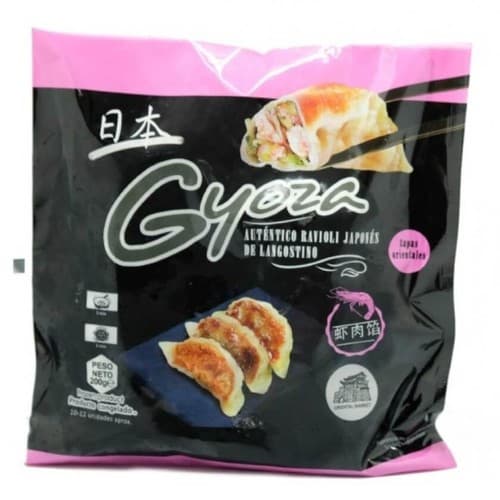
€3.95Shrimp Gyoza
ORIENTAL MARKET · kg · Bonpreu
 €6.95
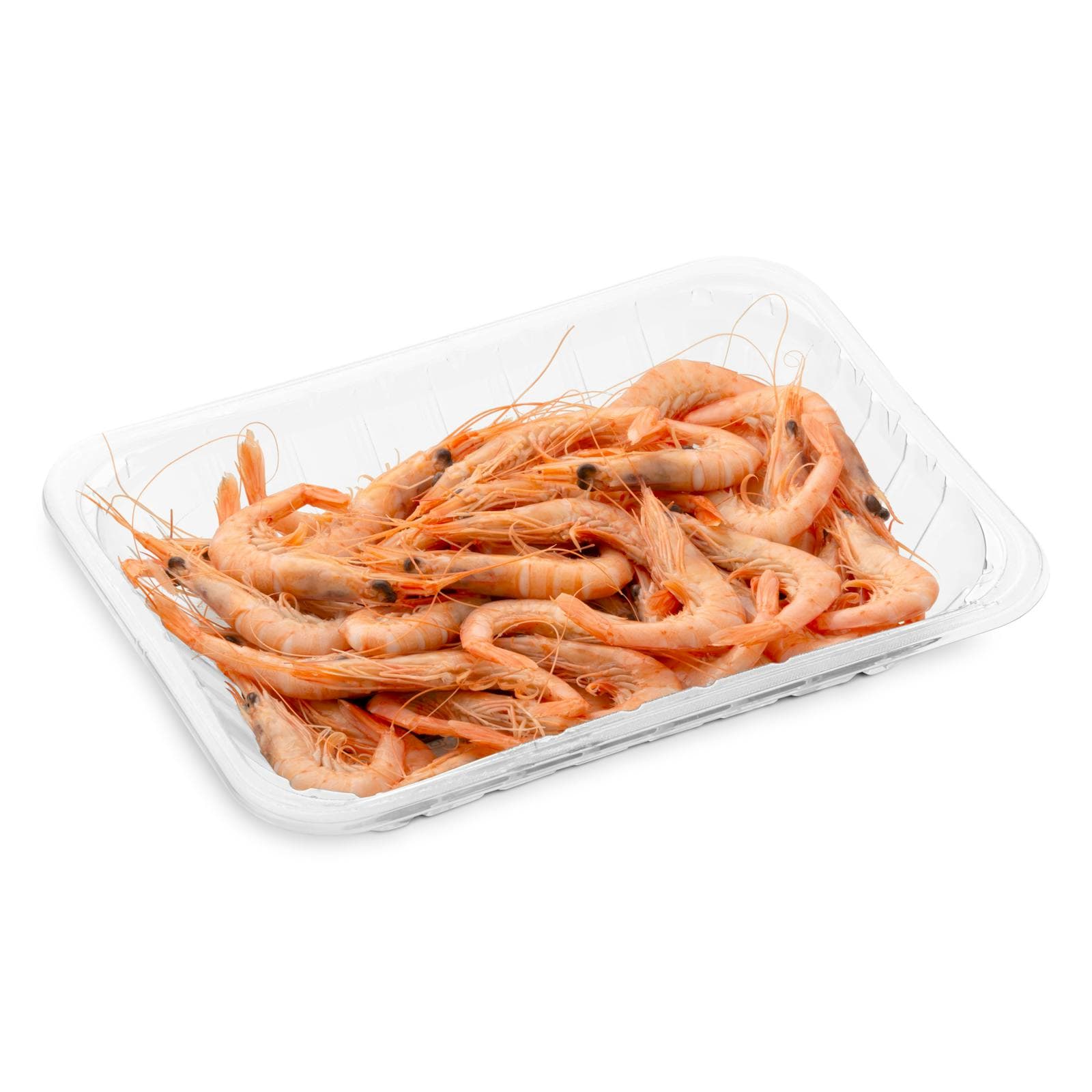
€6.95Cooked Shrimp
300 g · Mercadona
 €1084.05
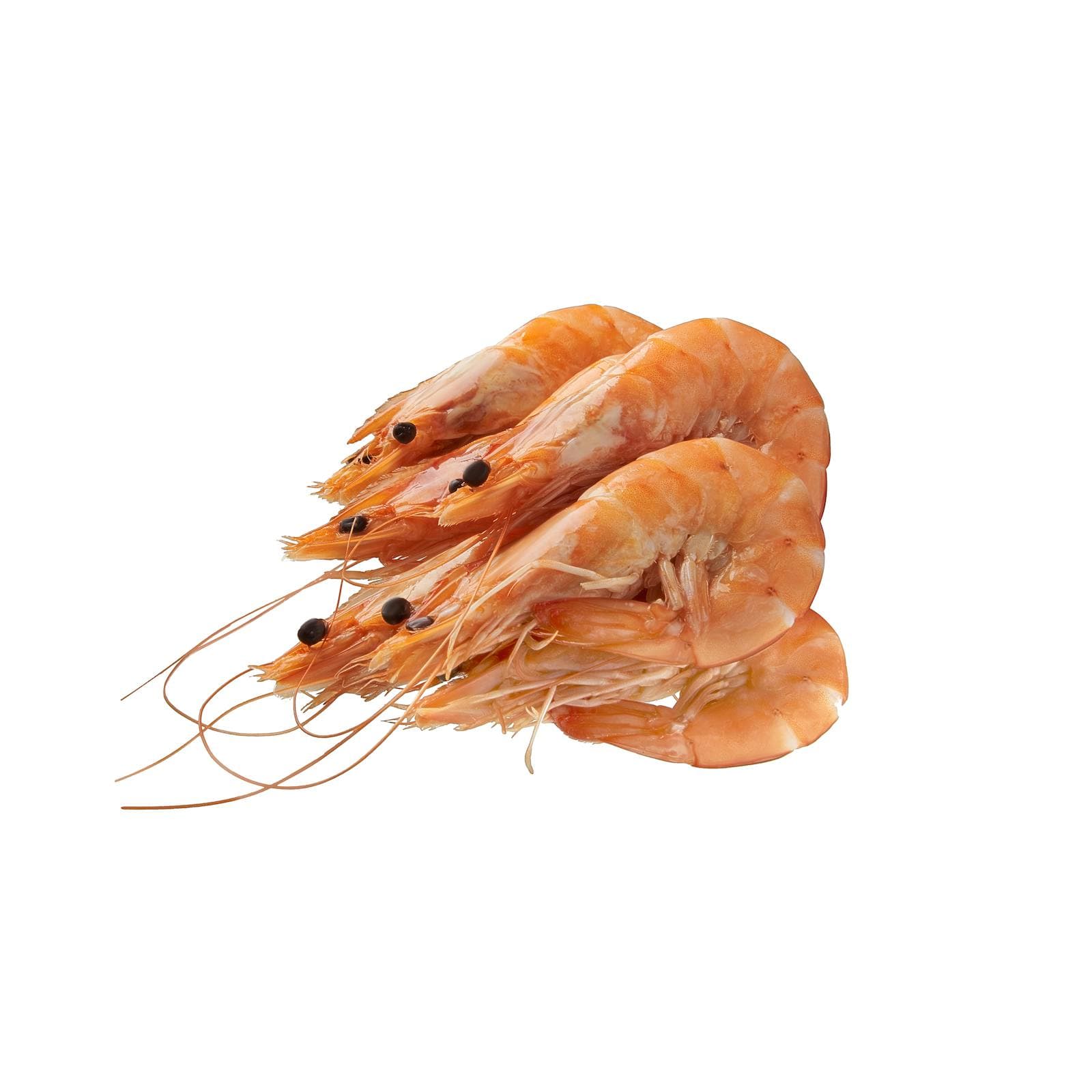
Cooked Shrimp
kg · Mercadona
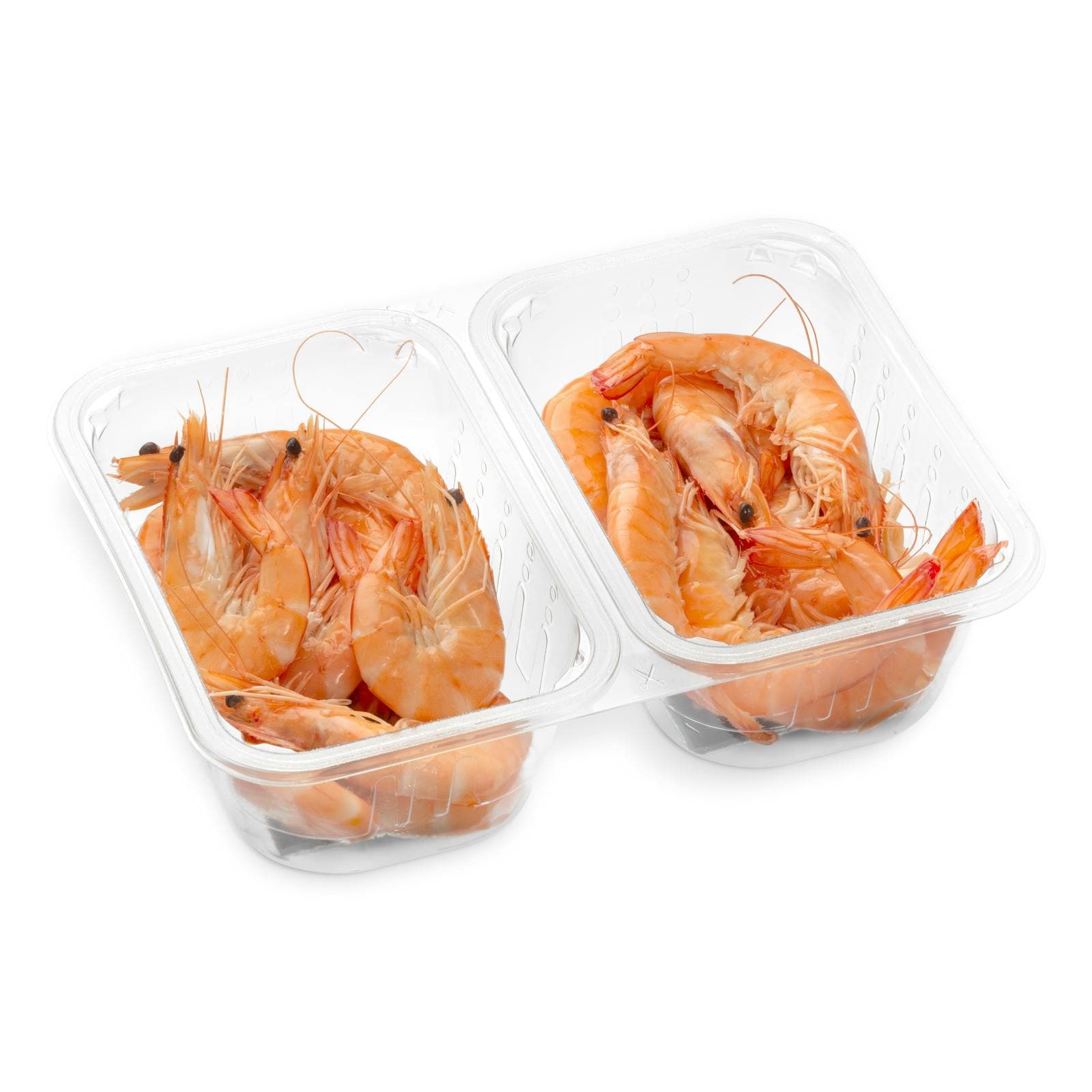 €6.30
€6.30Cooked Prawn
600 g · Mercadona
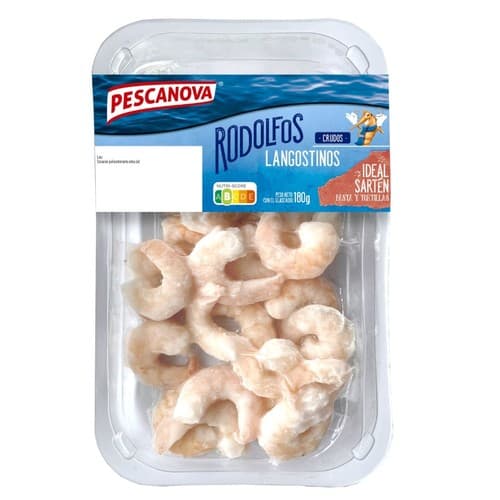 €4.89
€4.89Peeled Raw Shrimp
PESCANOVA · kg · Bonpreu
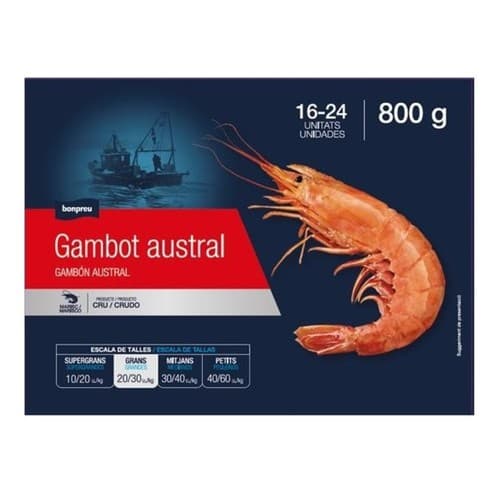 €10.95
Australian Prawn
BONPREU · kg · Bonpreu
Good to know
- Common Sizes
- 61-70, 51-60, 41-50, 31-40, 26-30, 21-25, 16-20 per lb (count per pound)
- Primary Forms
- Shell-on (headless, with carapace), Peeled & Deveined (tail-on or tail-off), Butterfly (split and deveined)
- Species
- Whiteleg shrimp (Litopenaeus vannamei), Black tiger shrimp (Penaeus monodon), Northern shrimp (Pandalus borealis), Rock shrimp (Sicyonia brevirostris)
- Protein
- ~20g per 3.5oz (100g) serving
- Production Method
- Wild-caught or farm-raised; aquaculture supplies ~55% of global consumption
- Freezing Method
- Individually Quick Frozen (IQF) or block frozen; freezing halts enzymatic activity and bacterial growth immediately after catch
- Frozen Shelf Life
- 9-12 months at 0°F (-18°C) or below; quality maintained best within 6 months
- Thawed Refrigerated Shelf Life
- 1-2 days; never refreeze after thawing
Substitutes
- Bay Scallops — Similar cooking time and mild sweetness; different texture (tender rather than firm); good in stir-fries, pasta, and salads
- Sea Scallops (Quartered) — Larger, sweeter, buttery; cook slightly longer; direct substitute in most preparations
- Lobster Tail — Rich, sweet, similar texture; much larger portion; excellent for special occasions, grilling, or baking
- Dungeness or King Crab Legs — Sweet, briny; different presentation but compatible flavor profile; good in boils, pastas, and salads
- Firm White Fish (Cod, Halibut) — Milder flavor, similar protein content; does not curl; substitute in curries, tacos, and baked dishes but not shrimp cocktail
- Calamari — Similar mild sweetness and quick cooking time; notably different texture (tender-chewy); works in stir-fries, salads, and fried preparations
- Crawfish Tails — Sweet, briny; authentic in Louisiana-style dishes, étouffée, boils, and gumbo
- Langoustines — Smaller, sweeter, more delicate than shrimp; direct substitute in upscale preparations; increasingly available frozen
Pairs with
Also called
Frozen Prawns
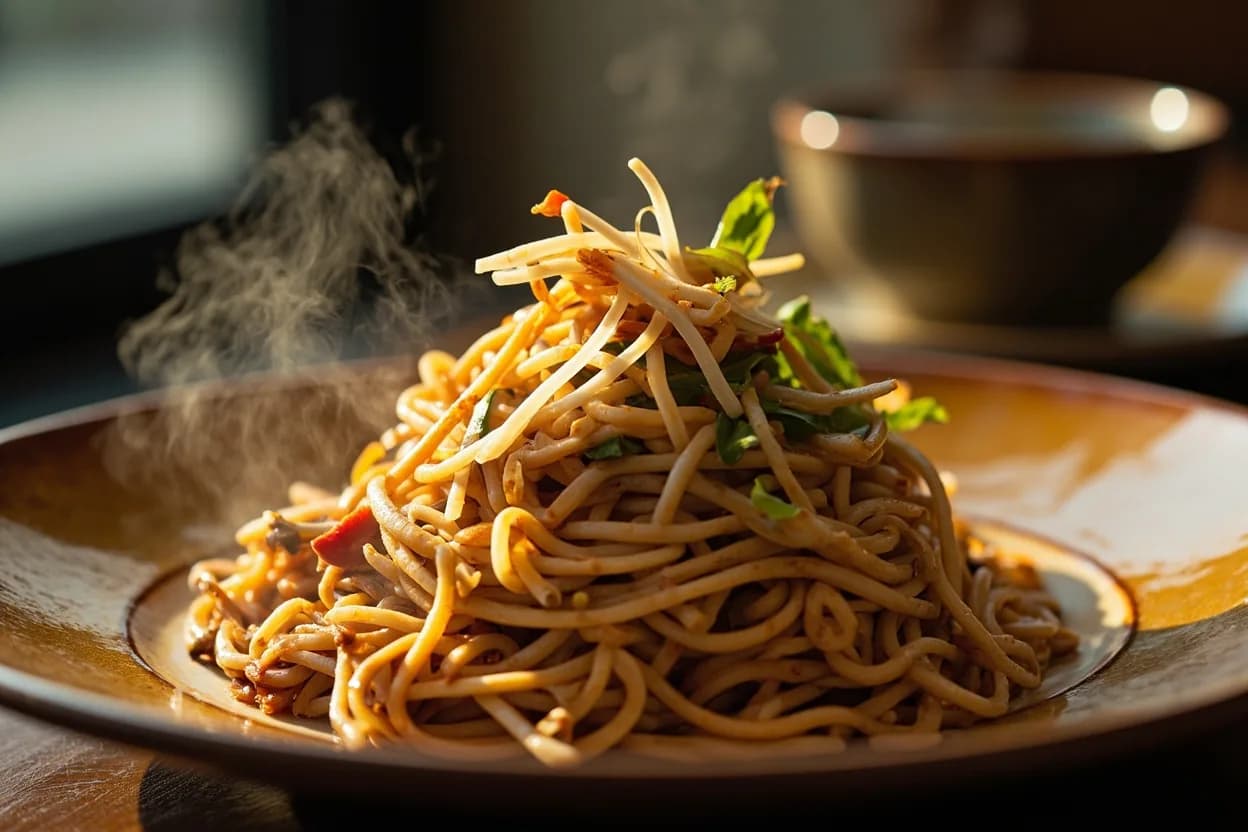
Appears in these dishes
Related

Egg
The kitchen's everything ingredient — bind, leaven, enrich, or fry

Chicken Breast
Lean, quick-cooking white meat for everyday dinners

Ground Beef
Versatile minced beef for burgers, ragù, tacos, and meatballs

Pork Loin
Lean, tender roasting cut that stays juicy with care

Salmon
Rich, rosy fish that roasts, grills, or cures beautifully

Egg White
Pure protein that whips to airy peaks for meringue and more

Egg Yolk
Rich, golden yolk for custards, mayonnaise, and pasta

Quail Egg
Tiny, speckled eggs for garnishing and elegant bites