Proteins
Kid Goat (Capretto)
Tender, delicate young goat meat roasted or braised for Easter and festive tables.
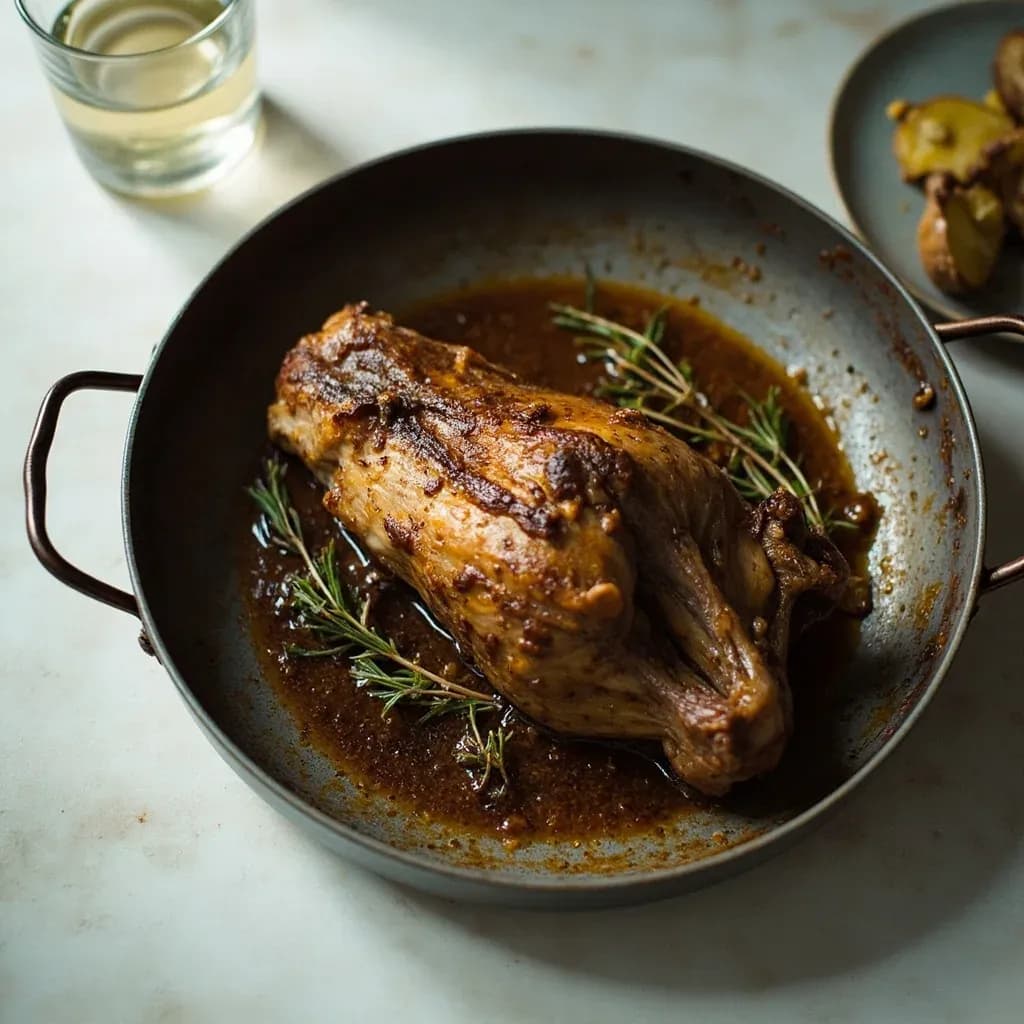
Kid goat, called capretto in Italy, is the meat of a young milk-fed goat, far more tender and milder than adult goat. It is a traditional Easter and festive roast across the Mediterranean, often slow-roasted with herbs, garlic and potatoes. Its lean, delicate flesh rewards gentle cooking.
Capretto is the Italian term for kid goat—young domestic goat (Capra hircus) slaughtered at three to six months of age. It anchors spring and Easter celebrations in northeastern Italy, particularly Veneto, Trentino, and Friuli-Venezia Giulia, where it has been a festive staple since at least the 16th century. The meat carries deep cultural significance as a symbol of renewal, traditionally served whole or on the bone for celebratory occasions. Outside Italy, find it at specialty butcher shops, Italian markets, or Middle Eastern butchers, where it may simply be labeled as young goat.
Two production methods define the eating experience. Milk-fed capretto (da latte), slaughtered at three to six weeks and fed exclusively on mother's milk, offers transcendent tenderness with ivory to pale pink flesh—closer to veal than goat in both texture and flavor. This prized preparation appears only briefly around Easter. Pasture kid (pascolino), slaughtered at three to five months after grazing, develops slightly deeper-colored flesh and more pronounced character while remaining far more delicate than adult goat.
Capretto is exceptionally lean—typically 2–3% fat, leaner than chicken breast—making it demanding at the stove. The meat cooks quickly and responds best to high heat for chops and roasts, or long, slow liquid for tougher cuts like the shoulder. Its delicate, mildly sweet flavor accommodates both rustic braises with tomatoes and wine and refined preparations with herbs and garlic. The entire animal is usable: saddle and legs command premium prices for roasting; shoulder and neck excel in braises and stocks.
- Measured in
- g
- Storage
- Fridge
Types & varieties
Slaughtered at 3–6 weeks, exclusively milk-fed; most prized, extremely tender and pale; primarily available at Easter
Slaughtered at 3–5 months; has grazed; slightly deeper color, more pronounced flavor than milk-fed
Spanish milk-fed kid, similar to capretto da latte; central to Castilian and Murcian cuisine
Prime roasting cut; bone-in or deboned; includes loin and ribs
Versatile; roasted whole, portioned for stews, or cut into escalopes
Best for braising; benefits from long, slow cooking to break down connective tissue
From the rack; excellent for quick, high-heat cooking
Buying and Sourcing Capretto
The availability of true milk-fed capretto is fleeting—plan ahead if you want the most prized Easter preparation. Ask your butcher to source the whole carcass if roasting; they will section it appropriately and may include organs (kidney, liver) prized in traditional regional cooking. When purchasing cuts, look for flesh that is moist but not wet, with a fresh, clean smell. Avoid any meat with an overly gamey aroma, which indicates an animal that was too old. Confirm age with your supplier: milk-fed capretto should come from animals slaughtered at three to six weeks.
- Request the whole carcass from your butcher for roasting; they handle sectioning and may include prized organs
- Confirm the animal's age before purchase—milk-fed capretto is from animals 3–6 weeks old
- Look for moist but not wet flesh with a clean smell; avoid any meat with pronounced gamey odor
- Specialty Italian markets, Middle Eastern butchers, and farm-direct sources are your best options outside Italy
Milk-Fed Versus Pasture
This distinction fundamentally shapes the eating experience and dictates cooking approach. Milk-fed capretto da latte offers unparalleled tenderness—the meat virtually melts with minimal intervention, making it ideal for quick roasting or grilling where the delicate flavor can shine unadorned. Its pale, almost ivory flesh requires less cooking time and lower temperatures than its pasture-raised counterpart. Pasture capretto pascolino develops more connective tissue and slightly denser muscle from grazing, which translates to deeper flavor but requires either high-heat quick cooking (grilling, pan-searing) or extended moist heat (braising) to achieve optimal texture.
- Milk-fed: slaughter at 3–6 weeks, mother's milk only; best for roasting and grilling with minimal seasoning
- Pasture-raised: slaughter at 3–5 months; benefits from braising or high-heat quick cooking
- Substituting pasture capretto in a milk-fed recipe? Extend braising times or increase marinating time for flavor penetration
Common uses
Tips & pitfalls
- Bring kid to room temperature for at least 1 hour before cooking to ensure even heat distribution throughout the lean meat
- Use a meat thermometer: target 60–63°C (140–145°F) for medium-rare/medium in the thickest part of saddle or leg—do not rely on time alone
- Do not overcook: kid is extremely lean and dries out quickly; even slightly overcooked meat becomes tough and stringy
- Rest the meat for 10–15 minutes under loose foil tent before carving; this allows carryover cooking to finish and juices to redistribute
- Marinate overnight in olive oil, garlic, rosemary, and white wine for deeper flavor penetration before roasting
- For braises, sear the meat aggressively before adding liquid; the fond (browned bits) is essential to the finished sauce's depth and complexity
- Do not discard bones—roast them for stock or add to braising liquid for added depth and body
- Do not substitute adult goat meat; it is much gamier, tougher, and requires longer cooking methods
Nutrition
Nutrition
No USDA FoodData Central match for Kid Goat (Capretto) yet. We surface a per-100 g profile once a generic whole-food entry is matched and verified.
In the shops
Matched grocery products
No matched grocery products for Kid Goat (Capretto) yet.
Good to know
- Species
- Capra hircus (domestic goat), kid slaughtered at 3–6 months
- Italian Name
- Capretto (literally 'little goat')
- Spanish Name
- Cabrito
- Primary Season
- Spring, especially around Easter
- Flavor
- Delicate, mildly sweet; similar to veal but leaner; less gamey than adult goat
- Texture
- Tender, fine-grained; pale pink to light red depending on age and feed
- Fat Content
- Very lean, typically 2–3% fat (leaner than chicken breast)
- Typical Weight
- Whole: 4–9 kg (9–20 lbs); retail cuts: legs 1–2 kg, saddle 1.5–2.5 kg
- Yield
- Boneless meat is approximately 55–65% of carcass weight
- Storage
- Refrigerate at 2–4°C for 2–3 days; freeze at -18°C for up to 6 months
Substitutes
- Young lamb (abbacchio) — Closest substitute in texture and mildness; use leg or shoulder for braising, saddle for roasting
- Veal (vitello) — Similar delicate flavor and pale color; slightly richer; adjust cooking times as veal may be slightly larger
- Pork loin — Comparable leanness and mild flavor; better for quick-cooking methods than braising
- Venison loin — Acceptable for roasting if kid is unavailable; more gamey, so adjust seasoning accordingly
Pairs with
Also called
Capretto · Cabrito · Young Goat
Related

Egg
The kitchen's everything ingredient — bind, leaven, enrich, or fry

Chicken Breast
Lean, quick-cooking white meat for everyday dinners

Ground Beef
Versatile minced beef for burgers, ragù, tacos, and meatballs

Pork Loin
Lean, tender roasting cut that stays juicy with care

Salmon
Rich, rosy fish that roasts, grills, or cures beautifully

Egg White
Pure protein that whips to airy peaks for meringue and more

Egg Yolk
Rich, golden yolk for custards, mayonnaise, and pasta

Quail Egg
Tiny, speckled eggs for garnishing and elegant bites