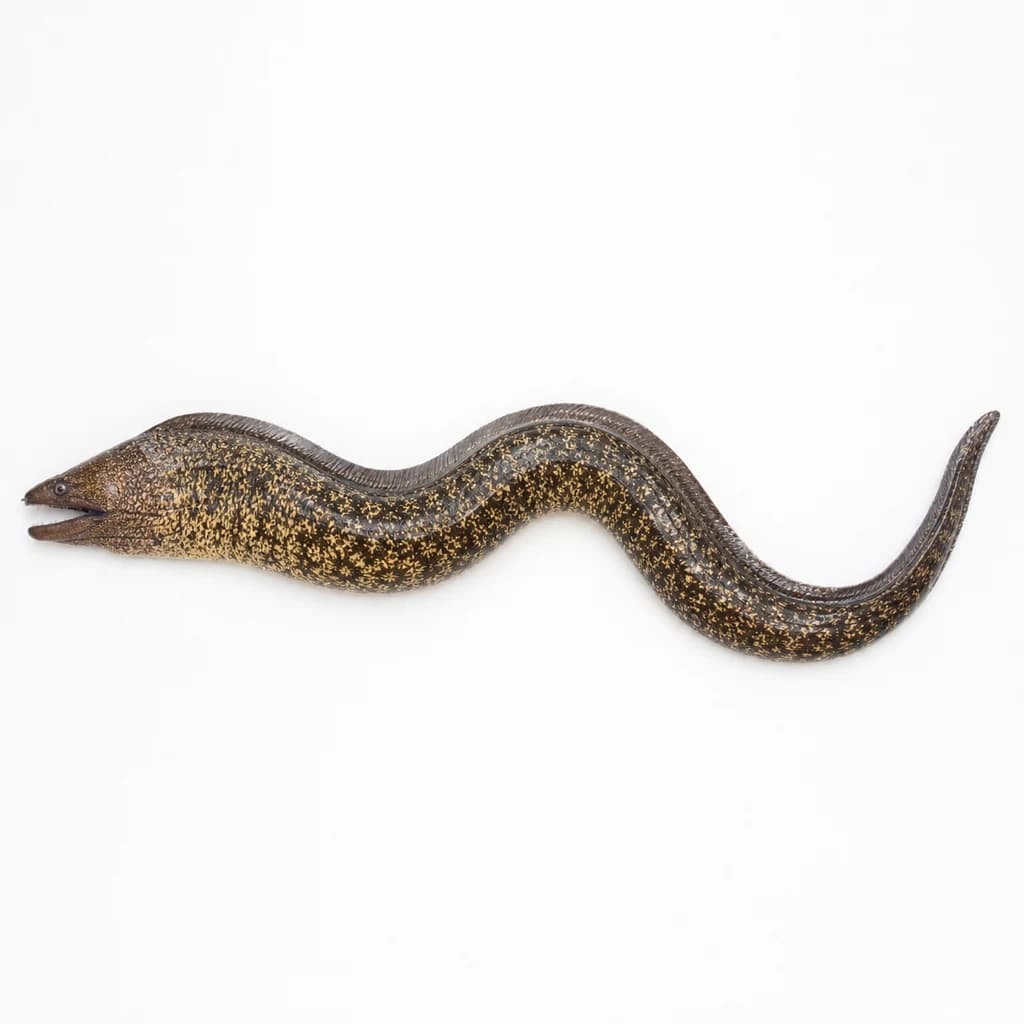
Natural form
Whole moray eel showing its elongated snake-like body, mottled skin, and continuous dorsal fin.
Shows the reader the unmistakable form of a moray eel before any preparation, establishing its distinctive elongated shape and patterned skin.
Proteins
Moray Eel (Moreia)
Firm-fleshed saltwater eel, fried or stewed in Portuguese and Mediterranean cooking.
Moray eel is a long, snake-like saltwater fish with firm white flesh and many fine bones. In Portugal (moreia) and parts of the Mediterranean it is dried, fried crisp, or stewed in caldeiradas and soups. The meat is rich and gelatinous, prized in traditional coastal dishes.
Moray eel (moreia) is a firm-fleshed saltwater eel native to the Mediterranean Sea and Eastern Atlantic, prized in Portuguese, Spanish, Italian, and Greek cooking. Despite its reptilian appearance—mottled brown and olive skin with dark spots—its flesh is pale, dense, and remarkably boneless when properly filleted, yielding approximately 50–55% edible meat. The flavor is mild and slightly sweet with a clean sea taste, distinct from the stronger ocean flavor of its cousin, the conger eel. Historically considered a lowly fish, moray was a staple of Roman cuisine and appears throughout ancient Mediterranean culinary literature; today it commands respect in the coastal regions of Setúbal and the Algarve, where it appears in everything from street-food fritters to elegant cataplana stews.
The eel's firm texture makes it forgiving in aggressive cooking methods—stews, deep-frying, and grilling—but utterly unforgiving if overcooked. Unlike conger eel, moray skin never softens during cooking and must be removed entirely before preparation. The blood and slime contain mild toxins neutralized by thorough cooking, so proper cleaning is non-negotiable. For the home cook, sourcing cleaned and portioned moray from a reliable fishmonger is strongly advisable; tackling a whole specimen requires confidence, the right knife, and patience with its notoriously slippery skin.
In Portuguese kitchens, moray is most famously cooked in the cataplana—the distinctive clamshell steamer that captures aromatics and steam in equal measure—where it braises with tomatoes, onions, white wine, and fresh coriander. It is also sold as moreia frita, dusted in cornmeal and deep-fried until golden and crisp. The eel's dense flesh holds together beautifully in soups and rice dishes, and when poached gently in court-bouillon, it becomes a refined starter served cold.
- Measured in
- g
- Storage
- Fridge
Allergens
Types & varieties
The primary culinary species; mottled brown/olive skin with dark spots
Various tropical moray species; not traditionally used in Mediterranean cooking
Cleaning and Butchering
If you source a whole moray eel, cleaning it is the most challenging step. Begin by killing the eel with a firm blow behind the head, then hang it to drain blood completely—this step prevents bitter flavor in the finished dish. Rub the entire surface generously with coarse sea salt and let it rest for 10 minutes; this draws out the protective slime coat that clings stubbornly to the skin. Rinse thoroughly and repeat the salt scrub once more before rinsing again under cold water.
To skin the eel, use a sharp, sturdy knife on a completely stable surface—the skin is extremely slippery and tough. Score the skin deeply in a ring just behind the head, then grip the flap with a cloth for traction and pull firmly toward the tail. Work slowly and methodically; rushing leads to torn skin and wasted meat. Once skinned, gut and wash the cavity, then portion as needed. Alternatively, ask your fishmonger to handle this step entirely—most specialist fishmongers are accustomed to the request.
- Kill quickly with a firm blow behind the head to minimize suffering and stress to the fish
- Hang the eel to drain blood completely before any other preparation
- Salt-slime-rinse method is essential before skinning
- Score skin ring deeply at the head before pulling; work toward the tail
Cooking Properties
Moray eel behaves like a firm white fish on steroids—it holds together under heat in ways that flakier fish cannot. This forgiving quality makes it ideal for stews, where it absorbs sauce flavors without disintegrating. However, the same density that makes it resilient to long cooking also means that overcooking produces a rubbery, unpleasant texture. The flesh is done when it turns fully opaque throughout and offers slight resistance when pressed with a finger—it should not flake apart like cod nor bounce back like an overcooked shrimp.
The flesh improves noticeably with a 30-minute soak in lightly salted cold water before cooking; this firms the proteins and evens out the texture. Do not skip this step for poached or grilled preparations where texture is paramount. For fried dishes, the firm texture is an asset: moray holds its shape in hot oil and develops a satisfying crust without drying out.
- Cook until flesh turns opaque throughout; gentle simmer, not vigorous boil
- Overcooked moray becomes rubbery and loses its clean sea flavor
- Soak cleaned flesh in salted cold water for 30 minutes before cooking to improve texture
- Firm texture holds up well to aggressive cooking methods but loses character if overworked
Common uses
Tips & pitfalls
- Rub the live eel generously with coarse sea salt, let rest 10 minutes, then rinse repeatedly to remove the protective slime coat—this step is essential before any cooking method
- Kill the eel quickly (a firm blow behind the head), then hang it to drain blood completely before skinning; this prevents bitter flavor
- Use a sharp, sturdy knife and work on a stable surface; the skin is extremely slippery and tough
- Score the skin deeply around the head before peeling—pull toward the tail using a cloth for grip
- If sourcing whole, ask your fishmonger to clean it; the process is intimidating for home cooks
- Do not overcook—moray becomes rubbery if boiled too long; simmer gently until flesh turns opaque throughout
- Soaking cleaned flesh in lightly salted cold water for 30 minutes improves texture before cooking
- Unlike conger eel, moray skin does not soften during cooking; remove it completely before any preparation
Nutrition
Nutrition
No USDA FoodData Central match for Moray Eel (Moreia) yet. We surface a per-100 g profile once a generic whole-food entry is matched and verified.
In the shops
Matched grocery products
No matched grocery products for Moray Eel (Moreia) yet.
Good to know
- Scientific name
- Muraena helena
- Origin
- Eastern Atlantic and Mediterranean Sea
- Texture
- Firm, white flesh with no visible bones when filleted
- Flavor
- Mild, slightly sweet, clean taste of the sea
- Yield
- Approximately 50–55% edible meat after skinning and cleaning
- Availability
- Fresh from specialist fishmongers; also sold cleaned and portioned
- Storage
- Use within 1–2 days when fresh; freeze at -18°C for up to 3 months
- Toxicity note
- Blood and slime contain mild toxins destroyed by thorough cooking; skin slime must be removed before cooking
Substitutes
- Conger eel (safio) — Closest texture; slightly stronger flavor; use 1:1 in any recipe
- European eel (anguila) — Fattier flesh; reduce cooking time slightly; excellent for frying
- Monkfish tail — Comparable firm, boneless texture; different flavor but works in stews and fried preparations
Pairs with
Also called
Moreia
Related
Egg
The kitchen's everything ingredient — bind, leaven, enrich, or fry
Chicken Breast
Lean, quick-cooking white meat for everyday dinners

Ground Beef
Versatile minced beef for burgers, ragù, tacos, and meatballs
Pork Loin
Lean, tender roasting cut that stays juicy with care
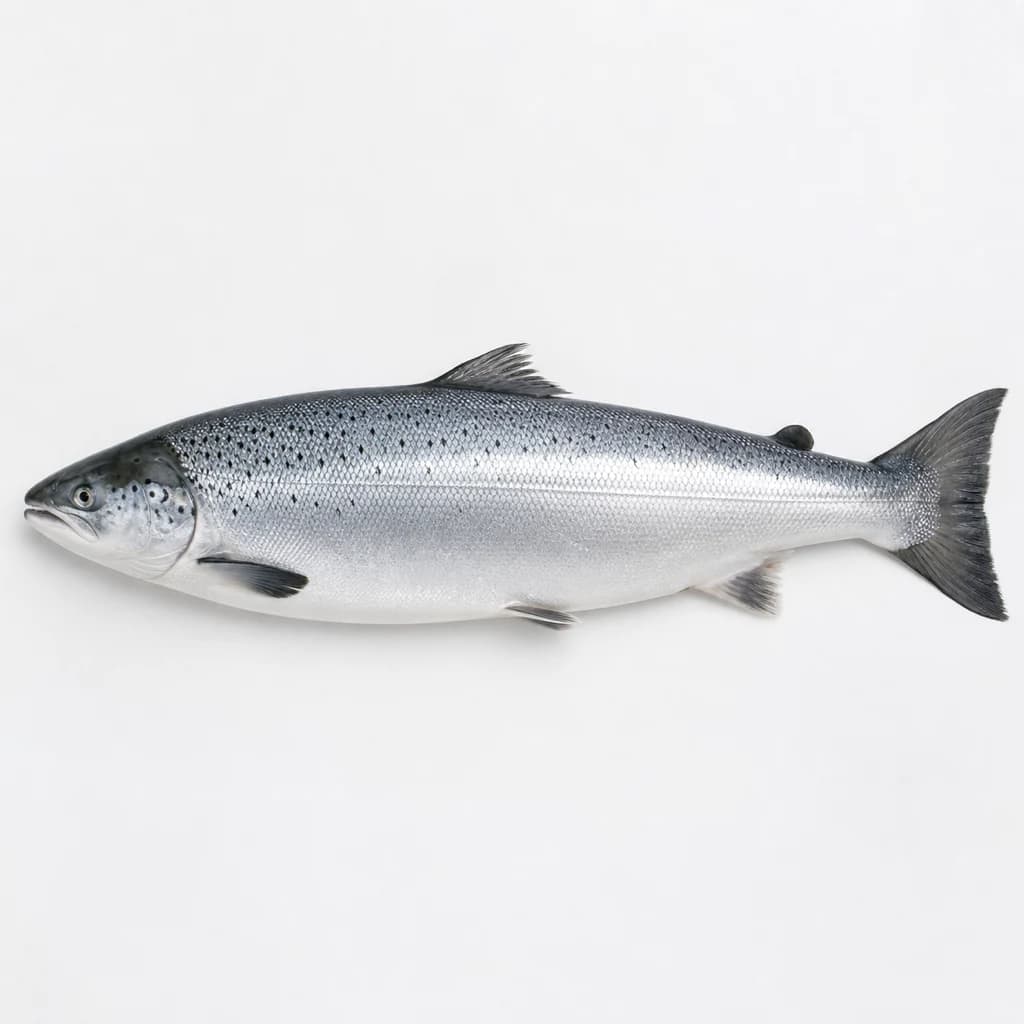
Salmon
Rich, rosy fish that roasts, grills, or cures beautifully

Egg White
Pure protein that whips to airy peaks for meringue and more
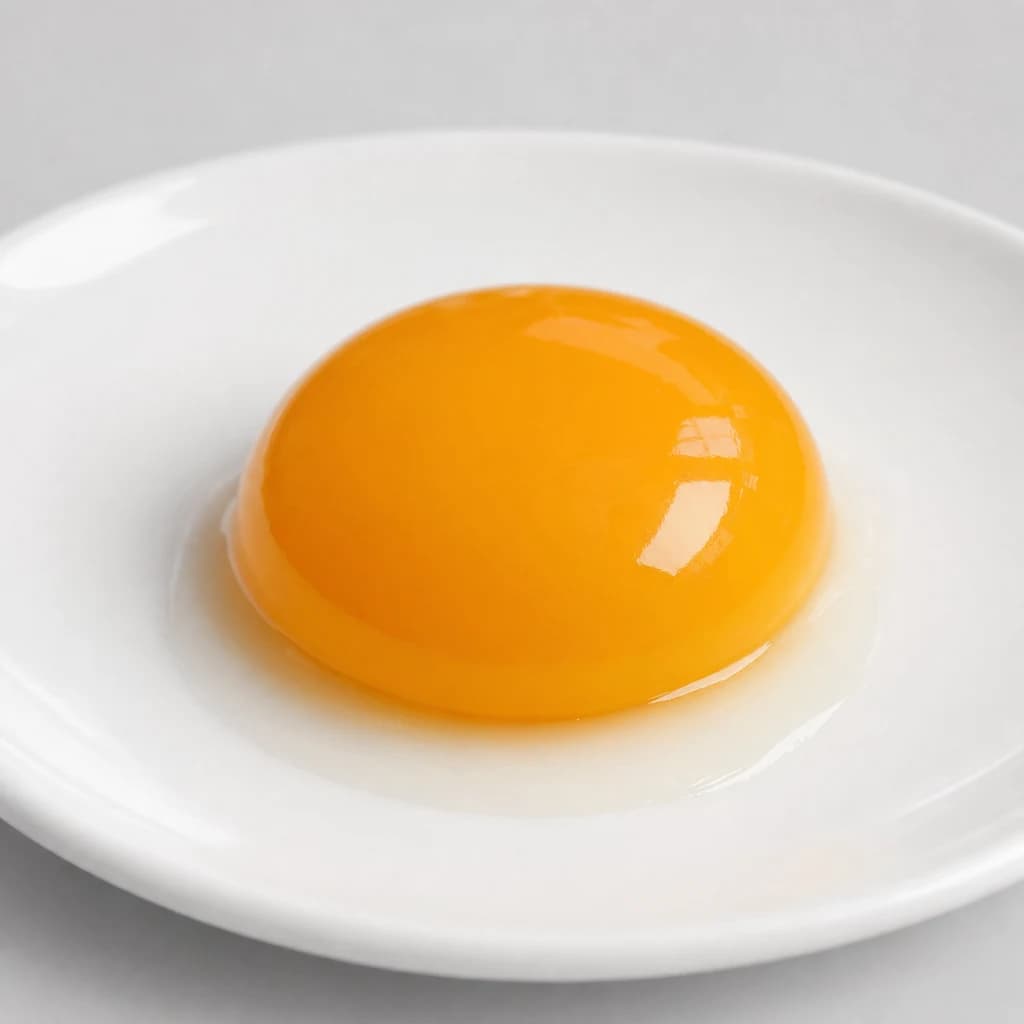
Egg Yolk
Rich, golden yolk for custards, mayonnaise, and pasta

Quail Egg
Tiny, speckled eggs for garnishing and elegant bites