Proteins
Plaice
Mild, delicate North Atlantic flatfish, pan-fried or steamed whole or as fillets.
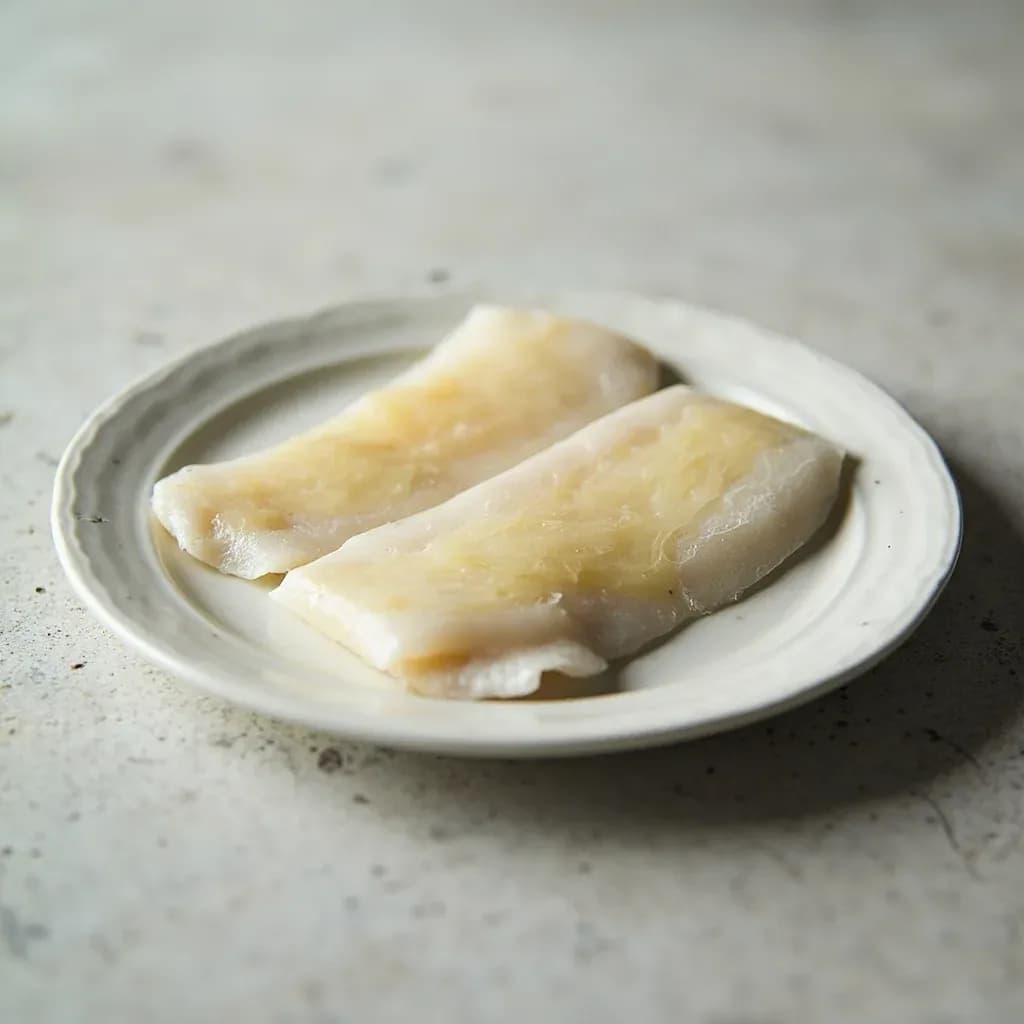
Plaice is a right-eyed flatfish prized across Northern Europe for its soft white flesh and subtle, sweet flavor. It is commonly dredged in flour and pan-fried in butter, breaded, or served as fillets with lemon. The fish is recognizable by its smooth brown skin dotted with bright orange spots.
Plaice (Pleuronectes platessa) is the workhorse flatfish of northern European cooking — a diamond-shaped, right-eyed flatfish of the North Atlantic whose olive-brown upper side is freckled with bright orange-red spots and whose underside is a clean, bright white. It is the fish the British and Dutch reach for when Dover sole is too dear: sweet-fleshed, fine-grained, and tender, with a low fat content that makes it one of the most delicate of all European flatfish. Because the flesh carries so little oil, plaice rewards short, gentle cooking and resents anything that drives moisture out of it, which is why it is most often pan-fried briefly in butter, poached in a light court-bouillon, or grilled skin-side down until just opaque.
The defining characteristic in the kitchen is texture. A correctly cooked plaice fillet should flake into soft, moist layers with the lightest pressure from a fork; the moment it pushes back dry and cottony, it has gone a minute too far. The skin, left on, crisps into a savory shell that protects that delicate flesh and adds the only real textural contrast on the plate — a fact that drives almost every classical preparation, from French meunière to the Dutch schol met spek, where bacon fat bastes the lean flesh as it fries.
Plaice is at its best from autumn through early spring, when fish are in peak condition after summer feeding and spawning runs bring them close to shore in quantity, and the same fish behaves well cold — poached, skinned, and dressed with mayonnaise or vinaigrette — making it a fixture of Scandinavian summer tables. For a cook, it is a fish that punishes overhandling and rewards restraint: a hot pan, a slick of butter, a squeeze of lemon, and almost nothing else.
- Measured in
- g
- Storage
- Fridge
Allergens
Types & varieties
The true Pleuronectes platessa, sold simply as 'plaice' in Britain and Ireland; the benchmark for the species.
Hippoglossoides platessoides, also called long rough dab. Not a true plaice; milder, softer flesh and rougher skin, sold as 'plaice' across the northeastern US and Canada.
Platichthys flesus; sometimes mislabeled as plaice in UK shops. Lacks the orange spots and can have eyes on either side.
Glyptocephalus cynoglossus; sold in Britain as 'witch' and frequently substituted for plaice or lemon sole.
Solea solea, not a plaice but the premium flatfish of the same waters, with firmer, more gelatinous flesh.
Cooking a whole plaice on the bone
Bone-in sides and whole fish hold their moisture better than skinned fillets, which is why serious kitchens prefer to cook plaice whole and debone at the pass. The cartilage running down the center softens during cooking and lifts cleanly away once the fish is rested, leaving two uninterrupted sides of flesh — a presentation as useful for cold poached service as for a hot buttered plate. The trick is to score the dark skin in two or three diagonal slashes before cooking so heat reaches the thickest part of the flesh at the same time as the tail.
- Score the dark (eyed) skin with 2–3 diagonal cuts through to the bone before cooking.
- Cook the fish skin-side down first if pan-frying, finishing briefly on the flesh side if needed.
- Rest the cooked fish for 2–3 minutes before attempting to lift the central cartilage.
- Slide a knife along the spine from head to tail; the cartilage peels away in one piece, leaving two clean sides.
- Portion the top side first, then lift the skeleton away to reveal the underside flesh — service skin-side up to keep the moist side protected.
Identifying true plaice at the counter
Several flatfish are sold under the name 'plaice' in different markets, and a quick check of the skin settles any doubt before you buy.
- True European plaice: dark olive-brown upper side scattered with distinct orange-red spots; underside bright white; eyes on the right.
- European flounder: similar brown upper side but no orange spots, and the eyes can sit on either side.
- Witch (Torbay sole): uniform grey-brown upper side with no spots, more elongated body and smaller head.
- American plaice: rougher skin, more uniformly reddish-brown, lacks the bright orange spots of true plaice.
Common uses
Tips & pitfalls
- Always check for the bright orange-red spots on the dark side — it is the quickest way to confirm a true plaice rather than a flounder or dab.
- Dry fillets thoroughly before frying; surface moisture is what stops the skin from crisping in the pan.
- Cook plaice gently and briefly — the flesh is very lean and turns dry and cottony if overcooked. A fillet goes opaque in 2–3 minutes per side in a hot pan, no longer.
- Use a fish spatula and slide it under the fillet in one motion; poking the flesh causes the soft flakes to break apart.
- Leave the skin on for pan-frying and grilling — it crisps beautifully and protects the delicate flesh from drying out.
- Score the dark skin of a whole fish in 2–3 diagonal slashes before cooking so heat penetrates the thickest part evenly.
- Buy on the day you intend to cook it; plaice deteriorates faster than oily species and any 'fishiness' is a clear sign of age.
- Bone-in sides stay juicier than skinned fillets — debone yourself by running a knife along the central cartilage after cooking rather than before.
- A finish of beurre noisette, capers, and lemon, or a parsley cream sauce, are the two classic French and English accents.
Nutrition
Nutrition
No USDA FoodData Central match for Plaice yet. We surface a per-100 g profile once a generic whole-food entry is matched and verified.
In the shops
Matched grocery products
No matched grocery products for Plaice yet.
Good to know
- Scientific name
- Pleuronectes platessa
- Family
- Pleuronectidae (righteye flounders)
- Range
- North Atlantic — British Isles, North Sea, Iceland, Norwegian coast, south to the Bay of Biscay
- Identifying mark
- Bright orange or red spots scattered across the dark olive-brown upper side; underside is white
- Market size
- Typically 25–40 cm (10–16 in); can grow to roughly 90–100 cm
- Flesh
- Soft, fine-flaking white; very low fat compared with other flatfish; delicate, slightly sweet flavor
- Yield
- About 40–50% edible meat after head, bones, and skin removed
- Season
- Best autumn through early spring; spawning runs January–March
- Forms sold
- Whole gutted, bone-in sides, or skin-on fillets; both skin and flesh are edible
- Storage
- Use within 1–2 days; bury in crushed ice in the coldest part of the fridge
- Sustainability
- North Sea and Irish Sea stocks have rebuilt under management plans and are generally rated healthy by ICES
Substitutes
- Dover sole — The most direct substitute; firmer, meatier texture but cooks and plates identically. Significantly more expensive.
- Lemon sole — Microstomus kitt; similar delicate flavor, slightly firmer flesh, classic British fish-and-chip alternative.
- Flounder — Cheaper stand-in; very mild flavor and slightly more robust flesh that holds together better in the pan.
- Dab — Small North Sea flatfish with very similar texture and flavor; best for pan-fried fillets.
- Brill — Larger left-eyed flatfish; similar mild flavor, slightly meatier texture — good for whole-roasted preparations.
- Tilapia — Pantry substitute when no flatfish is available; similar lean white flesh but blander, so lean on butter, lemon, and herbs.
Pairs with
Also called
Rødspætte · European Plaice
Related

Egg
The kitchen's everything ingredient — bind, leaven, enrich, or fry

Chicken Breast
Lean, quick-cooking white meat for everyday dinners

Ground Beef
Versatile minced beef for burgers, ragù, tacos, and meatballs

Pork Loin
Lean, tender roasting cut that stays juicy with care

Salmon
Rich, rosy fish that roasts, grills, or cures beautifully

Egg White
Pure protein that whips to airy peaks for meringue and more

Egg Yolk
Rich, golden yolk for custards, mayonnaise, and pasta

Quail Egg
Tiny, speckled eggs for garnishing and elegant bites