Natural form
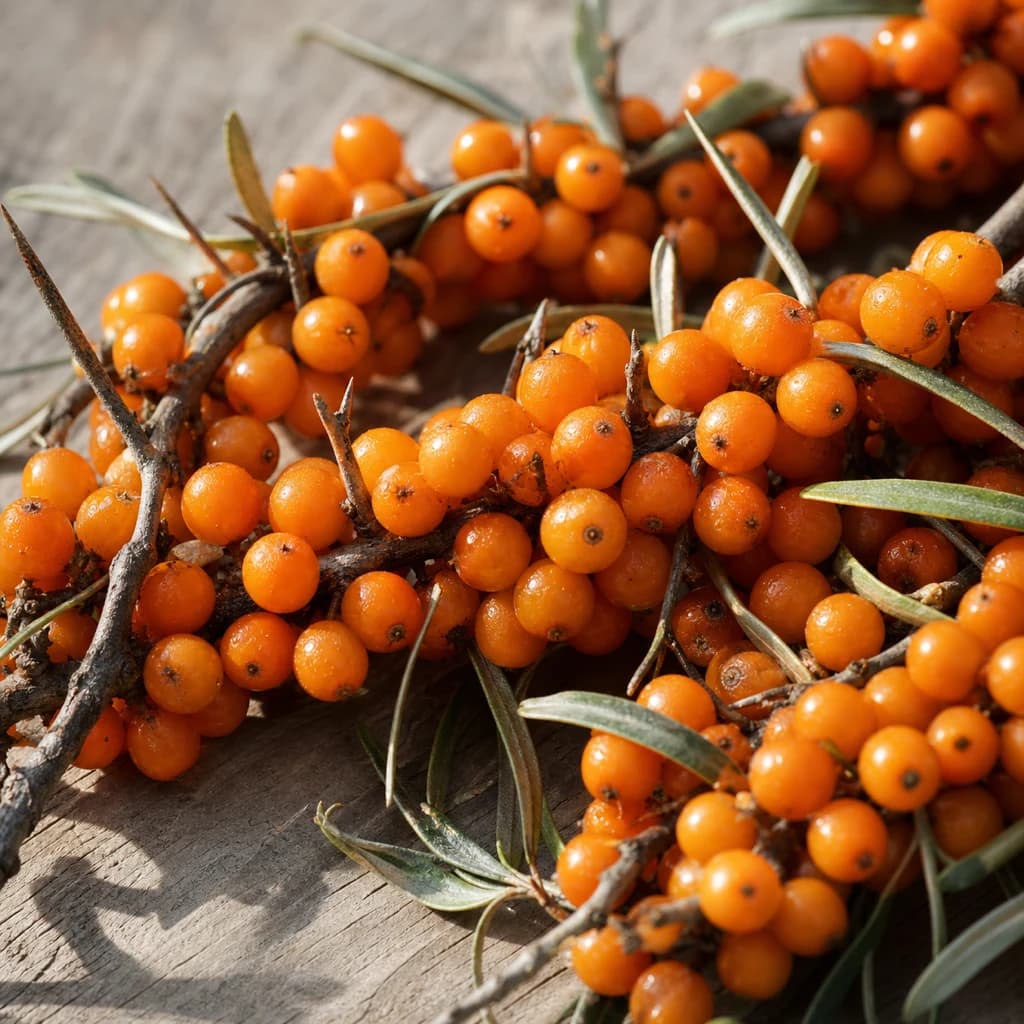
Dense clusters of bright-orange sea buckthorn berries clinging to thorny grey branches.
Shows the berry's distinctive color, tight clustering habit, and thorny branch structure as found in the wild or market.
Produce
Sea Buckthorn
Tart, vitamin-rich orange berry used in juices, sauces, and Nordic desserts.
Sea buckthorn is a small, bright-orange berry with an intensely tart, tangy flavor and very high vitamin C content. It is pressed into juice, cooked into sauces and jams, and used in Nordic desserts, sorbets, and cocktails. Its sharp acidity pairs well with cream, honey, and game.
Sea buckthorn (Hippophae rhamnoides) is a small, bright orange berry grown on thorny, extremely cold-hardy shrubs native to northern Europe, China, Russia, and the Himalayas. The berries grow directly on woody stems in dense clusters, making hand-harvesting laborious—commercial and home growers typically cut entire branches and freeze them overnight so the berries shake loose easily. What makes sea buckthorn remarkable in the kitchen is its extraordinary acidity (pH 2.5–3.0) combined with an unusually complex flavor: intensely tart and citric upfront, with tropical undertones of pineapple, mango, and passion fruit that emerge when the sharp edge is tempered with sugar or dairy. The berries are rarely eaten fresh out of hand by most people; their aggressive tartness requires transformation through cooking, sweetening, or alcohol extraction to become palatable.
Nutritionally, sea buckthorn is exceptional even among berries. Vitamin C content runs 15–20 times higher than oranges by weight (200–1,500 mg per 100g), and the berries also deliver significant Vitamins A, E, and K, beta-carotene, lycopene, and a rare complement of omega-3, -6, -7, and -9 fatty acids. This nutrient density carries through to the oil, which gives sea buckthorn its golden-orange color and is why cold-pressed oil commands premium prices as both a culinary finishing ingredient and a functional food product. The plant itself is dioecious—separate male and female specimens—so berry production requires planting both sexes, typically one male for every six to eight females. Commercial cultivation is dominated by China, which produces the vast majority of global supply; European and North American harvests remain small-scale.
In the kitchen, sea buckthorn behaves like an intensely acidic citrus fruit with a tropical depth, making it exceptionally versatile. The juice yield is high (70–80% by weight when pressed), and the seeds inside contribute beneficial oils and a subtle nutty character if left in during pressing. The orange pigment in the berry skin stains readily—wear gloves during processing and avoid cooking in reactive aluminum, iron, or copper pots, where the acidity can discolor both food and cookware. When balanced with sweetener, dairy, or fatty preparations, sea buckthorn transforms from bracingly tart into a vibrant, complex ingredient that anchors sauces, desserts, beverages, and condiments across Nordic, Baltic, Russian, and Central Asian traditions.
- Measured in
- g
- Storage
- Freezer
Types & varieties
European subspecies; common in coastal regions from the British Isles to Scandinavia and Central Europe
Mongolian and Siberian subspecies; primary source of most commercial Russian and Chinese production
Willow-leaved sea buckthorn; native to the Himalayan region (India, Nepal, Bhutan)
Tibetan subspecies; found at high altitudes in the Himalayas
German cultivar; one of the most productive commercial varieties; heavy yield of large berries
German commercial cultivar; noted for berry size and consistent yields
German cultivar; compact growth, good for smaller gardens; early ripening
Cultivar selected for higher oil content in berries; popular among small-scale growers
German cultivar; disease-resistant; produces sweet-tart berries suitable for direct consumption when fully ripe
Common uses
Tips & pitfalls
- Harvest by cutting whole branches in late summer or early autumn, then freeze the branches overnight—the berries fall off easily once frozen, avoiding the thorns entirely.
- Never eat raw berries straight from the branch in quantity; they are extremely tart and borderline astringent—processing with sugar, heat, or alcohol is essential for palatability.
- When making juice, press berries without removing seeds—the seeds contribute beneficial oils and a slightly nutty undertone to the finished product.
- Balance tartness with sweetener at roughly a 1:1 ratio by weight (sugar, honey, or maple syrup) when making sauces or preserves, then adjust to taste.
- Do not overcook juice when reducing—high heat turns it bitter and dulls the bright orange color; use low heat and monitor closely.
- Sea buckthorn pairs naturally with dairy (cream, yogurt, crème fraîche) which tempers acidity; this is a classic and reliable pairing in Nordic desserts.
- For oil extraction, cold-pressing yields the most nutrient-dense product; heat-pressed oil works for cooking but has lower therapeutic and nutritional value.
- The oil separates quickly in juice—shake or stir before each use if using as a beverage base.
- Avoid aluminum, iron, or copper cookware—high acidity reacts with reactive metals, discoloring both the food and the pot; use stainless steel or enamel instead.
Nutrition
Nutrition
No USDA FoodData Central match for Sea Buckthorn yet. We surface a per-100 g profile once a generic whole-food entry is matched and verified.
In the shops
Matched grocery products
No matched grocery products for Sea Buckthorn yet.
Good to know
- Scientific name
- Hippophae rhamnoides
- Origin
- Northern Europe, China, Russia, Himalayan regions
- Season
- Late summer to early autumn (August–October)
- Flavor
- Intensely tart and acidic, with citrus and tropical notes (hints of pineapple, mango, passion fruit)
- pH
- Very acidic, approximately 2.5–3.0
- Vitamin C content
- 15–20× higher than oranges by weight (200–1,500 mg per 100g)
- Key nutrients
- Vitamins A, E, K; beta-carotene; omega-3, -6, -7, -9 fatty acids; flavonoids; lycopene
- Color
- Bright orange to orange-yellow berries; golden-orange oil
- Juice yield
- Approximately 70–80% by weight when pressed
- Storage (fresh)
- Refrigerate up to 1 week; freezes well for several months
Substitutes
- Lingonberry — Simpler to find in Scandinavian markets; tartness and color are similar but flavor profile is less tropical; adjust sweetener added
- Pomegranate juice — Comparable acidity and visual appeal; lacks the tropical notes but works well for sauces and glazes
- Cranberry — Similar tartness and deep color; slightly less complex flavor; good for preserves and sauces
- Orange juice concentrate — Provides acidity and citrus character but no tropical notes; use less sugar if substituting in beverages
- Gooseberry — Tartness level is comparable; milder flavor means the dish loses complexity; works in preserves and pies
Also called
Tyrni · Seabuckthorn · Sea Buckthorn Berry
Related
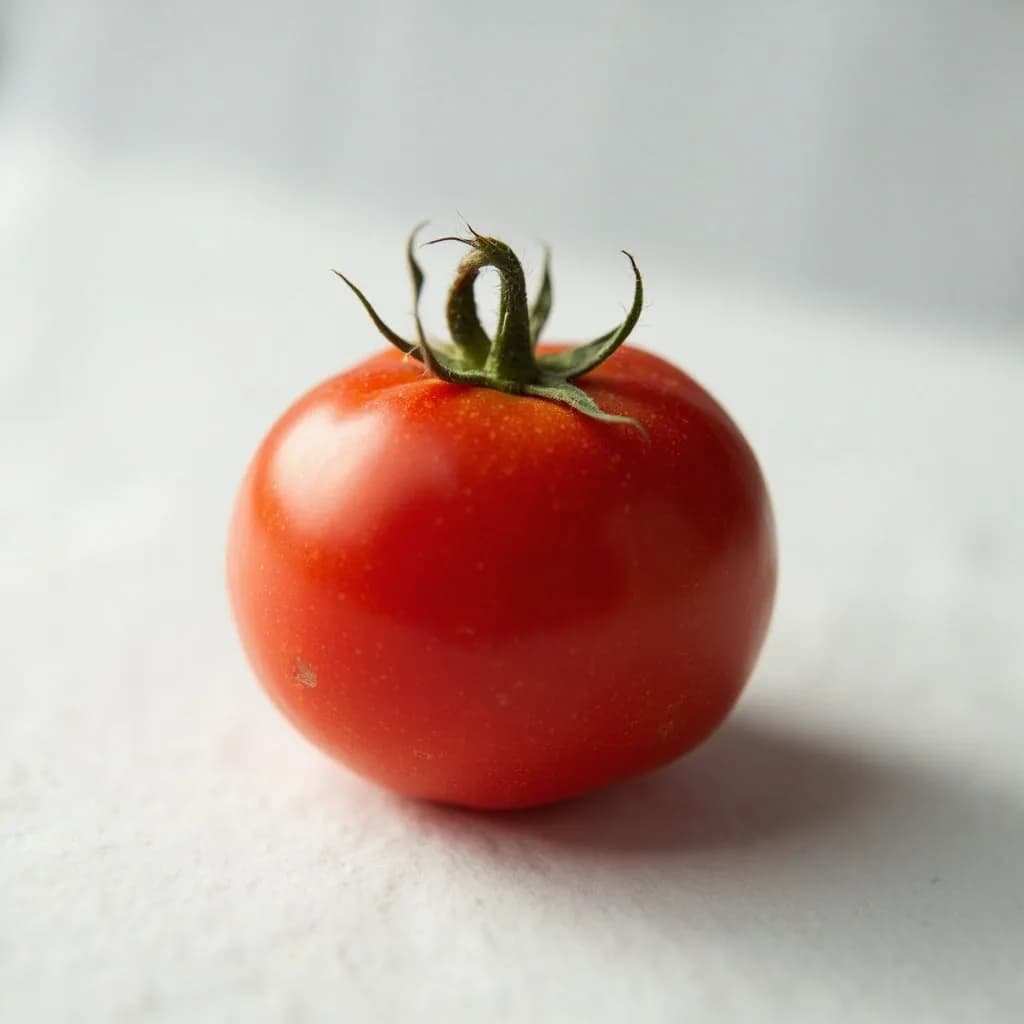
Tomato
Juicy, sun-sweet fruit for sauces, salads, and slow-cooked depth
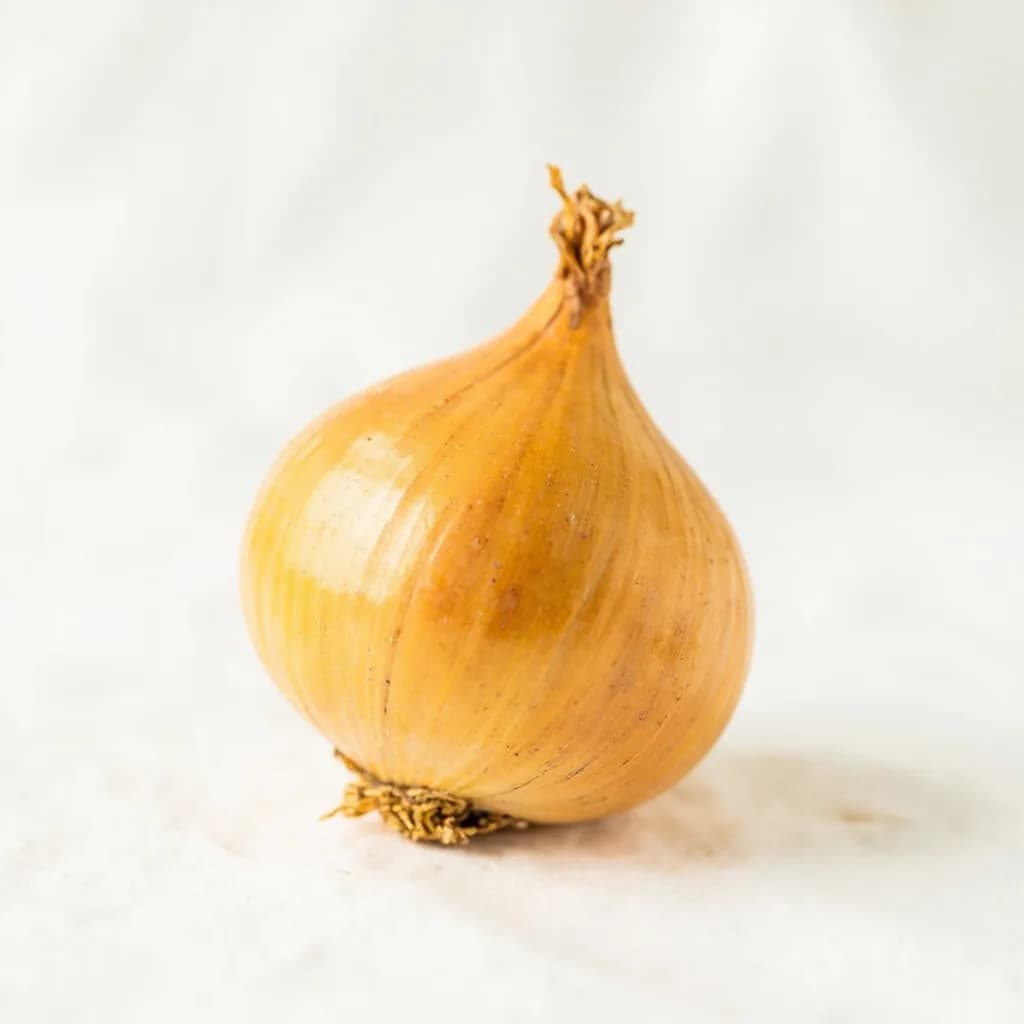
Yellow Onion
The aromatic backbone of soups, sofritos, and braises
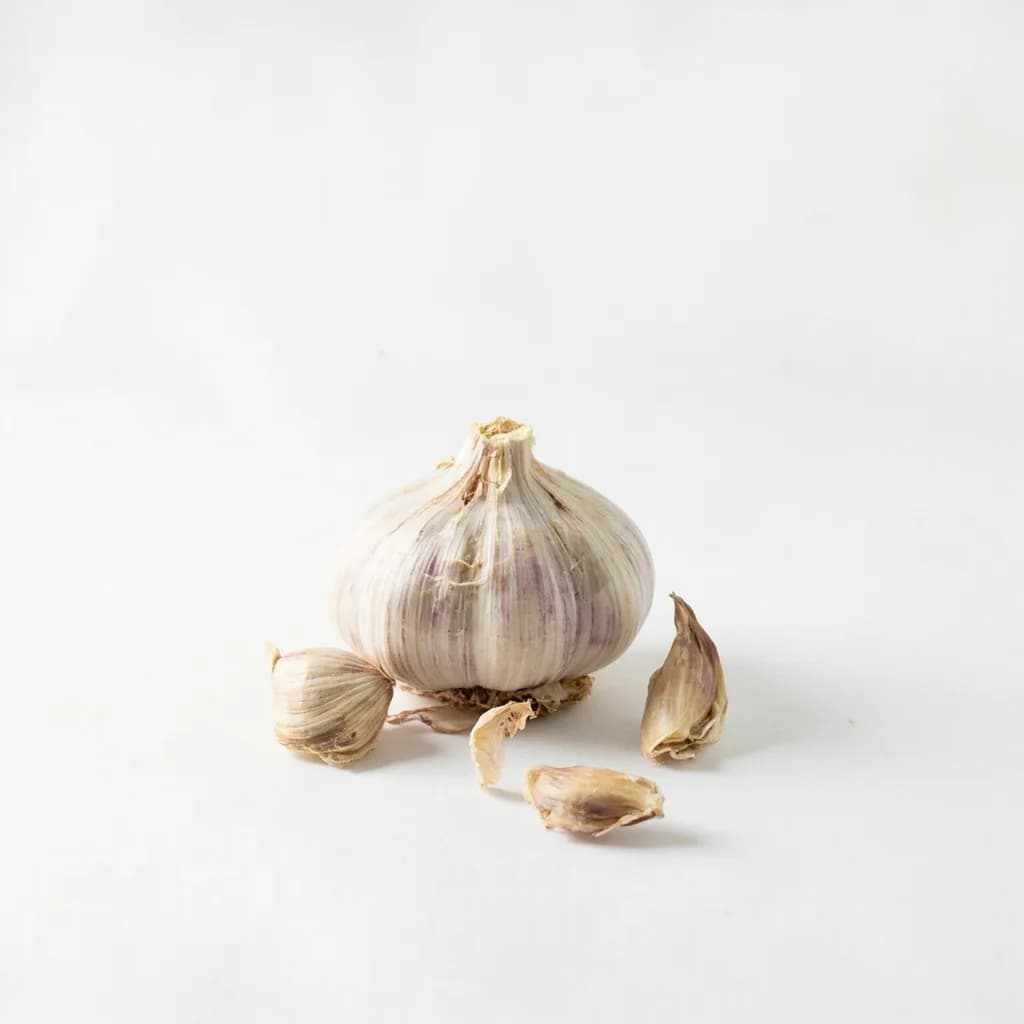
Garlic
Pungent cloves that perfume nearly every savory dish
Lemon
Bright, acidic citrus that wakes up almost any dish
Potato
Humble, hearty staple — roast, mash, fry, or boil
Carrot
Sweet, crunchy root — raw, roasted, or the base of a sofrito
Cucumber
Cool, crisp, and watery — for salads, pickles, and tzatziki

Lettuce
Crisp leaves for salads, wraps, and a fresh crunch