Proteins
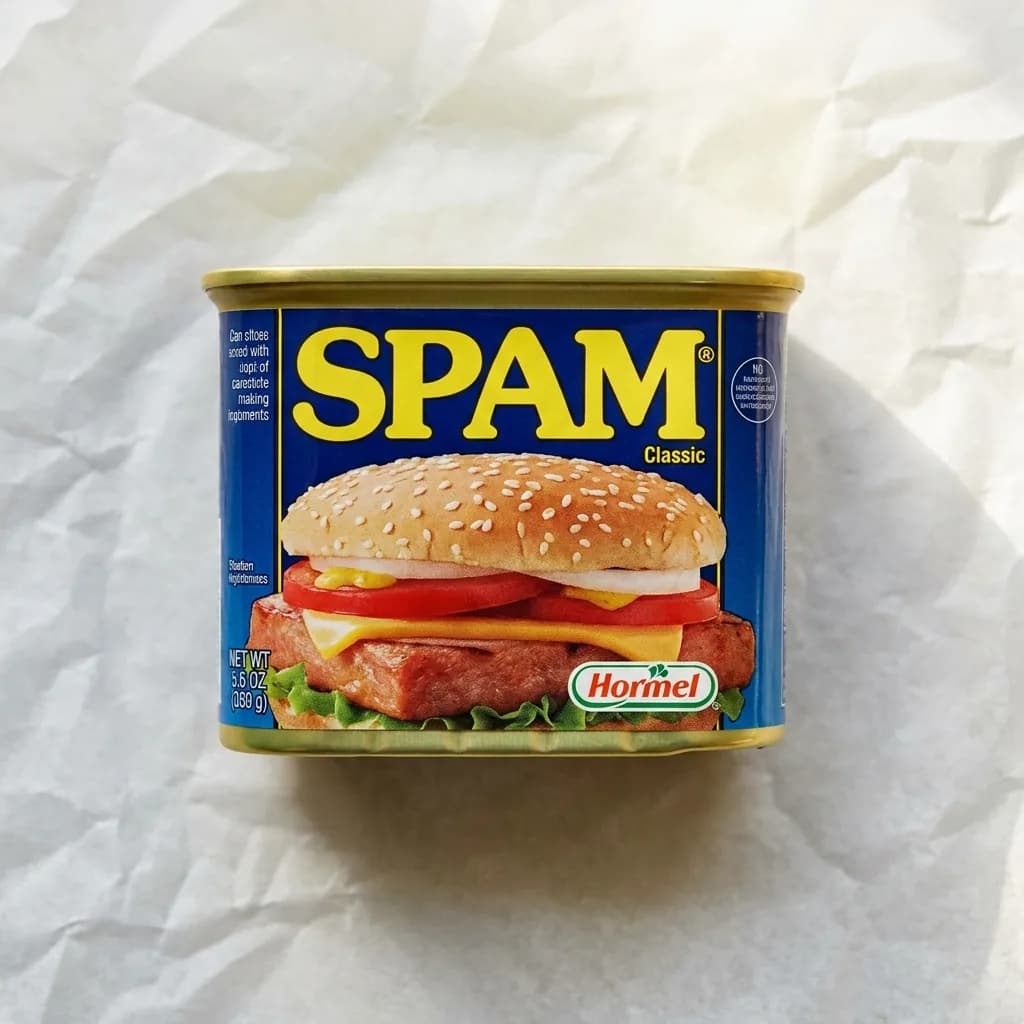
Spam (Canned Pork)
Shelf-stable canned cooked pork; sliced and fried for musubi, fried rice, and breakfast plates.
Spam is a canned precooked product of pork shoulder and ham with salt and seasonings, shelf-stable and ready to eat. Hugely popular in Hawaii, the Philippines, South Korea, and Pacific cuisines, it is sliced and pan-fried until crisp for Spam musubi, fried rice, budae jjigae, and breakfast plates. Its salty, savory flavor and convenience made it a global pantry icon.
Spam is a canned, fully cooked pork product made from pork shoulder and ham blended with salt, sugar, sodium nitrite, and water. The mixture is ground to a fine paste, packed into rectangular cans, and pressure-cooked to a sliceable consistency that holds together yet remains tender. Its defining characteristic is the emulsified fat cap that rises to the top of the can during cooking—this fat renders beautifully in a hot pan and is the secret to achieving a crisp, deeply browned exterior. Because Spam is already fully cooked, it requires only reheating or a quick sear to serve, making it one of the most convenient protein options in the pantry. The flavor is savory, mildly sweet, and salt-forward with a subtle cured-ham complexity from the nitrite cure, creating a taste that complements both Western and Asian preparations equally well.
Spam occupies a unique niche in the kitchen: it is not quite fresh pork, not quite ham, and not quite a sausage. Its smooth, dense texture and consistent sliceability come from the mechanical emulsification of the meat paste, which creates a uniform product without the grain or connective tissue of intact muscle. This texture holds up well to pan-frying without falling apart, yet it also shreds and cubes cleanly for incorporation into rice dishes, stir-fries, and soups. The fat content—approximately 25–31g per 100g—is substantial, and that rendered fat is aromatic and flavorful; seasoned cooks use it as a cooking medium for fried rice or scrambled eggs rather than discarding it.
Spam's cultural significance in Hawaii, Korea, and the Philippines is profound. Hawaii consumes more Spam per capita than any other place on earth—about five cans per person annually—where it appears in breakfast plates, musubi, and fried rice as a comfort food deeply woven into local identity. In the Philippines, Spam is a prized gift item and a staple in holiday feasts. In Korea, it is a ubiquitous soup ingredient and banchan (side dish). Any serious treatment of Spam as an ingredient must acknowledge that it is not merely a convenient protein but a cultural touchstone with its own culinary traditions.
- Measured in
- g
- Storage
- Pantry
Types & varieties
Classic formulation; 25g fat, 790mg sodium per serving
50% less fat; made with turkey and pork
25% less sodium than original; same fat content as original
Infused with teriyaki glaze; the preferred variety for musubi
Seasoned with chorizo spices including paprika and garlic
Filipino-inspired sweet cured style with pineapple and salt
Seasoned with linguiça-inspired spices
Red pepper seasoned for noticeable heat
Hickory-smoked flavor profile
Seasoned with roasted garlic
Contains real cheddar cheese blended in
Individually wrapped slices for single-serving convenience
Why Spam Behaves the Way It Does
The key to Spam's performance in the pan is the fat cap. When you open a can, you will notice a distinct layer of pale fat sitting above the pink meat below. This fat is rendered from the emulsified pork paste during processing and, critically, it has a lower melting point than the meat itself. When you place Spam in a cold pan and bring it to heat gradually, this fat melts first, coating the slice and acting as a frying medium. This is why many cooks insist on starting Spam in a cold pan: it gives the fat time to render and baste the slice from the inside out before the exterior begins to brown. If you drop Spam into a hot pan, the leaner meat proteins firm up too quickly, leading to a tough exterior with less rendered fat and less flavor.
The sodium nitrite in Spam serves two purposes: it preserves the pink color (preventing the gray-brown oxidation that would make it look unappetizing) and it contributes a mild cured-ham flavor that differentiates Spam from plain cooked pork. This is why Spam tastes more complex than simply reheated pork—it has a built-in seasoning system that includes both salt and cure.
- The fat cap on opened Spam is your cooking fat—use it to fry accompaniments
- Starting in a cold pan yields more render and better browning than searing from hot
- The pink color is from sodium nitrite cure; it does not make Spam taste like bacon
Working With Opened Cans
Once opened, Spam should be refrigerated in an airtight container. The exposed surface will dry out and oxidize within a day or two if left uncovered. A standard 12-oz can holds exactly six slices, so you can loosely reassemble the stack in a small container to minimize air contact. Use refrigerated Spam within 10 days for best flavor and texture. If you need only a few slices, pop the entire can into the freezer for 20–30 minutes before opening—the chilled Spam cuts cleanly with a sharp knife and resists crumbling. Once frozen, you cannot reassemble the stack, so freeze before opening only if you will use the whole can or can portion it first.
- Refrigerate opened Spam immediately; use within 10 days
- Freeze unopened can 20–30 minutes before opening for cleaner slices
- Store in airtight container; exposed surface will dry and darken
Common uses
Tips & pitfalls
- Freeze the unopened can 20–30 minutes before opening: cold Spam slices cleanly and resists crumbling when cut
- Score or notch the fat cap before frying: this prevents the slice from curling and allows even browning across the entire surface
- Render fat first, then crisp: start in a cold pan over medium-low to melt the fat, then increase heat to medium-high for the final sear
- Slice thin for maximum crispiness: thinner slices have more exposed surface area, yielding crispier, more caramelized edges
- Don't overcrowd the pan: give each slice space to contact the hot surface; cook in batches if needed
- Drain excess rendered fat for crispier results: blot slices on paper towels after the first flip if frying multiple pieces
- Season after cooking: Spam is already well-salted; add soy sauce, sriracha, or furikake only after tasting
- Double-fry for extra crispy: fry at 325°F for 2 minutes, rest 1 minute, then fry at 375°F for 1 minute until deeply golden
- Grill or broil for musubi: brush teriyaki-variety Spam with additional glaze and broil until caramelized and slightly charred
- Use the rendered fat to cook your rice or eggs: that pork-scented fat is a flavor asset, not a waste product
- Check the expiration date: older cans may develop a tinny or flat flavor even if technically safe to eat
Nutrition
Energy
3397 kJ · per 100 g
Where the calories come from
Protein
2.9g
6% DV
Carbs
0g
0% DV
Fat
88.7g
114% DV
Fiber
0g
0% DV
Sugars
0g
of which
Sodium
11mg
0% DV
Source · USDA FoodData Central · approx. Pork, fresh, backfat, raw
View on FDC →In the shops
Matched grocery products
No matched grocery products for Spam (Canned Pork) yet.
Good to know
- Product Type
- Canned cooked pork shoulder and ham; fully prepared and shelf-stable
- Invented
- 1937 by Geo. A. Hormel & Co., Austin, Minnesota (named from "spiced ham")
- Primary Ingredients
- Pork shoulder, ham, salt, water, sugar, sodium nitrite
- Shelf Life
- 2–5 years unopened; refrigerate after opening and use within 10 days
- Sodium Content
- Original: ~790mg per 2-oz serving (34% daily value); lower-sodium varieties available
- Fat Content
- ~25–31g per 100g; rendered fat separates to top of can when opened
- Serving Size
- 12-oz can holds 6 stacked slices; one serving is 2 oz (about 3 slices)
- Global Reach
- Over 15 billion cans sold since 1937; highest per-capita consumption in Hawaii (5 cans/person/year)
Substitutes
- Diced cooked ham — Similar savory-pork flavor but lacks Spam's specific texture and seasoning blend; reduce additional salt if using
- Bacon — Can achieve similar crisp texture in fried rice or sandwiches; much higher fat content; slice rasher-size for comparable results
- Other canned luncheon meat (Topy, Picnic, etc.) — Comparable flavor and sliceable texture; similar sodium levels and cooking behavior
- Diced smoked sausage (linguiça, chorizo, andouille) — Give similar smoky, savory punch; pan-fry until browned before incorporating
- Smoked tofu (firm, pressed) — For vegetarian dishes; press well, marinate in soy sauce, and pan-fry until crispy for textural mimicry
- Diced cooked chicken breast — For lower-fat applications; season well with salt and a touch of liquid smoke to approximate
Pairs with
Also called
Canned Pork · Luncheon Meat
Appears in these dishes
Related

Egg
The kitchen's everything ingredient — bind, leaven, enrich, or fry

Chicken Breast
Lean, quick-cooking white meat for everyday dinners

Ground Beef
Versatile minced beef for burgers, ragù, tacos, and meatballs

Pork Loin
Lean, tender roasting cut that stays juicy with care

Salmon
Rich, rosy fish that roasts, grills, or cures beautifully

Egg White
Pure protein that whips to airy peaks for meringue and more

Egg Yolk
Rich, golden yolk for custards, mayonnaise, and pasta

Quail Egg
Tiny, speckled eggs for garnishing and elegant bites