 French
Medium · Hot
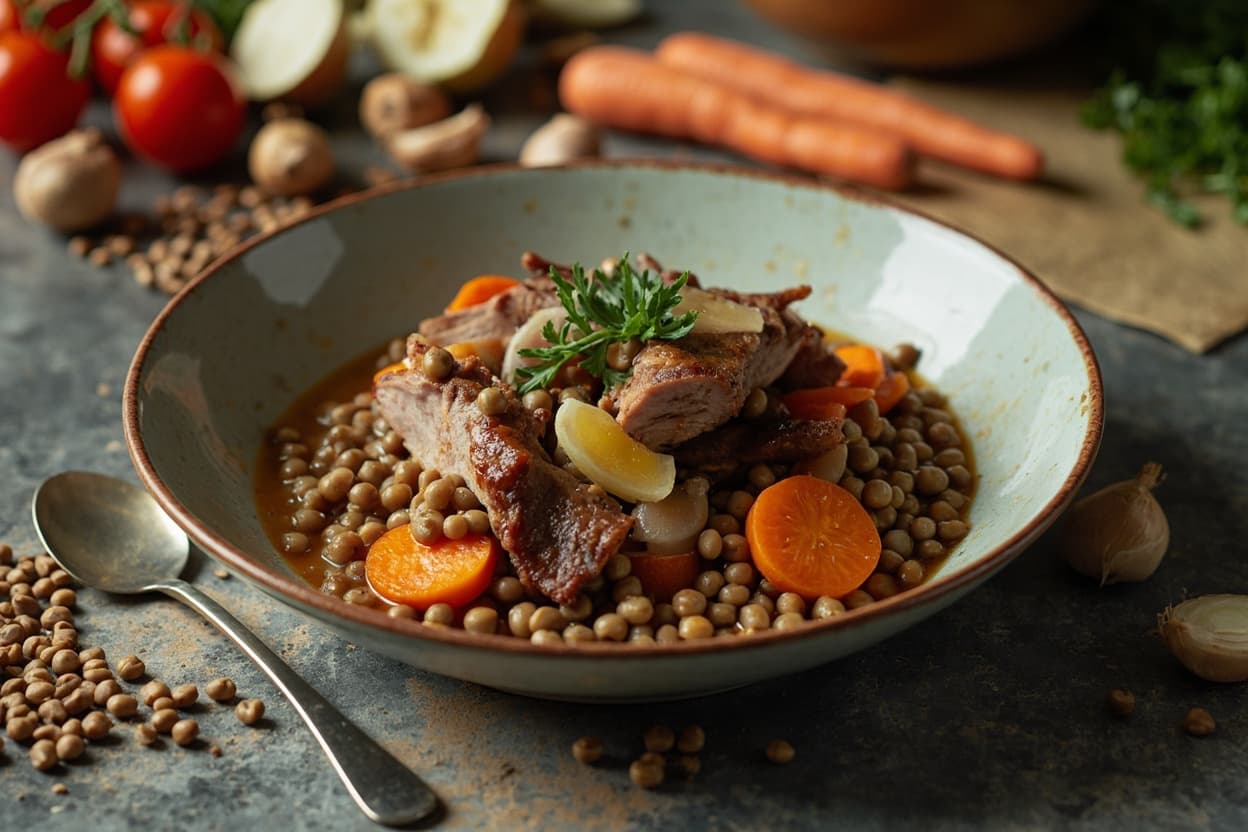
Estouffade of Pork Belly and Lentils
Slow-coaxed pork belly turns yielding and fragrant alongside earthy lentils, sweet carrot, and onion in a braise built on nothing more than thyme and garlic. It is exactly the sort of unhurried, wholesome pot that proves allergen-free cooking never has to mean flavour-free — just honest, well-seasoned ingredients doing their quiet work.

Prep
15 min
Cook
40 min
Rest
5 min
Total
1h
Method
Season and Sear the Pork
1
Combine salt, smoked paprika, and black pepper. Pat the pork belly cubes dry and toss them in the spice mixture until evenly coated.
2
Heat olive oil in a large, heavy-bottomed saucepan or Dutch oven over medium-high heat. When the oil shimmers, add the seasoned pork belly pieces in a single layer. Sear undisturbed for 3 to 4 minutes per side until deeply golden brown on at least two sides. Work in batches if needed to avoid crowding. Transfer seared pork to a plate and set aside.
Build the Soffritto and Braise
3
In the same pan with the pork drippings, add the diced yellow onion, carrot, and celery. Reduce heat to medium and cook, stirring occasionally, for 8 to 10 minutes until the vegetables are soft and lightly caramelized.
4
Add the minced garlic and cook for 1 minute until fragrant. Stir in the tomato sauce and cook for 2 minutes, letting it deepen slightly.
5
Pour in the red wine vinegar and scrape up any browned bits from the bottom of the pan. This deglaze adds wonderful complexity.
6
Return the seared pork belly to the pan. Add the rinsed lentils, water, and thyme sprigs. Stir everything together and bring to a gentle simmer.
Simmer Until Tender
7
Reduce heat to low, cover the pan, and let the estouffade simmer for 30 to 35 minutes, or until the pork belly is fork-tender and the lentils are cooked through but still holding their shape. Stir the mixture occasionally and check that there is enough liquid — add a splash of water if it appears dry.
8
Taste and adjust seasoning with additional salt and black pepper as needed. Remove the thyme sprigs.
Finish and Serve
9
Scatter the chopped parsley over the estouffade and fold it in gently. Let the dish rest for 5 minutes off the heat to allow the flavors to meld.
10
Ladle into wide, shallow bowls and serve warm. This estouffade is wonderful alongside white rice or crusty gluten-free bread.
B
Nutri-Score
Good balance
A–E · lower is better · score 2
Calories
908
per serving
Source of protein · 30gLow sugar · 8g
Protein
30g
Carbs
62g
Fat
61g
Sat. fat
17g
Fiber
8g
Sugar
8g
Sodium
1340mg
Nut FreeDiabetes FriendlyHeart HealthyAnti InflammatoryLow SodiumHigh ProteinBalanced MacrosLow Processed Sugar
Nutri-Score is a general nutritional-balance guide, not medical or dietary advice.
C
Environmental impact
Moderate impact
A–E · lower is better · includes estimates
kg CO2e
1.6
per serving
CCarbonAEU all-round· carbon sets the grade
Water
0.6m³
Land
57Pt
Runoff
0.1g P
Pork Belly, cubed drives 77% of this recipe’s estimated footprint.
Carbon from Poore & Nemecek 2018; water, land & runoff from Agribalyse — modelled averages for comparing recipes, not a measurement of your groceries.
Flavor Profile
7
Umami
3
Sweet
5
Salty
3
Sour
1
Bitter
3
Spicy
Textures
TenderCreamySoftRich
Aromas
HerbalSmokySavoryTomato
Kitchen Equipment
Primary Tool
Dutch OvenCounter FootprintMedium
Safety & Storage
Cooking Temperature
Pork belly must reach an internal temperature of 145°F (63°C) followed by a 3-minute rest. Use a meat thermometer to verify doneness, especially since the long braise can mask undercooking.
High Risk Population
This dish contains celery. Individuals with celery allergy should avoid this recipe entirely. Those with sulfite sensitivity should note that red wine vinegar may contain sulfites.
Cross Contamination
If cooking for allergen-sensitive individuals, use dedicated cutting boards and utensils that have not contacted other allergens. Clean all surfaces with soap and water between ingredient preparations.
Storage
Refrigerate leftovers within 2 hours of cooking in airtight containers. Consume within 3-4 days. Reheat leftovers to 165°F (74°C) until steaming hot throughout.
Handling
Work with raw pork belly on a clean surface and wash hands thoroughly with soap before and after handling. Pat pork dry before searing to achieve proper browning and reduce splatter risk.
Equipment Safety
Use oven mitts when handling the Dutch oven during and after cooking, as the vessel retains significant heat. When deglazing with vinegar, stand back to avoid steam burns from the rapid vapor release.
Pro Tips
Technique
That first sear is everything—don't rush it. Getting that deep golden crust on the pork belly creates the flavor foundation for the entire dish, so make sure your pan is properly hot before adding the meat.
Substitution
If you want to swap the lentils, white beans or chickpeas work beautifully here too. Just adjust your cooking liquid slightly since different legumes absorb at different rates.
Flavor Boost
The red wine vinegar deglaze isn't optional—it's essential. Those caramelized bits on the bottom of the pan are pure flavor gold, and the acid brightens the whole dish beautifully.
Storage
This estouffade actually tastes better the next day as the flavors continue to develop. Store it in an airtight container in the refrigerator for up to 4 days.
From the chef
This estouffade is everything a slow braise should be — pork belly cubed and seared until deeply golden, then nestled with lentils, carrot, celery, and thyme and left to simmer until the pot fills with that particular warmth only a long, unhurried cook produces. The red wine vinegar deglaze lifts every browned bit into the sauce and keeps the whole thing bright. Every ingredient here is exactly what it says it is: honest, well-seasoned, and free from every top allergen. Ladle it into wide bowls over rice and let it speak for itself.
TagsProvençAlSlow Braised
AllergensCelerySulfites
Source: generated · May 30, 2026