 Mexican
Medium · Hot
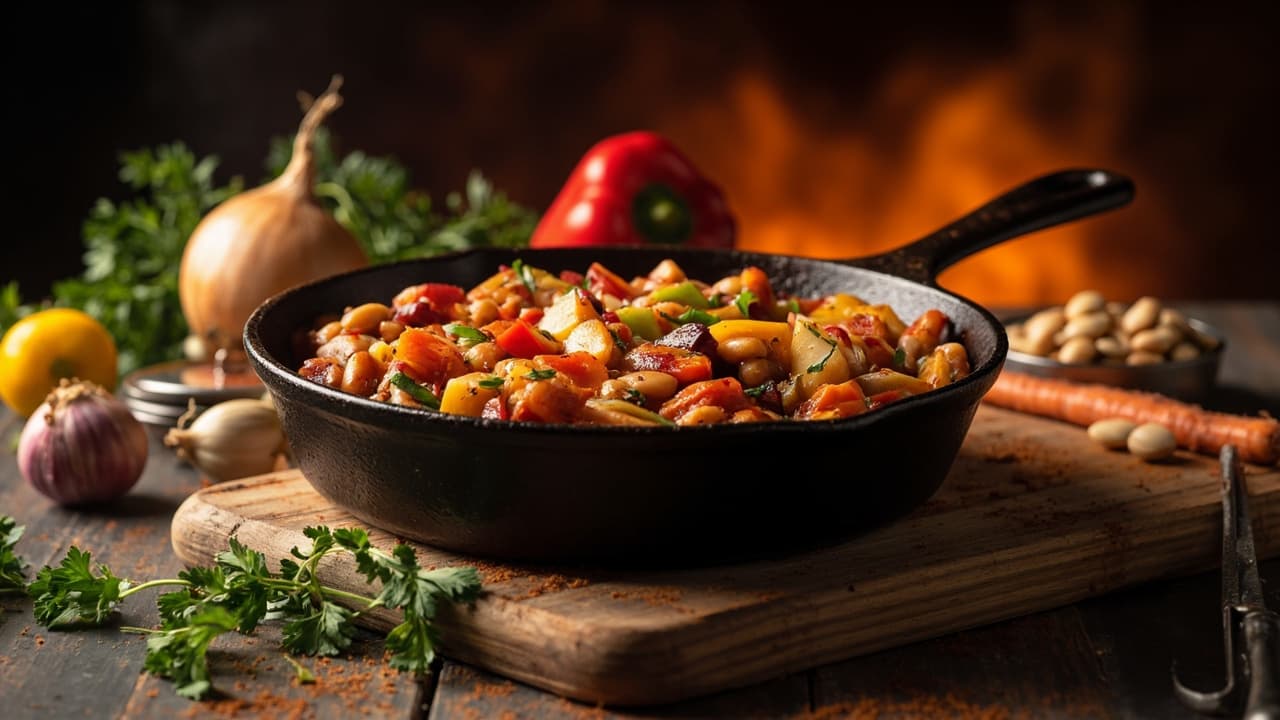
Pinto Bean and Vegetable Skillet with Paprika Oil
A hearty skillet of creamy pinto beans simmered with colorful vegetables, finished with a warm paprika-infused oil that lends a smoky depth reminiscent of the hearth.
Prep
15 min
Cook
30 min
Total
45 min
Method
1
Drain and rinse the pinto beans. Dice the onion, slice the bell pepper into strips, chop the carrots into half-moons, cube the zucchini, and chop the tomatoes.
3
In a small saucepan over low heat, combine the olive oil, minced garlic, smoked paprika, and paprika. Swirl gently for 2-3 minutes until the oil is fragrant and tinted a deep amber hue. Remove from heat immediately to prevent burning.
4
5
Add the bell pepper and carrot to the skillet. Cook for 5-6 minutes, stirring occasionally, until the vegetables begin to caramelize at the edges.
6
Stir in the zucchini and chopped tomatoes. Season with salt, black pepper, and cumin. Cook for another 3-4 minutes until the tomatoes break down into a light sauce.
7
Add the pinto beans to the skillet, stirring gently to combine. Reduce heat to medium-low and simmer for 8-10 minutes, allowing the flavors to meld and the beans to absorb the paprika oil.
8
Scatter the shredded cheddar cheese over the top of the skillet. Cover for 2 minutes to let the cheese melt into a golden, gooey layer.
Grade pending
Nutri-Score
Estimated nutrition
Grade pending · 100% ingredient coverage
Calories
359
per serving
Protein
13g
Carbs
46g
Fat
15g
Sat. fat
2g
Fiber
12g
Sugar
8g
Sodium
879mg
Gluten FreeVegetarianDiabetesHeart HealthyHigh CholesterolHigh FiberPlant Based
Nutri-Score is a general nutritional-balance guide, not medical or dietary advice.
Grade pending
Environmental impact
Estimated footprint
Grade pending · 100% ingredient coverage
kg CO2e
0.4
per serving
Water
0.5m³
Runoff
0.04g P
Tomato drives 34% of this recipe’s estimated footprint.
Carbon from Poore & Nemecek 2018; water, land & runoff from Agribalyse — modelled averages for comparing recipes, not a measurement of your groceries.
Flavor Profile
7
Umami
4
Sweet
5
Salty
2
Sour
1
Bitter
3
Spicy
Textures
CreamyCrispyTender
Aromas
HerbalPungentSavorySmoky
Kitchen Equipment
Primary Tool
Large Cast Iron SkilletLarge Cast Iron SkilletSmall SaucepanChef KnifeColanderCutting BoardMeasuring SpoonsMixing BowlPaper TowelsTongs
Safety & Storage
Cooking Temperature
Heat paprika oil over low heat only until fragrant (2-3 minutes). Remove immediately to prevent garlic from burning and oil from reaching smoke point.
Cross Contamination
Use separate cutting boards for fresh vegetables and cheese to prevent cross-contamination. Wash all utensils thoroughly between uses.
Storage
Refrigerate leftovers within 2 hours in airtight containers. The dairy content (cheese) makes proper cold storage essential.
Shelf Life
Consume refrigerated leftovers within 3-4 days. Discard if left at room temperature for more than 2 hours.
High Risk Population
For young children, elderly, pregnant individuals, or immunocompromised persons: ensure beans are heated to minimum 165°F throughout before consumption.
Handling
Use dry oven mitts or towels when handling cast iron skillets. Wet or damp materials can cause steam burns when contacting hot cast iron.
Allergen Warning
This recipe contains milk (from cheddar cheese). Verify all diners have no dairy allergies or lactose intolerance before serving.
Pro Tips
Technique
The paprika oil is the soul of this dish—let it whisper over low heat, not sing. You want to see it turn a deep amber and smell that earthy smoke before you pull it. Like tending a fire, patience rewards you here.
Substitution
If you have dried beans instead of canned, use them—there's a depth that canned cannot match. Soak them overnight, then simmer them in the skillet after the vegetables have softened, giving them time to drink in all that smoky oil.
From the chef
The paprika oil is where this skillet begins and ends — garlic, smoked paprika, and sweet paprika warmed slowly in olive oil until the oil turns deep amber and the kitchen fills with the smell of something close to a hearthside fire. That infusion goes into the cast iron first, then the vegetables follow in order of hardness: onion, bell pepper, carrot, then zucchini and tomato until they break down into a light sauce. Pinto beans simmer into all of it, absorbing the smoke and spice. Melted cheddar on top, a scattering of fresh parsley, and the whole skillet comes to the table still warm from the fire.
TagsOne PotSkilletWeeknight DinnerSmokyVegetarianBeansHigh FiberComfort Food
AllergensMilk
Source: generated · June 12, 2026