 Spanish
Medium · Hot
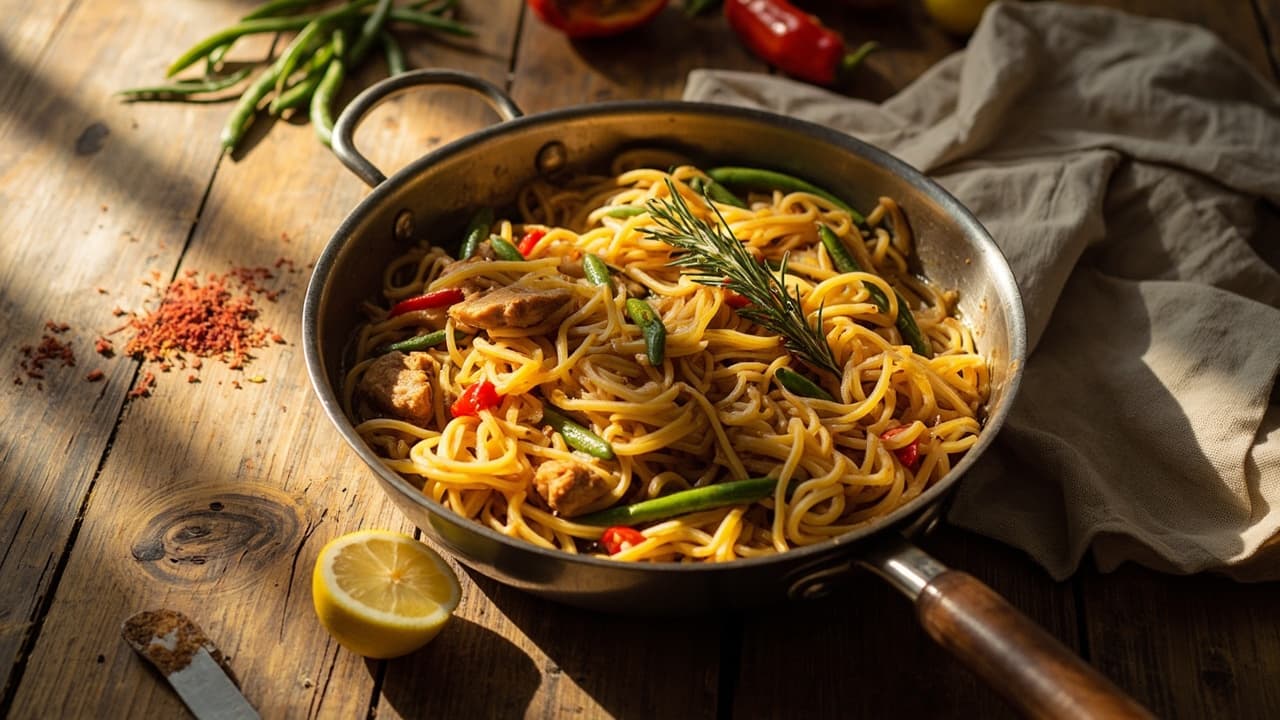
Saffron Fideuà with Chicken, Green Beans and Bell Pepper
A Valencian take on fideuà — toasted pasta threads in a saffron-stained broth with tender chicken, crisp green beans and sweet bell pepper. The socarrat is the prize.
Prep
15 min
Cook
30 min
Rest
5 min
Total
50 min
Method
Preparation
1
Cut spaghetti into 3-4 cm lengths. Bloom saffron in half a cup of warm chicken broth for 10 minutes. Cut green beans into 3 cm pieces. Slice bell pepper into thin strips. Cut chicken thighs into 3-4 cm chunks.
Building the Sofrito
2
Heat olive oil in a wide paella pan or heavy skillet over medium-high heat. Add chicken pieces and brown on all sides, about 5 minutes. Remove and set aside.
The Fideuà
4
Return chicken to the pan. Add green beans and bell pepper strips, tossing to coat in the sofrito.
5
6
Scatter the broken spaghetti over the surface — do not stir! Spread evenly. Nestle rosemary sprigs on top.
7
Cook over medium heat for 10-12 minutes until noodles are al dente and liquid is nearly absorbed. Gently shake the pan occasionally to prevent sticking.
The Socarrat
8
Increase heat to medium-high for the final 3-4 minutes. Listen for the sizzle — this is the socarrat forming. Resist the urge to stir. When you smell a toasty, nutty aroma and hear gentle crackling, remove from heat.
9
Cover with foil and rest for 5 minutes. Serve directly from the pan with lemon wedges on the side.
A
Nutri-Score
Excellent balance
A–E · lower is better · score -2
Calories
791
per serving
High in protein · 47gLow sugar · 7gLow saturated fat · 6g
Protein
47g
Carbs
85g
Fat
29g
Sat. fat
6g
Fiber
7g
Sugar
7g
Sodium
709mg
MediterraneanBalancedHeart HealthyGeneral WellnessHigh ProteinLow Processed Food
Nutri-Score is a general nutritional-balance guide, not medical or dietary advice.
C
Environmental impact
Moderate impact
A–E · lower is better · includes estimates
kg CO2e
1.5
per serving
CCarbonAEU all-round· carbon sets the grade
Water
0.8m³
Land
73Pt
Runoff
0.2g P
Chicken Thigh drives 73% of this recipe’s estimated footprint.
Carbon from Poore & Nemecek 2018; water, land & runoff from Agribalyse — modelled averages for comparing recipes, not a measurement of your groceries.
Flavor Profile
7
Umami
5
Sweet
5
Salty
2
Sour
1
Bitter
3
Spicy
Textures
CrispyTenderAl DenteJammy
Aromas
SaffronHerbalSmokyGarlickyTomato
Kitchen Equipment
Primary Tool
Paella PanPaella PanStockpotChef KnifeCutting BoardTongsWooden SpoonMeasuring SpoonsMeasuring CupsAluminum FoilLemon Wedge
Counter FootprintMedium
Safety & Storage
Cooking Temperature
The socarrat formation requires increasing heat to medium-high for 3-4 minutes. Monitor carefully to prevent burning while achieving the desired toasted crust. Remove from heat immediately when a toasty, nutty aroma signals the crust is ready.
Handling
Raw chicken thighs must be handled with clean utensils and separate cutting boards. Wash hands thoroughly with soap for 20 seconds before and after handling raw poultry. Do not reuse cutting boards or utensils used for raw chicken without proper sanitization.
Cross Contamination
If this dish is prepared in a facility or kitchen that also handles wheat-containing products, cross-contact with gluten is possible. Use dedicated equipment or thoroughly clean all surfaces, utensils, and pans before preparing if cooking for someone with celiac disease or gluten sensitivity.
High Risk Population
Chicken must reach an internal temperature of 165°F (74°C) before consumption. Immunocompromised individuals, pregnant women, young children, and elderly persons are at higher risk from undercooked poultry. Use a calibrated food thermometer to verify doneness.
Storage
Leftover fideuà must be refrigerated within 2 hours of cooking and stored in airtight containers. Consume within 3-4 days. Reheat leftovers to 165°F (74°C) before serving. The socarrat crust may soften during storage.
Equipment Safety
When increasing heat for the socarrat step, use oven mitts or heat-resistant gloves. The pan handle and edges will be extremely hot. Do not leave unattended during the high-heat phase.
Pro Tips
Technique
Never stir the noodles once they touch the broth — this is not risotto, and the socarrat only forms when the pasta makes peace with the hot pan. Let gravity and patience do their work.
The bloom is sacred: dissolve your saffron in half a cup of warm (not boiling) broth for at least 10 minutes. Cold broth or instant saffron will give you color without soul.
Substitution
If saffron threads are precious, a pinch of turmeric bloomed in warm broth gives you the golden color, though I recommend you seek the real thing — it is not a spice, it is a memory.
Equipment
Use the widest pan you own — a paella pan is ideal, but a heavy cast iron skillet works beautifully. The surface area matters more than the depth.
From the chef
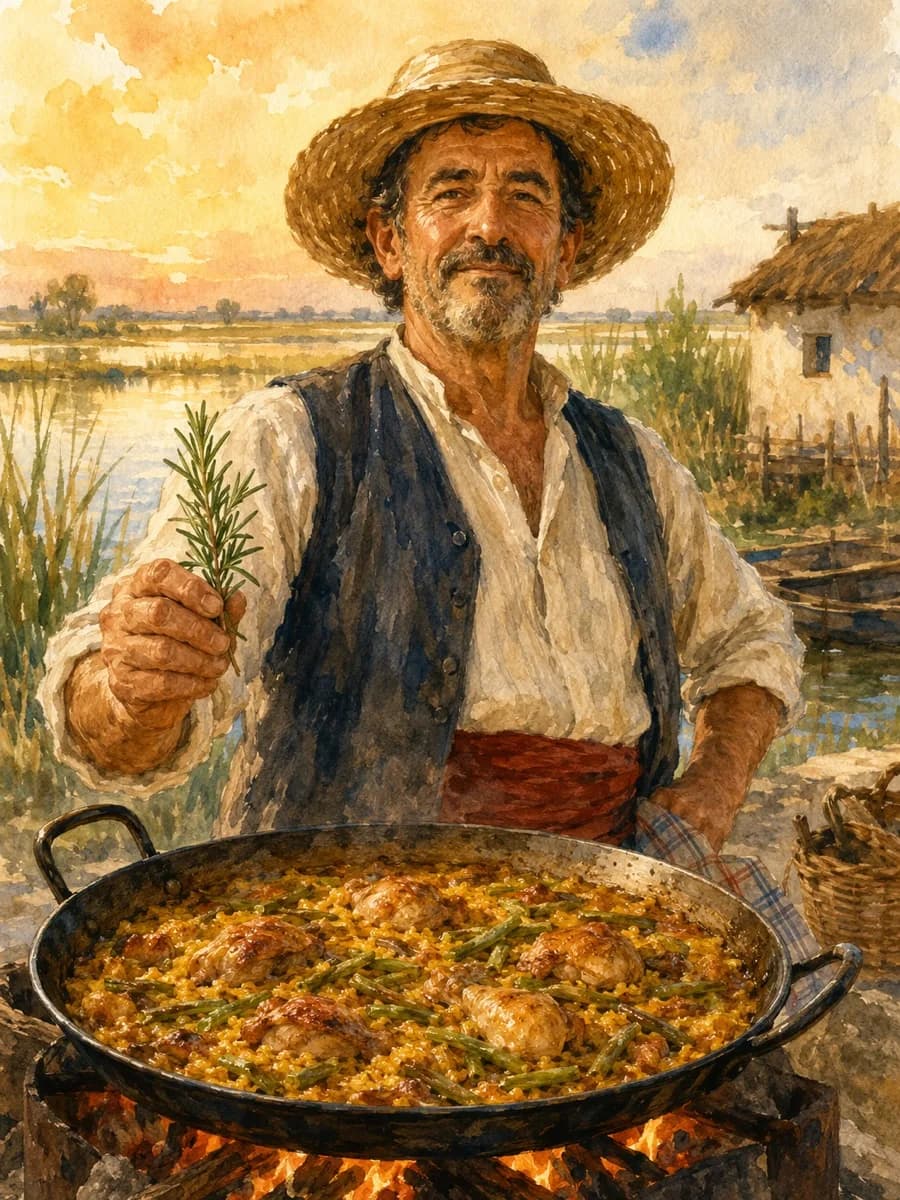
In El Palmar, my grandfather would say that the pan speaks to those who listen. This fideuà carries his voice — the saffron blooms deep as the Albufera at sunset, the sofrito slow-cooked until it remembers the summer tomatoes from his garden, and when that socarrat begins to whisper, you will know the dish has forgiven you for not being in Valencia with me by the fire.
TagsFideuaSocarratSaffronChickenGreen BeansBell PepperSofritoTraditionalValencian
AllergensWheatGluten
Source: generated · June 10, 2026