 German
Medium · Hot
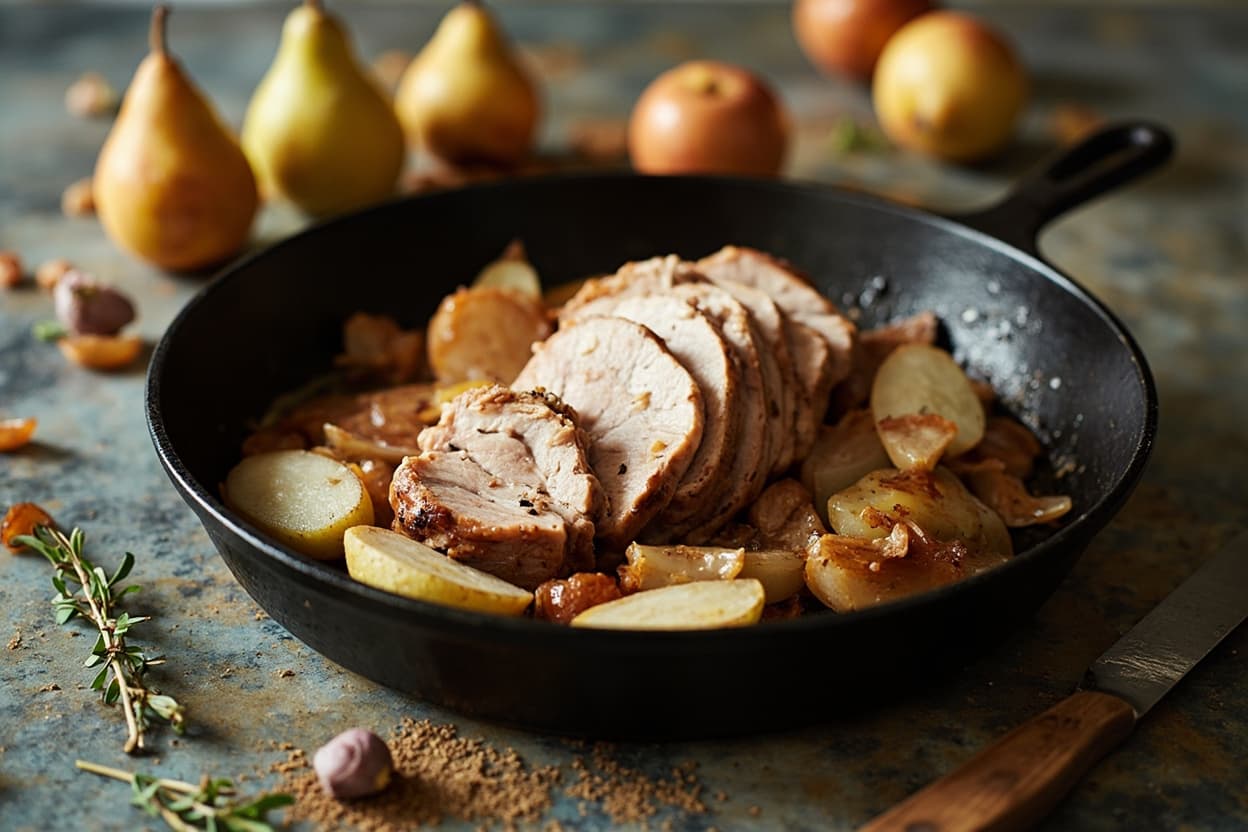
Pork Loin, Pear and Onion Traybake
Pork loin scored and spread with mustard, nestled into a tray with wedges of pear and onion that soften and catch at the edges as the oven heat concentrates them. Thyme works through the whole tray in the last minutes, tying the fruit sweetness and the savory fat together. One tray, no complications, good food.

Prep
15 min
Cook
30 min
Rest
10 min
Total
55 min
Method
Prep
1
Preheat your oven to 190°C (375°F). Pat the pork loin dry with paper towels and season generously with salt and black pepper on all sides.
2
Halve the pears, remove the cores, and cut each half into three wedges. Peel and halve the yellow onions, then cut each half into three wedges.
Sear
4
Heat a large oven-safe cast-iron skillet or frying pan over high heat. Add 2 tablespoons of olive oil and 20 grams of butter.
5
When the fat is hot and shimmering, sear the pork loin for 2-3 minutes per side until a deep golden crust forms. Do not crowd the pan.
Roast
6
7
8
Remove the skillet from the oven. Transfer the pork to a cutting board and rest for 8-10 minutes under loose foil.
Finish
9
While the pork rests, place the skillet back on the stovetop over medium heat. Stir in the mustard and let the pan juices reduce for 2-3 minutes, scraping up any browned bits from the bottom.
10
Slice the rested pork into medallions. Arrange the pork and roasted pears and onions on a warmed platter, spoon the mustard pan sauce over the top, and serve immediately.
A
Nutri-Score
Excellent balance
A–E · lower is better · score -1
Calories
458
per serving
High in protein · 33gLow sugar · 12g
Protein
33g
Carbs
20g
Fat
28g
Sat. fat
11g
Fiber
4g
Sugar
12g
Sodium
768mg
High ProteinLow CarbBalanced Meal
Nutri-Score is a general nutritional-balance guide, not medical or dietary advice.
D
Environmental impact
High impact
A–E · lower is better · includes estimates
kg CO2e
2.2
per serving
DCarbonAEU all-round· carbon sets the grade
Water
0.8m³
Land
68Pt
Runoff
0.2g P
Pork Loin drives 84% of this recipe’s estimated footprint.
Carbon from Poore & Nemecek 2018; water, land & runoff from Agribalyse — modelled averages for comparing recipes, not a measurement of your groceries.
Flavor Profile
6
Umami
4
Sweet
5
Salty
3
Sour
1
Bitter
3
Spicy
Textures
CrispyTenderSoft
Aromas
HerbalSmokyCaramelized
Kitchen Equipment
Primary Tool
Cast Iron SkilletCast Iron SkilletOvenChef KnifeCutting BoardTongsInstant Read ThermometerPastry BrushPaper TowelsAluminum Foil
Counter FootprintMedium
Techniques
Safety & Storage
Cooking Temperature
Pork loin must reach internal temperature of 63°C (145°F) throughout. Use a calibrated meat thermometer inserted into the thickest part to verify doneness before consumption.
Handling
Hot cast-iron skillet poses burn risk when moving from oven to stovetop. Use dry pot holders and ensure the skillet handle is facing away from your body when transferring.
Cross Contamination
Raw pork juices in the skillet can contaminate other foods. After searing, avoid placing other ingredients directly in unwashed pan until after roasting, and wash the skillet thoroughly before reuse with other foods.
Storage
Leftover pork medallions with pears and onions must be refrigerated within 2 hours of cooking. Store in airtight containers and consume within 3-4 days. Reheat leftovers to 74°C (165°F) before eating.
High Risk Population
Pork should be cooked thoroughly for pregnant individuals, elderly, young children, and immunocompromised persons. Avoid serving pork that is pink or undercooked in the center.
Allergen Warning
This dish contains milk (butter) and mustard. Individuals with allergies to these ingredients should avoid consumption or substitute accordingly.
Allow pork to rest 8-10 minutes after roasting before slicing. Cutting too soon will release juices, resulting in dry meat. Loosely tent with foil during resting to maintain warmth without trapping steam that makes the crust soggy.
Pro Tips
Technique
Pat the pork loin completely dry before searing — any moisture is the enemy of a deep, golden crust. A hot cast-iron and patience for those first few minutes is what separates a proper sear from a pale, steamed exterior.
Substitution
If you don't have fresh rosemary, use 1 teaspoon of dried; and swap thyme for sage if you prefer a more herbal, wintery note. The mustard pan sauce works with either combination.
From the chef
My Oma used to say the best traybake tells you autumn arrived the moment you open the oven door — and this one delivers exactly that. The pears and onions caramelize while the pork rests, their sweetness cutting through the richness in a way that feels almost effortless. It's the kind of dish that makes you look competent without showing off, and that balance is everything in a proper Gasthaus kitchen.
TagsTraybakePorkOne PanMustard SauceOven Roasted
AllergensMilkMustard
Source: generated · May 30, 2026