 Persian
Medium · Hot
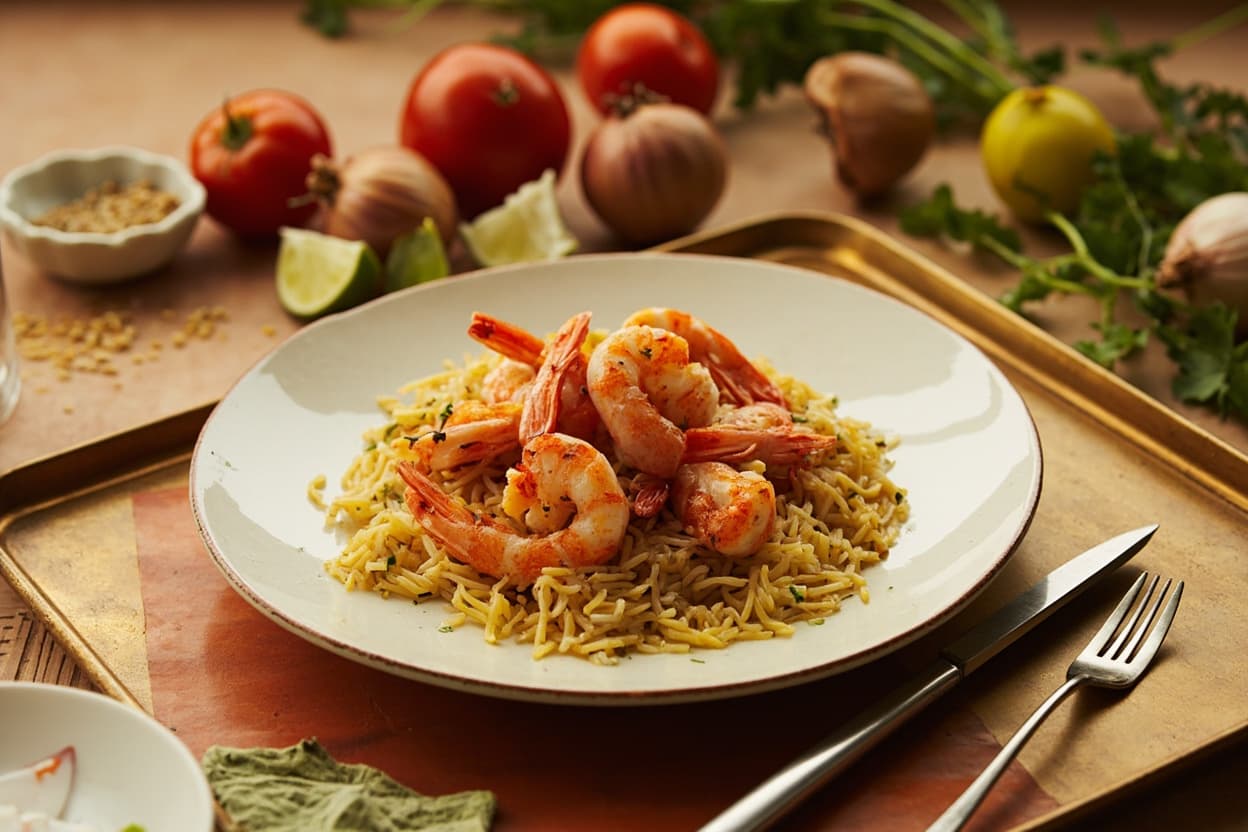
Bandari Shrimp with Saffron and Herb Rice
Turmeric-golden shrimp are sautéed until their edges curl and deepen, perfumed with lime and fresh cilantro that still tastes of the sea. Below them, saffron-tinted basmati exhales its steam slowly, each grain separate and fragrant with the coastal warmth of Bandar Abbas. This is southern Iranian cooking at its most honest — sun-drenched, herb-loud, and generous.

Prep
45 min
Cook
35 min
Rest
5 min
Total
1h 25m
Method
Bloom the Saffron
1
Crush the 1/4 teaspoon saffron threads between your fingers and steep in 2 tablespoons of hot water. Let it rest like a secret, unlocking its golden perfume for at least 10 minutes.
Prepare the Rice
2
Rinse the basmati rice in cold water until the water runs clear. Soak in salted water for 30 minutes to coax each grain to length and patience.
3
Bring a large pot of water to a boil. Drain the soaked rice and parboil for 5-7 minutes, tasting a grain — it should be tender but with a firm heart. Drain immediately.
Season and Cook the Shrimp
4
Build the Saffron Rice with Tahdig
6
Mix 1/3 of the parboiled rice with the bloomed saffron water, stirring gently so the golden threads paint each grain. Reserve the rest of the rice.
7
8
Wrap the lid in a clean kitchen towel and steam over lowest heat for 25-30 minutes. This is the meditation, the waiting, the crust forming.
Gently Steam the Rice
Rest and Unveil the Tahdig
10
Remove from heat and let the rice rest, covered, for 5 minutes. This is the pause before revelation.
11
Fold a serving platter with a clean cloth and invert the pot with a gentle prayer. Lift slowly, and watch the golden tahdig reveal itself like a sunrise.
Plate and Serve
12
13
Serve alongside a cooling bowl of plain yogurt — a counterpoint of freshness to the warmth and spice.
C
Nutri-Score
Fair balance
A–E · lower is better · score 4
Calories
759
per serving
High in protein · 48gLow sugar · 4g
Protein
48g
Carbs
103g
Fat
18g
Sat. fat
9g
Fiber
4g
Sugar
4g
Sodium
2212mg
Gluten FreeDairy FreeHeart HealthyAnti InflammatoryDiabetes FriendlyHigh ProteinWhole Foods
Nutri-Score is a general nutritional-balance guide, not medical or dietary advice.
E
Environmental impact
Very high impact
A–E · lower is better · includes estimates
kg CO2e
4.2
per serving
ECarbonBEU all-round· carbon sets the grade
Water
24m³
Land
54Pt
Runoff
1.1g P
shrimp drives 80% of this recipe’s estimated footprint.
Carbon from Poore & Nemecek 2018; water, land & runoff from Agribalyse — modelled averages for comparing recipes, not a measurement of your groceries.
Flavor Profile
7
Umami
3
Sweet
5
Salty
4
Sour
1
Bitter
3
Spicy
Textures
CrispyTenderSilkyCreamy
Aromas
HerbalFloralNuttyPungent
Kitchen Equipment
Techniques
Safety & Storage
Cross Contamination
Raw shrimp juices can contaminate other ingredients. Use separate cutting boards and utensils. Clean surfaces with hot soapy water after handling raw shrimp.
Cooking Temperature
Shrimp must reach an internal temperature of 145°F (63°C) to be safe. Cook 2 minutes per side until pink and curled. Undercooked shellfish poses serious foodborne illness risk.
High Risk Population
Shellfish is particularly dangerous for pregnant women, elderly, young children, and immunocompromised individuals. Ensure complete cooking and avoid raw or undercooked preparations.
Storage
Cooked rice with herbs has a limited shelf life of 2 hours at room temperature. Refrigerate within 2 hours at 40°F (4°C) or below. Reheat to 165°F (74°C) before consuming leftovers.
Handling
Thaw frozen shrimp in the refrigerator overnight or under cold running water. Never thaw at room temperature as this allows bacterial growth in the danger zone.
Equipment Safety
When steaming rice with a cloth-wrapped lid, use oven mitts. The escaping steam and lid can cause severe burns. Place pot on a stable surface away from edge.
Pro Tips
Technique
The secret to a perfect tahdig is low heat and patience. After layering your rice, resist the urge to lift the lid for at least 25 minutes. The crust forms in the quiet moments when you trust the process.
Substitution
If basmati rice is unavailable, long-grain jasmine rice makes a worthy substitute, though the tahdig may be less pronounced.
Equipment
A heavy-bottomed pot with a thick base is essential for even heat distribution and achieving that coveted golden crust.
From the chef
This dish carries the soul of Iran's southern ports — where Bandari cooks first taught me that spice need not shout to be heard. The shrimp arrive at the table like old friends, draped in turmeric and the memory of sea wind, while beneath them rests a rice that has learned patience from my grandmother's hands. When you cut through that golden tahdig crust and the saffron perfume rises to meet you, you will understand why I say a Persian table is an act of love made visible.
TagsPersianSeafoodShrimpSaffronTahdigHerbaceousAromatic
AllergensShellfishMilk
Source: generated · May 30, 2026