 American
Medium · Hot
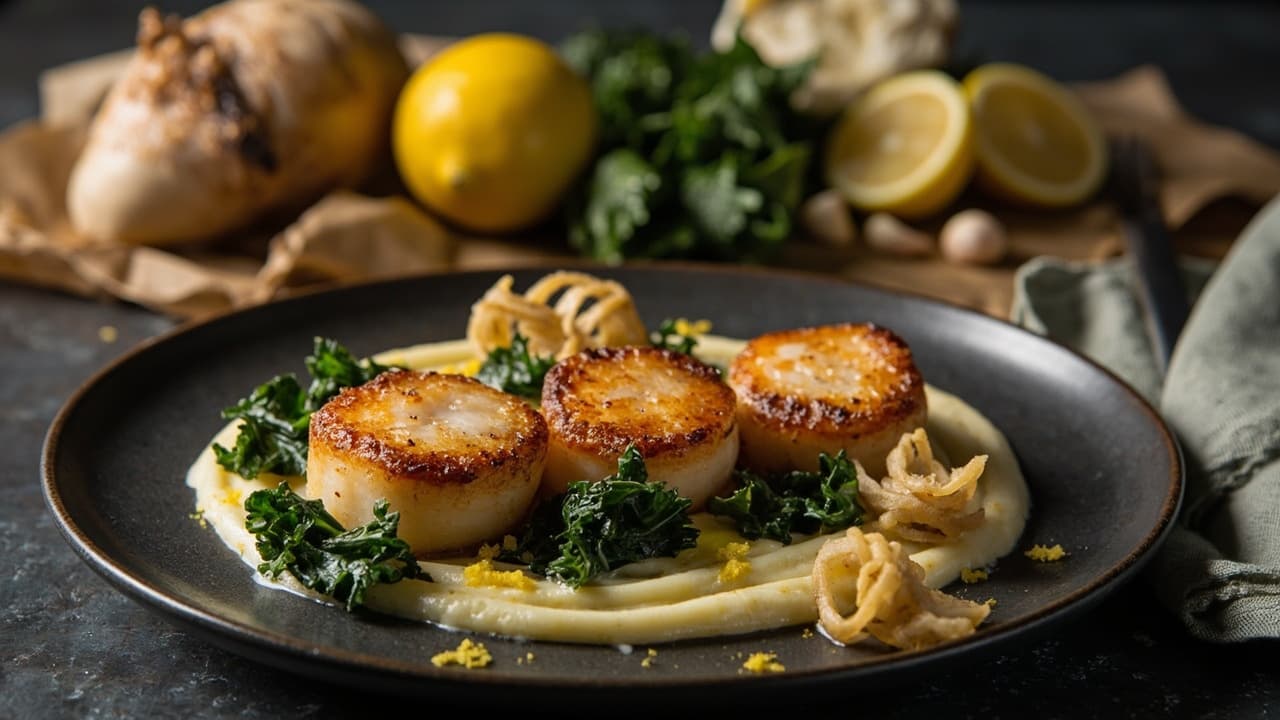
Seared Scallop with Crispy Kale and Turnip
Delicate scallops seared to a golden crust, resting atop a silky turnip puree with crisp curls of roasted kale, finished with a whisper of lemon and high-heat oil.
Prep
15 min
Cook
30 min
Total
45 min
Method
1
Pat the scallops completely dry with paper towels; any moisture prevents proper browning. Season both flat sides with salt and black pepper. Set aside at room temperature for 10 minutes.
2
3
Reduce to a gentle simmer and cook until fork-tender, 18-20 minutes. Drain thoroughly, reserving 2 tablespoons of cooking liquid.
4
Return turnip to the hot pan with 30g butter, white pepper, and the reserved cooking liquid. Mash or blend until silky smooth. Keep warm off the heat.
5
6
Spread in a single layer on a baking sheet. Roast for 8-10 minutes until edges are crispy and darkened but not burnt. Remove and set aside.
7
Place a heavy skillet over the highest heat your stove allows. Add 2 tablespoons olive oil and heat until it shimmers and just begins to smoke, approximately 1 minute.
8
Lay scallops in the pan, flat side down, without crowding. Listen for an immediate sizzle. Sear undisturbed for 90 seconds until a deep golden crust forms at the edges.
9
10
Add lemon halves cut-side down to char briefly, 30 seconds. Remove scallops immediately — they continue cooking off heat. Remove lemon when lightly caramelized.
11
Spoon warm turnip puree into the center of each plate, creating a small well.
12
Place 2 seared scallops atop each puree mound. Scatter crispy kale around and over the scallops.
A
Nutri-Score
Excellent balance
A–E · lower is better · score -2
Calories
439
per serving
High in protein · 44gLow sugar · 5g
Protein
44g
Carbs
18g
Fat
22g
Sat. fat
8g
Fiber
7g
Sugar
5g
Sodium
1400mg
Gluten FreeHigh ProteinLow CarbPescatarianDiabetesHeart HealthyWeight Loss
Nutri-Score is a general nutritional-balance guide, not medical or dietary advice.
Grade pending
Environmental impact
Estimated footprint
Grade pending · 82% ingredient coverage
kg CO2e
≥0.2
per serving
Butter drives 29% of this recipe’s estimated footprint.
Carbon from Poore & Nemecek 2018; water, land & runoff from Agribalyse — modelled averages for comparing recipes, not a measurement of your groceries.
Flavor Profile
6
Umami
4
Sweet
5
Salty
3
Sour
2
Bitter
1
Spicy
Textures
CrispySilkySmoothTender
Aromas
CitrusDairyHerbalSmoky
Kitchen Equipment
Primary Tool
Heavy Bottomed SkilletHeavy Bottomed SkilletSaucepanSheet PanChef KnifeCutting BoardFine Mesh StrainerMicroplane GraterRubber SpatulaTongsMeasuring CupsMeasuring SpoonsPaper Towels
Safety & Storage
Cooking Temperature
Bring oil to shimmer and slight smoke point before adding scallops; ensure scallops reach an internal temperature of at least 145°F (63°C) measured at the thickest point. Scallops should appear opaque throughout and feel firm with gentle resistance when pressed.
Cross Contamination
Avoid using the same basting spoon or utensils for raw scallops and the finished butter sauce; use separate tools or sanitize between uses.
Storage
Keep fresh scallops on ice or refrigerated at or below 4°C (40°F) until immediately before cooking; do not leave at room temperature for more than 20 minutes during prep.
High Risk Population
Elderly, pregnant, or immunocompromised individuals should confirm scallops are fully cooked through; seared scallops may have a raw center.
Handling
Pat scallops completely dry before seasoning and searing; residual moisture creates steam instead of a golden crust and increases splatter risk.
Equipment Safety
Heat oil to high smoke point in a heavy skillet; never leave unattended and keep a fire extinguisher or pan lid accessible to smother any grease fire.
Allergen Warning
Clearly label dishes containing butter (dairy) and scallops (mollusks/shellfish) when serving to guests with dietary restrictions or allergies.
Pro Tips
Technique
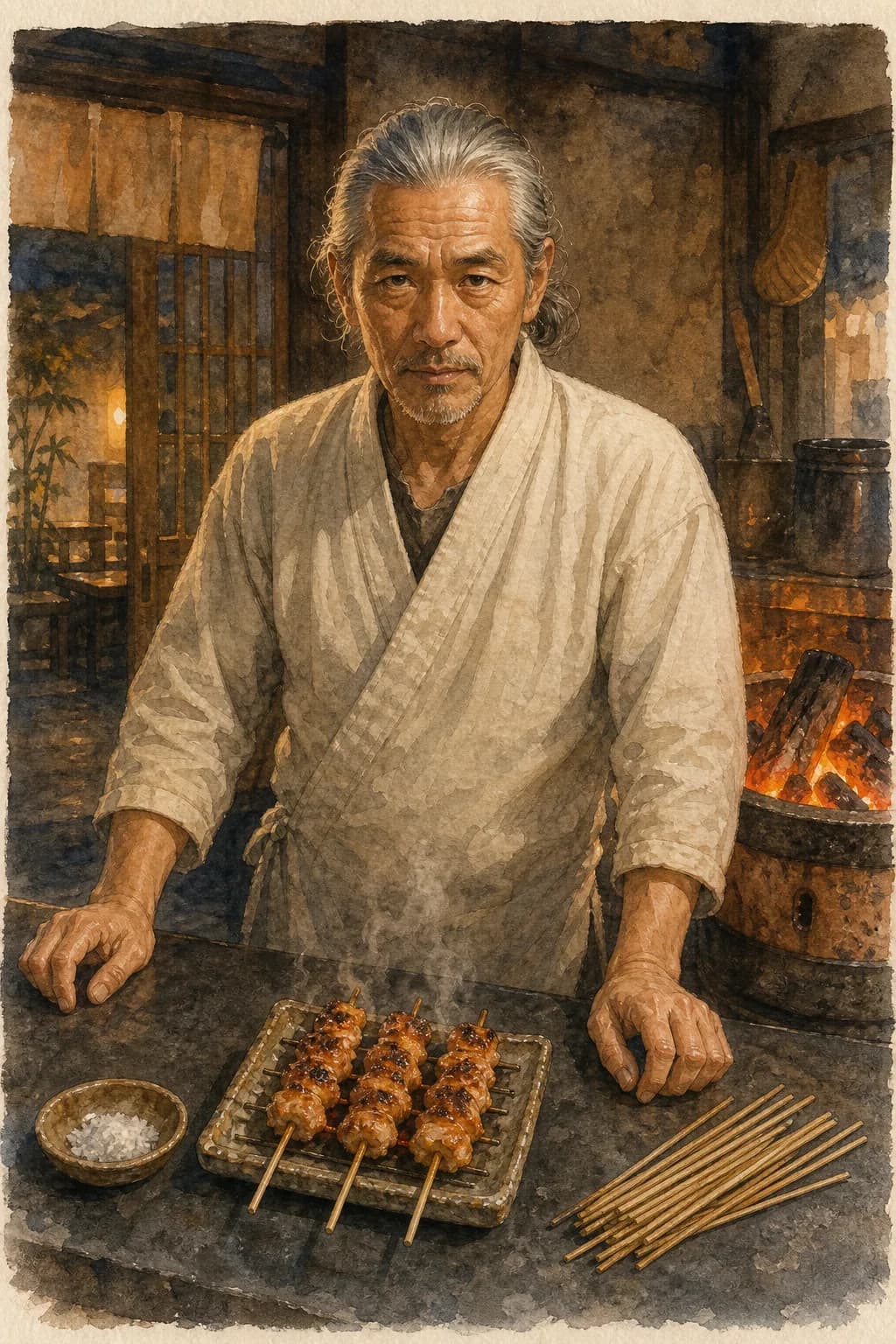
The pan must sing before the scallop touches it—one moment of silence means one moment of lost potential. When the oil shimmers like heat rising from summer stone, that is the voice of the fire asking to meet the sea.
Substitution
If binchōtan is unavailable, a charcoal broiler at its highest setting will honor these scallops. But never gas—it lies, and the scallop will know.
From the chef
The scallop demands everything from the pan. Dry the surface completely, lay it flat-side down into oil that is just beginning to smoke, and do not move it. Ninety seconds for the crust to form — deep gold at the edges, still translucent at the center. The turnip puree beneath is silky and grounding, its mild minerality a quiet counterpoint to the sweetness of the sea. Kale roasted brittle adds texture without distraction. Together they hold a clean, spare balance that nothing needs to interrupt.
TagsButter FinishedGourmetHigh HeatElegantRestaurant QualityVegetables
AllergensMilkMollusks
Source: generated · June 12, 2026