 Romanian
Medium · Hot
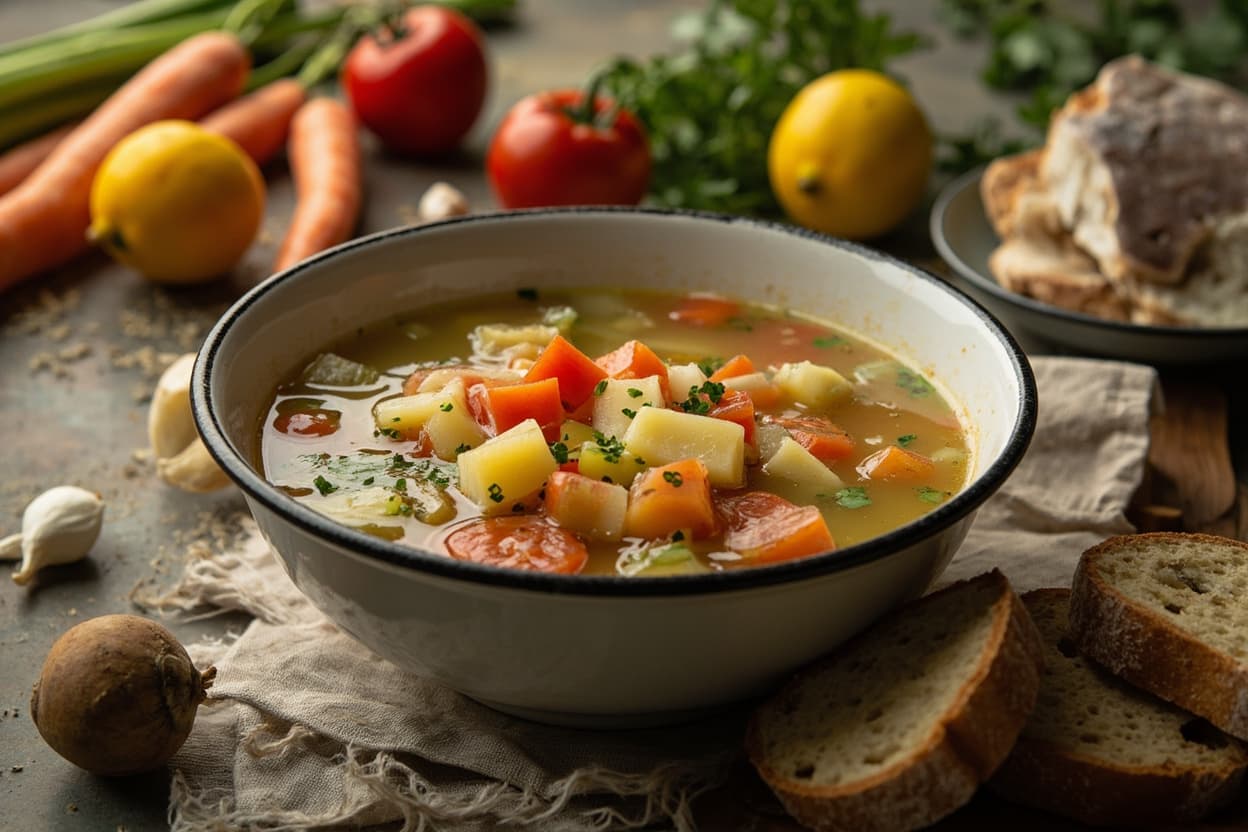
Bright Sour Vegetable and Potato Soup
Carrot, celery, potato, and bell pepper build a gentle, clear broth that simmers until everything is tender but still holding shape. Then the lemon goes in — a hard squeeze that lifts the whole pot the way borș used to back in Cluj, turning something mild into something bright and alive. Light on the stomach, honest on the palate.

Prep
15 min
Cook
35 min
Total
50 min
Method
Build the Aromatics
1
Dice the yellow onion into small pieces. Mince the garlic cloves. Peel and slice the carrots into half-inch rounds.
2
In a large Dutch oven, warm the sunflower oil over medium heat. Add the diced onion and cook, stirring occasionally with a wooden spoon, until softened and translucent, about 8 minutes.
Bloom the Paprika
4
Sprinkle the paprika directly over the aromatics. Stir constantly for about 30 seconds as the paprika blooms in the oil, releasing its warm sweet fragrance. Do not let it burn.
Build the Soup
5
6
7
Use a potato masher or the wooden spoon to lightly crush some of the potatoes against the pot wall to thicken the broth slightly, leaving plenty of chunky pieces for texture.
Sour and Finish
8
Squeeze the juice of the entire lemon directly into the soup. Stir well and taste for seasoning, adding more salt and black pepper as needed.
9
Remove the pot from heat. Stir in the yogurt to add cooling tanginess.
A
Nutri-Score
Excellent balance
A–E · lower is better · score -2
Calories
205
per serving
Low sugar · 4gLow saturated fat · 2g
Protein
5g
Carbs
24g
Fat
11g
Sat. fat
2g
Fiber
5g
Sugar
4g
Sodium
664mg
Gluten FreeDairy InclusiveDiabetes FriendlyHeart HealthyLow GlycemicHigh FiberBalanced Meal
Nutri-Score is a general nutritional-balance guide, not medical or dietary advice.
A
Environmental impact
Very low impact
A–E · lower is better · includes estimates
kg CO2e
0.2
per serving
ACarbonAEU all-round· both agree
Water
0.4m³
Land
14Pt
Runoff
0.05g P
potato drives 29% of this recipe’s estimated footprint.
Carbon from Poore & Nemecek 2018; water, land & runoff from Agribalyse — modelled averages for comparing recipes, not a measurement of your groceries.
Flavor Profile
5
Umami
4
Sweet
5
Salty
8
Sour
1
Bitter
3
Spicy
Textures
TenderCreamyVelvetySmooth
Aromas
HerbalEarthySmokyBrightPungent
Kitchen Equipment
Primary Tool
Dutch OvenCounter FootprintMedium
Techniques
Safety & Storage
Cooking Temperature
Monitor paprika closely when blooming in oil - it can burn within seconds if heat is too high, turning bitter and unusable.
Bring soup to a rolling boil when cooking to ensure safe internal temperature, especially if scaling up for larger batches.
Cross Contamination
Practice proper hand washing and equipment sanitization when switching from handling raw vegetables to adding the cooked yogurt finish.
Storage
Refrigerate leftover soup within 2 hours of cooking. The yogurt content shortens shelf life - consume within 3-4 days.
High Risk Population
Immunocompromised individuals, pregnant women, and young children should ensure yogurt is pasteurized and soup is reheated to165°F before consumption.
Handling
When squeezing lemon juice directly into soup, avoid contact between the lemon and any surfaces that will touch the soup to prevent bacterial transfer.
Allergen Warning
This recipe contains milk from yogurt. Substitute with coconut yogurt or omit entirely for dairy-free version.
Pro Tips
Technique
Never rush the onion — let it go soft and translucent before anything else touches the pot. That patience is the difference between soup and something you'd feed to the dog.
Substitution
No lemon? A tablespoon of white wine vinegar stirred in at the end works in a pinch, but lemon is better. The yogurt adds tang too, so you won't lose everything if you're short on citrus.
From the chef
My bunică in Cluj made this soup when the cabbage was all gone for the sarmale and winter still had teeth. She'd squeeze lemon hard into the pot and call it 'borsul nostru' — our bors, even without the real thing. Now in Barcelona, when my neighbors come knocking with that homesick look, this is what I make. Cheap, warm, sour in all the right ways, and it feeds whoever shows up at the door.
TagsSourVegetarian AdaptablePotatoPaprikaOne PotHeartyYogurtDillLemonTraditional
AllergensMilk
Source: generated · May 30, 2026