 American
Medium · Hot
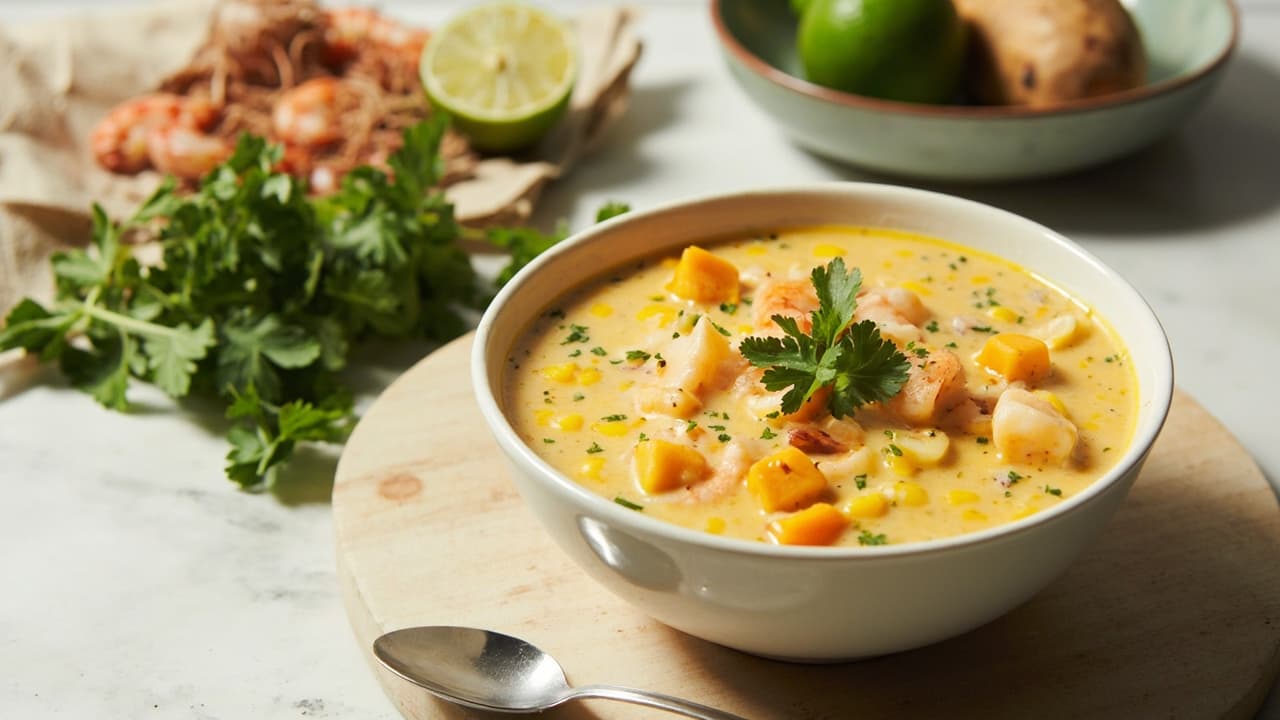
Corn and Shrimp Chowder with Lime and Cilantro
A bright, coastal chowder that balances sweet corn and briny shrimp with sharp lime acidity and fresh cilantro—lighter than traditional cream-based versions, with a whisper of cayenne warmth.

Prep
20 min
Cook
25 min
Rest
5 min
Total
50 min
Method
Build the Aromatic Base
1
Dice the yellow-onion finely. Mince the garlic cloves.
2
Heat olive-oil in a large Dutch oven over medium heat. Add the diced onion and cook, stirring occasionally, until softened and translucent, about 5 minutes.
3
Add the minced garlic and cook for 30 seconds until fragrant.
4
Sprinkle the all-purpose-flour over the onion and garlic. Stir constantly for 2 minutes to cook out the raw flour taste—this is your light roux.
Simmer the Chowder
5
Peel and dice the sweet-potato into half-inch cubes. Cut the kernels from the corn ears.
6
Pour in the chicken-broth gradually, whisking to incorporate the roux smoothly without lumps.
7
Add the diced sweet-potato and bring the mixture to a gentle boil. Reduce heat and simmer for 10 minutes until the potato is just tender.
8
Add the corn kernels and pour in the whole-milk. Simmer for another 5 minutes, stirring occasionally.
Cook the Shrimp and Season
9
Season the shrimp with salt, black-pepper, and cayenne. Stir to coat evenly.
Finish with Brightness
11
Remove the pot from heat. Juice both limes directly into the chowder—you want sharp citrus brightness cutting through the richness.
13
Let the chowder rest for 2 minutes before ladling into bowls—the flavors marry as it settles.
A
Nutri-Score
Excellent balance
A–E · lower is better · score -1
Calories
393
per serving
High in protein · 36gLow sugar · 14g
Protein
36g
Carbs
39g
Fat
13g
Sat. fat
5g
Fiber
6g
Sugar
14g
Sodium
1375mg
High ProteinBalancedHeart HealthyDiabetes FriendlyLow SodiumFiber RichLow Fat
Nutri-Score is a general nutritional-balance guide, not medical or dietary advice.
E
Environmental impact
Very high impact
A–E · lower is better · includes estimates
kg CO2e
3.7
per serving
ECarbonBEU all-round· carbon sets the grade
Water
21m³
Land
50Pt
Runoff
1.0g P
shrimp drives 83% of this recipe’s estimated footprint.
Carbon from Poore & Nemecek 2018; water, land & runoff from Agribalyse — modelled averages for comparing recipes, not a measurement of your groceries.
Flavor Profile
6
Umami
5
Sweet
4
Salty
3
Sour
1
Bitter
4
Spicy
Textures
SilkyTenderCreamySaucy
Aromas
HerbalCitrusBrinySavory
Kitchen Equipment
Primary Tool
Dutch OvenCounter FootprintMedium
Safety & Storage
Cross Contamination
Shrimp is a major allergen and cross-contamination risk. Use dedicated cutting boards and utensils for raw shrimp. Clean all surfaces with hot soapy water immediately after handling raw shrimp to prevent allergen transfer to other foods.
Cooking Temperature
Shrimp must reach an internal temperature of 145°F to be safely consumed. The chowder base should be simmered at 185-200°F during cooking, and the final dish should be held at 165°F or above for safe service.
Bring the entire chowder to a rolling boil (212°F/100°C) after adding chicken broth to ensure any undercooked ingredients or improperly handled broth reach safe temperatures. Maintain at 165°F (74°C) or above for service.
High Risk Population
This dish contains multiple priority allergens (shellfish, milk, wheat/gluten) making it particularly risky for individuals with severe food allergies. Those with shellfish allergies should avoid entirely.
Storage
Dairy-based soups with shellfish are highly perishable. Cool rapidly and refrigerate at 40°F or below within 2 hours of cooking. Consume within 3-4 days. Reheat to 165°F throughout before serving.
Allergen Warning
Clearly label this dish as containing shrimp (shellfish), milk, and wheat/gluten. Inform guests of all three allergens present before service. Check that any chicken broth used does not contain additional hidden allergens.
Handling
Do not overcook shrimp as directed in step 10—they continue to cook from residual heat. Adding shrimp to already-hot chowder is appropriate, but avoid boiling vigorously after adding as this causes shrimp to become tough and rubbery.
Shelf Life
This chowder does not freeze well due to dairy content (whole milk) and shrimp texture deterioration. Prepare fresh and consume within the recommended timeframe rather than freezing for later use.
Equipment Safety
If using equipment previously used for other allergens, perform thorough cleaning between uses. The Dutch oven used for roux and simmering should be dedicated to this dish if serving to allergen-sensitive individuals.
Pro Tips
Technique
Do not overcook the shrimp. Remove them the moment they turn pink and curl—that's the exact second. The carryover heat finishes the job, and rubber is what happens when you don't trust the timing.
Substitution
If fresh corn isn't available, frozen corn works beautifully here. Just don't thaw it first—add it frozen to keep the kernels intact and sweet.
From the chef
In Lima, my mother would say a chowder without acid is just wet soup. This version pulls from the sea and the land—sweet corn, plump shrimp, and that sharp lime acidity that makes everything sing. The cayenne whispers warmth, never burns, just reminds you the Pacific sun is close.
TagsSeafoodCitrusComfort FoodOne PotLimeCornShrimp
AllergensWheatMilkShellfishGluten
Source: generated · June 10, 2026