 Spanish
Medium · Hot
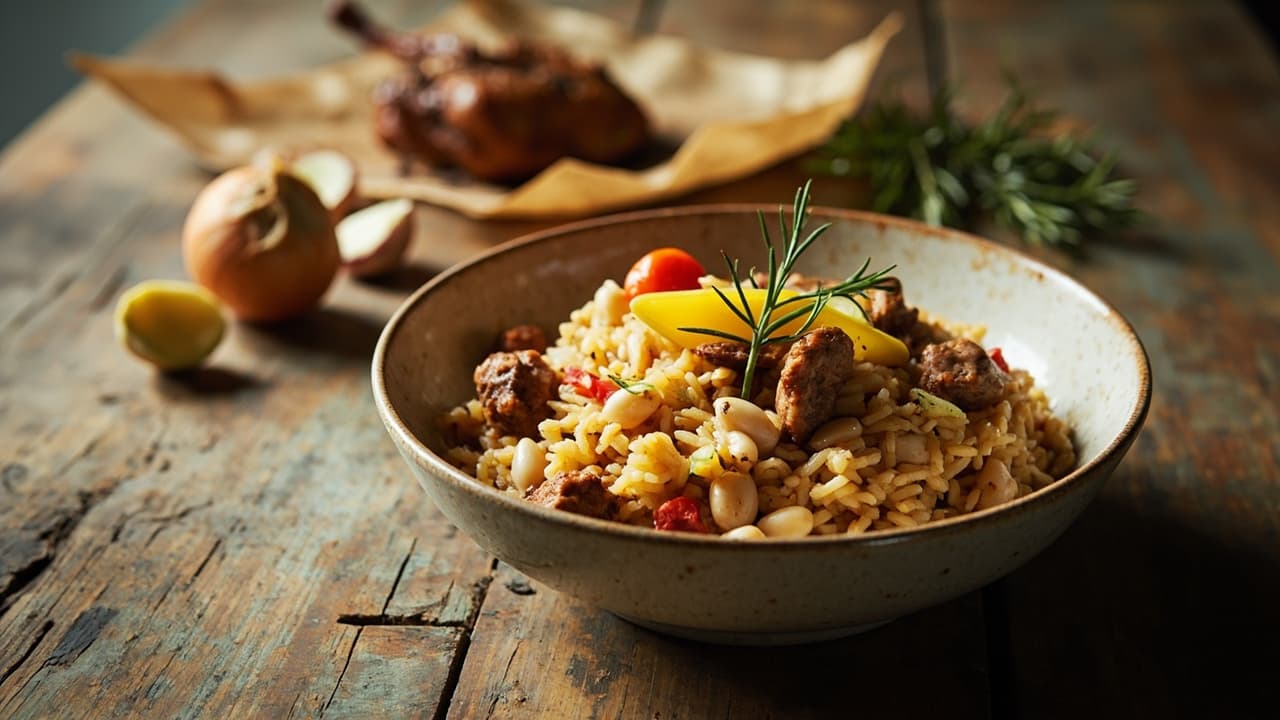
Duck and White Bean Rice Bowl with Rosemary
A Valencian-inspired rice bowl with tender duck, creamy white beans and fragrant rosemary. The slow-cooked sofrito builds depth while the rice develops a golden socarrat crust at the bottom.
Prep
15 min
Cook
35 min
Rest
5 min
Total
55 min
Method
Brown the Duck
1
Season the duck pieces generously with salt and black pepper. Heat 2 tablespoons of olive oil in a wide paella pan or heavy skillet over medium-high heat.
Build the Sofrito
3
4
Add the diced onion and cook for 5 minutes until softened and translucent. Add the grated tomato and sweet paprika, stirring to combine.
5
Let the sofrito cook for 8-10 minutes, stirring occasionally, until the tomato reduces and the oil separates. This is the foundation of flavor.
6
Let the sofrito cook for 8-10 minutes, stirring occasionally, until the tomato reduces and the oil separates. This is the foundation of flavor.
Add the Proteins and Aromatics
7
Nestle the seared duck pieces back into the pan along with the bell pepper strips. Stir gently to coat in the sofrito.
8
Add the white beans and distribute evenly across the pan. Place the rosemary sprigs on top.
Cook the Rice
9
Bloom the saffron threads in a small cup with 2 tablespoons of hot chicken broth, letting it steep for 2 minutes.
10
Add the white rice to the pan, spreading it in an even layer. Pour the hot chicken broth over everything, including the bloomed saffron.
11
Bring to a gentle boil, then reduce heat to low. Cook undisturbed for 15-18 minutes, never stirring the rice. The liquid should be absorbed and small holes will appear on the surface.
Develop the Socarrat
12
Increase heat to medium-high for the last 2 minutes to encourage the socarrat—the toasted golden crust at the bottom. Listen for a gentle crackling sound.
13
Remove from heat and cover with a clean kitchen towel. Rest for 5 minutes to allow the crust to release from the pan.
14
Serve directly from the pan, scraping up the precious socarrat crust and distributing it among the bowls. Remove rosemary sprigs before serving.
A
Nutri-Score
Excellent balance
A–E · lower is better · score -2
Calories
1109
per serving
Calorie-dense · 1109 kcalSource of protein · 42gLow sugar · 7g
Protein
42g
Carbs
161g
Fat
33g
Sat. fat
12g
Fiber
9g
Sugar
7g
Sodium
888mg
Gluten FreeDairy FreeHeart HealthyDiabetes FriendlyHigh ProteinAnti Inflammatory
Nutri-Score is a general nutritional-balance guide, not medical or dietary advice.
C
Environmental impact
Moderate impact
A–E · lower is better · includes estimates
kg CO2e
1.4
per serving
CCarbonAEU all-round· carbon sets the grade
Water
2.0m³
Runoff
0.1g P
Duck leg or thigh, cut into pieces drives 42% of this recipe’s estimated footprint.
Carbon from Poore & Nemecek 2018; water, land & runoff from Agribalyse — modelled averages for comparing recipes, not a measurement of your groceries.
Flavor Profile
7
Umami
5
Sweet
4
Salty
3
Sour
2
Bitter
3
Spicy
Textures
CrispyTenderCreamy
Aromas
HerbalGarlickyNutty
Kitchen Equipment
Primary Tool
Cast Iron SkilletCast Iron SkilletSmall BowlChef KnifeCutting BoardTongsWooden SpoonMeasuring CupsMeasuring SpoonsPaper TowelsKitchen Towel
Counter FootprintMedium
Safety & Storage
Cooking Temperature
Duck should reach an internal temperature of 165°F (74°C) throughout. When searing skin-side down and developing the socarrat crust, monitor closely to avoid burning.
Chicken broth must be heated to 165°F (74°C) if not purchased pre-pasteurized. When using store-bought broth for high-risk individuals, verify it has been commercially sterilized or boil for 1 minute before use.
Cross Contamination
If preparing this dish in a kitchen that handles common allergens (nuts, shellfish, milk, eggs), thoroughly sanitize all surfaces, utensils, and the paella pan before and after cooking to prevent allergen transfer.
Handling
Use dedicated utensils and a clean pan when searing duck. If serving to allergen-sensitive individuals, use homemade broth verified to be free of celery, sulfites, and gluten.
Storage
Store leftover duck and rice bowl in an airtight container in the refrigerator at 40°F (4°C) or below. Consume within 3-4 days. Reheat to 165°F (74°C) before serving.
High Risk Population
For immunocompromised individuals, pregnant women, or elderly persons, ensure chicken broth is from a verified allergen-free source and that duck is cooked to 165°F (74°C) throughout.
Pro Tips
Technique
Never, ever stir the rice once you have added the broth. This is not negotiable — stirring breaks the starch columns and you will get a risotto when you want a paella. Spread the rice thin, walk away, and let the heat work its magic.
Substitution
If you cannot find duck, chicken thigh pieces work beautifully and are more traditional in the campo. The key is skin-on, bone-in, so the fat renders and protects the meat during the sear.
Equipment
A wide, shallow pan — traditional steel or carbon steel — is essential. The surface-area-to-depth ratio is what makes the socarrat possible. A deep saucepan will steam the rice into submission and you will have nothing but tragedy at the bottom.
Flavor Boost
Bloom your saffron in hot broth for at least two minutes before adding it. Cold liquid will not unlock the color or fragrance. Timid saffron is worse than no saffron — use enough to turn the rice a deep, proud gold.
From the chef
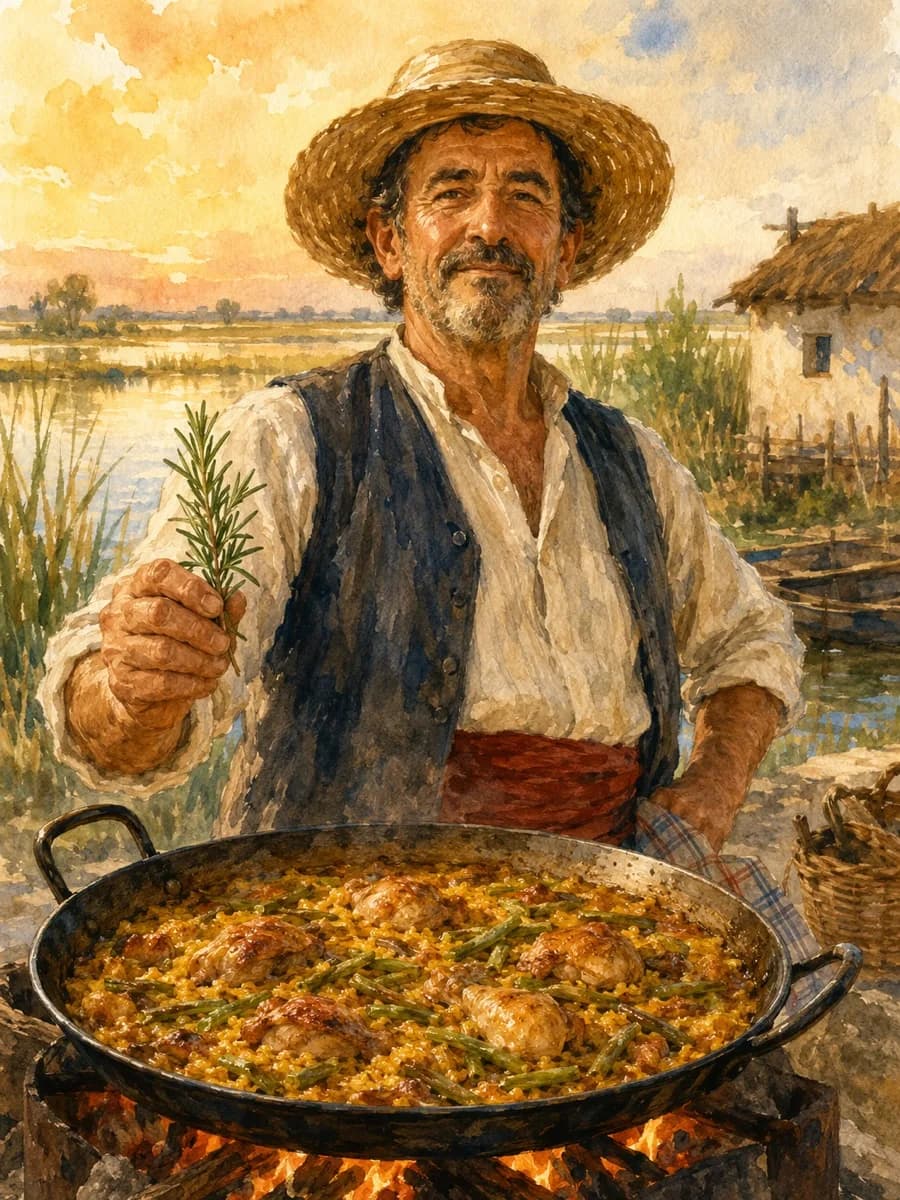
In El Palmar, my grandfather would say the rice tells you everything — if you listen. This bowl carries that same truth: a slow sofrito of tomato, garlic and sweet paprika, the duck crisping at the edges while the white beans drink in rosemary's perfume. You will not stir the rice. You will let it rest undisturbed, and in the last two minutes you will raise the heat and listen for that crackling — that is the socarrat speaking, and it is the best part of the pan.
TagsDuckWhite BeansSaffronRosemarySofritoSocarratOne PotValencian Inspired
AllergensSulfitesCeleryGluten
Source: generated · June 10, 2026