 Indonesian
Medium · Hot
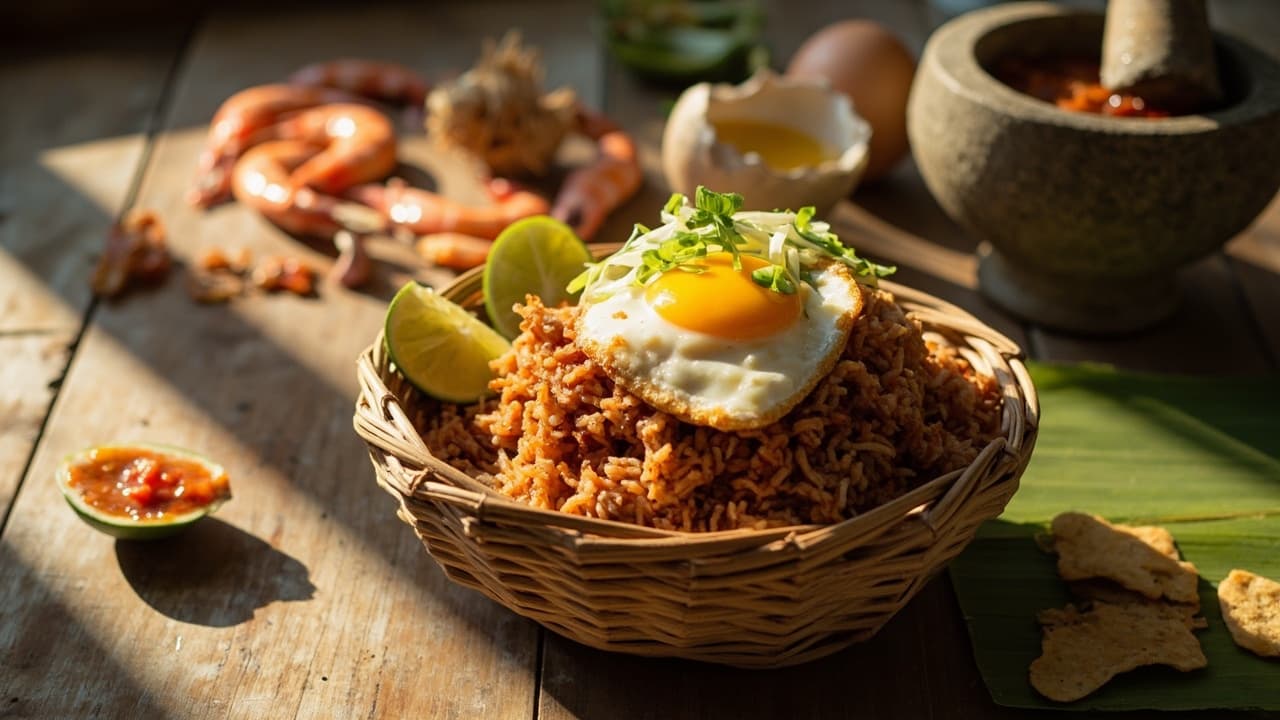
Nasi Goreng Udang with Shrimp and Egg
A vibrant Indonesian fried rice with succulent shrimp, aromatic spice paste, and a crispy fried egg on top. Dewi uses soy sauce for depth and a kick of cayenne to build that signature sweet-salty-spicy balance.

Prep
15 min
Cook
20 min
Total
35 min
Method
Prep the Shrimp
Make the Spice Paste
2
In a mortar and pestle (or using a blender), combine shallots, garlic, ginger, cayenne, and salt. Grind until you have a smooth, fragrant paste. This is your bumbu — the soul of the nasi goreng!
Cook the Fried Eggs
3
Heat 1 tbsp coconut oil in a wok over medium-high heat. Crack in 2 eggs and fry until the whites are crispy at the edges but the yolk remains runny, about 2-3 minutes. Set aside and repeat with remaining eggs. Keep warm.
Stir-Fry the Shrimp
4
In the same wok over high heat, add 1 tbsp coconut oil. Add the marinated shrimp and cook for 1-2 minutes per side until pink and slightly caramelized. Remove and set aside.
Build the Nasi Goreng
5
Add the remaining 2 tbsp coconut oil to the wok. Add the spice paste and stir-fry for 30 seconds until incredibly fragrant — the kitchen should smell amazing!
6
Add the day-old white rice, breaking up any clumps. Stir-fry vigorously for 3-4 minutes, letting the rice absorb the spice paste and get slightly crispy.
7
Pour in 3 tbsp soy sauce and add black pepper. Toss everything together until the rice is evenly coated and takes on a beautiful dark golden color. Return the shrimp to the wok and toss for 1 minute to warm through.
Serve It Up
8
Divide the nasi goreng among plates. Top each with a fried egg. Garnish with sliced scallion and a squeeze of fresh lime juice. Add a pinch of salt if needed. Serve immediately while that egg yolk is still gloriously runny!
B
Nutri-Score
Good balance
A–E · lower is better · score 2
Calories
1290
per serving
Source of protein · 50gLow sugar · 10g
Protein
50g
Carbs
212g
Fat
26g
Sat. fat
20g
Fiber
6g
Sugar
10g
Sodium
956mg
Gluten FreeHeart HealthyDiabetes FriendlyWeight ManagementHigh ProteinBalanced MacrosLow Carb Alternative
Nutri-Score is a general nutritional-balance guide, not medical or dietary advice.
E
Environmental impact
Very high impact
A–E · lower is better · includes estimates
kg CO2e
3.9
per serving
ECarbonBEU all-round· carbon sets the grade
Water
21m³
Land
54Pt
Runoff
0.9g P
Shrimp drives 69% of this recipe’s estimated footprint.
Carbon from Poore & Nemecek 2018; water, land & runoff from Agribalyse — modelled averages for comparing recipes, not a measurement of your groceries.
Flavor Profile
8
Umami
4
Sweet
7
Salty
4
Sour
2
Bitter
6
Spicy
Textures
CrispyTenderChewySilky
Aromas
HerbalSmokyEarthyPungentNutty
Kitchen Equipment
Primary Tool
WokCounter FootprintMedium
Safety & Storage
Cooking Temperature
Cook shrimp to minimum internal temperature of 145°F (63°C) until flesh is opaque and pink. Verify with food thermometer inserted into thickest part.
Frying eggs over medium-high heat for 2-3 minutes creates crispy edges while keeping yolk runny. Ensure whites are fully set before serving.
Cross Contamination
Raw shrimp marinade contains soy sauce and garlic. Use separate cutting boards and utensils for raw seafood. Never return cooked shrimp to the original marinade container.
Wok is reused between eggs, shrimp, and rice. Wash thoroughly with hot soapy water between each use, especially when handling different protein types.
Allergen Warning
Soy sauce typically contains wheat (gluten). For gluten-free requirement, substitute with tamari or coconut aminos. Notify diners of allergen content.
High Risk Population
Shellfish and runny eggs pose higher risk for pregnant women, young children, elderly, and immunocompromised individuals. Consider fully cooking eggs and using fully cooked shrimp for these populations.
Storage
Day-old rice is recommended for fried rice texture as fresh rice becomes too sticky. Store cooked rice in refrigerator at 40°F (4°C) or below if prepared in advance.
Serve fried rice immediately after preparation. If storing leftovers, cool within 2 hours and refrigerate at 40°F (4°C) maximum. Consume within 2 days.
Handling
When deveining shrimp, ensure thorough removal of digestive tract (black vein) which can harbor bacteria. Pat shrimp completely dry before cooking for optimal caramelization.
Equipment Safety
High-heat wok cooking produces hot oil splatter. Use long-handled utensils, protect forearms with sleeves, and keep wok lid accessible in case of oil fire.
Pro Tips
Technique
The moment your spice paste hits the wok, you should hear it sizzle loudly and smell that incredible fragrance bloom immediately — that is your signal the paste is ready and the flavors are alive. If it doesn't smell amazing within 10 seconds, grind it a bit longer in your mortar.
Substitution
Fresh shrimp is always best, but frozen and thawed works perfectly fine for this dish — just make sure they are thoroughly pat-dried before marinating so they get that beautiful caramelization instead of steaming.
Equipment
A well-seasoned carbon steel or cast iron wok makes all the difference for that slightly crispy rice texture we all crave. The high heat retention gives you those gorgeous charred bits that make nasi goreng irresistible.
Time Saver
Make your spice paste in larger batches and freeze it in ice cube trays — one cube is roughly one batch of bumbu for nasi goreng. Then you can have authentic flavors ready in minutes on busy weeknights.
From the chef
In Yogyakarta, we say that the smell of nasi goreng sizzling in a wok is the aroma of home itself. This version with plump udang and that glorious crispy-edged fried egg on top — it's the dish my mother made whenever she wanted to turn leftover rice into something that made everyone at the table go quiet, just集中注意力to every bite. The key is that bumbu, the spice paste you grind until it becomes a fragrant paste that sings when it hits the hot oil — that is where all the soul lives, and I will never let you skip it.
TagsShrimpSpicyWeeknight DinnerEgg ToppingOne PotQuick
AllergensShellfishSoyEggs
Source: generated · June 10, 2026