 French
Medium · Hot
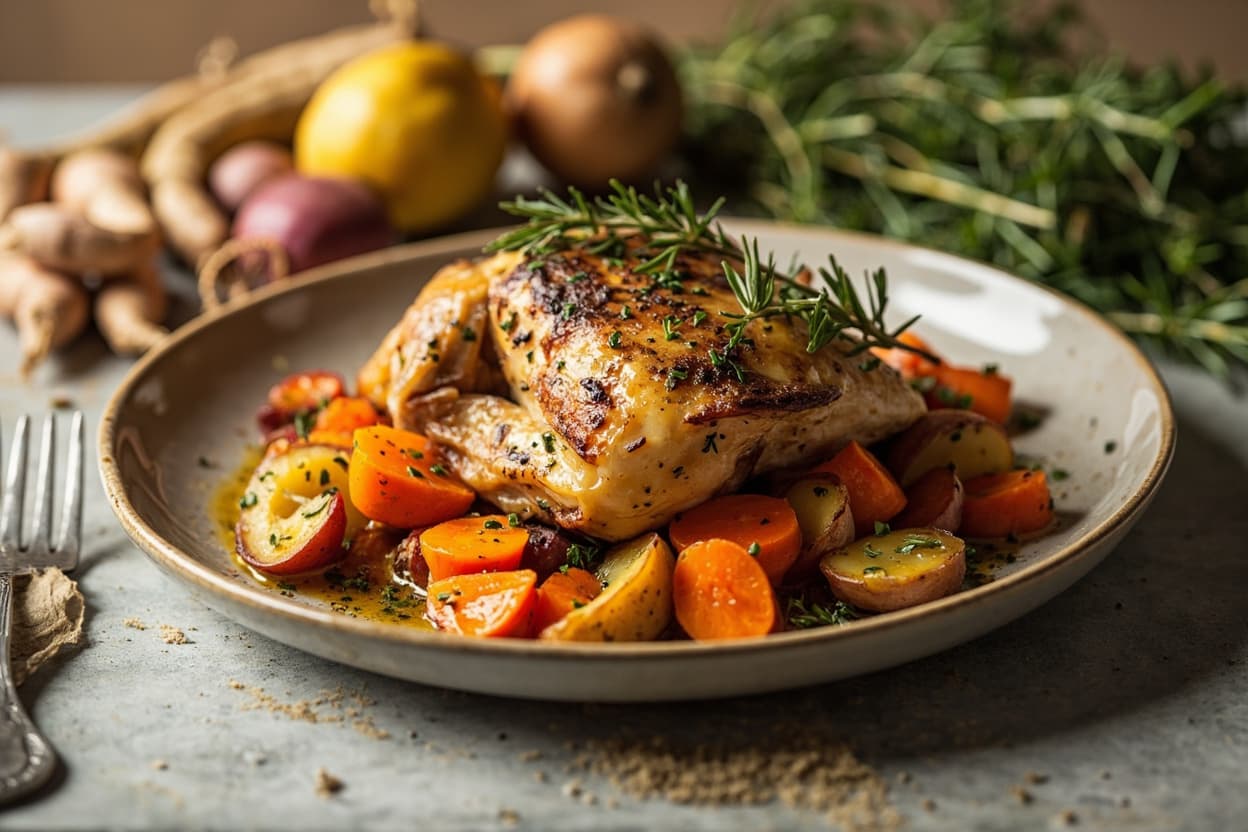
Dijon Chicken Traybake with Roots
Chicken breasts are coated in mustard and roasted alongside carrot and potato with rosemary and olive oil until everything is golden-edged and the mustard has formed a fragrant crust. Straightforward, reliable, and endlessly versatile — the sort of traybake that goes from oven to table with nothing to worry about along the way.

Prep
20 min
Cook
45 min
Rest
5 min
Total
1h 10m
Method
Prep Work
1
Preheat your oven to 200°C (400°F). Pat the chicken thighs dry with paper towels and let them come to room temperature for about 10 minutes.
2
Cut the potato, carrot, and sweet potato into rough 3-cm chunks. Peel and quarter the yellow onions. Strip the rosemary leaves from the sprigs and roughly chop.
3
Zest the lemon using a fine grater, then cut the lemon in half and juice one half (save the other half for serving).
4
Peel and mince the garlic cloves finely.
Make the Glaze
5
In a small bowl, whisk together the Dijon mustard, olive oil, honey, minced garlic, lemon zest, and black pepper until well combined.
Assemble and Roast
6
7
Nestle the chicken thighs among the vegetables, skin-side up. Spoon the Dijon glaze generously over each chicken thigh, reserving some for later.
8
9
After 25 minutes, baste the chicken and vegetables with the pan juices. Continue roasting for another 15-20 minutes until the chicken skin is golden and crispy, and a meat thermometer reads 75°C (167°F) when inserted into the thickest part.
10
Remove from the oven and let rest for 5 minutes. Squeeze the remaining lemon half over the traybake and serve warm.
A
Nutri-Score
Excellent balance
A–E · lower is better · score -3
Calories
829
per serving
High in protein · 68gLow sugar · 21gLow saturated fat · 8g
Protein
68g
Carbs
55g
Fat
38g
Sat. fat
8g
Fiber
8g
Sugar
21g
Sodium
1321mg
Gluten FreeDairy FreeEgg FreeHeart HealthyDiabetes FriendlyHigh ProteinLow Processed Food
Nutri-Score is a general nutritional-balance guide, not medical or dietary advice.
D
Environmental impact
High impact
A–E · lower is better · includes estimates
kg CO2e
2.5
per serving
DCarbonBEU all-round· carbon sets the grade
Water
1.3m³
Land
91Pt
Runoff
0.3g P
Chicken Thighs drives 88% of this recipe’s estimated footprint.
Carbon from Poore & Nemecek 2018; water, land & runoff from Agribalyse — modelled averages for comparing recipes, not a measurement of your groceries.
Flavor Profile
7
Umami
4
Sweet
5
Salty
3
Sour
1
Bitter
3
Spicy
Textures
CrispyTenderCaramelized
Aromas
HerbalRoastedPungent
Kitchen Equipment
Primary Tool
Rimmed Baking SheetCounter FootprintMedium
Techniques
Safety & Storage
Allergen Warning
This dish contains mustard from the Dijon glaze. If cooking for someone with a mustard allergy, substitute with yellow mustard powder mixed with olive oil and a touch of honey for a similar flavor profile without the allergen.
Cooking Temperature
Chicken must reach an internal temperature of 74°C (165°F) as verified with a meat thermometer inserted into the thickest part of the thigh. Use a reliable probe thermometer rather than relying on visual cues alone.
Cross Contamination
Raw chicken juices can contaminate vegetables and prep surfaces. Use separate cutting boards for vegetables and reserve a dedicated board for raw poultry. Clean and sanitize all surfaces after handling raw chicken.
Storage
Cool leftovers within 2 hours and refrigerate in airtight containers. Consume within 3-4 days. When reheating, ensure chicken reaches 74°C (165°F) throughout before serving.
Handling
Pat chicken dry and let it reach room temperature only for the specified 10 minutes. Do not leave raw chicken at room temperature for extended periods as this allows bacterial growth on the surface.
Pro Tips
Technique
Pat your chicken thighs completely dry before glazing — moisture is the enemy of crispy skin. The honey in the glaze will caramelize beautifully if the skin starts dry, giving you that deeply golden, lacquered finish you're after.
Substitution
If honey isn't part of your diet, swap it for pure maple syrup or even a couple of tablespoons of coconut sugar dissolved in a touch of warm water — you'll still get that lovely sticky glaze and gorgeous caramelization without changing the technique.
Time Saver
The vegetables can be prepped the night before and stored in a sealed container with a damp paper towel to prevent browning. When you're ready to cook, just spread them onto the tray and proceed — dinner is on the table even faster.
From the chef
Chicken thighs go into the oven coated in a honey-Dijon glaze with garlic, lemon zest, and black pepper, nestled among potato, carrot, sweet potato, and onion on a single roasting pan. As everything roasts, the glaze caramelizes into a sticky, fragrant crust while the root vegetables soften and pick up the pan juices. After twenty-five minutes you baste, then finish until the skin is properly golden and a thermometer reads 74 degrees. One pan, every ingredient visible from start to finish, and a squeeze of fresh lemon at the table to bring it all together.
TagsGluten FreeDairy FreeNut FreeChickenRoot VegetablesTraybakeOne PanWeeknight DinnerComfort FoodHigh Protein
AllergensMustard
Source: generated · May 30, 2026