 Mediterranean
Medium · Warm
Grape and Toasted Walnut Olive Oil Cake
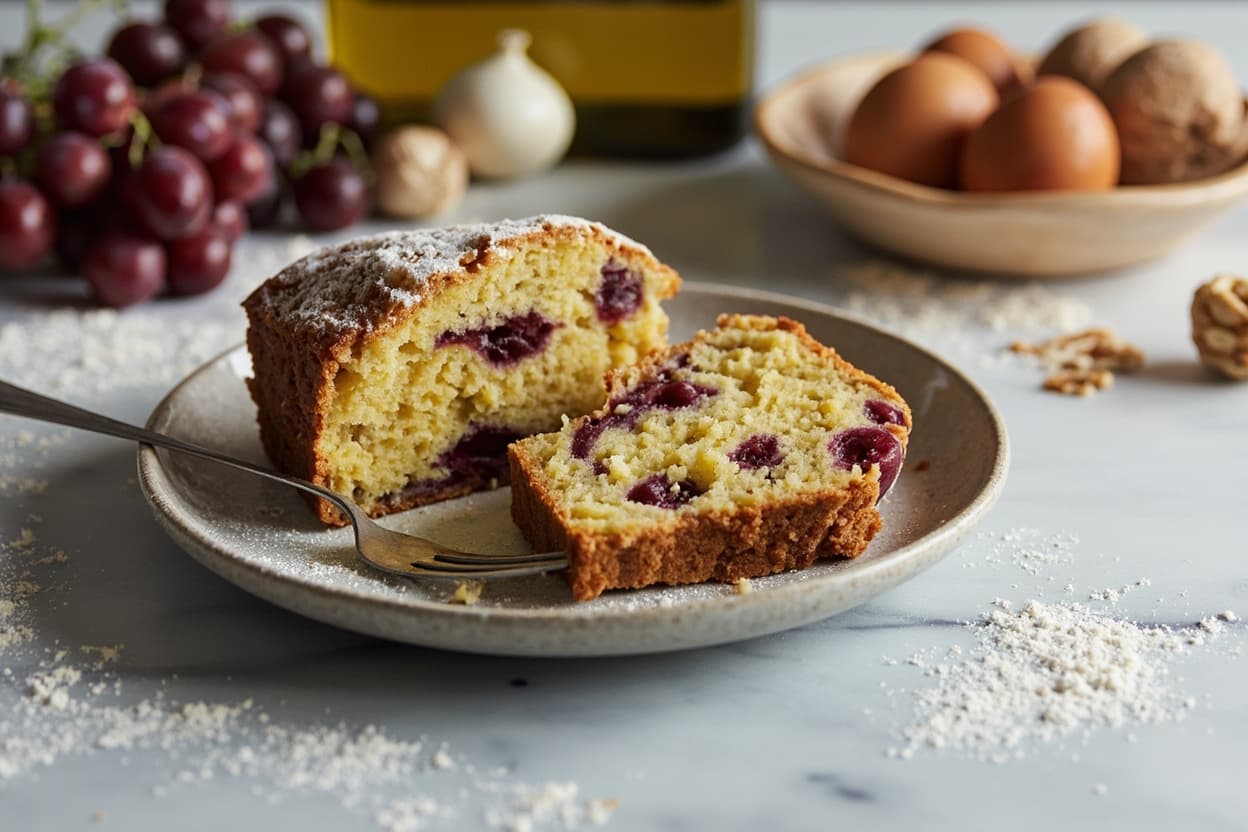
Olive oil gives this cake a moistness that butter cannot match and a subtle grassy note that stays present even after baking. Whole grapes pressed into the batter collapse gently as they cook, leaving jammy, almost wine-like pockets throughout, and toasted walnuts add a bitter crunch that keeps each slice from reading as sweet. The crumb firms slightly as it cools — it is better the next day.

Prep
20 min
Cook
35 min
Rest
10 min
Total
1h 5m
Method
Toast the Walnuts
1
Preheat your oven to 350°F (175°C). Scatter the walnut halves on a baking sheet and place in the oven for 8-10 minutes, stirring halfway through, until deeply fragrant and turning golden. Let them cool completely on the sheet before roughly chopping into irregular pieces.
Mix the Batter
2
In a medium bowl, whisk together the all-purpose-flour, baking-powder, and salt. Set aside.
3
In a large bowl, crack the egg and add the white-sugar. Using a hand whisk or stand mixer, beat vigorously for 3-4 minutes until the mixture is pale, thick, and falls in ribbons from the whisk.
4
With the mixer still running, slowly pour in the olive-oil in a thin stream, beating constantly until the batter looks smooth and glossy, almost like a thick mayonnaise.
5
Pour in the whole-milk and add the lemon zest. Fold gently with a spatula until just combined.
Fold and Assemble
6
Sift the flour mixture directly over the wet ingredients. Using a wide spatula, fold from the bottom of the bowl upward in slow, deliberate strokes—stop as soon as you see the last streaks of flour disappearing. Overmixing will make the crumb dense.
7
Fold in the toasted walnut pieces, keeping some texture visible.
Bake the Cake
8
9
Gently press the halved grape cut-side down into the batter in a decorative pattern, spacing them about 1 inch apart. They will sink slightly as the cake rises.
10
11
Let the cake rest in the pan for 10 minutes, then turn out onto a wire rack or serve directly from the pan. The grapes will have caramelised slightly on the bottom—if serving inverted, they make a beautiful topping.
C
Nutri-Score
Fair balance
A–E · lower is better · score 4
Calories
571
per serving
Calorie-dense · 571 kcal
Protein
9g
Carbs
54g
Fat
38g
Sat. fat
5g
Fiber
3g
Sugar
31g
Sodium
319mg
VegetarianBlood Sugar AwareHeart HealthyMediterranean StyleModerate ProteinBalanced Carbs
Nutri-Score is a general nutritional-balance guide, not medical or dietary advice.
B
Environmental impact
Low impact
A–E · lower is better · complete match
kg CO2e
0.4
per serving
BCarbonAEU all-round· carbon sets the grade
Water
1.1m³
Land
28Pt
Runoff
0.05g P
olive-oil drives 26% of this recipe’s estimated footprint.
Carbon from Poore & Nemecek 2018; water, land & runoff from Agribalyse — modelled averages for comparing recipes, not a measurement of your groceries.
Flavor Profile
3
Umami
7
Sweet
2
Salty
4
Sour
3
Bitter
1
Spicy
Textures
TenderCrumblyCrunchyJammyMoist
Aromas
CitrusNuttyFruityHerbalCaramelized
Kitchen Equipment
Primary Tool
OvenCounter FootprintMedium
Techniques
Safety & Storage
Cooking Temperature
Toast walnuts at 350°F for 8-10 minutes, stirring halfway. Monitor closely to avoid burning—nuts can go from golden to charred quickly due to high oil content.
High Risk Population
This batter contains raw beaten eggs. Pregnant individuals, young children, elderly, and immunocompromised persons should exercise caution as raw eggs may contain Salmonella bacteria.
Cross Contamination
Prevent cross-contact with other allergens: wash hands and surfaces thoroughly after handling walnuts if switching to prepare allergen-free items. Store walnut ingredients separately from other baking ingredients.
Handling
When beating eggs and sugar, ensure thorough incorporation before adding oil. The mixture should reach ribbon stage—pale, thick, and fall in ribbons from the whisk—to ensure proper aeration and food safety.
Storage
Store finished cake at room temperature in an airtight container for up to 3 days, or refrigerate for up to 5 days. Bring to room temperature before serving for best texture.
Allergen Warning
Clearly label this cake as containing tree nuts (walnuts), eggs, milk, and gluten/wheat for guests with food allergies or intolerances.
Equipment Safety
Use oven mitts when handling the hot baking sheet with toasted walnuts and the cake pan after baking. Allow walnuts to cool completely before chopping to prevent burns.
Pro Tips
Technique
Bring your eggs to room temperature before you begin—this isn't fussiness, it's architecture. Cold eggs won't emulsify properly with the oil, and you'll end up with streaks instead of that smooth, glossy ribbon that tells you the batter is ready.
Substitution
If you can't find fresh grapes, halved figs or thick slices of pear work beautifully with the walnut base—anything that will caramelise at the bottom and release gentle sweetness as it bakes.
Equipment
A nine-inch round cake pan is ideal here, but a similar-sized square pan will work. Just keep an eye on the edges pulling away from the sides—that's your cue more than any strict timer.
From the chef
There's a moment in late summer when the market stalls overflow with fat, jewel-bright grapes and I find myself reaching for the olive oil instead of the butter. This cake was born from that shift—the way a good grassy oil can transform a simple batter into something that tastes of the Mediterranean even in a Bristol autumn. I toast the walnuts until they're deeply fragrant because, you see, patience is where the flavor lives. The grapes sink into the top as it bakes, their skins splitting to release jammy sweetness against that tender, lemon-perfumed crumb. It's the kind of cake that tastes like you've taken your time.
TagsOlive Oil CakeFruityNuttyCitrusSeasonalBrunchTea Time
AllergensTree NutsEggsMilkWheat
Source: generated · May 30, 2026