 French
Medium · Hot
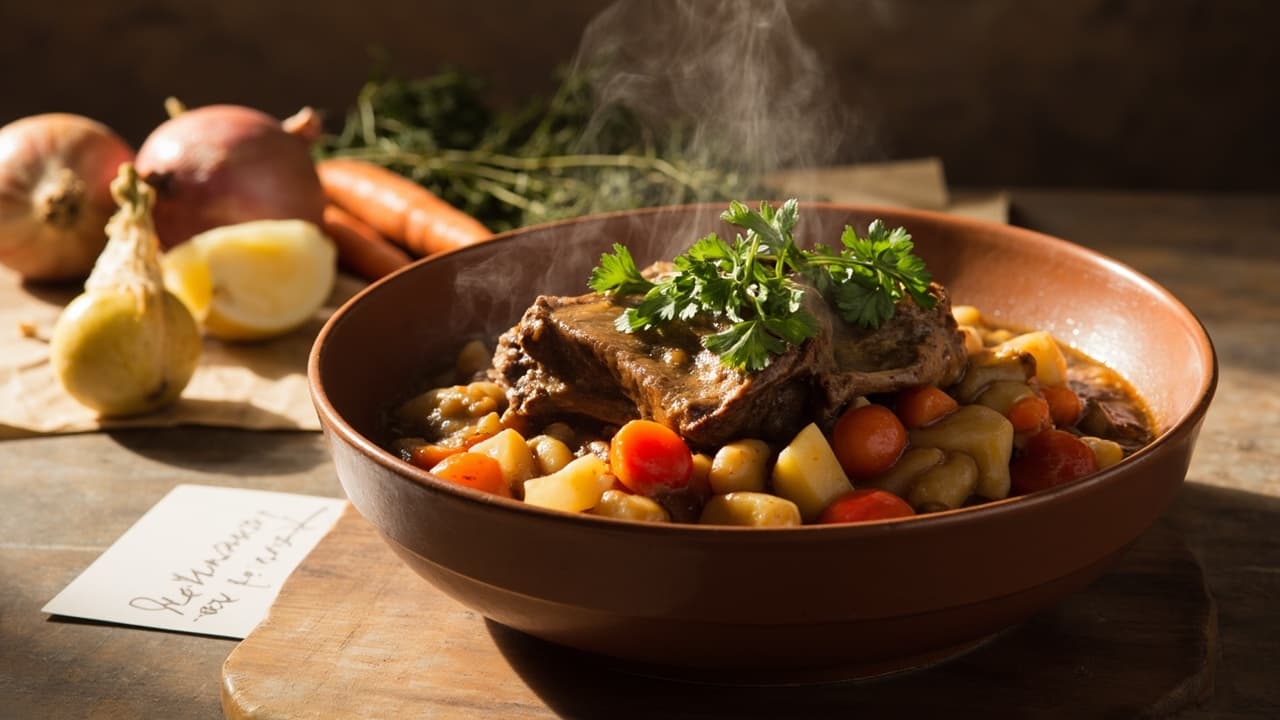
Navarin d'Agneau aux Haricots Blancs (Lamb Navarin with White Beans)
A hearty French braise of tender lamb and creamy white beans, perfumed with thyme and rosemary. Allergen-friendly comfort food at its finest.
Prep
20 min
Cook
2h
Rest
4h
Total
6h 20m
Method
Prepare the Beans
1
Rinse the white beans under cold water and pick out any debris. Place in a large bowl, cover with fresh water, and soak for at least 4 hours or overnight. Drain and rinse before using.
2
In a medium saucepan, cover the soaked white beans with fresh water by 2 inches. Add 1/2 tsp salt. Bring to a boil, then reduce to a gentle simmer. Cook until just tender, about 45 minutes. Drain and set aside.
Sear the Lamb
3
Season the cubed lamb generously with remaining salt and black pepper. In a large Dutch oven or heavy-bottomed pot, heat the olive oil over medium-high heat until shimmering.
4
Working in batches to avoid crowding, sear the lamb pieces on all sides until deeply golden brown, about 3-4 minutes per side. Transfer to a plate and set aside.
Build the Braise
5
6
Braise Until Tender
8
Bring the liquid to a gentle boil, then reduce heat to low. Cover and braise for 1 hour, or until the lamb is tender and beginning to fall apart.
Finish and Serve
9
10
11
Remove from heat and stir in the fresh chopped parsley. Serve hot, spooning generous portions into bowls with crusty bread or over white rice if desired.
A
Nutri-Score
Excellent balance
A–E · lower is better · score -2
Calories
938
per serving
High in protein · 64gLow sugar · 7g
Protein
64g
Carbs
80g
Fat
42g
Sat. fat
23g
Fiber
11g
Sugar
7g
Sodium
1105mg
Gluten FreeDairy FreeLegume InclusiveMediterranean StyleHeart HealthyIron DeficiencyDigestive HealthWeight ManagementHigh ProteinHigh FiberBalanced Macros
Nutri-Score is a general nutritional-balance guide, not medical or dietary advice.
E
Environmental impact
Very high impact
A–E · lower is better · includes estimates
kg CO2e
6.4
per serving
ECarbonCEU all-round· carbon sets the grade
Water
1.4m³
Runoff
0.3g P
Lamb chop, cubed drives 93% of this recipe’s estimated footprint.
Carbon from Poore & Nemecek 2018; water, land & runoff from Agribalyse — modelled averages for comparing recipes, not a measurement of your groceries.
Flavor Profile
8
Umami
5
Sweet
5
Salty
3
Sour
2
Bitter
3
Spicy
Textures
TenderCreamyFork TenderRich
Aromas
HerbalSavoryGarlickyEarthy
Kitchen Equipment
Primary Tool
Dutch OvenDutch OvenSaucepanLarge PotChef KnifeCutting BoardWooden SpoonMeasuring SpoonsMeasuring CupColanderMixing BowlPlastic WrapAluminum Foil
Counter FootprintMedium
Safety & Storage
Cross Contamination
Use separate cutting boards and utensils for raw lamb and ready-to-eat vegetables to prevent cross-contact. Clean all surfaces thoroughly between uses.
Cooking Temperature
Ensure lamb reaches minimum internal temperature of 145°F (63°C) for medium-rare or 160°F (71°C) for medium doneness when checking with a meat thermometer.
Cook beans until completely tender, approximately 45 minutes of simmering after soaking, to eliminate lectins and ensure safe consumption.
Storage
Refrigerate leftovers within 2 hours of cooking. Store in airtight containers for up to 4 days in refrigerator or 3 months in freezer.
High Risk Population
For immunocompromised individuals, pregnant women, or elderly, ensure lamb is cooked to 160°F (71°C) minimum and beans are fully softened with no firmness remaining.
Handling
When searing lamb in batches, avoid overcrowding the pot to maintain oil temperature above 350°F and achieve proper browning without steaming.
Allergen Warning
Verify chicken broth is certified gluten-free if preparing for individuals with celiac disease or gluten sensitivity, as some commercial broths contain wheat-based thickeners.
Pro Tips
Technique
When searing your lamb, resist the urge to move the pieces too soon — let them develop that deep golden crust for 3-4 minutes per side. That caramelization is where all the flavor lives, and crowding the pan will just steam the meat instead of browning it.
Substitution
If white beans aren't your favorite or you want to mix things up, navy beans or cannellini beans work beautifully here. You could even substitute cooked lentils for a heartier, protein-packed twist that holds up wonderfully in the braise.
Make Ahead
This navarin actually tastes even better the next day! The beans absorb more of that fragrant broth as it sits, and the lamb becomes even more tender. Make it on Sunday and enjoy stress-free weeknight dinners.
From the chef
This navarin is slow-cooked French comfort done right — lamb braised until it yields completely, creamy white beans soaking up a broth deepened by thyme, rosemary, and caramelized vegetables. The technique is classical: sear the lamb in batches for a proper fond, build the braise from that same pot, add the beans late so they stay intact but turn silky. No dairy, no hidden allergens, just every ingredient named and doing real work. This is the kind of dish that rewards patience and tastes even better reheated the next day.
TagsFrenchComfort FoodBraisedLambBeansOne PotAllergen FriendlyGluten FreeDairy Free
Source: generated · June 10, 2026