 Pakistani
Medium · Hot
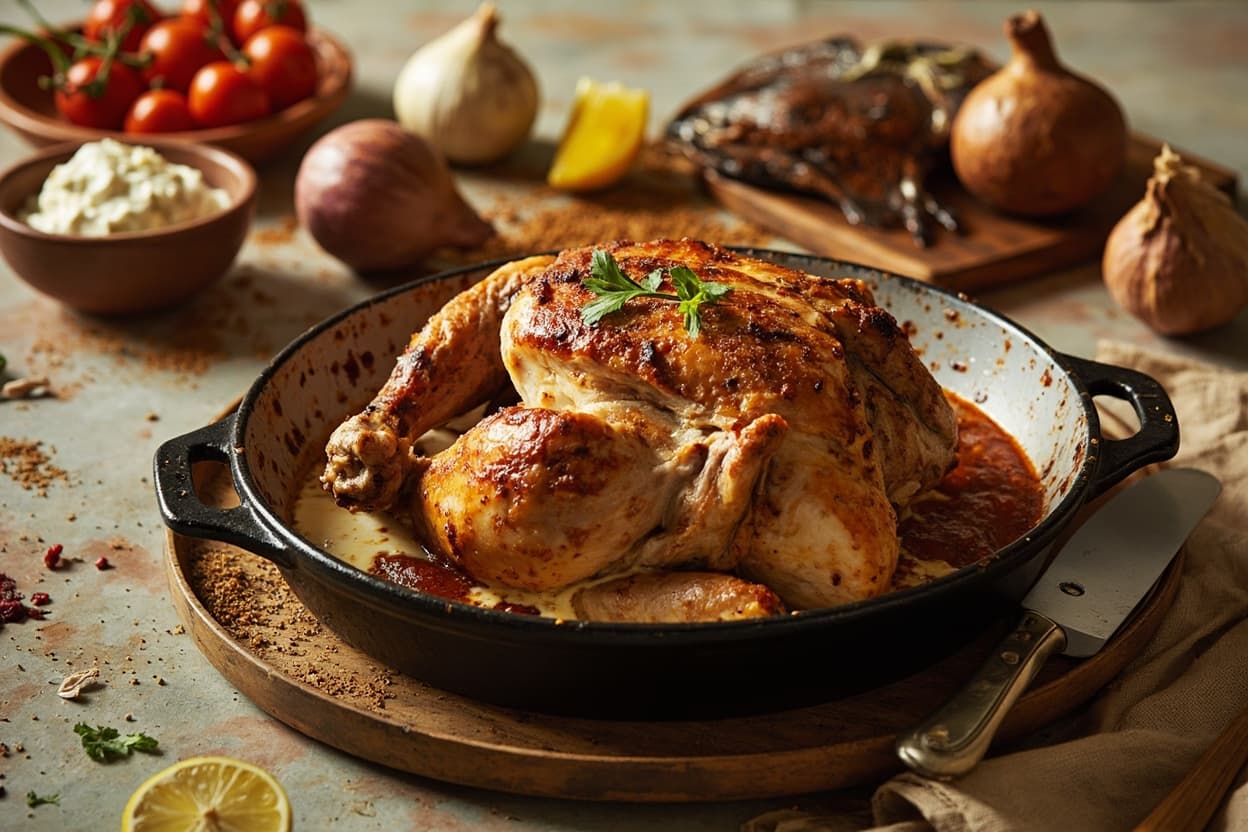
Whole Roast Masala Chicken, Yogurt and Lemon
A whole bird rubbed inside and out with yogurt, garlic, cumin, and enough cayenne to blush, then left to sit before going into a hot oven where the yogurt crust tightens and chars at the edges. The lemon goes in with it, roasting down until its juice turns concentrated and almost jammy against the skin. Sliced at the table, this one feeds everyone without ceremony.

Prep
20 min
Cook
1h
Rest
10 min
Total
3h 20m
Method
Marinate the Chicken
1
2
3
Stuff the cavity with the halved lemon and quartered onion. Place in a roasting pan, cover, and refrigerate for at least 2 hours or overnight for deeper flavor.
Roast the Chicken
4
Preheat your oven to 200°C (400°F). Remove the chicken from the refrigerator and let it sit at room temperature for 20 minutes.
5
Roast, uncovered, for 50 to 60 minutes until the juices run clear and the skin is deeply golden. Baste with pan juices halfway through.
6
The chicken is done when a thermometer reads 75°C (165°F) in the thickest part of the thigh. If the skin is browning too fast, tent loosely with foil.
Rest and Serve
7
Transfer the chicken to a board, tent loosely with foil, and rest for 10 minutes. This is not a moment to rush — the juices need to settle.
8
Squeeze the roasted lemon from the cavity over the chicken. Scatter fresh cilantro leaves over the top and serve.
B
Nutri-Score
Good balance
A–E · lower is better · score 1
Calories
944
per serving
High in protein · 74gLow sugar · 8g
Protein
74g
Carbs
14g
Fat
64g
Sat. fat
16g
Fiber
3g
Sugar
8g
Sodium
1192mg
Heart HealthyAnti InflammatoryDiabetes FriendlyGut HealthImmune SupportLow CholesterolHigh ProteinLow CarbBalanced Macros
Nutri-Score is a general nutritional-balance guide, not medical or dietary advice.
E
Environmental impact
Very high impact
A–E · lower is better · includes estimates
kg CO2e
4.0
per serving
ECarbonBEU all-round· carbon sets the grade
Water
1.6m³
Land
112Pt
Runoff
0.3g P
Whole chicken, patted dry drives 94% of this recipe’s estimated footprint.
Carbon from Poore & Nemecek 2018; water, land & runoff from Agribalyse — modelled averages for comparing recipes, not a measurement of your groceries.
Flavor Profile
6
Umami
4
Sweet
5
Salty
4
Sour
2
Bitter
6
Spicy
Textures
CrispyTenderJuicy
Aromas
HerbalSmokySpicyTangyEarthy
Kitchen Equipment
Techniques
Safety & Storage
Cooking Temperature
Chicken must reach 75°C (165°F) in the thickest part of the thigh. Use a meat thermometer to verify doneness before serving.
High Risk Population
Pregnant individuals, elderly, and immunocompromised persons must ensure chicken is fully cooked to safe internal temperature to prevent foodborne illness.
Cross Contamination
Raw chicken juices can contaminate surfaces and other foods. Use separate cutting boards, wash hands thoroughly after handling, and sanitize any prep surfaces that contact raw poultry.
Storage
Marinated chicken must stay refrigerated at or below 4°C (40°F). Do not leave marinating chicken at room temperature for more than 2 hours total.
Leftover roasted chicken should be refrigerated within 2 hours of cooking and consumed within 3-4 days. Reheat to 74°C (165°F) before serving.
Handling
When coating chicken under the skin, use clean utensils and avoid cross-contact with other ingredients or ready-to-eat foods.
Allergen Warning
This recipe contains yogurt (dairy). Ensure all serving guests are aware and alternative accommodations are made for those with dairy allergies.
Pro Tips
Technique
When you rub the marinade under the skin over the breasts and thighs, use your fingers to gently separate the skin from the meat first — this creates little pockets where all that beautiful yogurt and spice can work directly against the flesh, not just sit on top.
Substitution
No fresh ginger on hand? Use 1 teaspoon of ground ginger per tablespoon of fresh, but crush it with a little water first so it blooms properly in the marinade.
Make Ahead
Marinate overnight for the deepest, most fragrant result — but even 2 hours will give you something worth eating. The longer it sits, the more the cayenne heat and turmeric earthiness permeate every layer.
From the chef
A whole chicken rubbed inside and out with yogurt, garlic, cumin, and enough cayenne to blush — this is a marinade that needs time to work. Overnight is best, because the yogurt tenderizes the meat from within while the spices sink deep into the flesh. In a hot oven the coating tightens and chars at the edges, the lemon inside roasting until its juice turns concentrated and almost jammy against the skin. Rest it properly before you cut, and every slice will hold its juice. This feeds a table without ceremony and asks nothing but patience.
TagsRoastedMarinatedSpicyYogurtWhole ChickenAromatic
AllergensMilk
Source: generated · May 30, 2026