 French
Medium · Hot
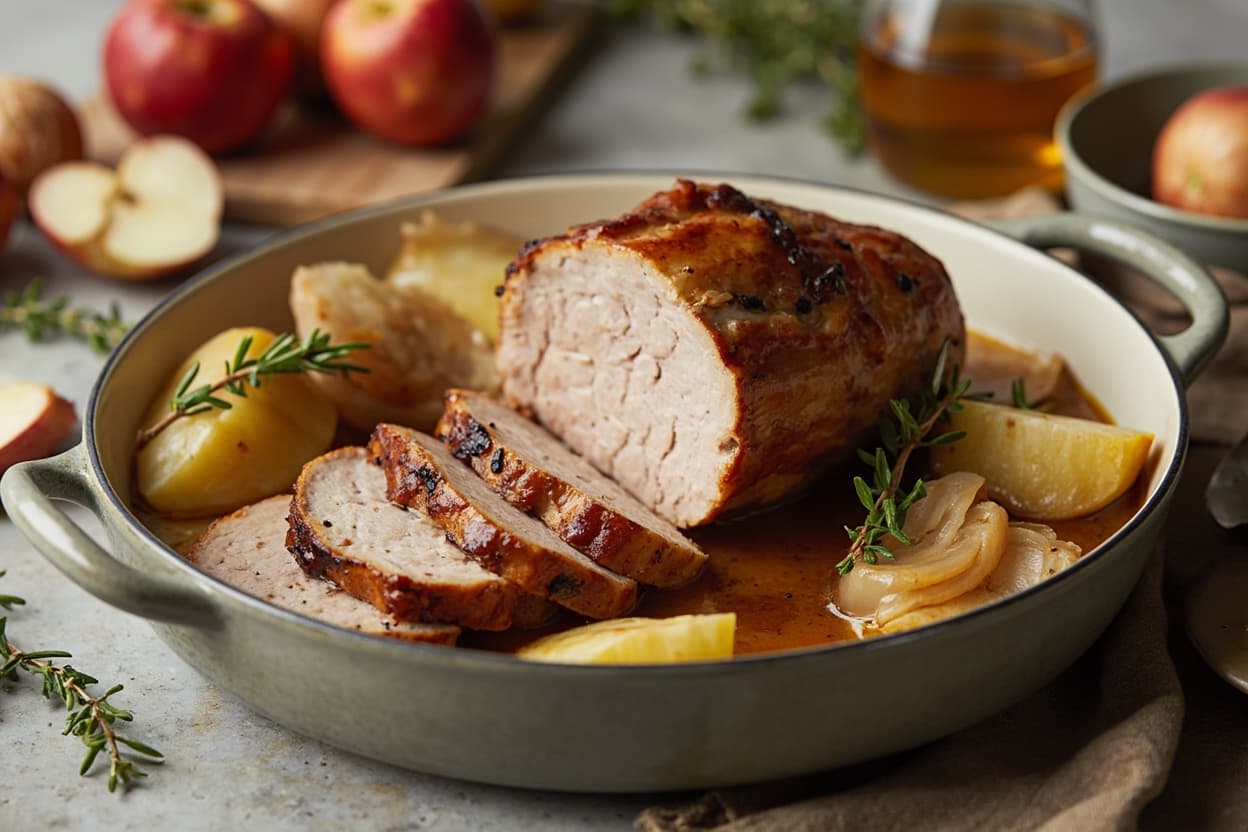
Normandy Cider Pork Loin with Apples
Pork loin roasts alongside soft-edged apple slices in a pan brightened with apple cider vinegar and thyme, the gentle acidity keeping the whole thing lively rather than heavy. Onion melts into the background while olive oil ties the flavours together — familiar, warming, and free from anything you cannot account for.

Prep
15 min
Cook
50 min
Rest
5 min
Total
1h 10m
Method
1
2
Add the water, fresh thyme sprigs, and rosemary sprigs. Stir to combine the aromatics with the braising liquid.
B
Nutri-Score
Good balance
A–E · lower is better · score 1
Calories
466
per serving
High in protein · 43g
Protein
43g
Carbs
23g
Fat
23g
Sat. fat
7g
Fiber
3g
Sugar
17g
Sodium
1023mg
Gluten FreeDairy FreeEgg FreeNut FreeSoy FreeHeart HealthyLow SugarHigh ProteinLow Carb
Nutri-Score is a general nutritional-balance guide, not medical or dietary advice.
E
Environmental impact
Very high impact
A–E · lower is better · includes estimates
kg CO2e
2.6
per serving
ECarbonAEU all-round· carbon sets the grade
Water
0.8m³
Land
79Pt
Runoff
0.2g P
pork loin drives 94% of this recipe’s estimated footprint.
Carbon from Poore & Nemecek 2018; water, land & runoff from Agribalyse — modelled averages for comparing recipes, not a measurement of your groceries.
Flavor Profile
6
Umami
7
Sweet
5
Salty
3
Sour
1
Bitter
3
Spicy
Textures
CrispyTenderJuicyCaramelized
Aromas
HerbalFruityWineySavory
Kitchen Equipment
Primary Tool
Braising PanBraising PanChef KnifeCutting BoardSlotted SpoonInstant Read ThermometerMeat Resting PlatePlastic WrapKitchen String
Counter FootprintMedium
Safety & Storage
Cooking Temperature
Pork loin must reach a minimum internal temperature of 63C or 145F to ensure safety against parasites and bacteria. Use a meat thermometer to verify doneness before consuming.
Cross Contamination
Keep raw pork separate from all vegetables and prepared foods during preparation. Use dedicated cutting boards and utensils for raw meat to prevent bacterial transfer.
Storage
Refrigerate leftover pork within two hours of cooking. Store in airtight containers and consume within three to four days for optimal quality and safety.
High Risk Population
Pregnant individuals, young children, elderly persons, and immunocompromised individuals should only consume pork that has reached the recommended internal temperature throughout.
Allergen Warning
Although this recipe is designed to avoid the top eight allergens, always verify that all ingredient labels are reviewed for sulfite content if preparing for sensitive individuals.
Handling
Allow seared pork to rest on a clean plate, not directly on countertops where raw meat juices may have dripped. Clean and sanitize any surfaces that contact raw pork immediately.
Pro Tips
Technique
When searing your pork, resist the urge to move it too soon—let it develop a deep golden crust for 3-4 minutes per side. That Maillard reaction creates layers of flavor that carry through the entire braise.
Substitution
Swap the white wine for additional water with 1 tablespoon of apple cider vinegar for an allergen-free alternative that maintains that subtle tang.
From the chef
Pork loin and apple are a natural pairing, and the key is giving each its moment: sear the pork until deeply browned on all sides before it goes into the braise, and let the apples caramelize separately so their edges catch. Apple cider vinegar keeps the braising liquid lively and prevents the whole dish from turning heavy. Thyme and rosemary work quietly in the background. The honey glaze goes on at the end, just enough to add a gentle sheen and tie the sweet and savory together. Slice against the grain, arrange the apples alongside, and serve while everything is still warm. Free from the top allergens, and genuinely comforting.
TagsFrenchBraisedPorkApplesWhite WineComfort FoodAllergen FreeAutumnOne Pan
AllergensSulfites
Source: generated · May 30, 2026