 Chinese
Medium · Hot
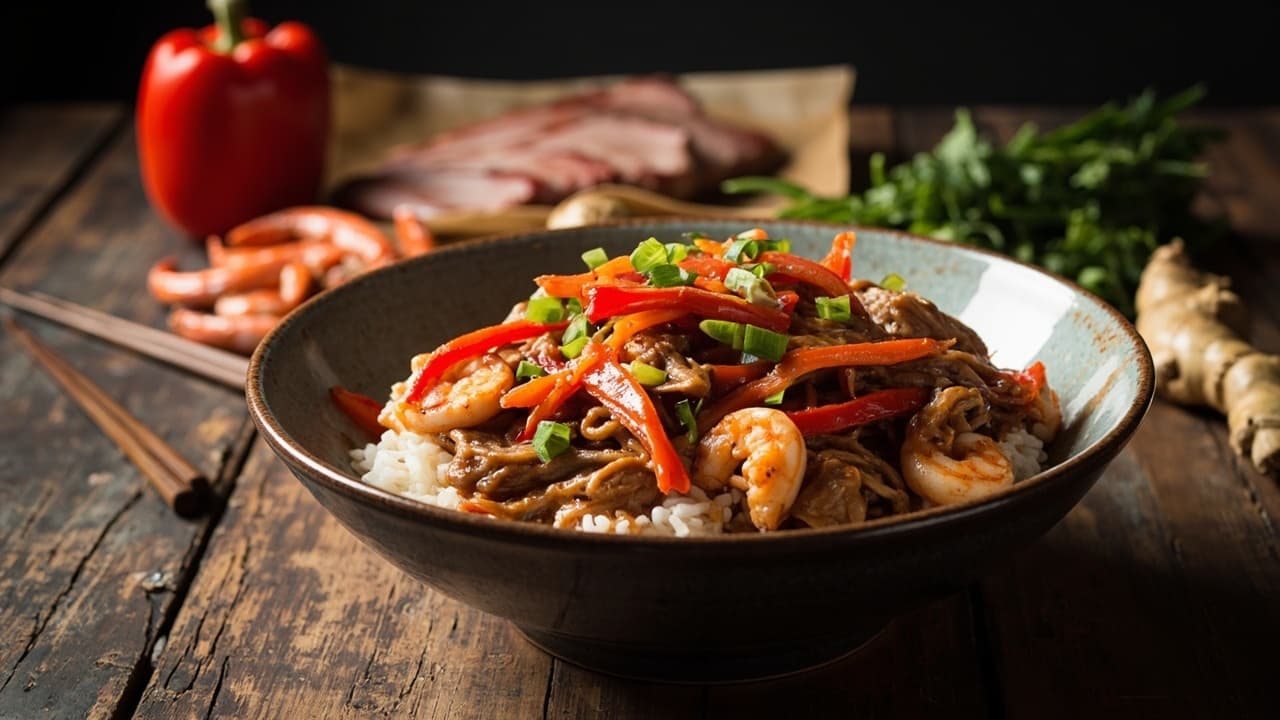
Spicy Pork and Shrimp Stir-Fry
A bold wok-tossed stir-fry with tender pork loin and plump shrimp in a spicy, savory sauce with crisp vegetables. Channeling wok hei energy with high heat and quick tosses.

Prep
15 min
Cook
15 min
Rest
10 min
Total
40 min
Method
Marinate the Proteins
1
Toss pork loin slices and shrimp together in a bowl with 2 tbsp soy sauce, 1 tbsp sesame oil, and 1 tbsp cornstarch. Mix until well coated and let sit for 10 minutes.
Make the Spice Paste
2
Combine minced garlic, grated ginger, cayenne, and white pepper in a small bowl. Mash together with the back of your spoon until a fragrant paste forms.
Mix the Stir-Fry Sauce
3
In a separate small bowl, whisk together 3 tbsp soy sauce, 1 tbsp sesame oil, 1 tbsp rice vinegar, and 1 tsp white sugar. Set aside near the wok.
High-Heat Wok Work
4
Place your wok over the highest heat you can manage until it begins to smoke lightly. Add 3 tbsp sesame oil and swirl to coat.
5
Add the spice paste and stir-fry for 30 seconds until fragrant and sizzling aggressively.
6
Add the marinated pork and spread into a single layer. Sear for 1 minute without moving, then toss and cook another minute until just turning opaque.
7
Push pork to one side, add shrimp in the empty space. Cook 1-2 minutes, flipping once, until pink and curled.
8
Add bell pepper and scallions. Toss everything together and cook 2 minutes until vegetables soften slightly but retain crunch.
9
Pour the stir-fry sauce over everything and toss vigorously for 1 minute, coating every piece with glossy, savory sauce.
10
Season with 0.5 tsp salt, give one final toss, and serve immediately over steamed white rice.
A
Nutri-Score
Excellent balance
A–E · lower is better · score -1
Calories
365
per serving
High in protein · 29gLow sugar · 4g
Protein
29g
Carbs
12g
Fat
22g
Sat. fat
5g
Fiber
2g
Sugar
4g
Sodium
614mg
Gluten FreeDairy FreePescatarianPaleo FriendlyHeart HealthyDiabetes FriendlyHigh ProteinSatiety Focused
Nutri-Score is a general nutritional-balance guide, not medical or dietary advice.
D
Environmental impact
High impact
A–E · lower is better · includes estimates
kg CO2e
2.4
per serving
DCarbonBEU all-round· carbon sets the grade
Water
9.1m³
Land
46Pt
Runoff
0.5g P
Shrimp, peeled and deveined drives 56% of this recipe’s estimated footprint.
Carbon from Poore & Nemecek 2018; water, land & runoff from Agribalyse — modelled averages for comparing recipes, not a measurement of your groceries.
Flavor Profile
7
Umami
3
Sweet
6
Salty
2
Sour
1
Bitter
5
Spicy
Textures
TenderCrispSaucyJuicy
Aromas
PungentHerbalNuttySmokySpicy
Kitchen Equipment
Primary Tool
WokCounter FootprintMedium
Techniques
Safety & Storage
Allergen Warning
Shellfish (shrimp) allergen present. Keep shrimp separate from other ingredients during prep. Clean all utensils, cutting boards, and surfaces with hot soapy water after handling raw shrimp. Do not use shrimp juice or drippings in other dishes without proper heat treatment.
Soy allergen present from soy sauce used in marinade and stir-fry sauce. Verify soy-free status for soy-allergic individuals. Note that tamari or coconut aminos could substitute if dairy-free soy allergy is not accompanied by wheat allergy.
Sesame allergen present from sesame oil used throughout recipe. Sesame oil is not typically heat-neutralized and remains allergenic even when cooked. Avoid cross-contact with sesame-free items during plating.
Cross Contamination
Raw pork loin and shrimp are marinated together. Use separate bowls and utensils for each protein if preparing for immune-compromised individuals. Never return cooked ingredients to the raw marinade container.
Cooking Temperature
Wok must reach smoking point before adding oil and ingredients. Add ingredients in rapid sequence: spice paste (30 sec), pork (2 min total), shrimp (1-2 min), vegetables (2 min). Internal temperature of pork should reach 145°F and shrimp should turn opaque with pink color throughout.
Handling
Shrimp require careful handling to avoid cross-contamination with ready-to-eat foods. Use a designated cutting board for raw seafood. Marinate shrimp in refrigerator at 40°F or below. Do not leave at room temperature for more than 30 minutes during prep.
Storage
Leftover stir-fry must be refrigerated within 2 hours of cooking. Store in airtight containers at 40°F or below. Consume within 3 days. Reheat to 165°F until steaming hot throughout before serving.
High Risk Population
Pregnant individuals, young children, elderly, and immunocompromised persons face elevated risk from undercooked pork or shrimp. Ensure proper cooking temperatures are verified. This dish contains no deli or raw-seafood components intended to be consumed raw.
Equipment Safety
High-heat wok cooking presents burn and grease-splash risk. Have a splatter guard nearby. Never add cold ingredients to superheated oil as this causes violent bubbling. Dry shrimp thoroughly before adding to wok to minimize oil splatter.
Pro Tips
Technique
Your wok must smoke before you add the oil—never add oil to a cold wok. This smoking point creates the thermal shock that gives proteins that coveted maillard crust and unlocks wok hei in your home kitchen.
Substitution
If shrimp is not available, equal weights of bay scallops or firm squid rings work beautifully; the quick cooking time stays the same, and both absorb the spicy sauce wonderfully.
Flavor Boost
Finish with a pinch of toasted Sichuan peppercorn powder to awaken the mala sensation—your mouth will thank you for the numbing-spicy finish that defines great Sichuan cooking.
From the chef
Pork loin and shrimp in one wok — this is a fast, high-heat combination that demands respect. The pork goes in first, seared until just opaque, then pushed aside so the shrimp can hit the hot surface and curl pink in under two minutes. A spice paste of garlic, ginger, cayenne, and white pepper blooms in the oil before anything else touches the wok. Bell pepper and scallions go in last to keep their crunch. The soy-sesame-vinegar sauce coats every piece with that glossy, savory finish. Keep your heat high and your tossing aggressive.
TagsSpicyHigh ProteinWeeknight DinnerQuickStir FryPorkSeafoodWok Cooked
AllergensShellfishSoySesame
Source: generated · June 10, 2026