 Indonesian
Medium · Hot
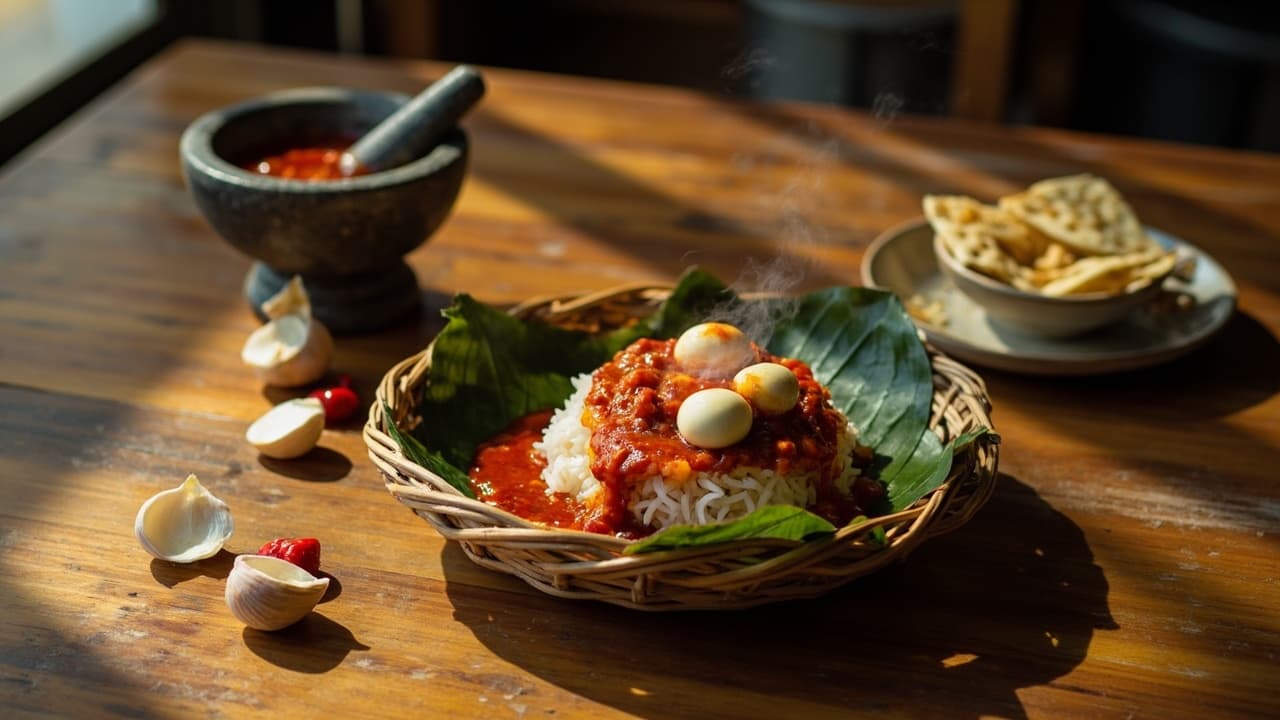
Telur Bumbu — Braised Eggs in Savory Sauce
A classic Indonesian home-style dish where hard-boiled eggs are simmered in a fragrant, slightly sweet savory sauce built from scratch bumbu. Perfect with steamed rice.

Prep
15 min
Cook
35 min
Rest
5 min
Total
55 min
Method
Make the Bumbu
1
Peel and roughly chop the shallots, garlic, and ginger. Add them to a mortar and pestle along with cayenne and salt.
2
Grind everything into a smooth paste, working in circular motions. This is the heart of your dish — take your time until no chunks remain.
Prepare the Eggs
4
Build the Sauce and Braise
6
Heat coconut oil in a wok or large pan over medium heat until shimmering.
7
Add the bumbu paste and fry for 2-3 minutes, stirring constantly, until deeply fragrant and the oil begins to separate.
8
Pour in tomato sauce and soy sauce, stirring to combine with the bumbu.
9
Add water and bring to a gentle simmer. Taste and adjust seasoning with salt and black pepper.
10
Serve
12
Remove from heat and let rest for 2 minutes. Serve hot over jasmine rice, spooning extra sauce on top.
C
Nutri-Score
Fair balance
A–E · lower is better · score 3
Calories
344
per serving
Source of protein · 17gLow sugar · 14g
Protein
17g
Carbs
25g
Fat
21g
Sat. fat
14g
Fiber
4g
Sugar
14g
Sodium
638mg
Gluten FreeDairy FreePaleoKeto FriendlyWhole30Not Suitable Low SodiumNot Suitable Heart HealthHigh ProteinLow CarbBalanced Fat
Nutri-Score is a general nutritional-balance guide, not medical or dietary advice.
B
Environmental impact
Low impact
A–E · lower is better · includes estimates
kg CO2e
0.7
per serving
BCarbonAEU all-round· carbon sets the grade
Water
0.4m³
Land
26Pt
Runoff
0.08g P
Egg drives 70% of this recipe’s estimated footprint.
Carbon from Poore & Nemecek 2018; water, land & runoff from Agribalyse — modelled averages for comparing recipes, not a measurement of your groceries.
Flavor Profile
7
Umami
4
Sweet
5
Salty
3
Sour
1
Bitter
5
Spicy
Textures
TenderSilkySaucyGlazed
Aromas
SavoryHerbalPungentSmoky
Kitchen Equipment
Primary Tool
WokWokMortar And PestleStockpotIce BathChef KnifeCutting BoardMeasuring SpoonsMeasuring CupsSlotted SpoonSpatulaPlastic WrapPaper Towels
Counter FootprintMedium
Safety & Storage
Handling
Eggs should be handled gently during peeling after boiling. Use the ice bath method to stop carryover cooking and make peeling easier, reducing the risk of egg damage and contamination.
Cooking Temperature
Bring egg cooking water to a full rolling boil before removing from heat. Ensure sauce simmer reaches at least 165°F (74°C) during the 15-20 minute braise to ensure food safety.
Cross Contamination
Use separate cutting boards and utensils for raw eggs and ready-to-eat ingredients. Clean and sanitize all surfaces that contact raw eggs with hot soapy water followed by sanitizer.
Storage
Store leftover Telur Bumbu in an airtight container in the refrigerator within 2 hours of cooking. Consume within 3-4 days for best quality and safety.
High Risk Population
Eggs in this recipe are hard-boiled which reduces but does not eliminate Salmonella risk. Pregnant women, young children, elderly, and immunocompromised individuals should ensure eggs are cooked to firm yolk consistency.
Equipment Safety
Use oven mitts or tongs when handling hot pots for boiling eggs and when working with hot wok oil. Coconut oil reaches high temperatures during frying.
Pro Tips
Technique
Do not skip grinding the bumbu in a mortar — the friction and pressure extract oils from the shallots and ginger that create layers of flavor impossible to achieve in a food processor. My grandmother used a cobek for everything, and so should you.
Flavor Boost
For a deeper umami punch, add a teaspoon of terasi (shrimp paste) when frying the bumbu — this is the secret Indonesian chefs use that transforms a good sauce into an unforgettable one.
Substitution
If kecap manis is unavailable, substitute with dark soy sauce plus half a teaspoon of palm sugar, but trust me — the real thing makes all the difference.
From the chef
Telur Bumbu reminds me of lazy Sunday mornings in my grandmother's kitchen in Yogyakarta. She would grind the bumbu by hand, insisting that a blender could never capture the oils the way a mortar does. This dish is proof that the most humble ingredients — eggs, shallots, garlic — become something extraordinary when treated with patience and love. The glossy sauce clinging to each egg tells a story of generations of Indonesian home cooks who understood that great flavor starts with a proper paste.
TagsSpicyBraisedEggsBumbuWeeknight DinnerSauce Based
AllergensEggsSoyFishShellfish
Source: generated · June 10, 2026