 Mediterranean
Medium · Room Temperature
Rescue-Plan Lemon and Olive Oil Cake
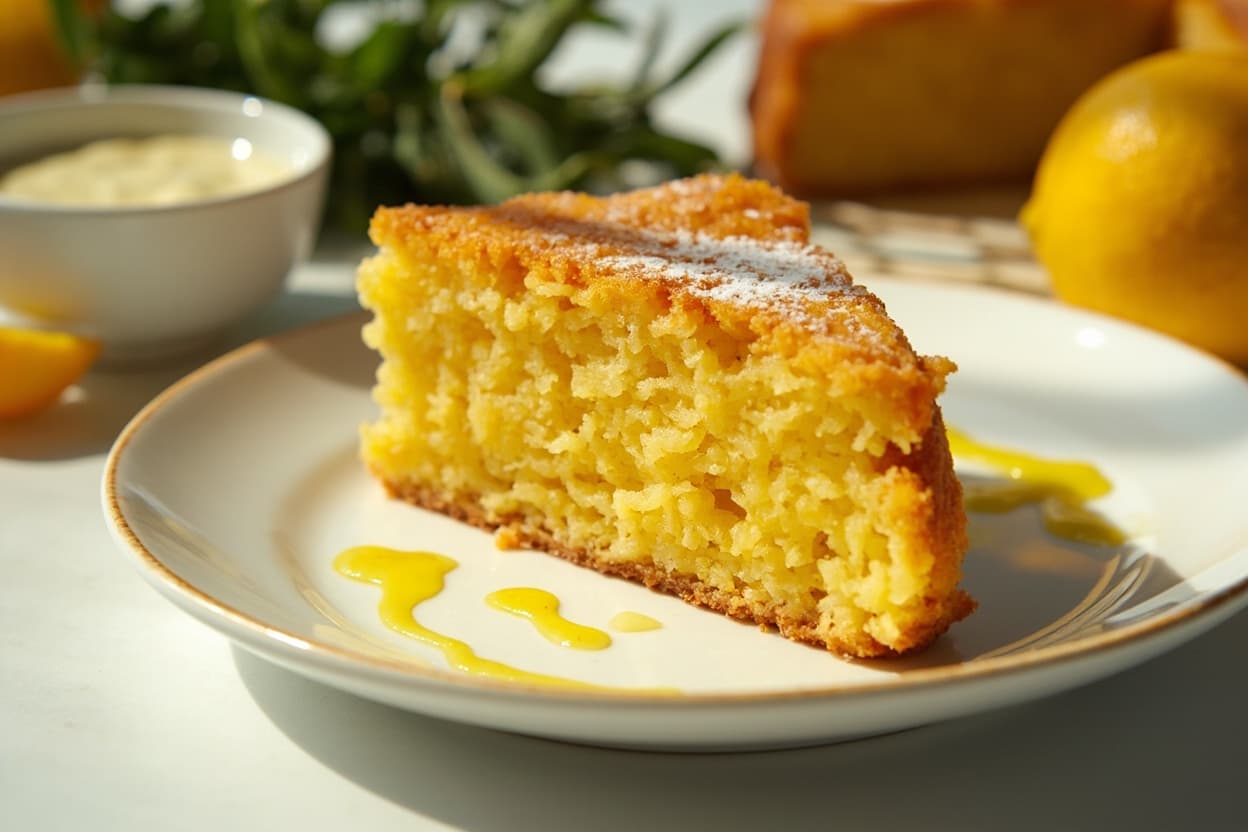
A bright, moist olive oil cake with lemon that Sol would approve of — forgiving, flexible, and designed with exits before anything goes sideways. This one tastes like sunshine and forgives the cook.

Prep
15 min
Cook
30 min
Rest
25 min
Total
1h 10m
Method
Prep
1
Zest both lemons directly into your mixing bowl — get all that fragrant yellow stuff. Now juice them and add that juice too. Save the juiced halves to wipe the pan later. You're welcome.
Build the Batter
2
3
Introduce the Dry Crew
5
In another bowl (or pour directly if you're feeling confident), whisk together flour, sugar, baking powder, and salt. This is your insurance policy — aerated and evenly distributed.
6
Dump the dry ingredients into the wet. Fold with a wooden spoon or spatula until just combined. Stop when you still see a few streaks of flour. Really. The lumps will bake out, and your cake will be tender instead of tough.
The Pour and Panic Prevention Phase
7
Sensory checkpoint: The batter should be thick but pourable — like good pancake batter. If it's stiff as paste, add milk one tablespoon at a time until it flows. If it's runny as soup, dust with flour one tablespoon at a time.
8
Pour into your prepared pan. Smooth the top with the back of a spoon. You're setting the stage for an even crumb.
Baking
9
Slide into a 350°F oven. Set your timer for 25 minutes.
10
At 25 minutes, open the oven door — don't just stand there guessing. The edges should be pulling away from the pan and the top should spring back when you gently press it.
11
If the center still looks wet or jiggly, close the door and check every 3 minutes. If the top is browning too aggressively while the center isn't done, tent loosely with foil and continue.
12
A toothpick inserted in the center should come out with moist crumbs, not wet batter. If it comes out clean, you've overdone it — go straight to the rescue plan.
Cooling and Rescue Windows
13
Remove from oven. Let the cake rest in the pan for exactly 10 minutes — this is your structural settling period. Don't skip it.
14
Run a knife around the edge to loosen. Place a wire rack over the top and flip. Lift the pan gently. If it sticks, wait 2 more minutes and try again. Patience prevents crumbling.
15
Flip right-side up onto the rack. Let it cool another 15 minutes before slicing. Yeah, it's hard. Do it anyway.
Rescue Plans (Print These)
17
18
Rescue #2 — Sunken Center: The cake is underdone. Tent with foil and return to oven at 325°F for 10-15 minutes. Still salvageable.
19
20
Rescue #4 — Batter Too Thick Right Now: Add milk or water one tablespoon at a time until pourable. This won't ruin the cake — it just adjusts consistency.
Grade pending
Nutri-Score
Estimated nutrition
Grade pending · 100% ingredient coverage
Calories
402
per serving
Protein
5g
Carbs
47g
Fat
23g
Sat. fat
4g
Fiber
1g
Sugar
28g
Sodium
311mg
VegetarianDairy FreeHeart HealthyLow Sodium OptionBalanced MacrosPortion Aware
Nutri-Score is a general nutritional-balance guide, not medical or dietary advice.
Grade pending
Environmental impact
Estimated footprint
Grade pending · 100% ingredient coverage
kg CO2e
0.3
per serving
Water
0.5m³
Land
19Pt
Runoff
0.03g P
olive oil drives 38% of this recipe’s estimated footprint.
Carbon from Poore & Nemecek 2018; water, land & runoff from Agribalyse — modelled averages for comparing recipes, not a measurement of your groceries.
Flavor Profile
2
Umami
6
Sweet
3
Salty
7
Sour
2
Bitter
0
Spicy
Textures
TenderMoistSlightly CrispySoft Centered
Aromas
CitrusFruityFloralHoneyed
Kitchen Equipment
Primary Tool
Baking PanOvenBaking PanMixing BowlWhiskWooden SpoonSpatulaWire RackKnifeMeasuring CupsMeasuring SpoonsPlastic WrapParchment Paper
Counter FootprintSmall
Techniques
Safety & Storage
Allergen Warning
This recipe contains eggs and wheat/gluten. For allergen-sensitive individuals, ensure all equipment is thoroughly cleaned before use and verify ingredient labels on baking powder for potential cross-contact with allergens.
Cross Contamination
Raw eggs are used in this batter. Use separate utensils for mixing raw batter and handling cooked cake. Avoid tasting batter containing raw eggs, especially for vulnerable populations.
Cooking Temperature
Bake at 350°F until internal temperature reaches at least 160°F. Use a toothpick check—moist crumbs (not wet batter) indicate doneness. If top browns too quickly, tent loosely with foil.
Handling
Allow cake to cool in pan for 10 minutes before removing. Hot cake is fragile and may crumble. Use oven mitts when handling hot pans and tenting foil.
Storage
Store at room temperature wrapped well for up to 2 days, or refrigerate for up to 5 days. Bring to room temperature before serving for best flavor and texture.
Shelf Life
Room temperature storage beyond 2 days risks bacterial growth. Refrigeration extends shelf life to 5 days. Discard if mold appears or if cake smells off.
High Risk Population
Raw egg batter poses salmonella risk. Infants, elderly, pregnant individuals, and immunocompromised persons should avoid consuming raw or undercooked eggs.
Pro Tips
Technique
When you stream in that olive oil while whisking, you're not just combining—you're building an emulsion. The mixture should go glossy and loosen up, not stay tight and sticky. If it looks flat, keep whisking. You're aerating your insurance policy.
Substitution
No honey? Swap in maple syrup or agave. No lemons? Use oranges—the cake goes somewhere equally beautiful. Two substitutions, always. This recipe doesn't hold grudges.
Reheating
Cold cake dulls the lemon. Always bring leftovers to room temp before serving again. Ten minutes on the counter does the trick—no microwave violence needed.
From the chef
I built this cake for every cook who's ever pulled something from the oven and felt their stomach drop. This isn't a test—it's a conversation between you, your senses, and some damn good ingredients. The lemon speaks first, the olive oil answers, and the honey holds it all together like a warm argument you actually want to keep having.
TagsLemonOlive OilHoneyCitrusFlexibleMoistBaking
AllergensEggsWheatGluten
Source: generated · June 9, 2026