 Moroccan
Medium · Hot
Moroccan Couscous with Saffron, Lemon, and Fresh Herbs
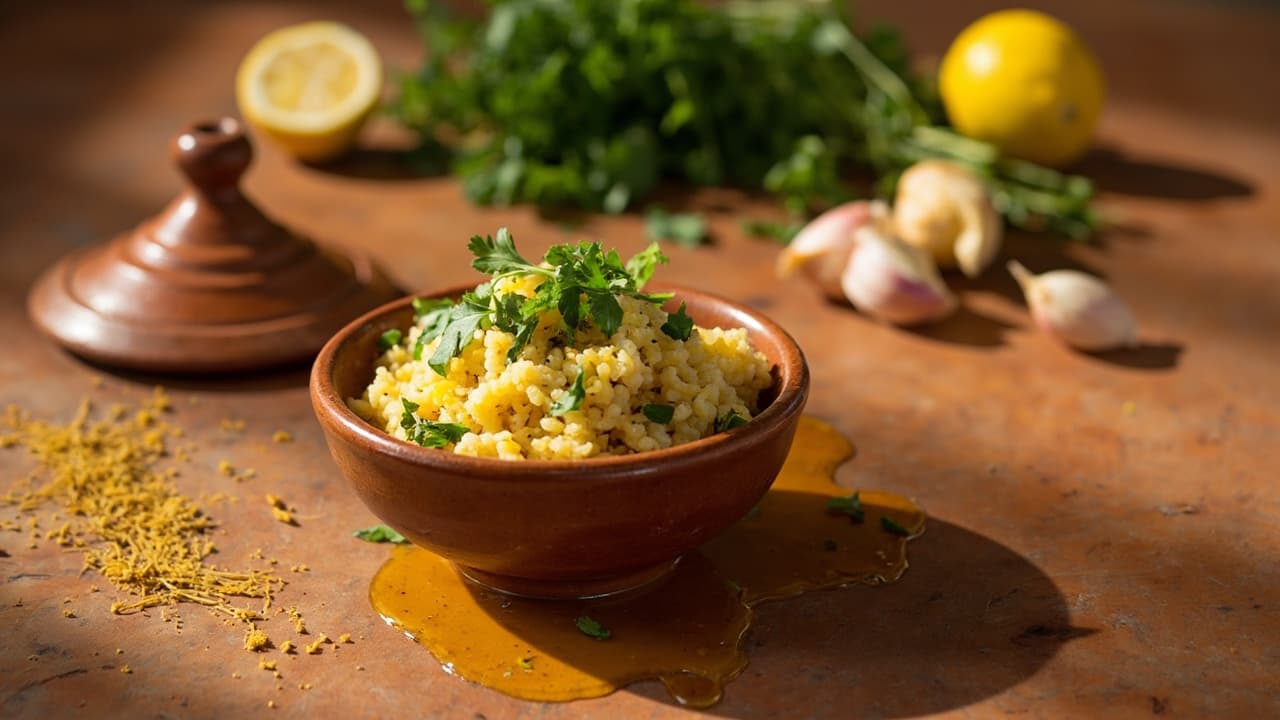
Steamed couscous infused with saffron and aromatic spices, finished with bright lemon juice, fresh herbs, and a touch of honey — a Moroccan celebration on a plate.

Prep
15 min
Cook
30 min
Total
45 min
Method
1
Combine saffron threads with warm water in a small bowl. Steep for 5-10 minutes until water turns deep golden-orange and fragrant.
2
Place couscous in a heat-safe bowl, pour 1 cup boiling water over it, cover tightly with plastic wrap, and let steam 5 minutes. Fluff with a fork and drizzle with 1 tablespoon olive oil.
3
In a tagine or Dutch oven, heat remaining olive oil over medium heat. Add diced yellow onion and cook 5-6 minutes until softened and translucent. Add minced garlic and cook 1 minute more until fragrant.
4
Add cumin, cinnamon, ground ginger, turmeric, and black pepper to the onion mixture. Stir constantly for 1 minute until spices are toasted and fragrant.
5
Pour the saffron infusion (including threads) into the pot. Add tomato sauce and chicken broth. Bring to a gentle simmer over medium heat, about 2-3 minutes.
6
A
Nutri-Score
Excellent balance
A–E · lower is better · score -2
Calories
411
per serving
Low sugar · 7gLow saturated fat · 3g
Protein
11g
Carbs
59g
Fat
15g
Sat. fat
3g
Fiber
7g
Sugar
7g
Sodium
674mg
Dairy FreeMediterraneanWhole GrainAnti InflammatoryDiabetesHeart HealthyWeight ManagementHigh FiberHigh IronHigh ProteinLow Saturated FatVitamin C Rich
Nutri-Score is a general nutritional-balance guide, not medical or dietary advice.
A
Environmental impact
Very low impact
A–E · lower is better · includes estimates
kg CO2e
0.4
per serving
ACarbonAEU all-round· both agree
Water
0.7m³
Land
28Pt
Runoff
0.06g P
Carbon from Poore & Nemecek 2018; water, land & runoff from Agribalyse — modelled averages for comparing recipes, not a measurement of your groceries.
Flavor Profile
6
Umami
4
Sweet
5
Salty
3
Sour
1
Bitter
4
Spicy
Textures
FluffyFreshLightTender
Aromas
CitrusEarthyFloralHerbalSpicy
Kitchen Equipment
Primary Tool
Dutch OvenTechniques
Folding
Safety & Storage
High Risk Population
Do not feed honey to infants under 12 months due to risk of infant botulism. The 1 teaspoon of honey in this recipe poses this risk for young children.
Storage
Fresh herbs (parsley and cilantro) should be stored in the refrigerator, used within 3-5 days, or blanched and frozen for longer storage to prevent bacterial growth.
Cross Contamination
Use separate cutting boards and utensils for fresh herbs and raw aromatics to prevent bacterial cross-contamination. Wash hands thoroughly after handling garlic and onion.
Allergen Warning
Store couscous away from cross-contact with other allergens. Clean preparation surfaces with soap and water or sanitizing solution before preparing if cooking for someone with wheat/gluten sensitivity.
Cooking Temperature
Ensure saffron broth reaches a gentle simmer (185-205°F) before adding couscous to ensure proper grain separation without mushiness. Discard any broth that has been held below 140°F for more than 2 hours.
Shelf Life
Prepared couscous is best consumed within 2-3 days when refrigerated in airtight containers. Reheat to 165°F before serving. Do not leave at room temperature for more than 2 hours.
Pro Tips
Technique
Never rush the saffron bloom — let those threads steep properly in warm water to extract every drop of color and fragrance. The deep golden-orange you see in that bowl will become the soul of your entire couscous.
Substitution
While nothing replaces true saffron threads, a generous pinch of turmeric will give you that beautiful golden color if needed — though I ask you, please, never to call it a substitute for the real thing.
From the chef
Couscous is not merely a grain — it is a conversation between steam and patience, between spice and sweetness, and this version honors that fully. Saffron threads steep until the broth turns deep amber-gold, then cumin, cinnamon, ginger, and turmeric bloom together in warm oil before the couscous absorbs every drop of color and fragrance. A finish of lemon juice, honey, and handfuls of fresh parsley and cilantro brings the whole thing alive. Every grain should shimmer, and every bite should carry you somewhere worth going.
TagsHerb Fresh
AllergensWheatSulfites
Source: generated · June 13, 2026