 Ecuadorian
Medium · Room Temperature
Shrimp Ceviche Chaleado
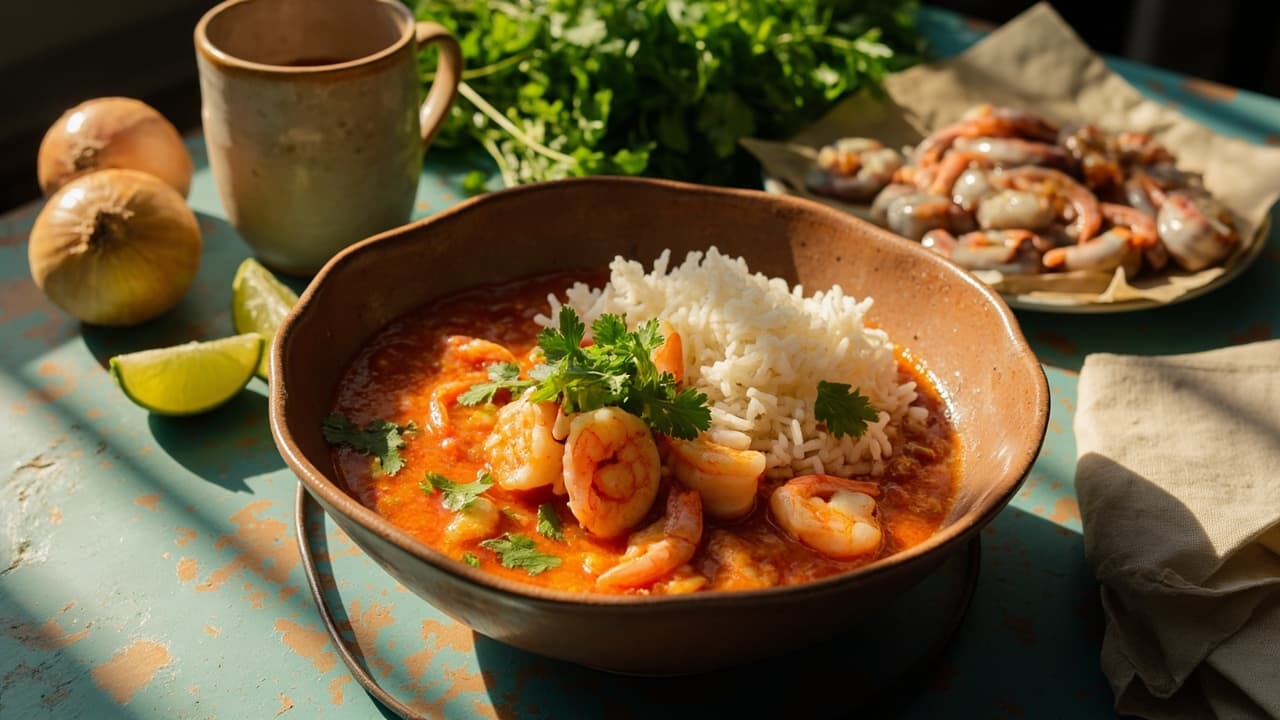
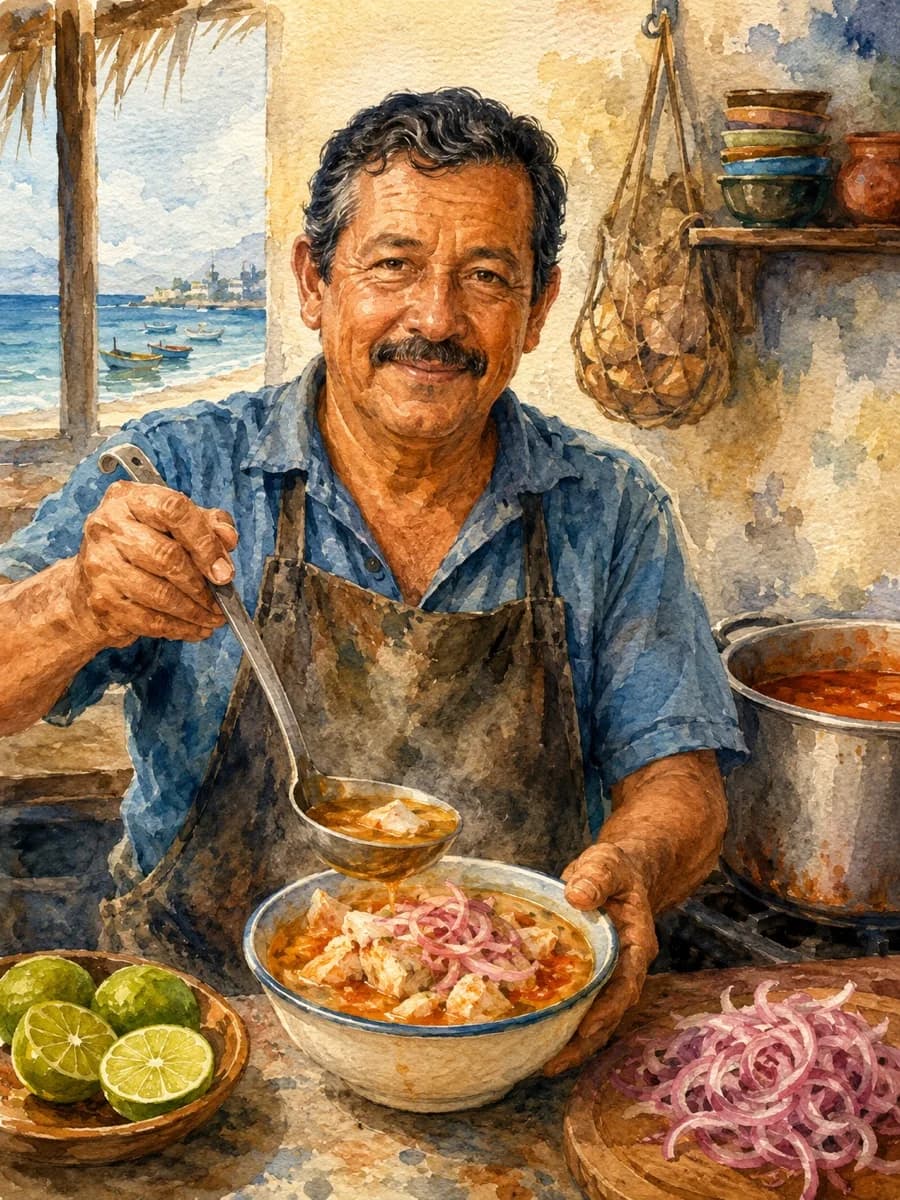
A beloved coastal Ecuadorian ceviche where plump shrimp are briefly blanched in hot ají broth then finished in bright lime juice. The result is tender, warmly spiced, and kissed with citrus. Manuel serves it with white rice and a final handful of cilantro.
Prep
20 min
Cook
25 min
Rest
5 min
Total
50 min
Method
Prepare the shrimp and lime juice
1
2
Juice all 6 limes into a large non-reactive bowl. Reserve the juice.
Build the ají base
3
Dice the tomato and slice the yellow onion thinly. Roughly chop the garlic cloves.
4
In a stockpot over medium heat, warm the olive oil. Add the sliced onion and cook, stirring with a wooden spoon, until softened and slightly golden, about 8 minutes.
6
Add the diced tomato and cook until they break down into a thick, jammy sauce, about 10 minutes. Pour in the chicken broth and bring to a gentle simmer.
Chaleado — cook the shrimp in hot broth
7
Drop the seasoned shrimp into the simmering ají broth. Cook for just 2 minutes — they should turn pink but remain tender inside. Do not overcook.
8
Remove the pot from the heat. Using a slotted spoon, transfer the shrimp and a ladleful of the hot broth directly into the bowl of fresh lime juice. The hot broth will warm the lime juice and begin the cooking process.
Finish and serve
11
Roughly chop the cilantro and stir it in off the heat — this preserves its bright, fresh flavor.
12
Slice the avocado and arrange on the side or float on top of each bowl.
13
Serve the Shrimp Ceviche Chaleado immediately alongside steamed white rice, with extra lime wedges on the side.
A
Nutri-Score
Excellent balance
A–E · lower is better · score -3
Calories
580
per serving
High in protein · 39gLow sugar · 8gLow saturated fat · 2g
Protein
39g
Carbs
85g
Fat
12g
Sat. fat
2g
Fiber
8g
Sugar
8g
Sodium
1851mg
Gluten FreePescatarianDairy FreeLow Saturated FatNo Added SugarsHeart HealthyAnti InflammatoryDiabetes FriendlyLow Sodium OptionHigh ProteinLow FatBalanced MealWeight Management
Nutri-Score is a general nutritional-balance guide, not medical or dietary advice.
E
Environmental impact
Very high impact
A–E · lower is better · includes estimates
kg CO2e
4.1
per serving
ECarbonBEU all-round· carbon sets the grade
Water
26m³
Land
48Pt
Runoff
1.1g P
Shrimp drives 82% of this recipe’s estimated footprint.
Carbon from Poore & Nemecek 2018; water, land & runoff from Agribalyse — modelled averages for comparing recipes, not a measurement of your groceries.
Flavor Profile
6
Umami
4
Sweet
5
Salty
8
Sour
1
Bitter
3
Spicy
Textures
TenderSmoothCreamyJuicy
Aromas
CitrusHerbalSavoryHerbaceousSmoky
Kitchen Equipment
Primary Tool
StockpotCounter FootprintMedium
Safety & Storage
Cooking Temperature
Shrimp must reach 145°F internal temperature for food safety. The recipe uses a 2-minute blanch in hot ají broth followed by residual heat from lime juice mixture — ensure broth is actively simmering at 180-200°F when shrimp are added.
Cross Contamination
Raw shrimp juice can cross-contaminate other ingredients. Use separate cutting boards, utensils, and prep bowls for raw shrimp versus fresh garnishes like cilantro, onion, and avocado. Sanitize all surfaces after handling raw shellfish.
Storage
Ceviche should not be stored — serve immediately. If leftovers are unavoidable, refrigerate within 1 hour at 40°F or below and consume within 24 hours. Do not leave at room temperature for more than 2 hours total.
High Risk Population
Traditional acid-cooked ceviche is not fully pasteurized. High-risk populations including pregnant/nursing women, children under 5, adults over 65, and immunocompromised individuals should avoid this dish or use fully cooked shrimp prepared to 145°F throughout.
Handling
Use cold shrimp for blanching and hot broth for shocking. Do not let blanched shrimp sit at room temperature in the ají base before adding lime juice — transfer immediately to the lime juice bowl as instructed.
Allergen Warning
Verify chicken broth is free from fish or shellfish additives. Some commercial broths may contain fish-derived ingredients like fish sauce or be processed on shared equipment. Choose a verified shellfish-free broth or use homemade.
Shelf Life
This dish is intended for immediate service. The citrus acidity slows but does not stop bacterial growth. Consume within 2 hours of preparation for optimal safety and texture — shrimp will continue to 'cook' and toughen in lime juice over time.
Pro Tips
Technique
The shrimp need exactly 2 minutes in the broth — pull them the moment they turn pink. They finish cooking in the lime juice, and this way they stay tender, never rubbery. Overcooked shrimp in ceviche is my biggest pet peeve.
Substitution
If you cannot find yellow onion, a red onion works in a pinch, but you lose that slow-cooked sweetness that makes the ají base so special. Fresh white fish like corvina also works beautifully if shrimp is not available.
Time Saver
Make the ají base a day ahead and keep it in the fridge — the flavors deepen overnight and you just need to heat and blanch the shrimp when ready to serve.
From the chef
Ceviche chaleado works because the shrimp meet heat twice — first a brief two minutes in the simmering ají broth of onion, tomato, garlic, and cumin, then they tumble straight into cold fresh lime juice that finishes the job gently. The hot broth warms the citrus and the whole thing marries into something tender and warmly spiced, bright with lime, not sharp with it. Raw onion goes in at the end for bite, cilantro stirred in off the heat. Avocado on the side. This is the coastal way of doing it, and there is a reason it has not changed.
TagsShrimpCitrusLimeCilantroAvocadoRiceGluten FreeDairy FreeCoastal
AllergensShellfishFish
Source: generated · June 10, 2026