 German Austrian
Medium · Hot
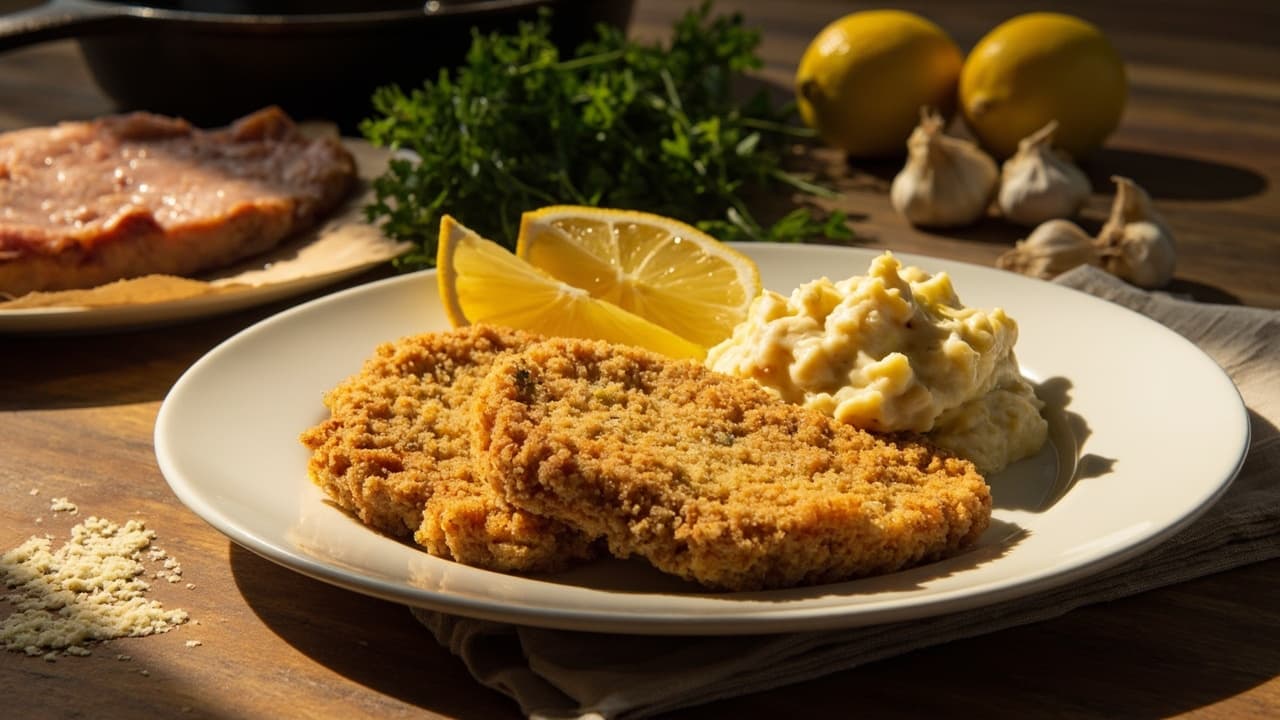
Crispy Pork Loin Cutlets with Mustard Parsley Crust
Golden, properly bashed-thin pork cutlets with a sharp mustard and fresh parsley crust. The way Oma made them — crispy, never soggy, with the meat as the star.

Prep
20 min
Cook
15 min
Rest
2 min
Total
37 min
Method
Prepare the Cutlets
1
Slice the pork loin into 4 equal cutlets, about 150g each. Place each cutlet between two sheets of plastic wrap.
2
Using a rolling pin or meat mallet, pound each cutlet to an even thickness of about 5mm. Season both sides generously with salt and black pepper.
3
Finely mince the garlic and rub it lightly into the cutlets. Set aside on a plate.
Make the Mustard Parsley Crust
6
Add the breadcrumbs and mix until the butter fully coats them. The mixture should be clumped but not wet. Set aside.
Set Up Breading Station
7
Place the flour in a shallow dish. Beat the eggs in a second shallow dish.
8
Working with one cutlet at a time, dredge first in flour, shaking off excess.
9
Dip into the beaten egg, letting any excess drip off.
Fry the Cutlets
11
Heat a cast-iron skillet or heavy frying pan over medium-high heat. Add 45g butter and let it melt and begin to brown.
12
Carefully place 2 cutlets into the pan, crumb-side down. Fry for 3-4 minutes until the crust is deep golden brown and crispy.
13
Flip the cutlets and fry another 2-3 minutes until the pork is cooked through with no pink remaining. The internal temperature should read 63°C (145°F).
14
Remove to a wire rack to rest — never straight onto a plate or the crust will go soft. Repeat with remaining 2 cutlets.
D
Nutri-Score
Needs balance
A–E · lower is better · score 12
Calories
640
per serving
High in saturated fat · 20gHigh in protein · 42gLow sugar · 4g
Protein
42g
Carbs
39g
Fat
35g
Sat. fat
20g
Fiber
4g
Sugar
4g
Sodium
1492mg
Contains PorkContains EggsContains DairyContains WheatLow FiberHigh Saturated FatHigh ProteinMuscle Gain
Nutri-Score is a general nutritional-balance guide, not medical or dietary advice.
D
Environmental impact
High impact
A–E · lower is better · includes estimates
kg CO2e
2.3
per serving
DCarbonAEU all-round· carbon sets the grade
Water
0.7m³
Land
73Pt
Runoff
0.2g P
Pork Loin drives 80% of this recipe’s estimated footprint.
Carbon from Poore & Nemecek 2018; water, land & runoff from Agribalyse — modelled averages for comparing recipes, not a measurement of your groceries.
Flavor Profile
7
Umami
4
Sweet
5
Salty
2
Sour
1
Bitter
2
Spicy
Textures
CrispyTenderGolden
Aromas
ButteryHerbalSavoryToasty
Kitchen Equipment
Primary Tool
Cast Iron SkilletCast Iron SkilletFrying PanSaucepanMeat MalletChef KnifeCutting BoardShallow DishMeasuring CupsMeasuring SpoonsTongsWire RackSpatulaPlastic WrapPaper Towels
Counter FootprintMedium
Techniques
Safety & Storage
Cooking Temperature
Cook pork cutlets to internal temperature of 63°C (145°F). Thin cutlets cook quickly - 3-4 minutes per side. Do not exceed medium-high heat when frying with butter as butter can burn and create acrolein, affecting flavor and safety.
Cross Contamination
Use separate plates and utensils for raw pork and ready-to-eat components. Set up breading station with separate dishes for flour, egg, and breadcrumbs. Wash hands thoroughly between handling raw meat and other ingredients.
Handling
Pound cutlets to even 5mm thickness for uniform cooking. Never place fried cutlets directly on plates - use wire rack to maintain crust crispness. Let rest 2 minutes before serving to allow juices to redistribute.
Storage
Refrigerate leftover cutlets within 2 hours. Store in airtight container for up to 3-4 days. Reheat thoroughly to 74°C (165°F) before consuming. Do not leave at room temperature for more than 2 hours total.
Allergen Warning
This dish contains multiple allergens (eggs, milk, wheat, gluten, mustard). Ensure all cooking and serving equipment is allergen-free. Inform guests of allergen content before service.
High Risk Population
Pork and egg products should be cooked thoroughly. Pregnant women, elderly, immunocompromised individuals, and young children should ensure pork reaches recommended internal temperature with no pink remaining.
Pro Tips
Technique
Let the excess egg drip off completely before pressing into the breadcrumbs — any wetness and your crust will be soft, not crispy. The egg should coat, not drown.
Equipment
A heavy cast-iron skillet holds heat properly for that deep golden crust. A thin pan will steam the cutlets instead of frying them, and that is no good at all.
Substitution
If you want more mustard punch, swap the prepared mustard for a coarse-grain Dijon. The seeds give extra texture and a sharper bite that stands up to the pork.
From the chef
Every Sunday above the Stube, I watched my Oma pound the pork thin and heard that satisfying thwack of the mallet. This is her technique — properly bashed, never pressed — but with a mustard-parsley crust I learned to love in the beer halls of Munich. The meat stays the star, the crust stays crispy, and if you rest them on a wire rack like she taught me, not a single crunch is lost.
TagsPan FriedBreaded PorkGerman AustrianMustardCast IronStube StyleComfort FoodButtery
AllergensEggsMilkWheatMustardGluten
Source: generated · June 10, 2026