 Catalan
Medium · Hot
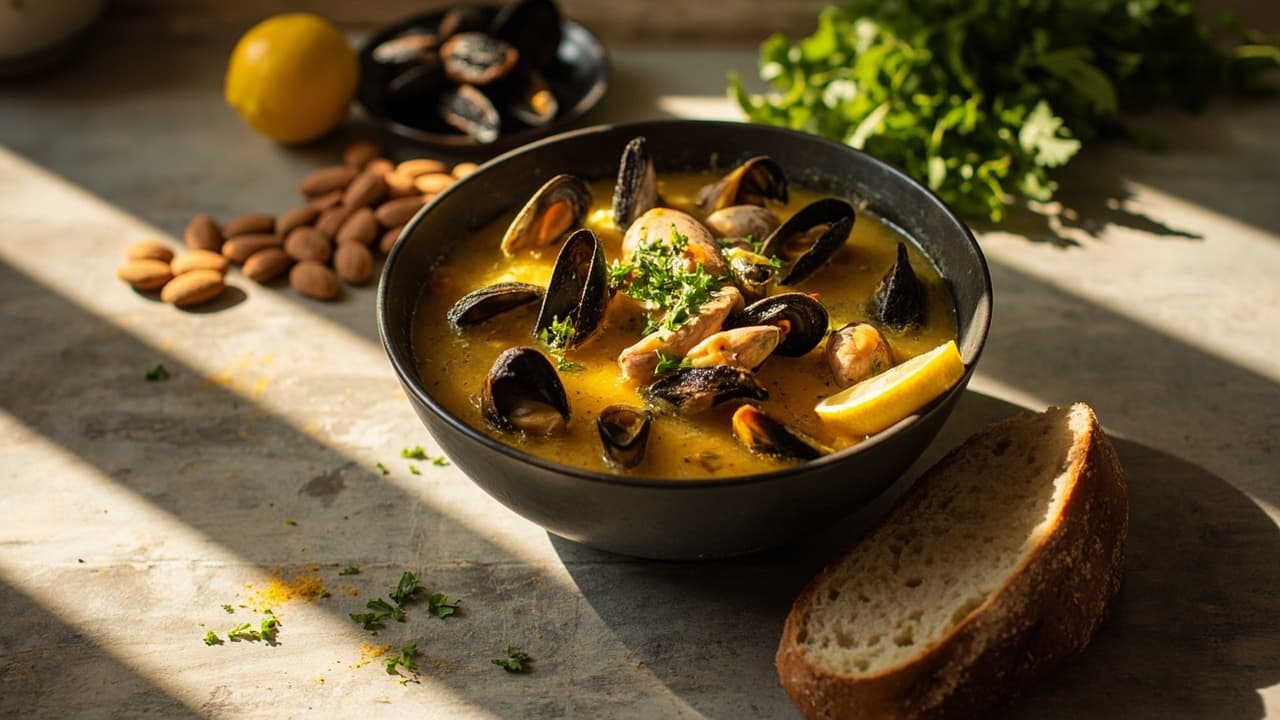
Cloïsses i Musclos amb Picada d'Ametlla
Clams and mussels opened in their own steam, finished with a traditional Catalan almond-garlic picada stirred through the briny broth. Briny, saffron-warmed, quietly reverent of the sea.
Prep
20 min
Cook
25 min
Total
45 min
Method
Prepare the Picada
1
In a dry skillet over medium-low heat, toast the almonds until golden and fragrant, about 3-4 minutes. Watch carefully — they turn from golden to burnt quickly. Transfer to a plate to cool.
2
In a mortar and pestle (or small food processor), pound the 2 garlic cloves with a pinch of salt until a rough paste forms. Add the toasted almonds and continue pounding until you have a coarse, uneven paste — not smooth, you want texture. Fold in the parsley leaves.
3
Stream in 2 tablespoons of olive oil while stirring to create a cohesive picada. Set aside.
Build the Sofregit
4
In a wide Dutch oven or heavy-bottomed casserole, warm 4 tablespoons of olive oil over medium heat. Add the diced onion and a pinch of salt. Cook, stirring occasionally, until the onion is soft and translucent, about 8 minutes.
5
Add the sliced garlic and cook for another 2 minutes until fragrant but not browned. Stir in the grated tomatoes. Lower the heat to medium-low and cook the sofregit, stirring from time to time, until the tomato has deepened in color and the liquid has mostly evaporated, about 12-15 minutes. The mixture should be thick and jammy.
Steam the Shellfish
6
Increase heat to medium-high. Nestle the scrubbed mussels and clams into the sofregit. Pour in 100ml of water — just enough to create steam. Cover tightly with a lid.
7
Cook for 4-5 minutes without lifting the lid. Check once at the 3-minute mark. The shellfish are done when they have opened — discard any that remain closed. Work quickly and unhurriedly; you want them tender, not rubbery.
Finish with Picada and Serve
8
Remove from heat. Stir the prepared picada into the broth, combining gently so the sauce thickens the cooking liquid into a glossy, briny emulsion. Taste and adjust salt.
A
Nutri-Score
Excellent balance
A–E · lower is better · score -2
Calories
520
per serving
High in protein · 38gLow sugar · 6gLow saturated fat · 5g
Protein
38g
Carbs
24g
Fat
31g
Sat. fat
5g
Fiber
4g
Sugar
6g
Sodium
1282mg
Gluten FreeDairy FreePescatarianMediterraneanLow Carb AdaptableHeart HealthyAnti InflammatoryIron RichB12 SufficientLow Processed FoodHigh ProteinOmega 3 RichMonounsaturated FatAntioxidant Support
Nutri-Score is a general nutritional-balance guide, not medical or dietary advice.
Flavor Profile
8
Umami
4
Sweet
5
Salty
3
Sour
1
Bitter
0
Spicy
Textures
TenderSilkyCoarseSaucy
Aromas
BrinyGarlickyHerbalNutty
Kitchen Equipment
Primary Tool
Dutch OvenDutch OvenMortar And PestleSmall Food ProcessorChef KnifeCutting BoardLadleMixing BowlPlateKitchen TimerTongs
Counter FootprintMedium
Techniques
Safety & Storage
High Risk Population
Shellfish poses heightened risk for pregnant women, elderly, immunocompromised individuals, and young children. Ensure all mollusks open fully before consumption - discard any that remain closed after cooking.
Cooking Temperature
Shellfish must reach adequate internal temperature during steaming. Cook covered for 4-5 minutes until all mussels and clams have opened. Partially opened or unopened shellfish indicate insufficient cooking.
Shellfish must reach internal temperature of 145°F (63°C) to ensure safety against Vibrio and other pathogens. Verify with a calibrated probe thermometer inserted into the thickest part of the shellfish meat. Do not rely solely on shell opening as an indicator of doneness.
Cross Contamination
Raw shellfish can harbor Vibrio bacteria and other pathogens. Use separate cutting boards, utensils, and plates for raw and cooked shellfish. Wash hands thoroughly after handling live mussels and clams.
Storage
Keep live mussels and clams refrigerated at 40°F (4°C) or below until cooking. Store on a tray or bowl with drainage - do not seal in plastic bags. Use within 1-2 days of purchase. If any shellfish have cracked shells or emit a foul odor, discard immediately.
Handling
Scrub mussels and clams thoroughly under cold running water, removing all debris and beard from mussels. Soak clams in cold salted water (or cold water) for 20-30 minutes to purge sand before cooking. Do not consume shellfish that died before cooking.
Allergen Warning
This dish contains mollusks (mussels, clams) and tree nuts (almonds). When serving, clearly label allergens for guests. Ensure almond contact with other dishes is avoided if serving multiple preparations.
Pro Tips
Technique
Watch your toasted almonds like they owe you money — once they turn golden, you have seconds before they cross into bitter burnt territory. Pull them off the heat the moment they smell nutty and fragrant.
The picada should be coarse, not smooth — you want texture that catches in the broth, not a paste that dissolves away. Keep some almond pieces chunky; they give the stew backbone.
Substitution
No fresh shellfish? Frozen works in a pinch, though the broth will be thinner. Thaw completely and pat dry before cooking, and add a splash of white wine to the steaming liquid for missing briny depth.
Presentation
Serve in warmed bowls so the broth stays hot the moment it reaches the table. A cold bowl kills the warmth of the dish before the first spoonful.
From the chef
Clams and mussels cooked in their own steam over a jammy sofregit make a broth worth spooning on its own — briny, saffron-warmed, darkened by the shellfish as each shell opens. The coarse almond picada goes in only at the end, stirred gently through the cooking liquid so it thickens the sauce without melting away into it. The shellfish should arrive at the table tender, not rubbery; the broth silky and golden. Scatter fresh parsley, offer lemon wedges, and serve with crusty white bread to capture every drop. A quiet dish, quietly made — reverently of the sea that gave it.
TagsShellfishPicadaSofregitTraditionalSteamedCatalan
AllergensMollusksTree Nuts
Source: generated · June 10, 2026