 French
Medium · Hot
White Bean Cassoulet with Sausage and Rosemary
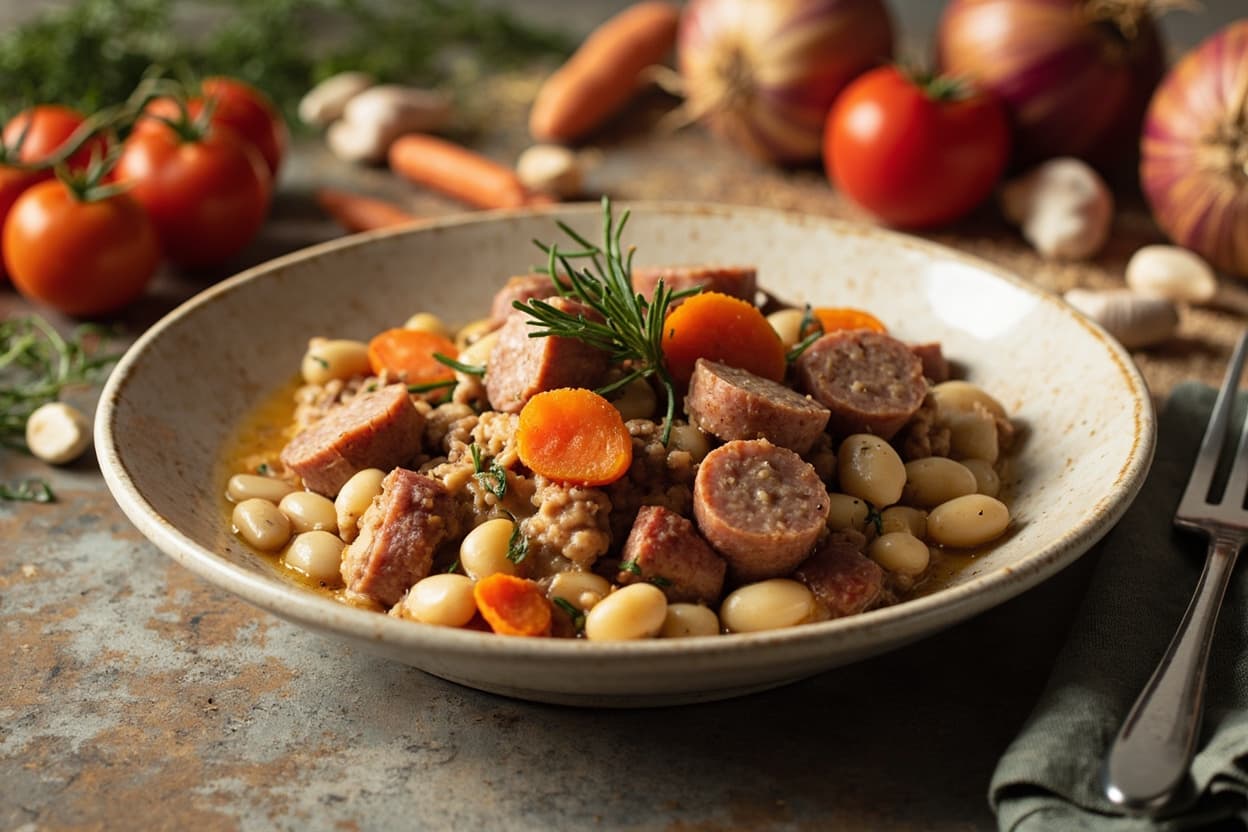
White beans, cooked long and slowly until their skins soften without splitting, absorb the fat and spice of the sausage as everything simmers together with carrot, garlic, and rosemary pressed into the pot. Tomato gives the cassoulet its body and its color, deepening over hours into something that smells of a southern French kitchen on a cold afternoon.

Prep
20 min
Cook
2h
Total
2h 20m
Method
Soak Beans
1
Rinse the white beans and sort through to remove any debris. Place in a large bowl and cover with cold water by at least 5 centimeters. Allow to soak for 8 hours or overnight at room temperature.
2
3
Cook the beans, skimming any foam that rises, for 1 to 2 hours until they are tender but still hold their shape. Drain and set aside.
Brown Sausage
4
5
Add the sausage links to the skillet, arranging them in a single layer. Cook without moving for 3-4 minutes until deeply browned on the bottom, then turn and repeat on all sides. Remove to a plate and set aside.
6
When cool enough to handle, slice the browned sausage into 2-centimeter rounds and set aside.
Build Aromatics
7
In the same skillet with the rendered fat, add the remaining butter and olive oil over medium heat. Once melted, add the diced yellow onion, carrot, and celery.
8
Cook the aromatics, stirring occasionally, for 8-10 minutes until the onion is translucent and the vegetables begin to soften and caramelize at the edges.
9
Add the minced garlic and cook for 1 minute until fragrant. Season with half the salt and black pepper.
Assemble and Simmer
10
Transfer the sautéed aromatics to a large Dutch oven or heavy-bottomed pot. Add the cooked white beans, sliced sausage, tomato sauce, and water. Nestle in the rosemary and thyme sprigs.
11
Bring the mixture to a gentle simmer over medium heat, then reduce to low. Cover partially and cook for 45 minutes to 1 hour, stirring occasionally, until the beans are very tender and the broth has thickened.
12
Remove the herb sprigs. Taste and adjust seasoning with the remaining salt and additional black pepper as desired.
Finish and Serve
13
Remove from heat. The cassoulet should have a rich, thick consistency. If the broth seems too thin, mash some of the beans against the side of the pot and stir to thicken.
B
Nutri-Score
Good balance
A–E · lower is better · score 0
Calories
625
per serving
Source of protein · 29gLow sugar · 8g
Protein
29g
Carbs
62g
Fat
30g
Sat. fat
11g
Fiber
8g
Sugar
8g
Sodium
1220mg
Gluten FreeDairy FreeHigh ProteinHigh Fiber
Nutri-Score is a general nutritional-balance guide, not medical or dietary advice.
C
Environmental impact
Moderate impact
A–E · lower is better · includes estimates
kg CO2e
1.3
per serving
CCarbonAEU all-round· carbon sets the grade
Water
0.5m³
Runoff
0.09g P
Sausage links drives 66% of this recipe’s estimated footprint.
Carbon from Poore & Nemecek 2018; water, land & runoff from Agribalyse — modelled averages for comparing recipes, not a measurement of your groceries.
Flavor Profile
7
Umami
4
Sweet
5
Salty
3
Sour
2
Bitter
2
Spicy
Textures
TenderCreamyThick
Aromas
HerbalSavoryEarthyGarlicky
Kitchen Equipment
Primary Tool
Dutch OvenStockpotCast Iron SkilletDutch OvenChef KnifeCutting BoardLadleWooden SpoonColanderMixing BowlMeasuring SpoonsPaper Towels
Counter FootprintLarge
Techniques
Safety & Storage
Cooking Temperature
Ensure sausage reaches internal temperature of 165°F (74°C) throughout before consumption. Use a food thermometer to verify.
Cross Contamination
Prevent cross-contact with other allergens during preparation. Use separate cutting boards and utensils for beans and sausage.
Handling
Beans soaked at room temperature for 8 hours should be drained, rinsed, and cooked promptly. Do not allow soaked beans to remain at room temperature beyond recommended soaking time.
Storage
Cool cassoulet to room temperature within 2 hours, then refrigerate in airtight containers. Consume within 3-4 days or freeze for up to 3 months.
Allergen Warning
Recipe contains milk (butter) and celery. Sausage may contain gluten and wheat. Verify all ingredient labels for allergen information.
High Risk Population
Individuals with compromised immune systems, pregnant individuals, or elderly should ensure beans are cooked until completely tender and sausage is fully cooked through.
When mashing beans to thicken at end of cooking, ensure hands and utensils are clean to avoid introducing contaminants.
Pro Tips
Technique
When browning your sausage links, resist the urge to move them too soon—that deep golden crust is where the flavor lives, and rushing it means losing that beautiful fond that will later dissolve into the broth, building layers of savory depth.
Substitution
If you cannot find fresh rosemary, substitute with 1 tablespoon of dried rosemary, though I encourage you to seek the fresh sprigs—their fragrance as they simmer is half the ritual of this dish.
From the chef
White beans soaked overnight and then cooked until their skins yield without splitting are the foundation this cassoulet is built on. The sausage browns deeply in butter and olive oil before it is sliced and returned to the pot, where its fat mingles with carrot, celery, and the long, resinous presence of rosemary and thyme. Tomato sauce gives the braising liquid its body and its color, and an hour of gentle simmering is what turns those separate elements into something unified and deeply savory. The beans absorb everything around them. By the time you serve it, nothing in the pot is quite what it started as.
TagsFrenchCassouletOne PotSlow CookedComfort FoodBeansSausageHeartyWinterDinner Party
AllergensMilkCeleryGlutenWheat
Source: generated · May 30, 2026