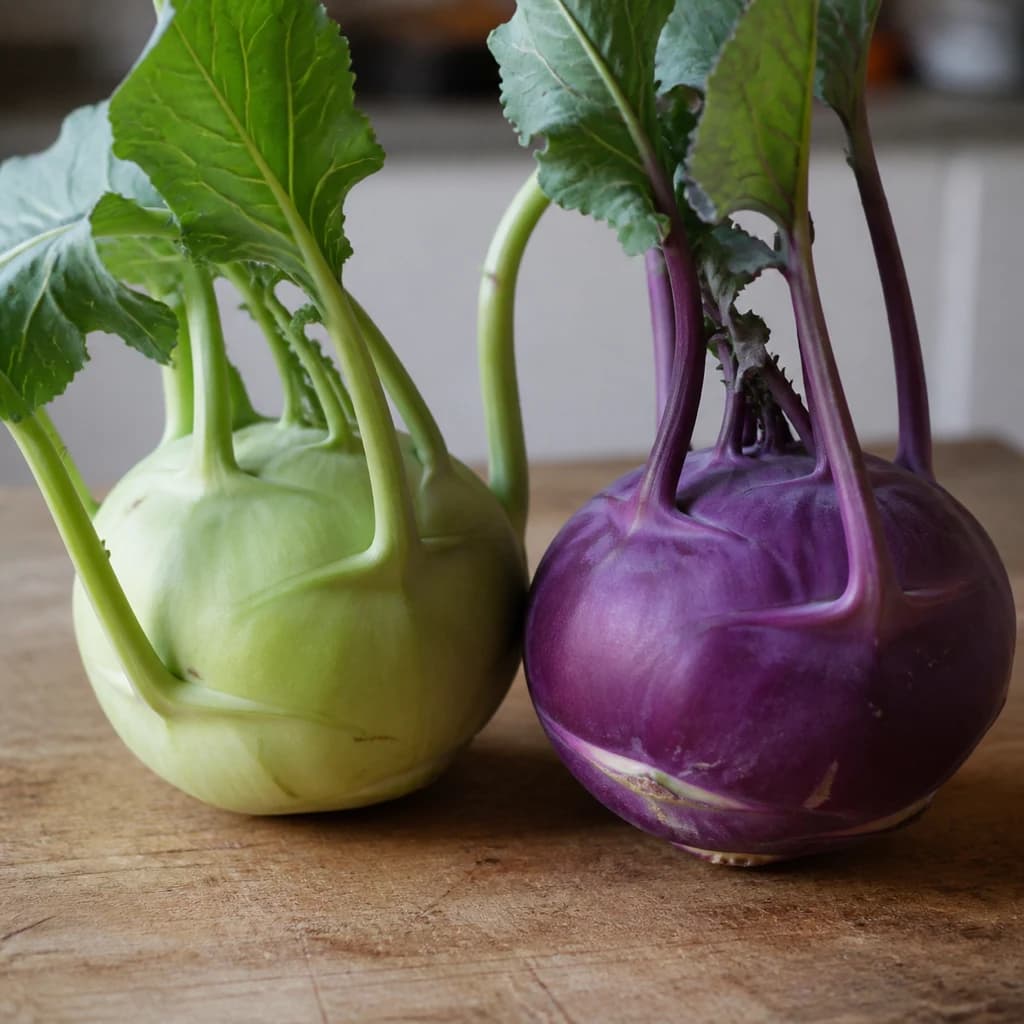
Natural form
Whole kohlrabi bulbs showing their distinctive swollen stem and leaf stalks.
Shows the reader the exact appearance of kohlrabi as found in a market or garden, including the characteristic alien-looking globe and protruding leaf stems.
Produce
Kohlrabi
Crisp, mild bulb of the cabbage family eaten raw in slaws or cooked in soups.
Kohlrabi is a swollen stem of the cabbage family with crisp, juicy white flesh tasting like a mild, sweet broccoli stem. The bulb is peeled and eaten raw in slaws and salads, roasted, or simmered in soups, while the leaves are cooked like greens. It is a staple in Central European and Indian cooking.
Kohlrabi is a member of the cabbage family (Brassicaceae) distinguished by its enlarged, swollen stem base that grows partially above ground—not a root vegetable, despite its underground appearance. Native to Northern Europe, particularly Germany, where it has been cultivated since the 1500s, it remains a staple in German, Austrian, and Czech cooking. The bulb develops where the leaves emerge, creating a round, bulbous structure with tender leaves radiating from its top. Both the crisp bulb and nutritious leaves are edible, making nearly the entire plant usable in the kitchen.
Raw kohlrabi has a refreshing, mild sweetness with a faint peppery note, and a texture often compared to a crisp apple or jicama. When cooked, the flavor becomes more delicate and the texture transforms to tender, similar to a cooked potato or broccoli stem. Unlike its close relatives cabbage and Brussels sprouts, kohlrabi lacks pronounced sulfurous compounds, giving it a gentler, more approachable flavor that appeals even to those who find other brassicas too pungent. Its high vitamin C content and fiber make it as nutritious as it is versatile.
The dramatic shift between raw and cooked states is what makes kohlrabi particularly valuable in the kitchen. It transitions seamlessly from a crunchy crudité to a silky soup thickener, from a crisp slaw base to caramelized roasted quarters. The leaves behave like collard greens or kale, adding another dimension of utility to a single ingredient.
- Measured in
- piece
- Storage
- Fridge
Types & varieties
Pale green skin, most common variety; mild and tender
Purple-tinged skin with greenish-white flesh; slightly nuttier flavor
Smaller, early-maturing variety; very tender
Can grow to 8–10 inches; must be harvested young to avoid woodiness
Buying and Storing
Select bulbs that feel heavy for their size with firm, unblemished skin. The leaves, if attached, should look fresh and green rather than wilted. Smaller bulbs (2–3 inches) are always more tender; anything over 4 inches risks becoming woody and pithy. Store unwashed and dry in a plastic bag in the crisper drawer for up to 4 weeks. Do not store near ethylene-producing fruits like apples or pears, which accelerate softening. Wash and dry just before peeling and using.
- Choose firm, heavy bulbs 2–3 inches in diameter
- Store dry and unwashed in a sealed plastic bag
- Keep away from ethylene-producing fruits
- Wash only before preparing, not before storing
Preparing the Bulb
The tough, fibrous skin must be removed before cooking or eating. Use a sharp vegetable peeler or mandoline to strip away the outer layer, then slice off any remaining fibrous bits. The core at the center is pale yellow and significantly tougher than the surrounding flesh; remove it with a paring knife before cooking to ensure even tenderness throughout. For raw applications, slice or shred immediately before serving to preserve the characteristic crispness.
- Peel the skin thoroughly—it is tough and fibrous even when thin
- Remove the pale yellow core before cooking
- Slice raw preparations immediately before serving
- Save trimmings for stock or compost
Common uses
Tips & pitfalls
- Peel thoroughly—the skin is tough and fibrous even if it looks thin
- Choose small to medium bulbs (2–3 inches); large ones become woody and pithy
- Store dry, unwashed, in a plastic bag in the crisper drawer
- Wash and dry before peeling to avoid trapping moisture under the skin
- If the core feels hard or pale yellow, remove it before cooking—it stays tough
- The leaves are edible and nutritious; cook them like kale or collard greens
- For raw applications, slice or shred just before serving to maintain crispness
- When roasting, cut pieces uniformly for even cooking
- Do not overcook; it should retain slight resistance, not become mushy
- Avoid storing near ethylene-producing fruits (apples, pears), which accelerate softening
- Purple varieties may have slightly stronger flavor; adjust seasoning accordingly
Nutrition
Energy
113 kJ · per 100 g
Where the calories come from
Protein
1.7g
3% DV
Carbs
6.2g
2% DV
Fat
0.1g
0% DV
Fiber
3.6g
13% DV
Sugars
2.6g
of which
Sodium
20mg
1% DV
Source · USDA FoodData Central · Kohlrabi, raw
View on FDC →In the shops
Matched grocery products
No matched grocery products for Kohlrabi yet.
Good to know
- Botanical name
- Brassica oleracea var. gongylodes
- Family
- Brassicaceae (cabbage family)
- Origin
- Northern Europe, especially Germany; first documented in the 1500s
- Season
- Spring and fall; prefers cool temperatures (55–75°F)
- What it actually is
- An enlarged, swollen stem (not a root vegetable) that grows above ground
- Typical size
- 2–4 inches diameter; smaller is more tender
- Colors
- Pale green (most common), purple, and white
- Flavor (raw)
- Mild, slightly sweet, faintly peppery; crisp like an apple
- Flavor (cooked)
- Delicate, sweeter; texture becomes tender like a cooked potato
- Edible parts
- Bulb and leaves both edible; leaves resemble collard greens
- Shelf life
- 2–4 weeks refrigerated when dry
- Yield
- Approximately 75% edible after trimming and peeling
Substitutes
- Broccoli stems — Closest flavor and texture; peel the woody outer layer before use
- Jicama — Similar crispness for raw use; slightly sweeter; different flavor
- Celery root (celeriac) — Comparable mild sweetness when cooked; texture is denser; stronger flavor
- Green cabbage core — Acceptable in cooked applications; will be slightly more pungent
- Kohlrabi greens — Substitute for kale or collard greens in equal amounts
Pairs with
Also called
German Turnip · Cabbage Turnip · Knol-Khol · Monj
Related
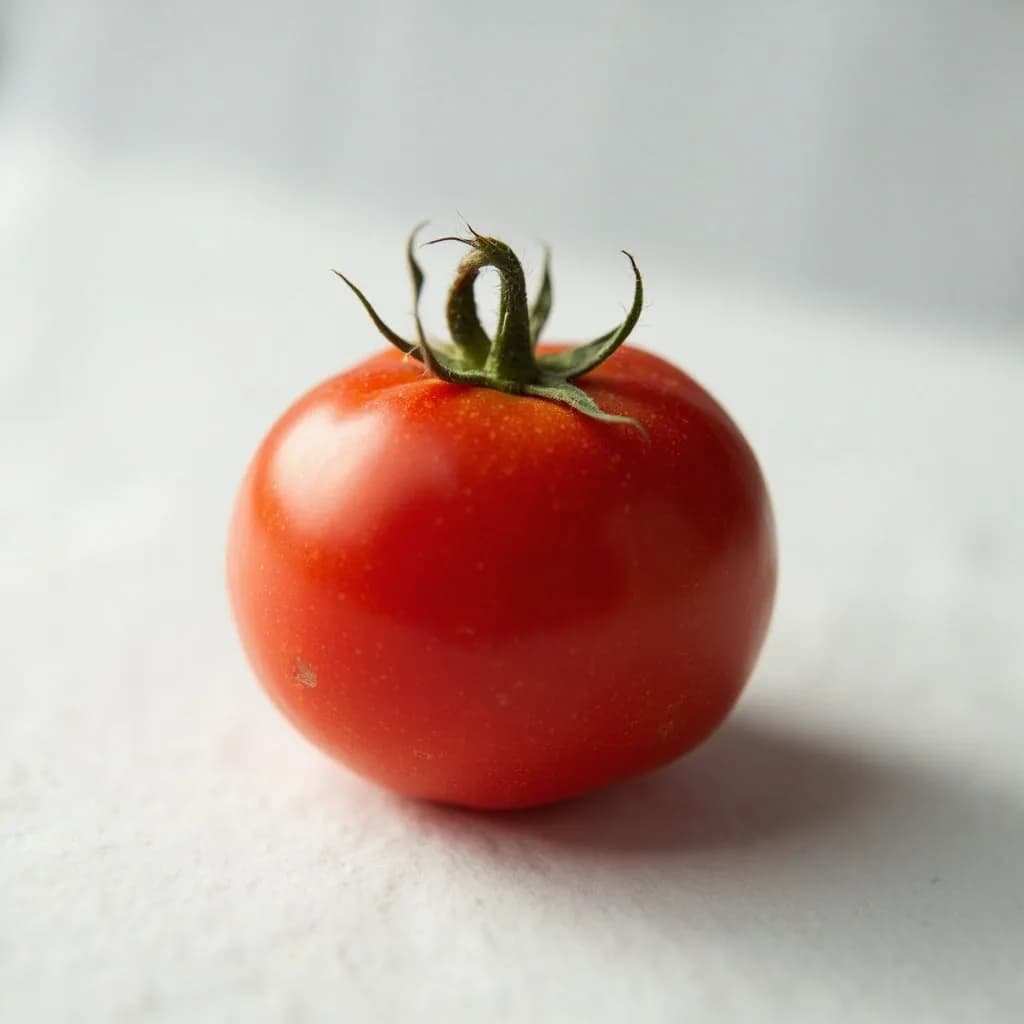
Tomato
Juicy, sun-sweet fruit for sauces, salads, and slow-cooked depth
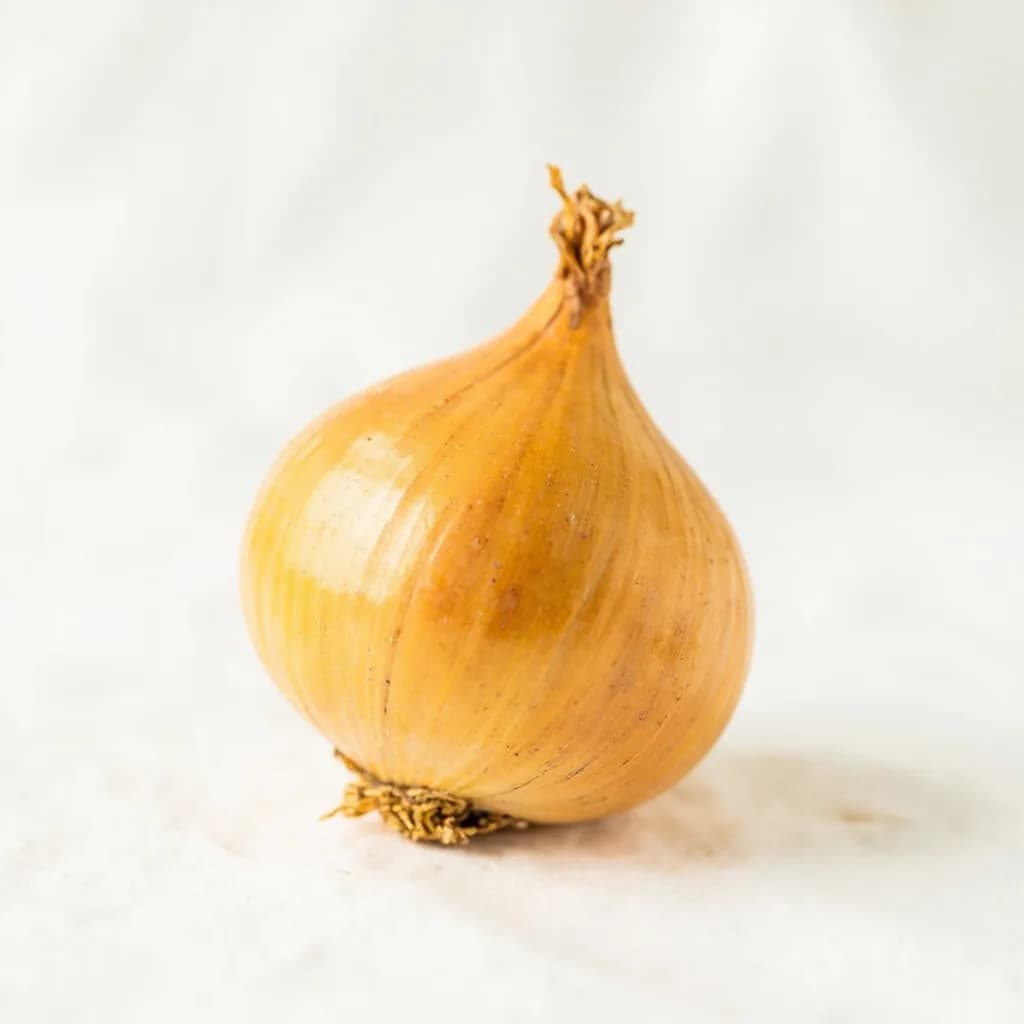
Yellow Onion
The aromatic backbone of soups, sofritos, and braises
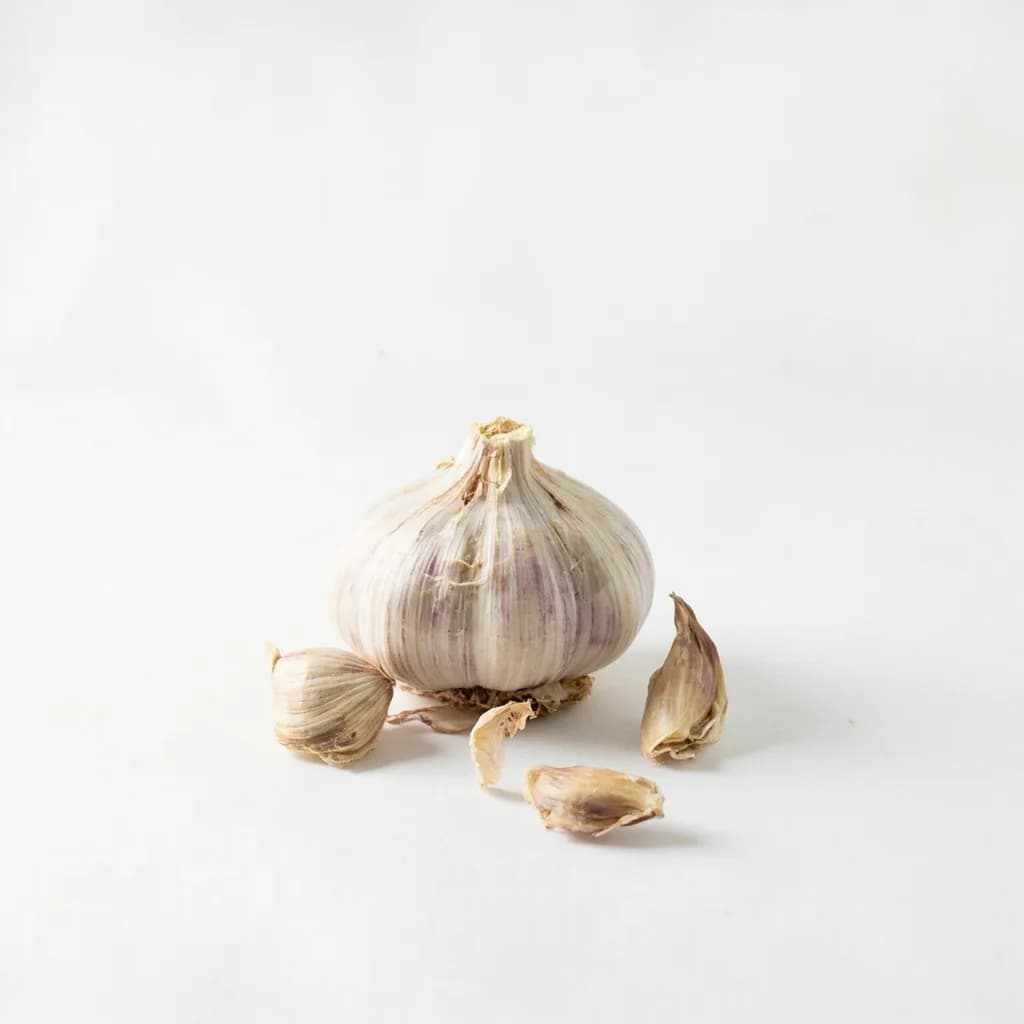
Garlic
Pungent cloves that perfume nearly every savory dish
Lemon
Bright, acidic citrus that wakes up almost any dish
Potato
Humble, hearty staple — roast, mash, fry, or boil
Carrot
Sweet, crunchy root — raw, roasted, or the base of a sofrito
Cucumber
Cool, crisp, and watery — for salads, pickles, and tzatziki

Lettuce
Crisp leaves for salads, wraps, and a fresh crunch