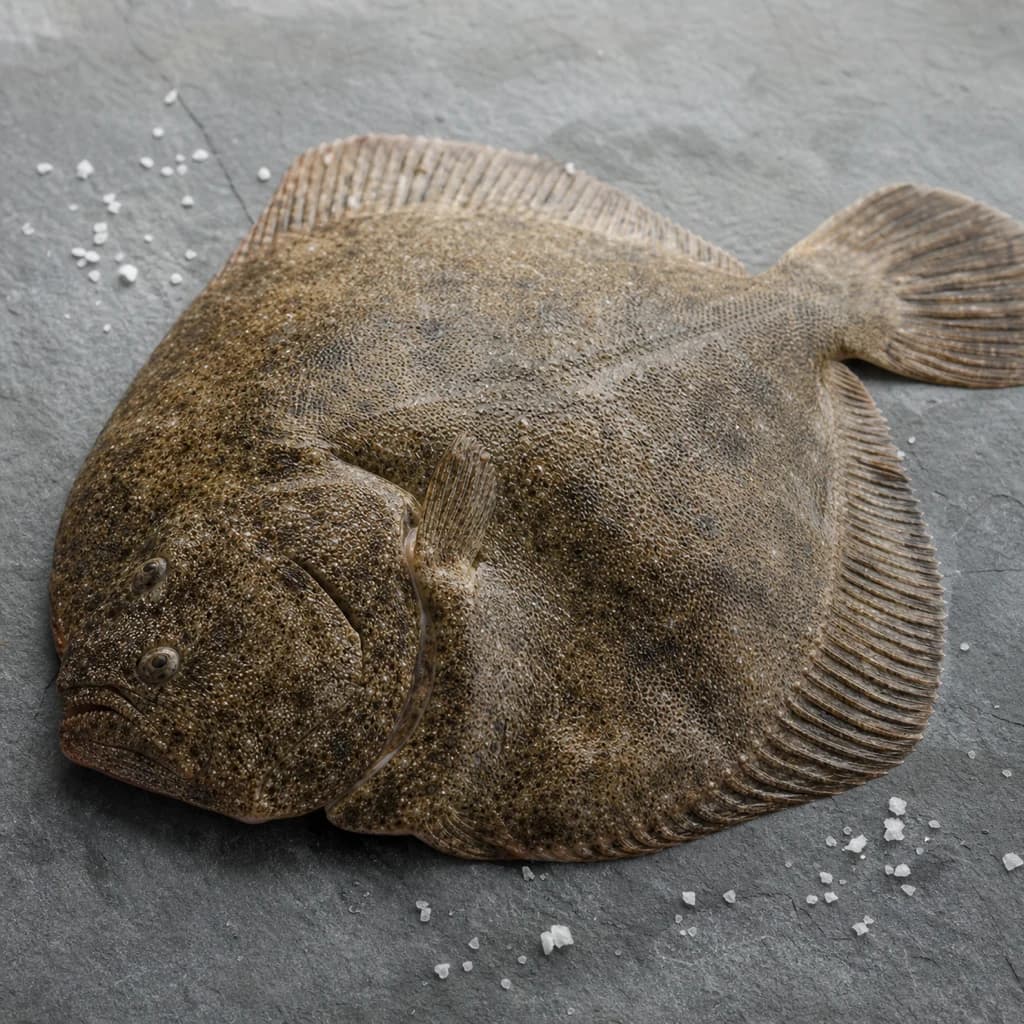
Natural form
A whole raw turbot shows its distinctive diamond-shaped body and mottled brown skin.
The whole fish reveals turbot's unmistakable flatfish shape, size, and speckled camouflage coloring that sets it apart from other flatfish.
Proteins
Turbot (Rodaballo)
Prized flatfish with firm, gelatinous white flesh, roasted or grilled whole.
Turbot is a large flatfish with firm, white, slightly gelatinous flesh and a delicate, refined flavor. Highly prized in European cooking and known in Spain as rodaballo, it is roasted or grilled whole, often over coals in Basque kitchens. Its sturdy texture and natural richness need little more than salt, oil, and lemon.
Turbot is a highly prized flatfish by chefs and diners for its exceptional balance of firm texture and delicate, sweet flavor. Unlike the more fragile sole, turbot holds its shape magnificently when roasted whole yet yields a silky, almost velouté-like quality in pan juices — a consequence of its unusually high collagen content. The fish is asymmetric, with both eyes on the left side of its body, and the upper skin is rough with small bony tubercles; these are cosmetic traits that do not affect the eating quality. Among the most expensive flatfish available, turbot genuinely earns its premium price: the flesh is dense enough for substantial preparations yet refined enough for the most elegant tables, and the naturally gelatinous texture enriches sauces without the need for artificial thickeners. Whether sourced wild from Atlantic or Mediterranean waters or farmed year-round in Spain and China, turbot rewards careful handling and restrained treatment — it is a fish that needs little embellishment to shine.
The difference between farmed and wild turbot is significant enough to affect your approach at the stove. Wild Atlantic and Mediterranean turbot have a more pronounced oceanic sweetness and firmer flesh, with a season running from late spring through early autumn. Farmed turbot, which dominates most markets, offers consistent quality and year-round availability but with a slightly milder flavor profile. Black Sea turbot (Scophthalmus maeoticus), a distinct species rarely exceeding 2 kilograms, is considered by many to have superior flavor, though availability is limited and it is a protected species in some regions. Regardless of origin, expect approximately 50–55% edible yield after filleting; the skin is entirely edible and crisps beautifully when properly scored and cooked over high heat.
Storage is critical with turbot — the firm flesh degrades rapidly once the fish is filleted, so purchase whole whenever possible. Use within 24–48 hours of buying, stored on ice in the coldest part of your refrigerator. Freezing is possible for up to three months but will compromise the delicate texture. When buying whole, look for clear, convex eyes (not sunken), bright red gills, and a fresh sea-breeze scent with no ammonia or sour notes. The flesh should be firm and springy, and the skin should appear moist without excessive slime.
- Measured in
- g
- Storage
- Fridge
Allergens
Types & varieties
The classic variety; slightly flatter body, fine-grained flesh; prized in Spanish and French cuisines
Found from the North Sea to Iberia; slightly richer flavor than Mediterranean stock; wild-caught season runs spring to autumn
Smaller than Atlantic variety (rarely exceeds 2 kg); considered by some to have superior flavor; a protected species in some regions
North American cousin; NOT a true turbot; different texture and flavor; botanically distinct (Paralichthys dentatus)
Most common in restaurants and markets; consistent quality and year-round availability; slightly milder flavor than wild
A color variant with yellowish skin; same species; occasionally seen in specialty markets
Buying Turbot: What to Look For
The quality markers for whole turbot are straightforward once you know what to check. Avoid any fish with sunken or cloudy eyes — this indicates the fish is past its prime. Gills should be bright red, not brown or slimy. Press the flesh with a finger: it should spring back immediately. The skin should be moist but not coated in excessive mucus, and there should be no fishy or ammonia-like odor. If buying fillets, look for opaque, firm flesh with no gaps or holes; translucent or soft flesh means the fish was not fresh when filleted. Ask your fishmonger to scale the fish but leave it whole until you are ready to cook — turbot deteriorates rapidly once the flesh is exposed to air.
- Clear, convex eyes indicate freshness; sunken or cloudy eyes mean the fish is old
- Bright red gills, not brown or slimy, signal recently caught fish
- Press test: flesh should spring back, not leave an indentation
- Avoid any ammonia or sour odors — fresh turbot smells of the sea
- Purchase whole whenever possible; fillets lose quality within hours
The Four-Central-Bone Structure
Turbot is a flatfish with a cartilaginous spine rather than the maze of small pin bones found in round fish. After filleting, only four central bones remain — two on each side of the backbone — and these are large enough to remove easily with tweezers or pliers. To fillet a whole turbot, make a deep cut behind the head down to the spine, then slice along the top line of the fish toward the tail. Work the knife along the natural seam between the flesh and the bones, using the curvature of the blade to follow the fish's contours. Repeat on the other side. The yield is approximately 50–55% flesh, but the absence of small bones makes every gram worth the effort. In French and Spanish kitchens, the flesh near the fins and cheeks is considered the most tender and is often reserved for special preparations.
- Only four central bones to remove with tweezers — no small pin bones
- Score the skin before cooking to prevent curling and allow fat penetration
- The collagen-rich bones and trimmings make an exceptionally rich fish stock
Common uses
Tips & pitfalls
- Purchase turbot whole whenever possible — the firm flesh degrades quickly once filleted; ask your fishmonger to scale it but leave it whole until you are ready to cook
- Look for clear, protruding eyes (convex, not sunken), bright red gills, and a fresh sea-breeze scent — no ammonia or sour notes
- Score the skin in a crosshatch pattern before roasting or grilling to prevent curling and allow fat to penetrate for crisper skin
- The flesh near the fins and cheeks is considered the most tender and is often reserved for special preparations in French and Spanish kitchens
- Do not overcook — turbot is done when the flesh turns from translucent to opaque and yields slightly to pressure; it continues cooking from residual heat
- The gelatinous quality is a feature, not a flaw; it creates a silky mouthfeel in soups and naturally enriches pan sauces
- Rest cooked turbot for 2–3 minutes before serving to allow juices to redistribute
- Use turbot within 24–48 hours of purchase; if freezing is necessary, wrap tightly and use within 3 months, noting that texture will suffer
Nutrition
Energy
397 kJ · per 100 g
Where the calories come from
Protein
16.1g
32% DV
Carbs
0g
0% DV
Fat
3g
4% DV
Fiber
0g
0% DV
Sodium
150mg
7% DV
Source · USDA FoodData Central · approx. Fish, turbot, european, raw
View on FDC →In the shops
Matched grocery products
No matched grocery products for Turbot (Rodaballo) yet.
Good to know
- Scientific Name
- Scophthalmus maximus (formerly Psetta maxima)
- Origin
- Northeast Atlantic, British Isles to Scandinavia, Mediterranean, and Black Sea; farmed in Spain, France, Turkey, and China
- Peak Season
- Late spring to early autumn for wild fish; farmed available year-round
- Flavor Profile
- Sweet, clean, oceanic; subtly briny without being fishy; more pronounced than sole or brill
- Texture
- Firm, dense, meaty flesh with fine flake; slightly gelatinous from high collagen; virtually boneless (four central bones)
- Typical Size
- 1–3 kg (2–6 lbs) market size; wild fish can reach 10 kg; farmed typically 1–2 kg
- Price Level
- Premium; among the most expensive flatfish, comparable to Dover sole
- Yield
- Approximately 50–55% edible flesh after filleting; skin is edible and crisps well
- Storage
- Use within 24–48 hours of purchase; store on ice in the coldest part of the refrigerator; can be frozen for up to 3 months but texture suffers
- Aquaculture
- Farmed turbot (mainly Spain and China) dominates the market; wild turbot is a rare seasonal specialty
Substitutes
- Brill — Closest substitute; similar firm, white flesh and cooking behavior; slightly milder flavor and less gelatinous texture; 10–15% cheaper
- Halibut — Acceptable substitute in a pinch; firmer flesh and more assertive flavor; reduce cooking time as halibut dries out more easily
- Dover Sole — Similar delicate flavor but much thinner flesh; cook quickly and handle gently; not a true substitute for whole roasted turbot
- John Dory — Completely different texture (dense and meaty) but shares the sweet, clean flavor profile; better for filleting than whole-roasting
- Lumpfish or Cock Crab — For the gelatinous quality only; not a visual or flavor substitute; useful in sauces mimicking turbot stock
Pairs with
Also called
Rodaballo
Related
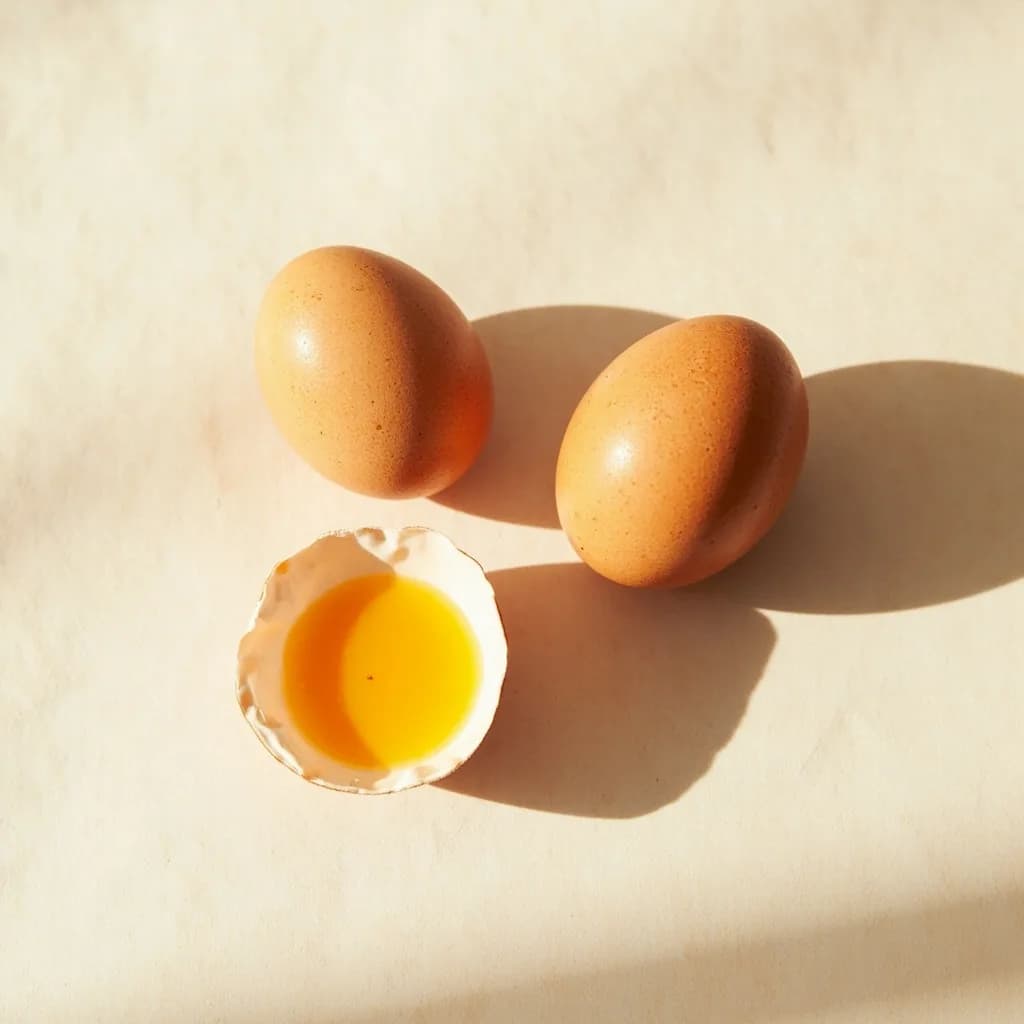
Egg
The kitchen's everything ingredient — bind, leaven, enrich, or fry
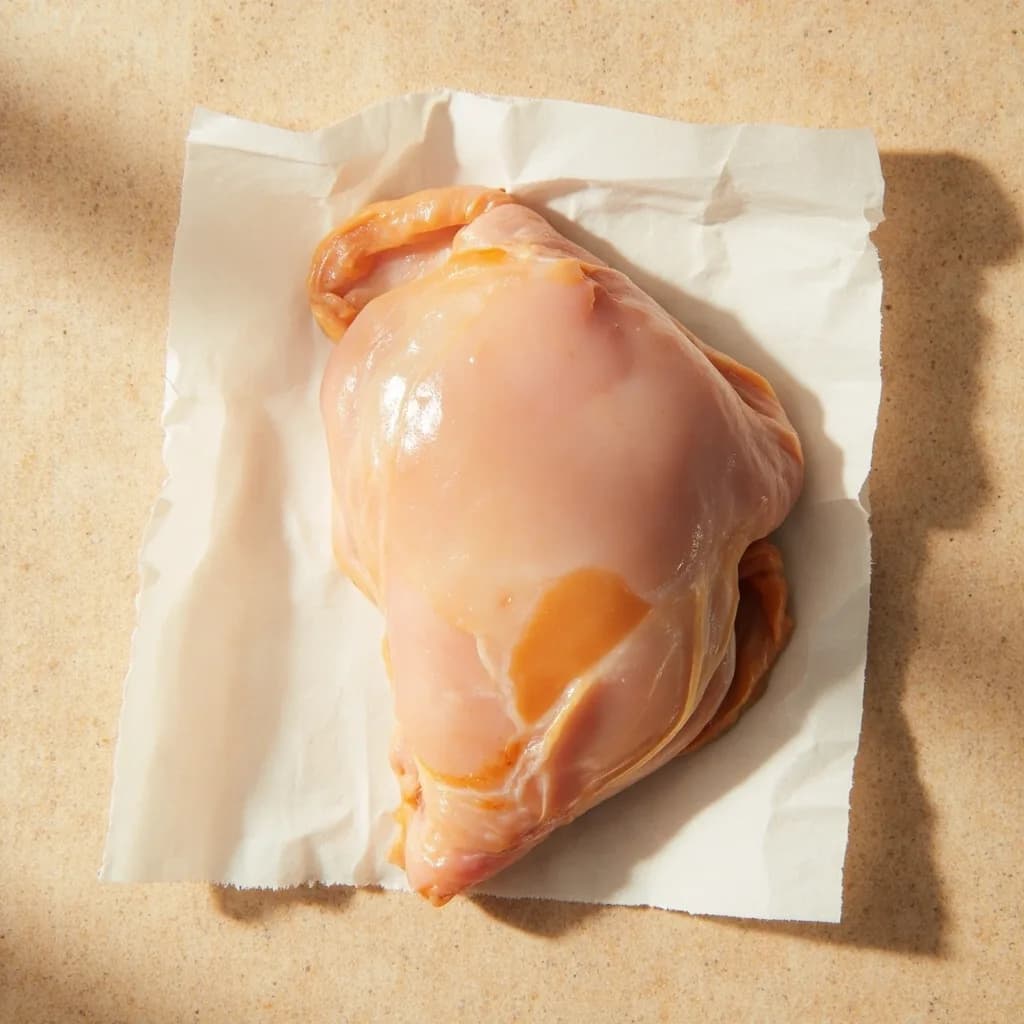
Chicken Breast
Lean, quick-cooking white meat for everyday dinners

Ground Beef
Versatile minced beef for burgers, ragù, tacos, and meatballs
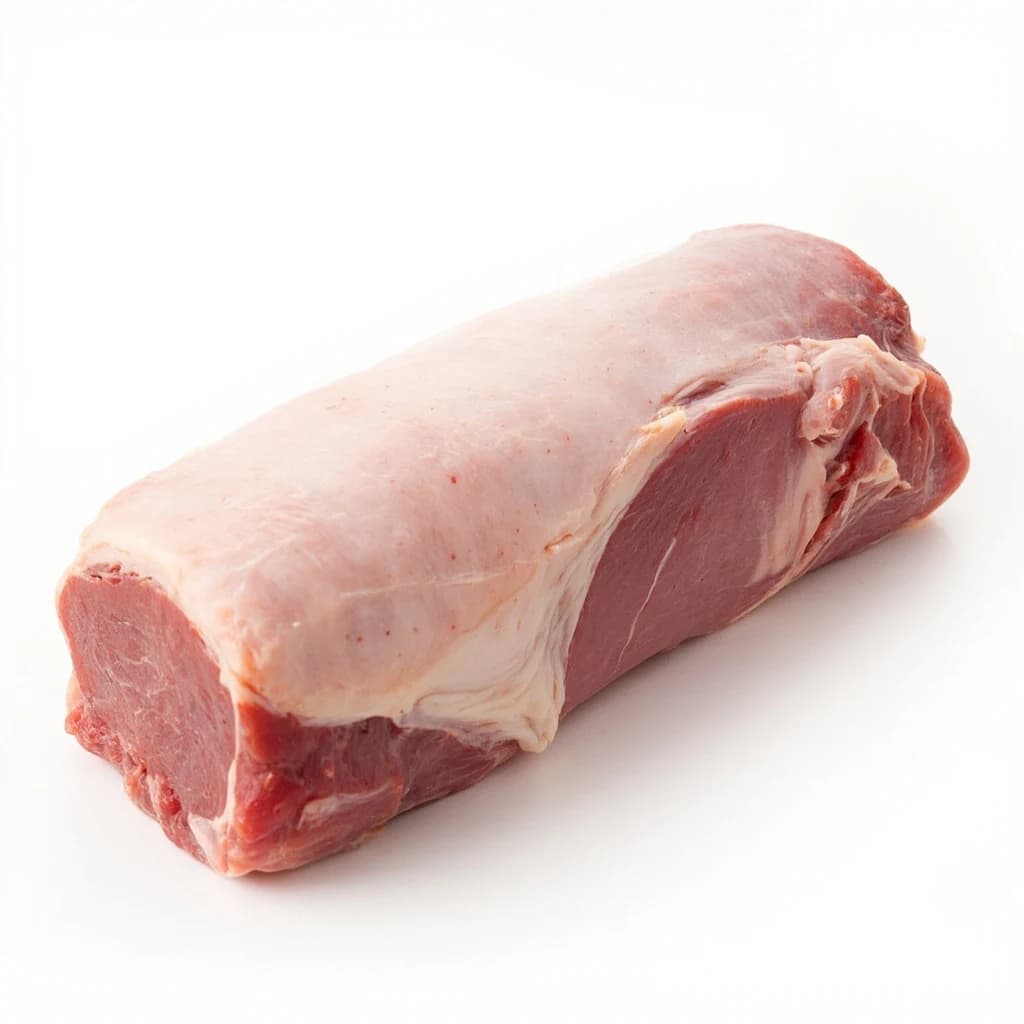
Pork Loin
Lean, tender roasting cut that stays juicy with care
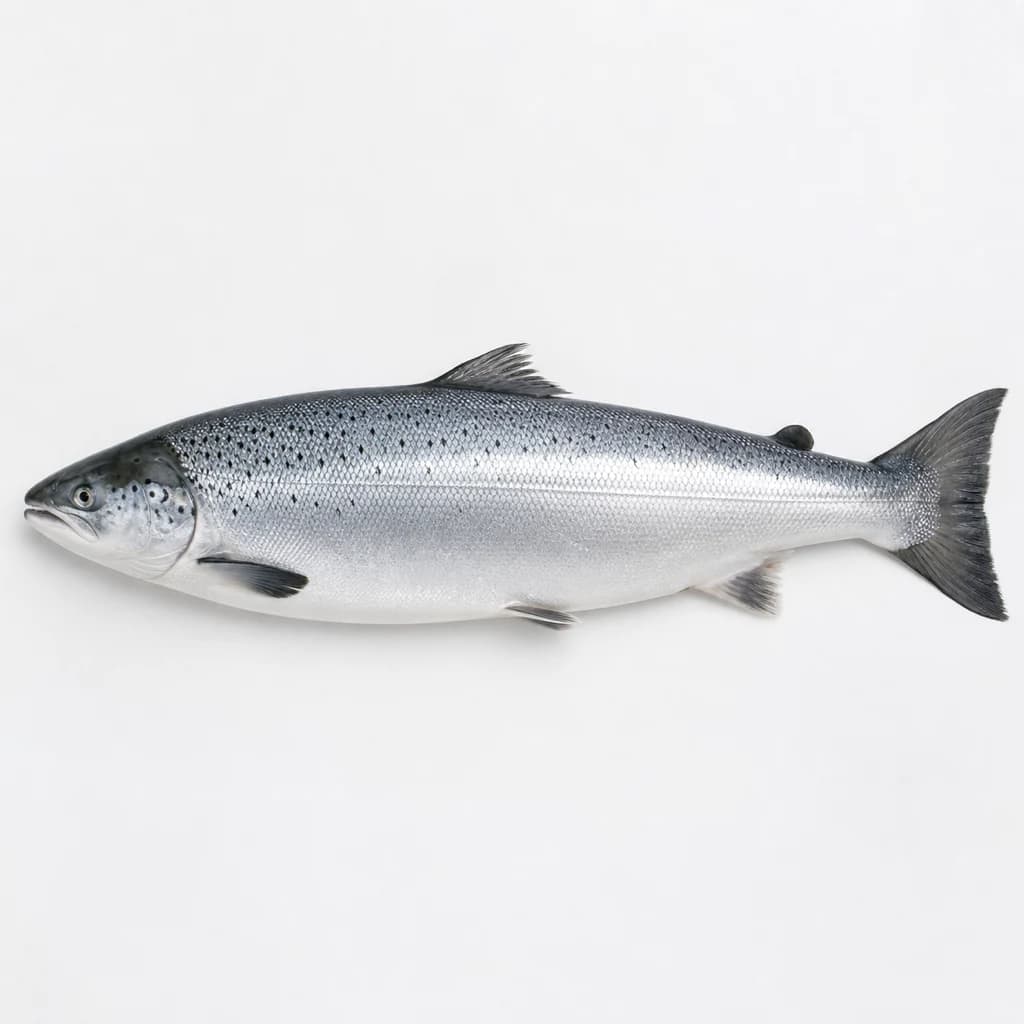
Salmon
Rich, rosy fish that roasts, grills, or cures beautifully

Egg White
Pure protein that whips to airy peaks for meringue and more
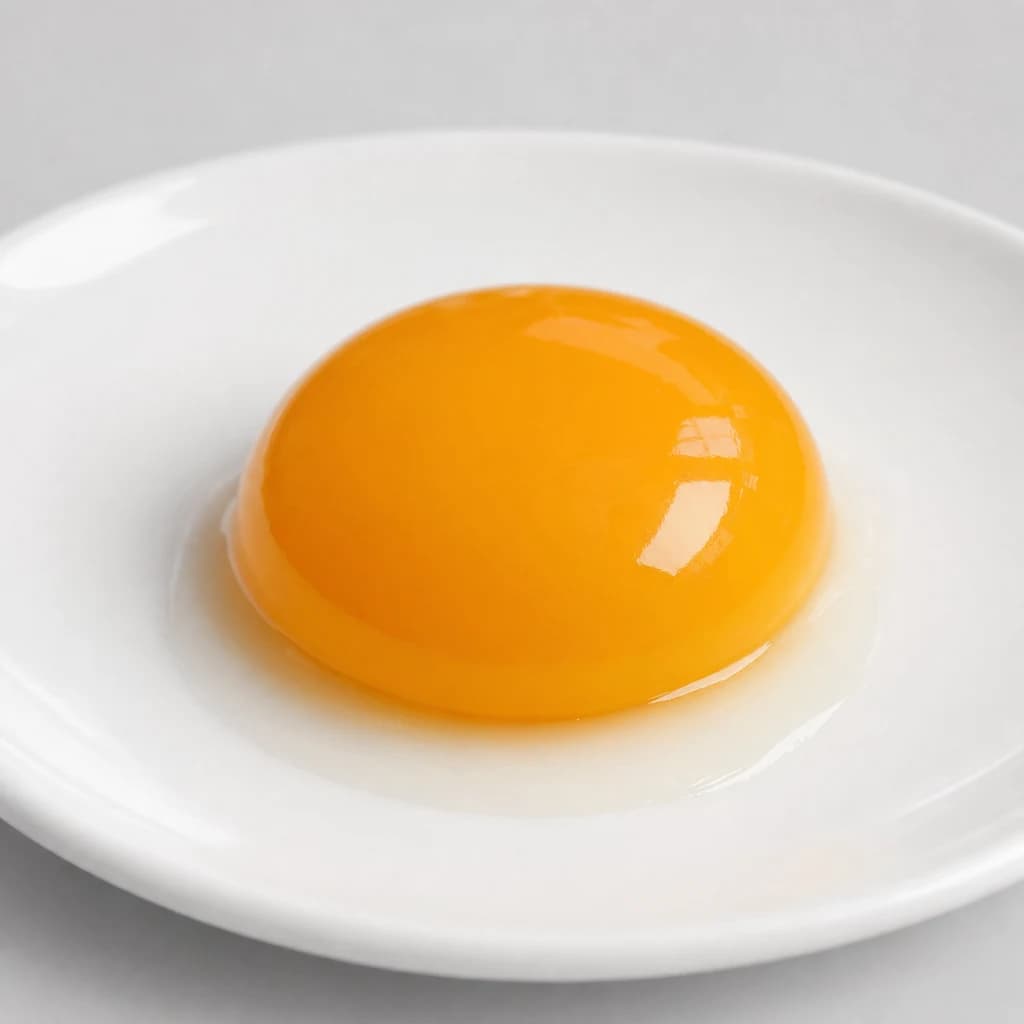
Egg Yolk
Rich, golden yolk for custards, mayonnaise, and pasta

Quail Egg
Tiny, speckled eggs for garnishing and elegant bites