Dairy & Eggs
Whole-Milk Yogurt
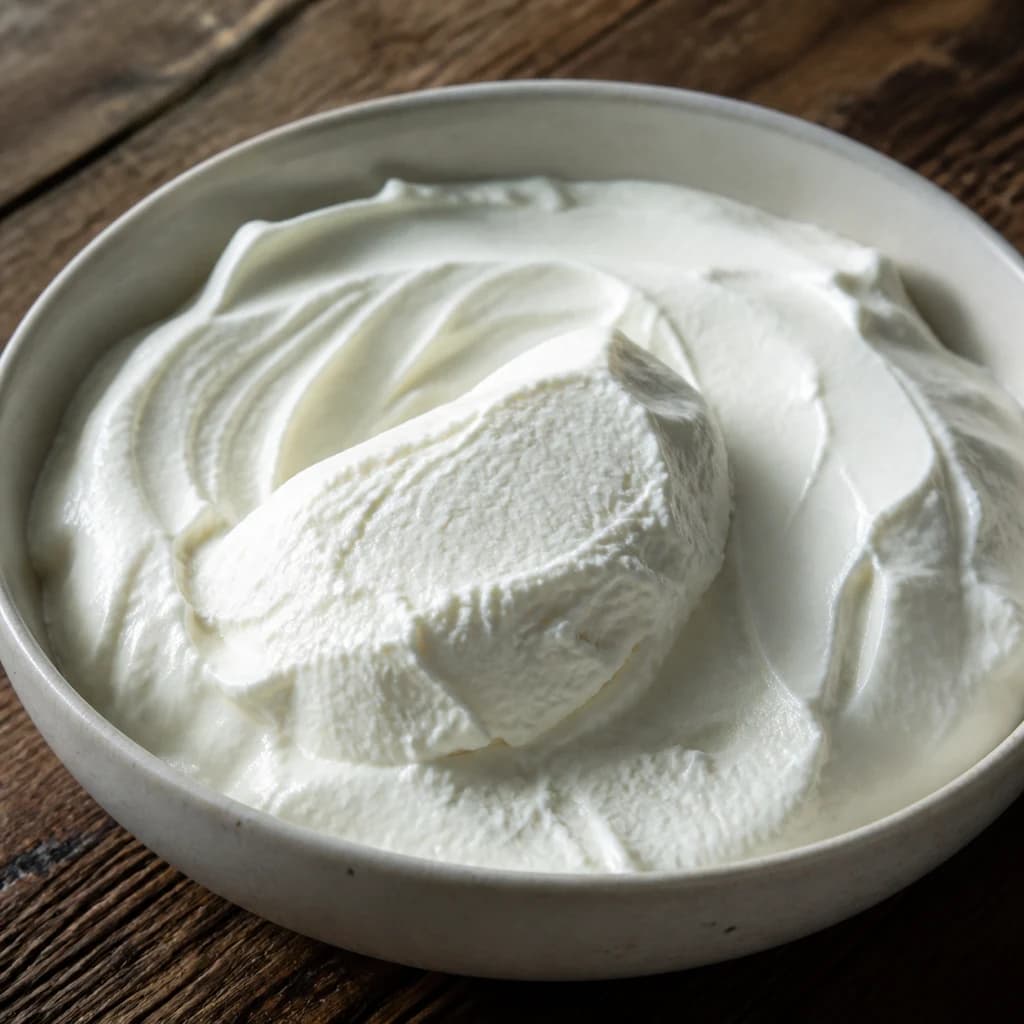
Full-fat unstrained yogurt with a looser, richer body than Greek; ideal for marinades, smoothies, and curries where it won't curdle as readily.
Whole-milk yogurt is the cook's all-purpose yogurt — fatty enough to survive gentle heat, loose enough to whisk into a sauce, and rich enough to stand on its own as a dip or topping. It is cultured milk with the fat left in (typically 3.25–4%, sometimes higher in artisanal and grass-fed versions), and that fat is the single most important variable in how it behaves in the kitchen. Casein proteins in milk coagulate when they meet heat and acid, but the butterfat coats those proteins and buffers the reaction, so whole-milk yogurt breaks into soft, fine curds rather than the harsh, watery lumps you'll get from non-fat versions.
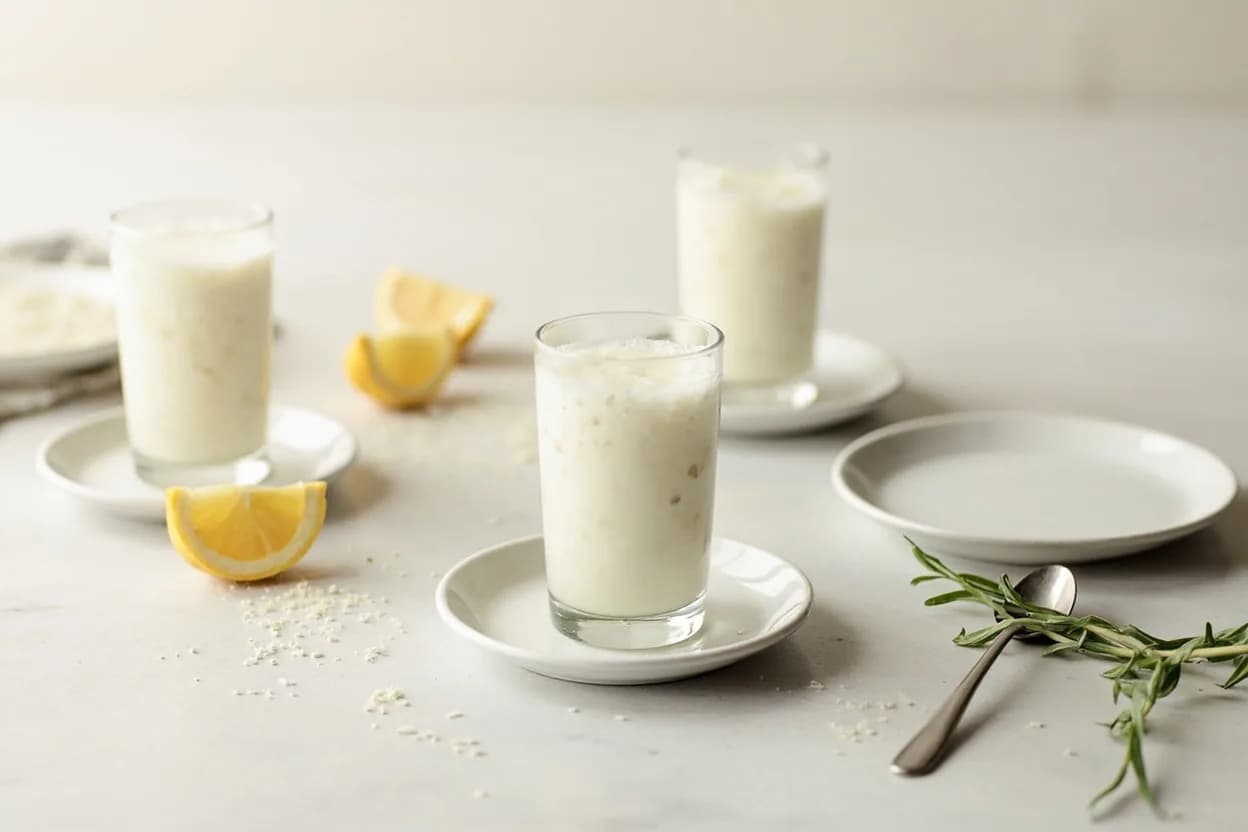
Unlike Greek-style yogurt, whole-milk yogurt is not strained, so it pours easily and carries more whey. That makes it the right choice when you want tang without thickness — stirred into a curry off the heat, thinned with cucumber and garlic for tzatziki, blended into a lassi, or whisked into a creamy salad dressing. The choice of milk animal (cow, sheep, goat, buffalo) and whether the cows were grass-fed shifts the flavor more than the choice of bacterial strain; Lactobacillus bulgaricus–dominated cultures (the Bulgarian tradition) give a sharper, more acetic tang, while longer Streptococcus thermophilus fermentations trend milder and slightly sweeter.
What you're really buying when you pick whole-milk over low-fat is margin for error. It tolerates being warmed, whisked, and stirred into simmering sauces far better than its leaner cousins, and the extra fat carries fat-soluble aromatics — toasted cumin, smoked chili, garlic, mint — in a way that low-fat yogurt simply can't. A small amount of cornstarch whisked in before tempering gives you even more insurance in delicate sauces.
- Measured in
- g
- Storage
- Refrigerated, Sealed
Allergens
Find it in
Suits
Types & varieties
Standard supermarket style; smooth, mildly tangy, ~3.5% fat.
Often unhomogenized; a layer of golden butterfat rises to the top, stirred in before serving.
L. bulgaricus–dominant; intensely tangy, often higher in fat.
Cultured slightly sweeter and milder; traditional earthenware sets; the base for lassi and raita.
Mild, sometimes slightly effervescent set yogurt from Georgia and Armenia; traditionally started from a back-slop.
Tangier with a grassy, almost barnyard note; lower in lactose; pairs especially well with honey and herbs.
Higher fat and protein; rich, grassy-sweet; common across the Mediterranean and the Basque country.
Cultured longer with added milk powder for body; very creamy, faintly caramelized note.
Yellower color, higher in omega-3s and CLA; richer, often described as buttery.
The Fat Buffer: Why Whole-Milk Works
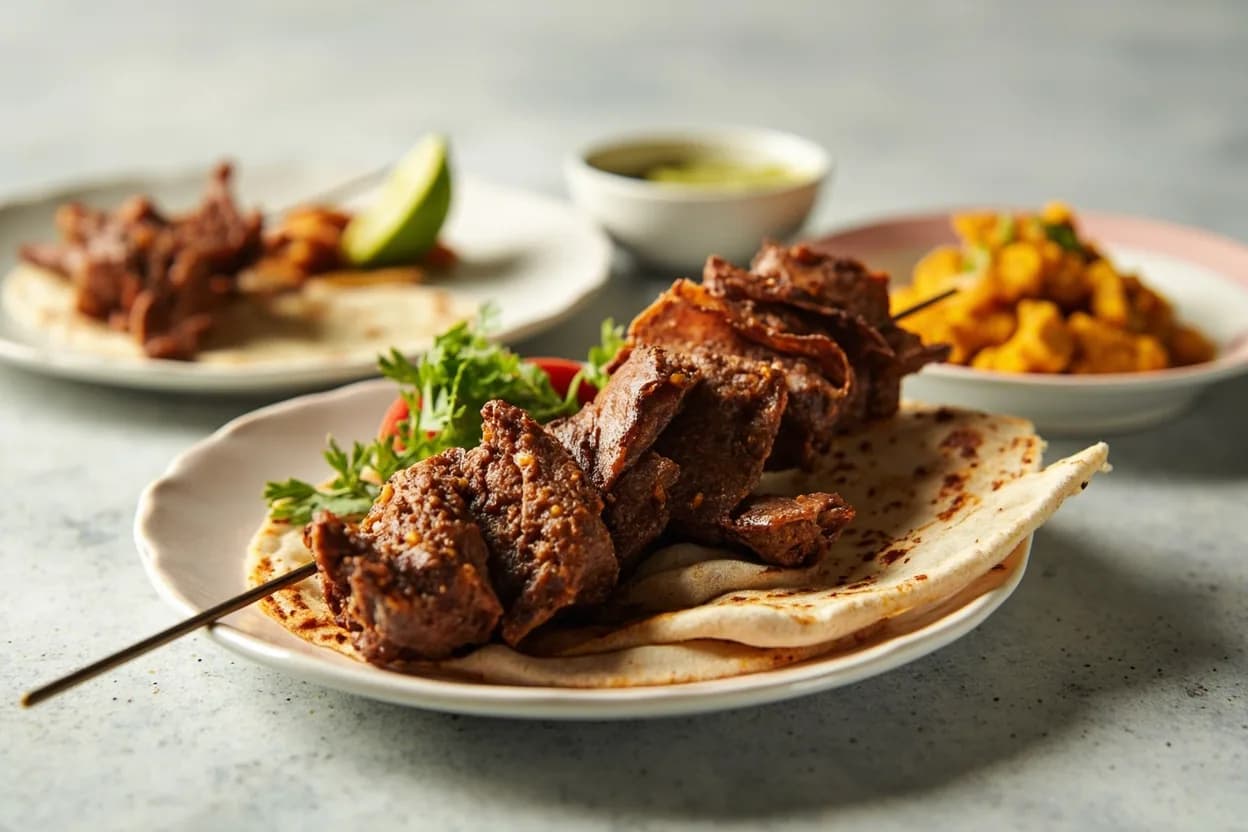
The reason a ladle of butter chicken finishes with a glossy swirl instead of cheese-like lumps comes down to fat. Casein proteins carry a negative charge in milk; when you add acid and heat, the charges neutralize and the proteins clump. The butterfat in whole-milk yogurt physically separates those proteins, slowing the clumping into a fine, velvety network that reads as 'creamy' instead of 'curdled.' Low-fat and non-fat versions lack that buffer, so the same heat and acid produce larger, tougher curds that weep whey. This is also why whole-milk yogurt is the only yogurt to trust in a slow-cooked lamb curry or a long-simmered korma — the dish will hold together for 30–45 minutes on a bare simmer, where a non-fat version would break in five.
- Fat coats casein and slows protein clumping under heat and acid.
- Whole-milk tolerates a bare simmer for 30–45 minutes; non-fat breaks in minutes.
- Cornstarch (1 tsp per cup) adds extra insurance in delicate pan sauces.
- Always temper — never dump cold yogurt straight into a hot pan.
Straining to Taste
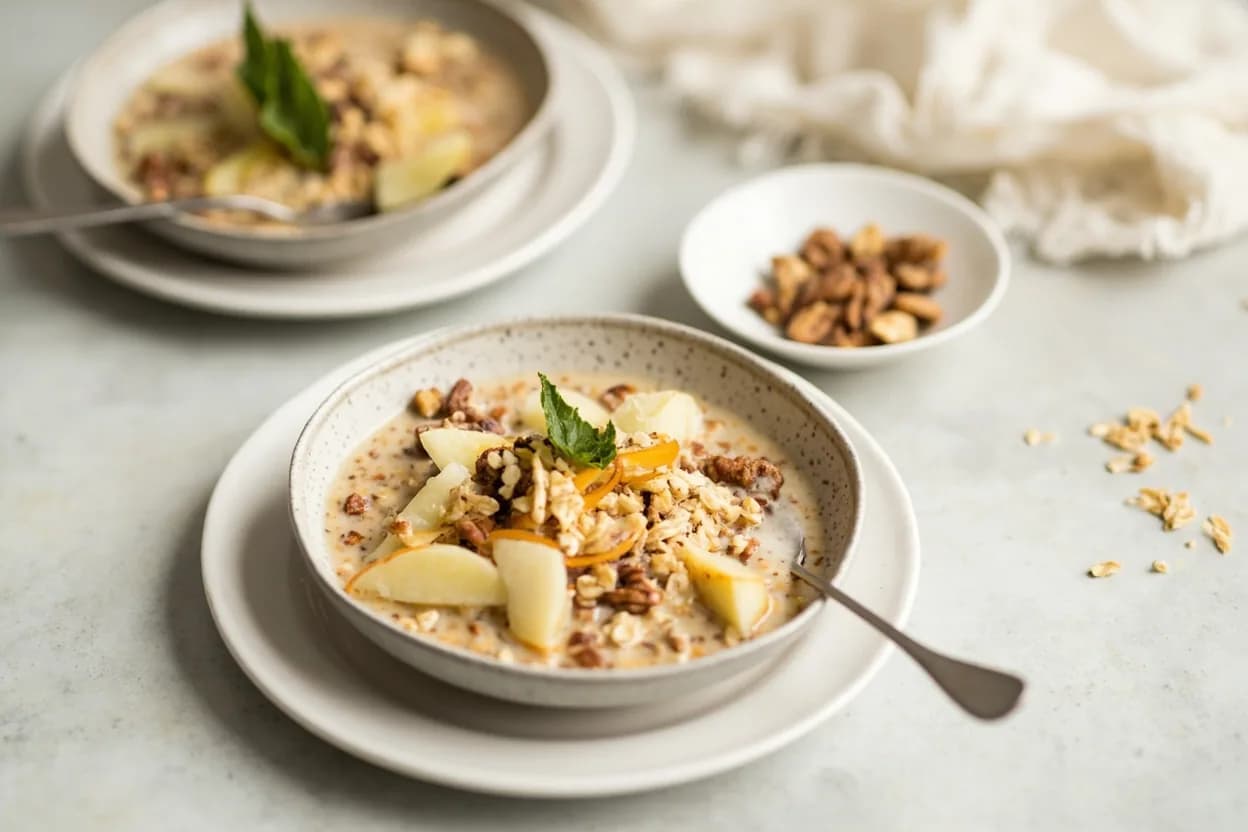
A single tub of plain whole-milk yogurt can play three roles depending on how long you hang it. Drained for 30–60 minutes in cheesecloth over a bowl, it loses enough whey to approximate a thick Greek-style spoon yogurt — perfect for breakfast bowls or a swoopable dip. Drained for 4–6 hours, it thickens into a spreadable, almost cream-cheese-like mass. Drained for 12–24 hours, it becomes labneh, dense and tangy, ready for olive oil, za'atar, and a pinch of Aleppo pepper. The whey you collect is full of protein and calcium; use it in pancake batter, bread dough, or soup.
- 30–60 minutes: thicker spoon yogurt for bowls and dips.
- 4–6 hours: spreadable, almost cream-cheese-like texture.
- 12–24 hours: labneh for spreading; finish with olive oil and herbs.
- Don't discard the whey — it enriches pancake batter, bread dough, and soups.
Reading the Label
The single most useful thing on a yogurt tub is the ingredient list. A short list — milk, cream, cultures — and the presence of named strains (L. bulgaricus, S. thermophilus, L. acidophilus) means a live, properly cultured product. Long lists that include gelatin, pectin, modified corn starch, or 'milk solids' are still cookable, but those stabilizers can mute the tang and change how the yogurt behaves in marinades. The 'Live & Active Cultures' seal from the National Yogurt Association is a useful shortcut, though the absence of the seal doesn't mean the product is dead. Avoid ultra-high-temperature (UHT) milk when culturing at home; the severe heat denatures the whey proteins in ways that inhibit a clean set.
- Short ingredient lists (milk, cream, cultures) are best for cooking.
- Named strains on the label confirm live culture activity.
- Stabilizers like gelatin and pectin are harmless but mute the tang.
- Ultra-high-temperature (UHT) milk cultures poorly; use standard pasteurized milk for homemade yogurt.
Common uses
Tips & pitfalls
- Temper yogurt before adding it to a hot pan: whisk a ladle of the warm sauce into the yogurt, then return the mixture to the pot off the heat. Cold yogurt hitting a hot pan is the single most common reason for curdling.
- Stabilize for cooking: whisk 1 tsp cornstarch per cup of yogurt before tempering into simmering sauces for extra insurance against breaking.
- Never boil yogurt. Add it only after the dish is off the flame or at a bare simmer — a hard boil will split even whole-milk versions.
- Salt and acid (lemon, vinegar) sharpen tang but also drive curdling; add them at the end of cooking so the fresh dairy flavor survives and the proteins stay calm.
- Bring yogurt to cool room temperature before serving cold; fridge-cold yogurt mutes aromatics like mint, cumin, and garlic.
- If a layer of liquid whey forms on top, stir it back in — it's full of protein and calcium. Drain it off only if you want a thicker result.
- Don't substitute low-fat or non-fat yogurt in cooked dishes where whole-milk is called for; the difference in curdling is dramatic, not subtle.
- For homemade yogurt, use a starter from a previous batch or a small container of live-culture commercial yogurt; culture 5–6 hours for mild sweetness, 10–12 hours for a sharper, more savory tang.
- Freeze in ice-cube trays for single-portion smoothie additions; thawed texture is grainy, so it's best reserved for blended use.
- When making tzatziki or raita, salt and drain the cucumber first (15 minutes in a colander) so the finished dish doesn't weep.
Nutrition
Energy
255 kJ · per 100 g
Where the calories come from
Protein
3.5g
7% DV
Carbs
4.7g
2% DV
Fat
3.3g
4% DV
Fiber
0g
0% DV
Sugars
4.7g
of which
Sodium
46mg
2% DV
Source · USDA FoodData Central · Yogurt, plain, whole milk
View on FDC →In the shops
Matched grocery products
 €1.00
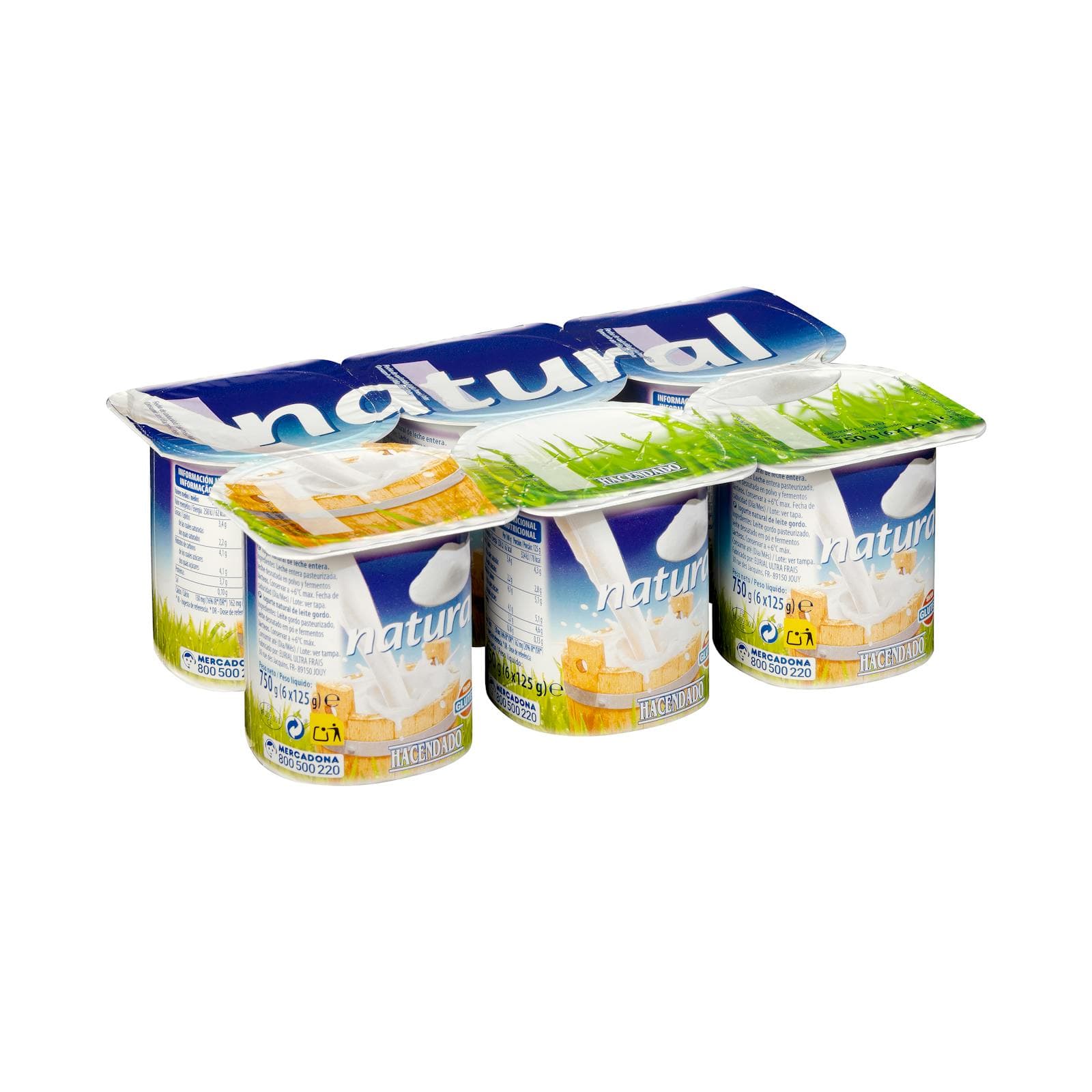
€1.00Natural Yogurt
Hacendado · 750 g · Mercadona
 €1.34
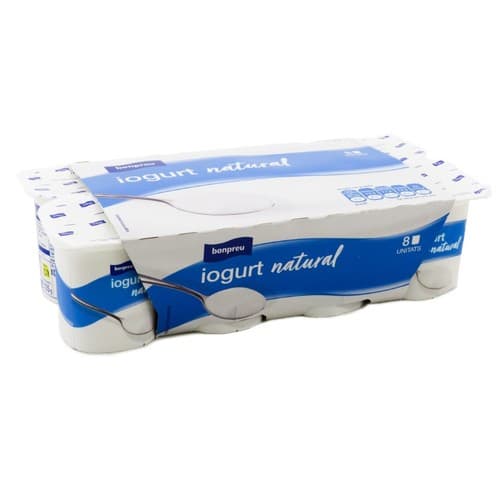
€1.34Natural Yogurt
BONPREU · kg · Bonpreu
 €1.90
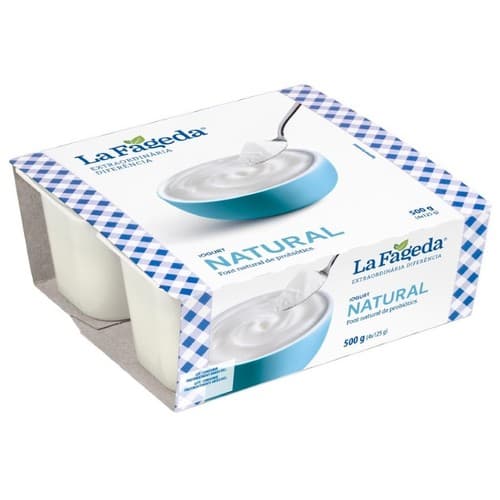
€1.90Natural Yogurt
LA FAGEDA · kg · Bonpreu
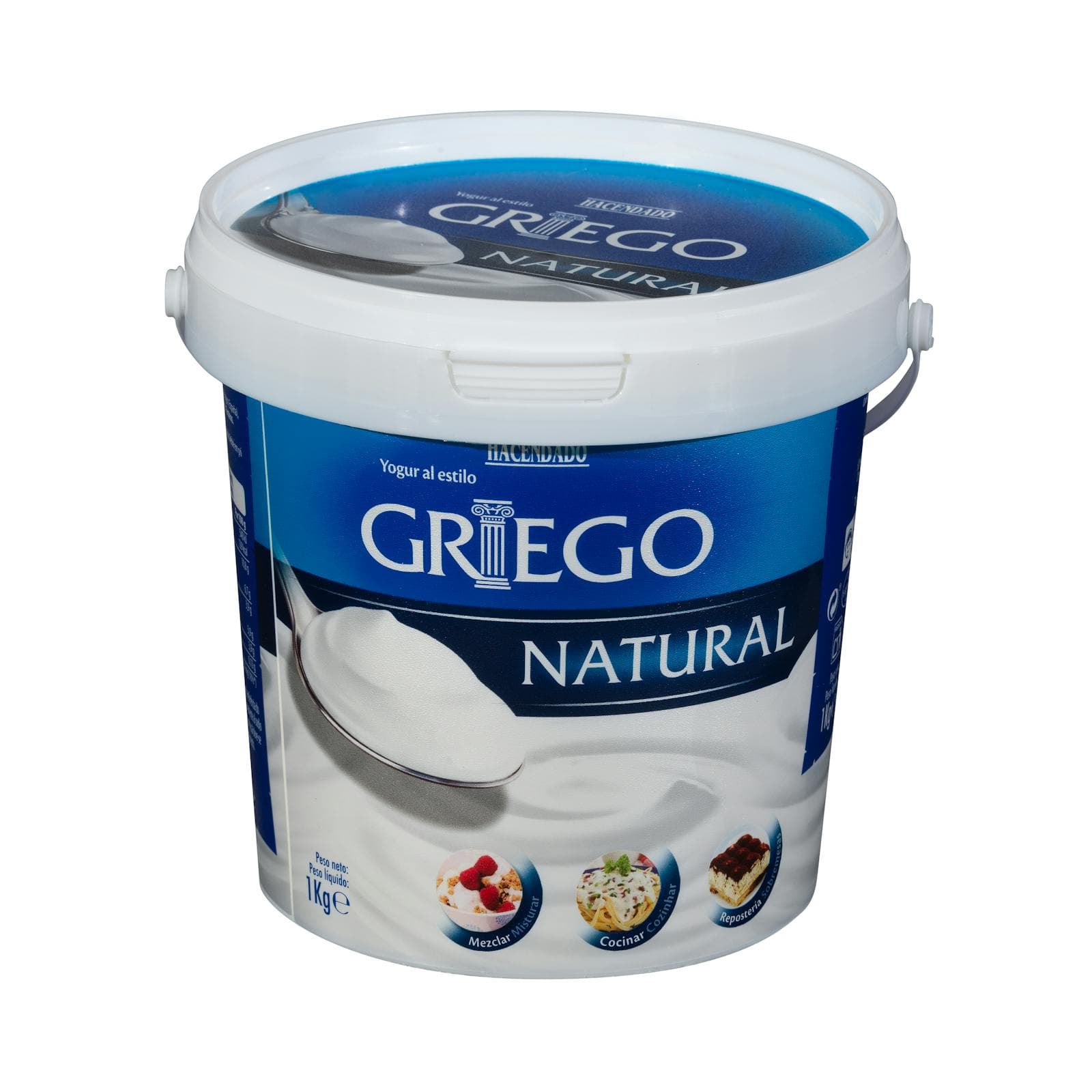 €2.20
€2.20Greek Natural Yogurt
Hacendado · 1 kg · Mercadona
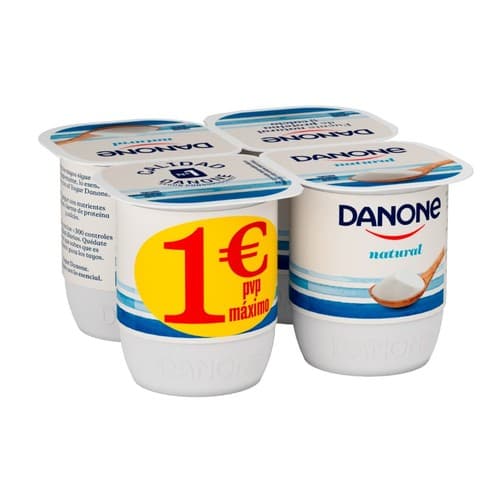 €1.00
€1.00Danone Natural Yogurt
DANONE · kg · Bonpreu
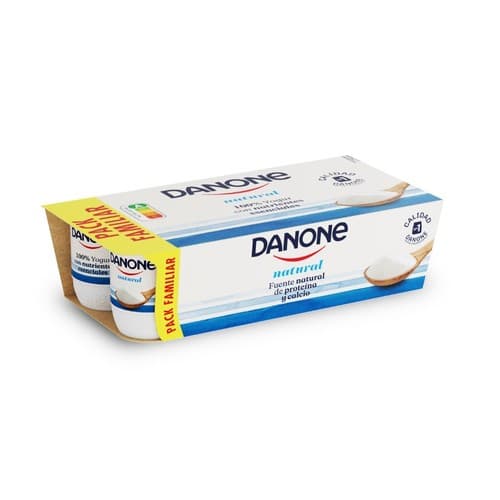 €1.99
€1.99Danone Natural Yogurt
DANONE · kg · Bonpreu
Good to know
- Standard Fat Content
- 3.25–4% milkfat; artisanal and grass-fed versions run 5–8%.
- pH
- Typically 4.0–4.6 — tart, but milder than low-fat or strained versions.
- Protein per Cup
- Approximately 8–9 g; sheep- and goat-milk versions are slightly higher.
- Calories per Cup
- Approximately 140–170, depending on fat level and added milk solids.
- Curdle Resistance
- High. Fat buffers casein proteins so the yogurt tolerates gentle heat far better than non-fat.
- Cultures
- Lactobacillus bulgaricus and Streptococcus thermophilus, often with added L. acidophilus and Bifidus.
- Texture
- Loose, pourable, and creamy; thinner than Greek because it is not strained, but richer than non-fat.
- Storage
- Refrigerate at 1–4°C; unopened containers keep to the printed date (often 2–3 weeks), opened containers 5–7 days.
- Yield (homemade)
- 1 L of whole milk yields roughly 1 L of yogurt, plus a small layer of whey.
Substitutes
- Greek-style whole-milk yogurt — 1:1 by weight works in most cooked applications; thin with 1–2 tbsp water per cup if the recipe wants a looser texture.
- Labneh — Much thicker and tangier; thin with milk and reduce lemon juice in the recipe.
- Sour cream — Equal volume in dips and dressings; tangier and more acidic — reduce added acid slightly.
- Crème fraîche — Excellent in warm sauces because it won't curdle, but milder and less tangy — add a squeeze of lemon.
- Buttermilk — Works in marinades and pancakes; thinner and tangier, so the final texture will be looser.
- Skyr — Thicker and higher in protein; thin with milk and add a squeeze of lemon to approximate the tang.
- Kefir — Pourable and tangy; good for smoothies and dressings but thinner, so reduce other liquid.
- Coconut-milk yogurt (full-fat) — Dairy-free option; slightly sweeter and less tangy — add a small squeeze of lemon to mimic acidity.
- Cashew or almond yogurt — Dairy-free and works cold; heat tolerance is poor, so avoid cooked uses.
Pairs with
Also called
full-fat yogurt · whole milk yoghurt