 Persian
Medium · Hot
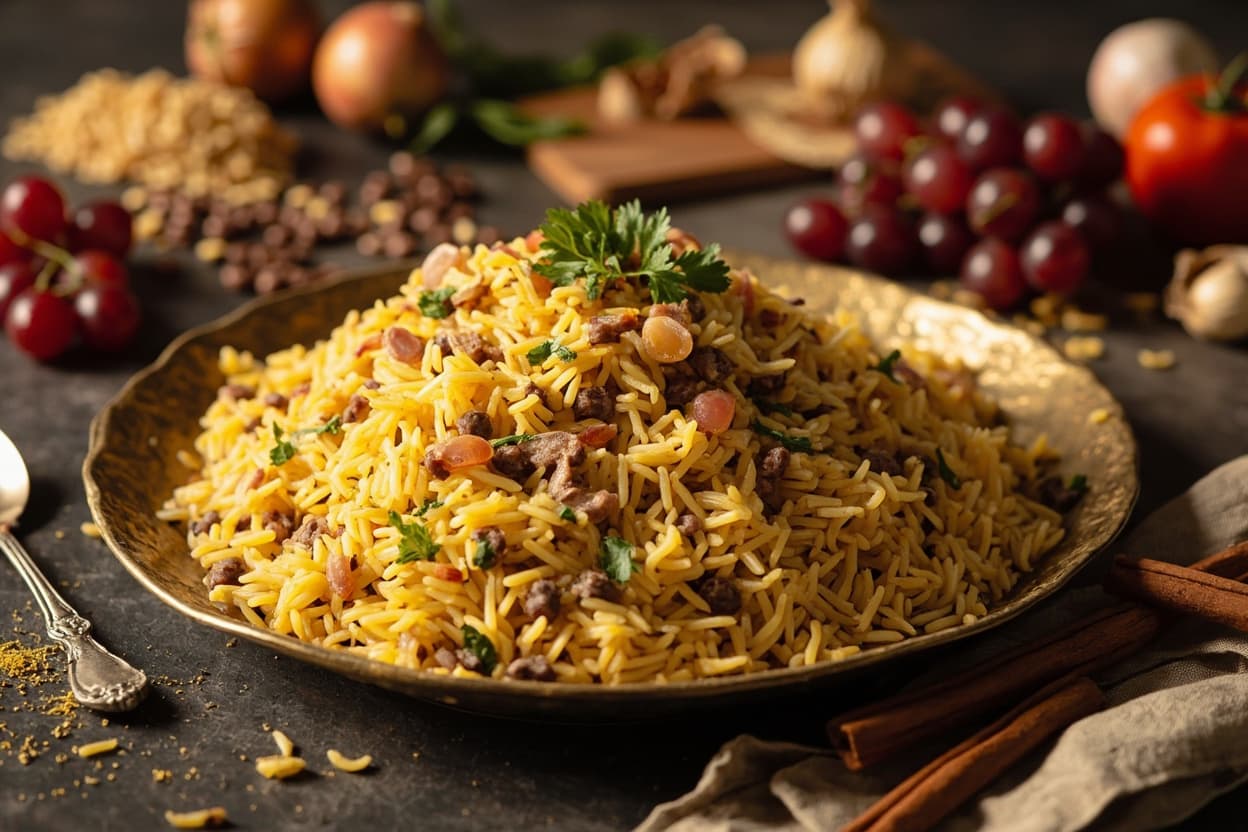
Lentil and Cinnamon Rice Pilaf with Grapes
Lentils are layered between saffron-stained basmati, the whole pilaf wrapped in the sweet warmth of cinnamon as it steams toward tenderness. Grapes brought to softness in the heat release a gentle juice that brightens every forkful with a quiet sourness. This is a rice that carries the old Persian affection for fruit inside savory things — a dish both humble and quietly celebratory.

Prep
10 min
Cook
45 min
Rest
5 min
Total
1h
Method
Prepare the Lentils
1
Bloom the Spices
3
Build the Pilaf
5
Add the basmati rice to the pot and stir gently, coating every grain with the spiced butter and onion. Pour in 2 cups of water and the drained lentils. Season with salt.
6
Arrange the potato slices in a single layer on the bottom of the pot — this is your tahdig, the sacred crust. Nestle the rice and lentil mixture on top.
7
8
Remove from heat and let rest, still covered, for 5 minutes to finish cooking through.
Serve the Pilaf
9
Melt the remaining 2 tablespoons of butter and drizzle it over the surface of the rice, letting it sink into the grains like golden rain.
10
To serve, place the pot on a kitchen towel and gently invert it onto a wide serving platter — lift the pot to reveal the crisp tahdig, scored by potato.
11
Scatter the grapes and chopped parsley over the top like jewels on silk. Serve immediately, while the crust still sings.
B
Nutri-Score
Good balance
A–E · lower is better · score 0
Calories
642
per serving
Source of protein · 21gLow sugar · 10g
Protein
21g
Carbs
118g
Fat
11g
Sat. fat
7g
Fiber
7g
Sugar
10g
Sodium
1034mg
Gluten FreeHeart HealthyDiabetesHigh Protein
Nutri-Score is a general nutritional-balance guide, not medical or dietary advice.
B
Environmental impact
Low impact
A–E · lower is better · includes estimates
kg CO2e
0.6
per serving
BCarbonAEU all-round· carbon sets the grade
Water
1.4m³
Land
20Pt
Runoff
0.06g P
Basmati rice drives 52% of this recipe’s estimated footprint.
Carbon from Poore & Nemecek 2018; water, land & runoff from Agribalyse — modelled averages for comparing recipes, not a measurement of your groceries.
Flavor Profile
6
Umami
4
Sweet
5
Salty
1
Sour
2
Bitter
1
Spicy
Textures
CrispyTenderChewy
Aromas
HerbalSweet SpiceNuttyAromatic
Kitchen Equipment
Primary Tool
StockpotStockpotSaucepanChef KnifeCutting BoardColanderMeasuring CupsMeasuring SpoonsWooden SpoonKitchen TowelPlastic Wrap
Counter FootprintMedium
Safety & Storage
Cooking Temperature
Simmer lentils at gentle boil (not rolling boil) for 20-25 minutes until tender. Pilaf steams at very low heat covered for 20 minutes plus 5 minute rest. Internal temperature should reach 165°F for food safety.
Handling
Use kitchen towel when inverting pot to reveal tahdig - pot and contents are extremely hot. Allow steam to escape away from face when removing lid after steaming.
Storage
Refrigerate leftovers within 2 hours. Contains dairy (butter) which makes it perishable. Store in airtight container and consume within 3-4 days.
Cross Contamination
Same pot used for lentils then pilaf construction - this is intentional pilaf technique. Clean pot thoroughly if using for other recipes to prevent allergen transfer.
Equipment Safety
Potato requires peeling and thin slicing - use appropriate knife, secure cutting board, and watch for slippage with wet potato surfaces.
High Risk Population
Contains dairy from butter. Not suitable for those with milk allergy or lactose intolerance. Cross-contact possible in households with dairy products.
Allergen Warning
Recipe contains milk allergen from butter. No milk-free alternative specified - could substitute with vegan butter for dairy-free diet if needed.
Pro Tips
Technique
The tahdig is not just a crust — it is the reward for patience. Arrange potato slices in a single, overlapping layer and never, never lift the lid while the rice steams. Trust the low heat. Trust the steam.
Substitution
If red grapes are unavailable, try dried apricots cut into quarters — they bring a deeper sweetness that mirrors the sun-dried fruits of Persian cooking.
From the chef
This pilaf carries the old Persian affection for fruit inside savory things — green lentils layered between saffron-stained basmati, warm with cinnamon, brightened by grapes that soften in the steam and release a quiet, gentle juice into every forkful. Potato slices line the bottom of the pot, becoming the golden tahdig crust that is the true reward of patience. A dish both humble and celebratory, where the earth and sky seem to have agreed on one thing at last.
TagsLentils
AllergensMilk
Source: generated · May 30, 2026