 Ethiopian
Medium · Hot
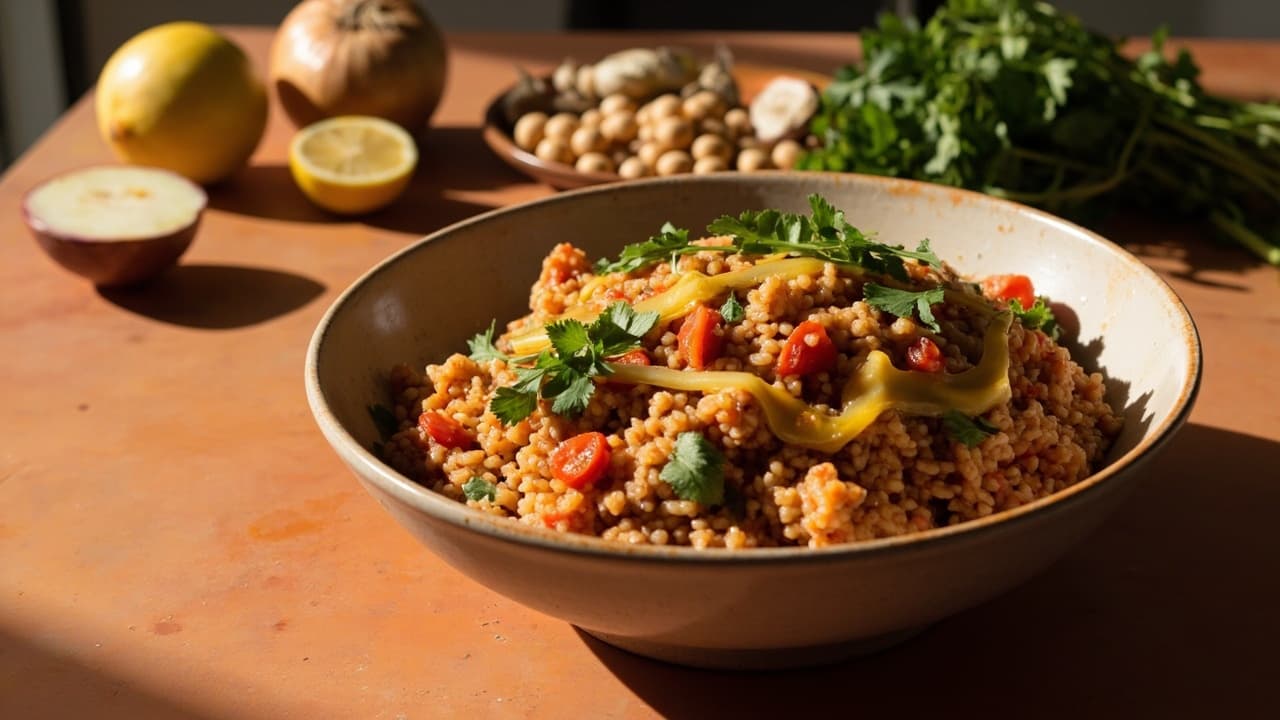
Quinoa Pilaf with Spiced Tomato and Chickpeas
A fragrant Ethiopian-inspired pilaf featuring fluffy quinoa tossed in a warming spiced tomato sauce with tender chickpeas. Communal, colorful, and deeply satisfying.

Prep
15 min
Cook
30 min
Rest
5 min
Total
50 min
Method
Prepare Quinoa
1
Rinse quinoa thoroughly under cold water using a fine mesh strainer to remove the bitter saponins.
4
Remove from heat and let rest covered for 5 minutes. Fluff with a fork and set aside.
Build Spiced Tomato Sauce
5
Dice tomatoes into small cubes. Finely chop the yellow onion. Mince the garlic cloves. Grate or finely mince the fresh ginger.
6
Heat olive oil in a large frying pan over medium heat. Add the chopped onion and sauté for 5-6 minutes until softened and translucent.
8
Add cumin, paprika, cayenne, turmeric, and black pepper. Stir constantly for 30 seconds to bloom the spices in the oil.
Add Chickpeas
Assemble and Serve
14
Add the cooked quinoa to the frying pan with the spiced tomato chickpea mixture. Toss everything together gently until the quinoa is well coated with the sauce.
16
Transfer to a serving platter. Chop fresh parsley and sprinkle generously over the top as garnish.
A
Nutri-Score
Excellent balance
A–E · lower is better · score -7
Calories
877
per serving
Source of protein · 36gSource of fibre · 22gLow sugar · 10gLow saturated fat · 3g
Protein
36g
Carbs
138g
Fat
23g
Sat. fat
3g
Fiber
22g
Sugar
10g
Sodium
1417mg
VeganGluten FreeDairy FreeHeart HealthyDiabetes FriendlyHigh FiberPlant ProteinIron Rich
Nutri-Score is a general nutritional-balance guide, not medical or dietary advice.
B
Environmental impact
Low impact
A–E · lower is better · includes estimates
kg CO2e
0.7
per serving
BCarbonAEU all-round· carbon sets the grade
Water
3.1m³
Land
30Pt
Runoff
0.07g P
Tomato drives 38% of this recipe’s estimated footprint.
Carbon from Poore & Nemecek 2018; water, land & runoff from Agribalyse — modelled averages for comparing recipes, not a measurement of your groceries.
Flavor Profile
7
Umami
4
Sweet
5
Salty
5
Sour
2
Bitter
5
Spicy
Textures
FluffyTenderSilkySaucy
Aromas
SpicedEarthyHerbalCitrusPungent
Kitchen Equipment
Primary Tool
Frying PanSaucepanFrying PanFine Mesh StrainerChef KnifeCutting BoardGraterMixing SpoonMeasuring CupsMeasuring SpoonsTongsMixing Bowls
Counter FootprintMedium
Techniques
Safety & Storage
Cross Contamination
Quinoa is naturally gluten-free but is often processed in facilities that handle wheat, barley, or rye. Purchase quinoa labeled gluten-free if serving individuals with celiac disease or gluten sensitivity.
Spices like paprika, cumin, and cayenne may have cross-contamination risk with mustard, celery, or gluten. Use certified pure spices for allergen-sensitive individuals.
Storage
Refrigerate leftover pilaf within 2 hours of cooking. Store in airtight containers and consume within 3-4 days for best quality and food safety.
The spiced tomato sauce and cooked quinoa can be stored separately for meal prep. Reheat thoroughly to 165°F before consuming.
Handling
When mincing garlic and ginger, ensure cutting boards are clean to prevent cross-contamination with raw proteins. Wash hands thoroughly after handling fresh ingredients.
Shelf Life
Use canned chickpeas within the expiration date. Once opened, store unused portion in a clean container with fresh water covering the legumes for up to 3-4 days.
High Risk Population
Pregnant individuals should ensure all ingredients are cooked thoroughly. This recipe reaches safe temperatures during simmering. Avoid consuming if lemons are not properly washed before zesting.
The cayenne pepper (0.5 tsp) provides moderate heat. Warn guests about spiciness level before serving to those with sensitivity or young children.
Pro Tips
Technique
When you bloom the spices in hot oil, don't rush it—keep that pan moving for those full 30 seconds. The cumin and paprika need that moment to wake up, releasing their fragrance like a morning blessing over your kitchen.
Substitution
No fresh ginger on hand? A quarter teaspoon of ground ginger works in a pinch, though fresh gives a brightness that ground simply cannot match. Similarly, teff or millet can stand in for quinoa if you want something closer to our traditional grain.
From the chef
Every grain of quinoa is a tiny vessel waiting to be filled with warmth and flavor. In Ethiopia, we call this abundance wot—a slow-simmered embrace of spices that welcomes everyone to the table. This pilaf is my answer to those who want to share the spirit of injera without losing a moment to knead it. Toss it together, tear the bread, and let the gathering begin.
TagsEthiopianSpicedPlant BasedCommunalWeeknight DinnerVegetarianProtein Rich
Source: generated · June 10, 2026