 Maghrebi
Medium · Hot
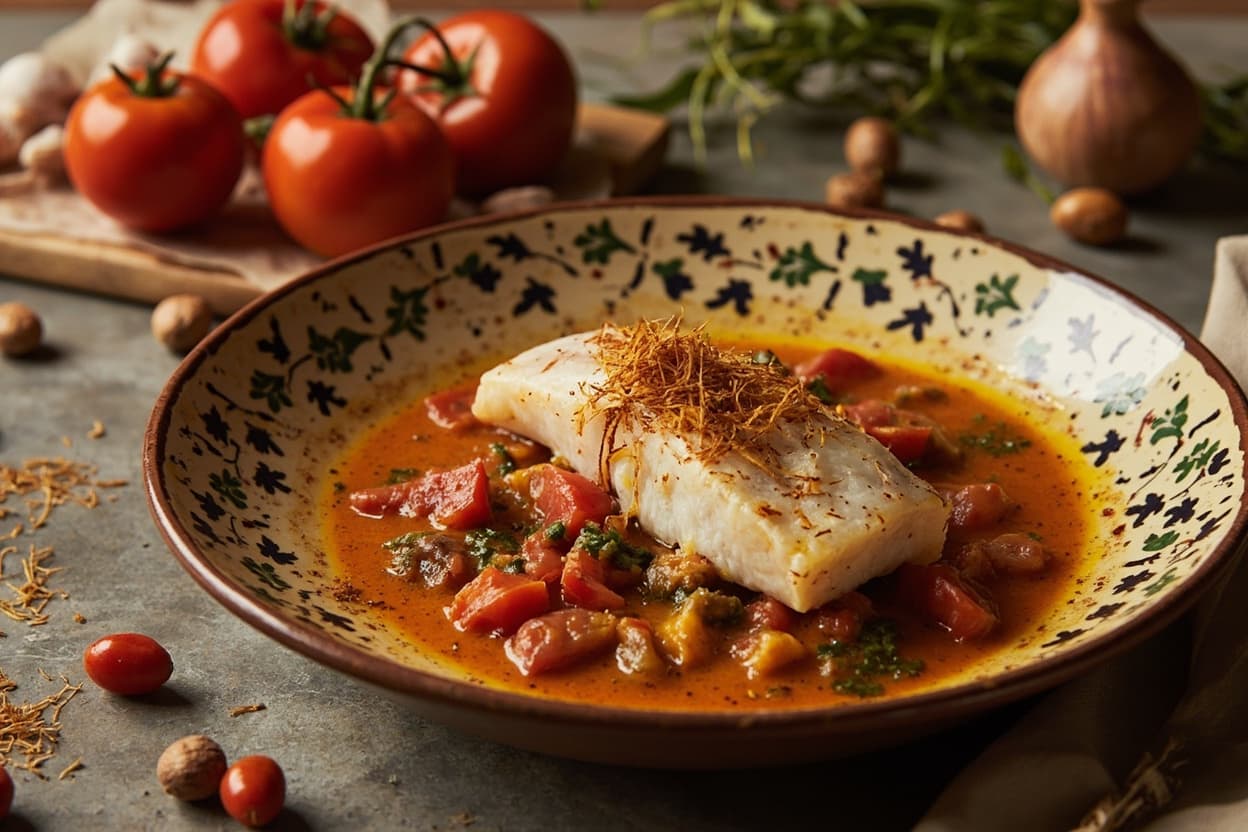
Coastal Cod Tagine in Saffron Pepper Sauce
Bell pepper and tomato cook down into a softened, slightly sweet sauce that saffron pulls into something entirely coastal — golden-hued, faintly perfumed, tasting of a harbor morning. Cod is settled into this sauce and left to finish gently, absorbing the color and the warmth while staying just firm at its center. Garlic and cilantro frame it, the way the shore frames the sea.

Prep
20 min
Cook
30 min
Rest
5 min
Total
55 min
Method
Build the Saffron Broth
1
Bloom the saffron: place pinch of saffron in 2 tablespoons warm water and let steep for 10 minutes until vibrant yellow.
2
In a large stockpot, warm olive oil over medium heat. Add diced yellow-onion and cook, stirring occasionally, until softened and translucent, about 8 minutes.
3
Add minced garlic, cumin, smoked-paprika, and turmeric. Stir constantly for 1 minute until the spices are fragrant and deepened in color.
4
Pour in the chopped tomatoes and their juices, then add 1 cup water and the saffron water. Season with salt and black-pepper. Bring to a gentle simmer.
5
Let the broth simmer uncovered for 15 minutes, stirring occasionally, until it thickens slightly and the flavors marry.
Add Vegetables and Fish
6
While broth simmers, cut bell-pepper into strips and slice carrots into diagonal coins. Nestle them into the simmering broth and cook for 5 minutes until just beginning to soften.
7
Gently lay the cod fillets into the broth, nestling them among the vegetables. Spoon some sauce over the fish.
A
Nutri-Score
Excellent balance
A–E · lower is better · score -3
Calories
320
per serving
High in protein · 31gLow sugar · 12gLow saturated fat · 2g
Protein
31g
Carbs
24g
Fat
12g
Sat. fat
2g
Fiber
7g
Sugar
12g
Sodium
1582mg
Gluten FreeDairy FreePescatarianMediterraneanHeart HealthyLow Sodium AdaptableAnti InflammatoryHigh ProteinLow Calorie
Nutri-Score is a general nutritional-balance guide, not medical or dietary advice.
Grade pending
Environmental impact
Estimated footprint
Grade pending · 66% ingredient coverage
kg CO2e
≥0.4
per serving
tomato drives 54% of this recipe’s estimated footprint.
Carbon from Poore & Nemecek 2018; water, land & runoff from Agribalyse — modelled averages for comparing recipes, not a measurement of your groceries.
Flavor Profile
6
Umami
4
Sweet
4
Salty
3
Sour
1
Bitter
3
Spicy
Textures
TenderSilkySaucy
Aromas
SaffronSmokyHerbalEarthy
Kitchen Equipment
Primary Tool
StockpotCounter FootprintMedium
Safety & Storage
Cooking Temperature
Fish must reach an internal temperature of 145°F (63°C) to ensure safety. The cod fillets should turn opaque and flake easily when properly cooked through.
Cross Contamination
Raw cod should be handled separately from vegetables and other ingredients. Use separate cutting boards and utensils for raw fish to prevent cross-contamination.
Storage
Leftover tagine must be refrigerated within 2 hours of cooking. Store in airtight containers and consume within 3 days. Reheat to 165°F before serving.
Handling
Fresh cod fillets should be handled with clean equipment and should not be left at room temperature for more than 2 hours total. Keep fish refrigerated until ready to cook.
High Risk Population
Elderly individuals, pregnant women, young children, and immunocompromised persons should ensure fish is cooked to proper temperature (145°F) before consumption.
Pro Tips
Technique
Never dump saffron directly into the pot—bloom it first in warm water for at least 10 minutes until the liquid turns a vibrant amber-gold. This releases the crocin oils that give the sauce its characteristic color and that haunting, almost medicinal floral quality that no other spice can replicate.
Substitution
If cod is unavailable, any firm white fish with similar flake—such as halibut, sea bass, or even thick-cut tilapia—will work beautifully. The key is that the fish should hold its shape during steaming and absorb the saffron broth without falling apart.
Flavor Boost
The final squeeze of lemon is not optional—it's the punctuation mark on this dish. Algerian cooking习惯 believes that acid at the end brightens all the warm spices that came before, creating that sweet-savory tension that makes you reach for more bread.
Equipment
While a traditional tagine clay pot is lovely, a heavy-bottomed stockpot works just as well here—the important thing is even, gentle heat so the fish steams rather than boils, staying tender and intact.
From the chef
In Oran, where my grandmother's kitchen faced the Mediterranean, Friday was never just about couscous—it was about the sea's gift to our table. A fish tagine like this one carries the salt wind of the coast in every saffron-gilded spoonful, a dish that moves differently than the meat tagines of the inland villages. I learned to build the broth in layers, each spice blooming in olive oil before the tomatoes arrive, because patience is the oldest ingredient in Maghrebi cooking.
TagsTagineFishSaffronMaghrebiMediterraneanOne Pot
AllergensFish
Source: generated · May 30, 2026