 French
Medium · Hot
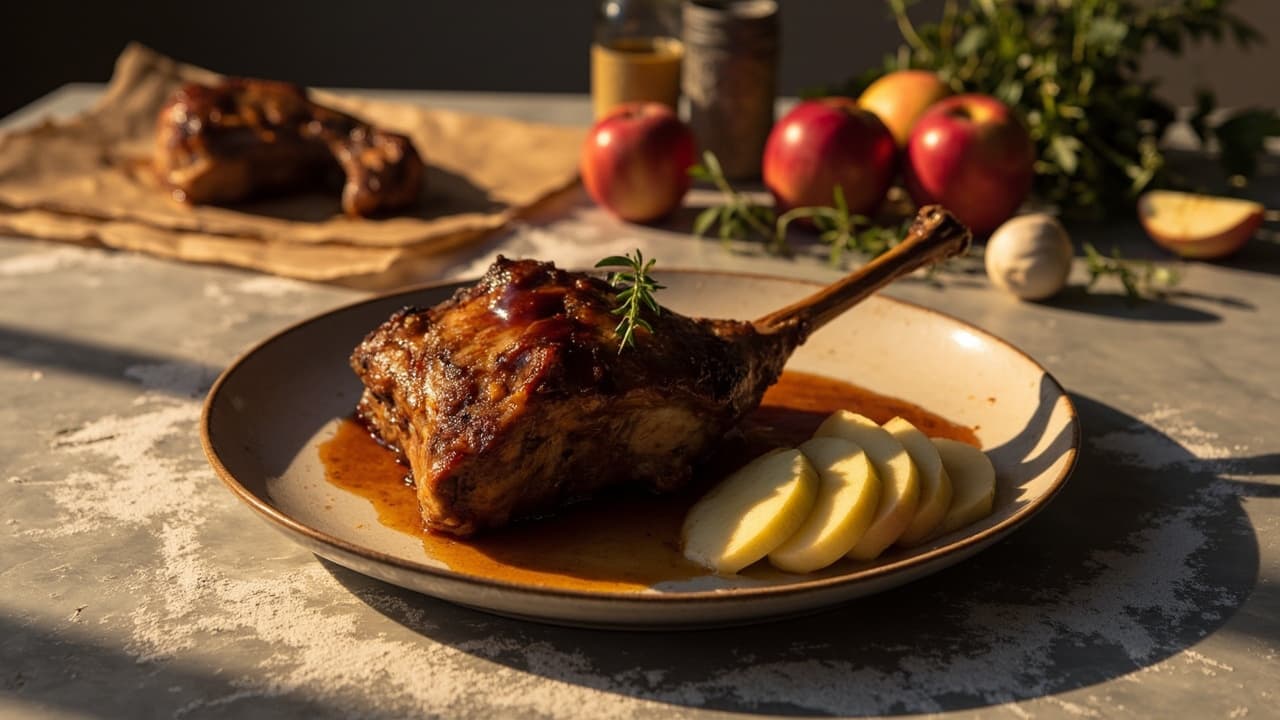
Duck Leg with Apple-Balsamic Reduction
Slow-braised duck legs rendered golden and tender, finished with a glossy apple-balsamic reduction that weaves together sweet, tart, and deeply savory notes.

Prep
20 min
Cook
1h 15m
Rest
5 min
Total
1h 35m
Method
Prepare the Duck Legs
1
Score the duck skin in a crosshatch pattern, cutting through the fat but not into the meat. This allows the fat to render beautifully and the skin to crisp.
2
Season the duck legs generously with salt and black pepper on all sides. Let them rest at room temperature for 20 minutes to temper.
Sear the Duck
3
Heat olive oil in a large heavy-bottomed skillet or Dutch oven over medium-high heat until shimmering.
4
Build the Apple-Balsamic Reduction
6
7
Add the chicken broth, scraping up the fond from the pan with a wooden spoon. This is where the depth lives.
8
Stir in the honey and balsamic vinegar. Bring to a gentle simmer.
9
Add the thyme sprigs and nestle the duck legs back into the pan, skin-side up this time. The legs should be partially submerged in the liquid.
Braise and Finish
10
11
Remove the duck legs carefully and set aside. Increase heat to medium and simmer the sauce uncovered for 10-15 minutes until it reduces by half and coats a spoon.
12
13
Whisk in the butter to emulsify and glossy the sauce. Season with additional salt and black pepper to taste.
E
Nutri-Score
Least favorable
A–E · lower is better · score 19
Calories
1054
per serving
High in saturated fat · 45gCalorie-dense · 1054 kcalSource of protein · 48g
Protein
48g
Carbs
32g
Fat
80g
Sat. fat
45g
Fiber
2g
Sugar
31g
Sodium
1678mg
Low CarbPaleoHigh ProteinLow Carb Friendly
Nutri-Score is a general nutritional-balance guide, not medical or dietary advice.
E
Environmental impact
Very high impact
A–E · lower is better · includes estimates
kg CO2e
2.7
per serving
ECarbonBEU all-round· carbon sets the grade
Water
1.0m³
Land
119Pt
Runoff
0.4g P
Duck legs drives 92% of this recipe’s estimated footprint.
Carbon from Poore & Nemecek 2018; water, land & runoff from Agribalyse — modelled averages for comparing recipes, not a measurement of your groceries.
Flavor Profile
7
Umami
5
Sweet
4
Salty
4
Sour
2
Bitter
3
Spicy
Textures
CrispyTenderSilkySoft
Aromas
HerbalFruitySmokyFattyVinegary
Kitchen Equipment
Primary Tool
Dutch OvenCounter FootprintMedium
Safety & Storage
Cooking Temperature
Duck legs must reach an internal temperature of at least 165°F (74°C) to ensure food safety. The braising process at low heat should achieve this, but use a meat thermometer to verify doneness before serving.
When whisking butter into the reduction at the end, do not let the sauce boil or it may break and lose its glossy emulsification. Remove from heat or reduce to lowest simmer before adding butter.
Handling
Raw duck legs and their rendered fat can harbor pathogens. Use separate cutting boards for raw poultry and wash all utensils, surfaces, and hands thoroughly with hot soapy water after handling raw duck.
Cross Contamination
When searing duck skin-side down, ensure no splattering occurs onto other cooking surfaces or ready-to-eat foods. The rendered fat reserved for sautéing garlic should not come into contact with other ingredients after raw meat contact.
Storage
Leftover duck with apple-balsamic reduction must be refrigerated within 2 hours of cooking. Store in airtight containers and consume within 3-4 days. Reheat to 165°F before serving.
Shelf Life
The honey in the reduction has natural preservative properties, but the added chicken broth and butter reduce shelf life. Do not leave the finished dish at room temperature for more than 2 hours (1 hour if ambient temperature is above 90°F).
Pro Tips
Technique
When scoring the duck skin in a crosshatch pattern, let your knife glide just through the fat layer — if you pierce the meat, juices escape during the sear, and we lose that beautiful render. Think of it as creating channels for the fat to escape and the skin to transform into something golden and crisp.
Substitution
If you don't have fresh thyme, rosemary makes a wonderful alternative — its woodsy intensity stands up beautifully to the rich duck and tart balsamic. Use half the amount, as rosemary is more assertive. A sprig of sage would also honor the dish, though it shifts the flavor toward something more delicate and autumnal.
Equipment
A heavy-bottomed Dutch oven or cast iron skillet is essential here — the even heat distribution ensures the skin renders slowly and evenly, while the retained fond becomes the foundation of your sauce's depth.
From the chef
This duck leg is a study in patience and reward — the slow rendering of golden skin, the gentle surrender of meat braising in aromatic liquid, and finally a reduction that captures every caramelized moment into a glossy, deeply complex sauce. There is a meditation in standing at the stove, watching the fat pool and crisp, knowing that the best flavors cannot be rushed. The apple brings a quiet sweetness that whispers against the bold balsamic, and when you finally pull the meat from the bone, tender and yielding, you'll understand why time is the most essential ingredient.
TagsDuck LegBraisedSearedApple BalsamicReductionClassicAutumnDinner PartySlow Cooked
AllergensDairy
Source: generated · June 10, 2026