 Persian
Medium · Hot
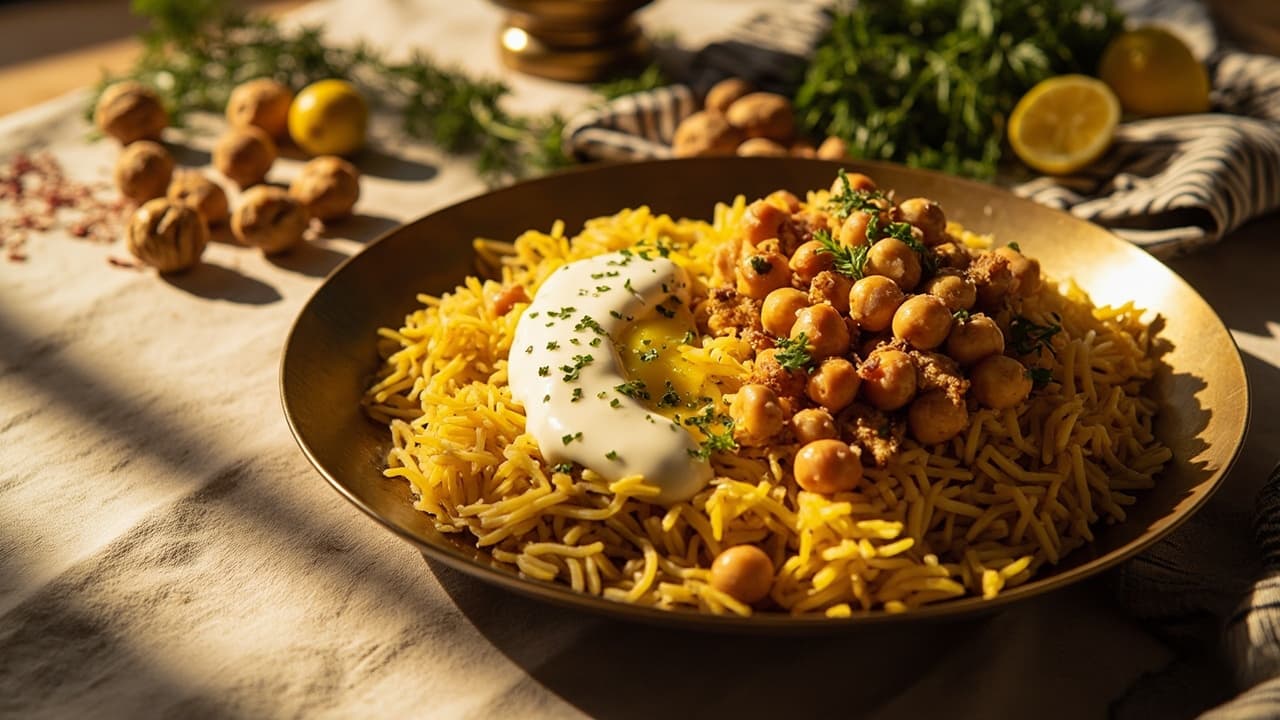
Golden Tahdig Bowls with Chickpeas and Herb Oil
Saffron-perfumed basmati rice with a crackling golden tahdig crust, crowned with warmly spiced chickpeas and finished with a vibrant drizzle of herb oil and cooling yogurt.

Prep
45 min
Cook
45 min
Rest
10 min
Total
1h 40m
Method
Bloom the Saffron
1
Steep saffron threads in 3 tablespoons of hot water for 10 minutes until the water turns deep amber. Set aside to cool.
Prepare the Rice
2
Rinse basmati rice under cold water until the water runs clear. Soak in salted water for 30 minutes, then drain thoroughly.
Cook the Chickpeas
3
Make the Herb Oil
Build the Tahdig
6
7
8
Drizzle the bloomed saffron water over the rice. Place a clean kitchen towel over the pot, cover with the lid, and cook over medium-low heat for 30-35 minutes until you hear a gentle sizzle and smell the rice singing.
Rest and Invert
9
Remove from heat and let rest, covered, for 10 minutes. This is where the tahdig sets and the poetry happens.
10
Place a large serving plate over the pot and invert in one confident, celebratory motion. Lift the pot slowly to reveal the golden tahdig crust.
Assemble the Bowls
11
12
13
Serve immediately while the tahdig is still crackling, sharing the generosity of the Persian table.
A
Nutri-Score
Excellent balance
A–E · lower is better · score -3
Calories
1286
per serving
Calorie-dense · 1286 kcalSource of protein · 39gSource of fibre · 18gLow sugar · 5g
Protein
39g
Carbs
173g
Fat
52g
Sat. fat
12g
Fiber
18g
Sugar
5g
Sodium
1200mg
Heart HealthyDiabetes FriendlyWeight ManagementHigh ProteinHigh FiberBalanced Macros
Nutri-Score is a general nutritional-balance guide, not medical or dietary advice.
C
Environmental impact
Moderate impact
A–E · lower is better · includes estimates
kg CO2e
1.1
per serving
CCarbonAEU all-round· carbon sets the grade
Water
2.7m³
Land
46Pt
Runoff
0.1g P
Basmati Rice drives 39% of this recipe’s estimated footprint.
Carbon from Poore & Nemecek 2018; water, land & runoff from Agribalyse — modelled averages for comparing recipes, not a measurement of your groceries.
Flavor Profile
6
Umami
4
Sweet
5
Salty
3
Sour
1
Bitter
4
Spicy
Textures
CrispyTenderCreamyChewy
Aromas
HerbalSaffronSmokyNuttyEarthy
Kitchen Equipment
Primary Tool
Heavy PotHeavy PotSkilletFood ProcessorChef KnifeCutting BoardMixing BowlFine StrainerMeasuring CupsMeasuring SpoonsServing PlateKitchen Towel
Counter FootprintMedium
Safety & Storage
Cross Contamination
Tree nuts (walnuts) present cross-contact risk. Prepare walnuts separately or use dedicated equipment when serving to individuals with nut allergies.
High Risk Population
Dairy components (butter, yogurt) and fresh herbs require careful handling for pregnant individuals, elderly, or immunocompromised diners. Ensure herbs are thoroughly washed.
Handling
Inverting the hot pot to reveal the tahdig crust poses burn risk. Use oven mitts, a sturdy plate, and confident controlled motion. Never flip toward yourself.
Storage
Cooked rice must be refrigerated within 2 hours. Leftover tahdig rice has Bacillus cereus risk if left at room temperature. Consume within 2 days or freeze.
Leftover chickpeas can be refrigerated in an airtight container for up to 5 days. Reheat to 165°F before serving.
Shelf Life
Herb oil is fresh and perishable. Store refrigerated and use within 3-5 days. Discard if color dulls or odor becomes off.
Cooking Temperature
Saffron bloom uses hot water (not boiling). Scald risk when handling hot water. Let cool before adding to rice.
Allergen Warning
Butter in the tahdig can burn if heat exceeds medium-low setting. Maintain even temperature to prevent scorching and potential smoke.
Pro Tips
Technique
Never lift the lid while the rice steams—you must trust the process. The magic happens in the quiet, patient minutes when you let the steam work its slow alchemy on the grain.
Substitution
If fresh herbs are not available, you can use dried parsley and dill, though the bright green vibrancy will be more muted. Reduce dried herbs to 1 teaspoon each and let them bloom in warm olive oil for 5 minutes before using.
From the chef
The crackling golden tahdig is the whole point — saffron-perfumed basmati steamed over potato rounds until the bottom caramelizes into something you can hear when you tap it. Chickpeas bloom with cumin and turmeric in hot olive oil, and a blended herb oil of parsley, cilantro, dill, mint, and chives pours over everything in a vivid green ribbon. When the pot is inverted and that crust is revealed, shimmering and whole, it is not just a meal — it is the generosity of every Persian table made visible.
TagsTahdigSaffronChickpeasHerb OilVegetarianPersianGolden CrustYogurt Topping
AllergensMilkTree Nuts
Source: generated · June 10, 2026