 Persian
Medium · Hot
Kale and Saffron Rice with Crispy Shallots
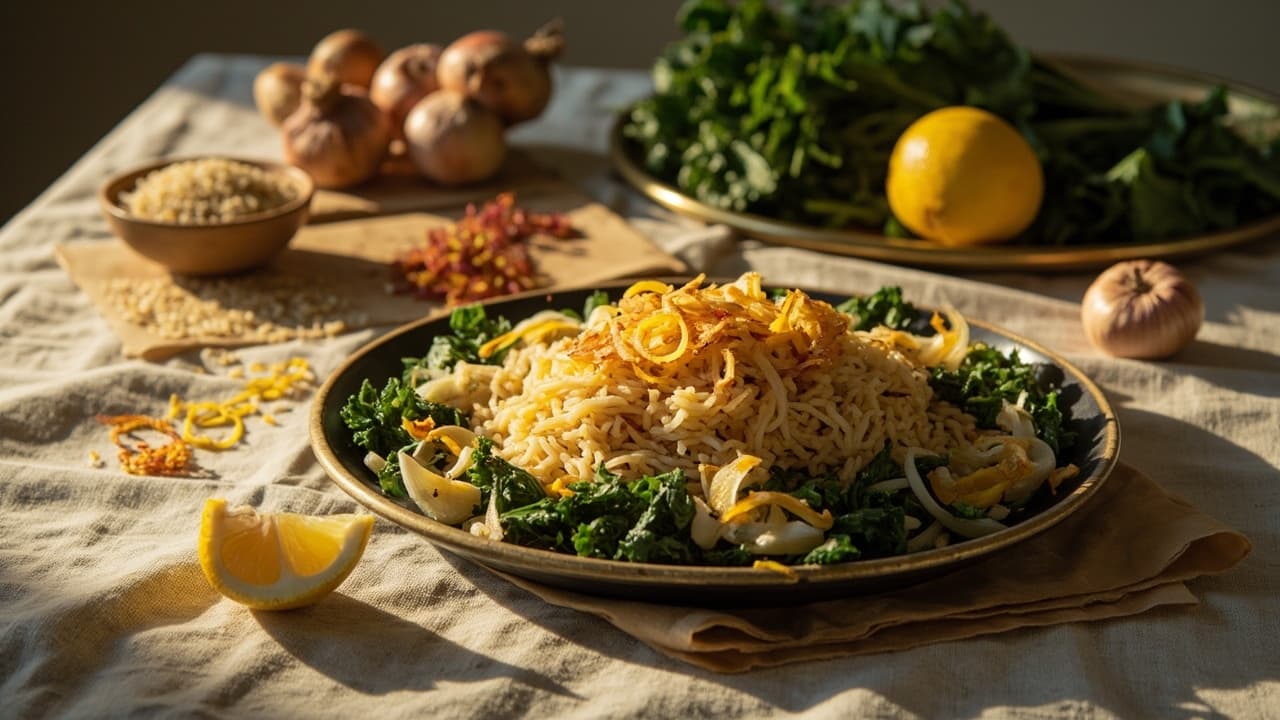
A golden saffron-scented rice layered with a crispy bottom crust, tender wilted kale, and shatteringly crisp shallots — a Persian-inspired bowl of patience, color, and warmth.

Prep
15 min
Cook
35 min
Rest
5 min
Total
55 min
Method
Blooming the Saffron
1
Crush the saffron threads between your fingertips and steep in 3 tablespoons of hot water. Let it sit for 10 minutes until the water turns a deep amber-gold — this is your liquid gold.
Preparing the Rice
2
Rinse the basmati rice until the water runs clear. In a large pot, bring water to boil, add salt and 1 tablespoon butter. Par-cook the rice for 7 minutes, drain immediately, and return to the pot.
Wilted Kale
4
Crispy Shallots
6
7
Fry, stirring occasionally, until the rings are deeply golden and crisp, about 8-10 minutes. Transfer to a paper towel-lined plate immediately.
Plating
8
Carefully invert the pot of rice onto a serving platter to reveal the golden tahdig crust — if it sticks, run a spatula along the edges first. The crust should be intact and shimmering.
A
Nutri-Score
Excellent balance
A–E · lower is better · score -5
Calories
794
per serving
Source of protein · 25gSource of fibre · 19gLow sugar · 16g
Protein
25g
Carbs
119g
Fat
30g
Sat. fat
9g
Fiber
19g
Sugar
16g
Sodium
1026mg
Gluten FreeDairy PresentHeart HealthyAntioxidant RichWhole GrainPlant Forward
Nutri-Score is a general nutritional-balance guide, not medical or dietary advice.
B
Environmental impact
Low impact
A–E · lower is better · complete match
kg CO2e
0.7
per serving
BCarbonAEU all-round· carbon sets the grade
Water
1.9m³
Land
33Pt
Runoff
0.08g P
basmati rice drives 45% of this recipe’s estimated footprint.
Carbon from Poore & Nemecek 2018; water, land & runoff from Agribalyse — modelled averages for comparing recipes, not a measurement of your groceries.
Flavor Profile
5
Umami
4
Sweet
5
Salty
4
Sour
2
Bitter
0
Spicy
Textures
CrispyTenderFluffyCrunchy
Aromas
FloralEarthyPungentNuttyCitrus
Kitchen Equipment
Primary Tool
StockpotCounter FootprintMedium
Techniques
Safety & Storage
Cooking Temperature
{"classification":"cooking-temperature","text":{"instruction":"Fry shallots over medium-high heat until oil shimmers before adding shallots to ensure proper crisping and to avoid soggy results."}}
Handling
Use oven mitts or towel when inverting the hot pot of rice to reveal the tahdig — the pot and steam are extremely hot.
Exercise caution when frying shallots in hot oil — use a long-handled utensil and stay nearby to prevent oil splatter burns.
Cross Contamination
The same skillet is reused for both kale and shallots. While intentional in this recipe, ensure skillet is at proper temperature between uses to prevent food texture issues.
Storage
Refrigerate leftover rice within 2 hours. Store crispy shallots separately in an airtight container to maintain crispness.
Saffron steeped in hot water should be used within the cooking session; do not store bloomed saffron for extended periods.
Equipment Safety
Ensure lid is tightly covered when steaming rice on lowest heat to prevent steam burns when removing the lid.
Pro Tips
Technique
When steaming the rice on low heat, resist the urge to lift the lid for at least 20 minutes. The steam is working — every peek releases the gentle heat that builds that precious golden crust we call tahdig.
Substitution
If you cannot find fresh kale, sturdy chard stems work beautifully, or even thin cabbage leaves wilted the same way. The key is texture contrast against the tender rice.
Equipment
A heavy-bottomed pot with a tight-fitting lid is essential. The weight matters — it distributes heat evenly and keeps steam trapped for that perfect crust formation.
From the chef
The tahdig reveals itself at the table when you invert the pot — a golden, shimmering crust that measures the patience given to the rice steaming above it. This version layers that same ceremony with kale wilted just until it sighs and shallots fried until they shatter like fragile jewelry. The saffron blooms in hot water for a full ten minutes before it meets the rice, carried downward through the steam into every grain. Serve it whole on the platter, crust facing up, with lemon wedges alongside for a bright finishing squeeze — the ceremony is part of what makes the meal.
TagsSaffronTahdigVegetarianKaleCrispy ShallotsOne PotWeeknight Dinner
AllergensMilk
Source: generated · June 10, 2026