 Sichuan
Medium · Hot
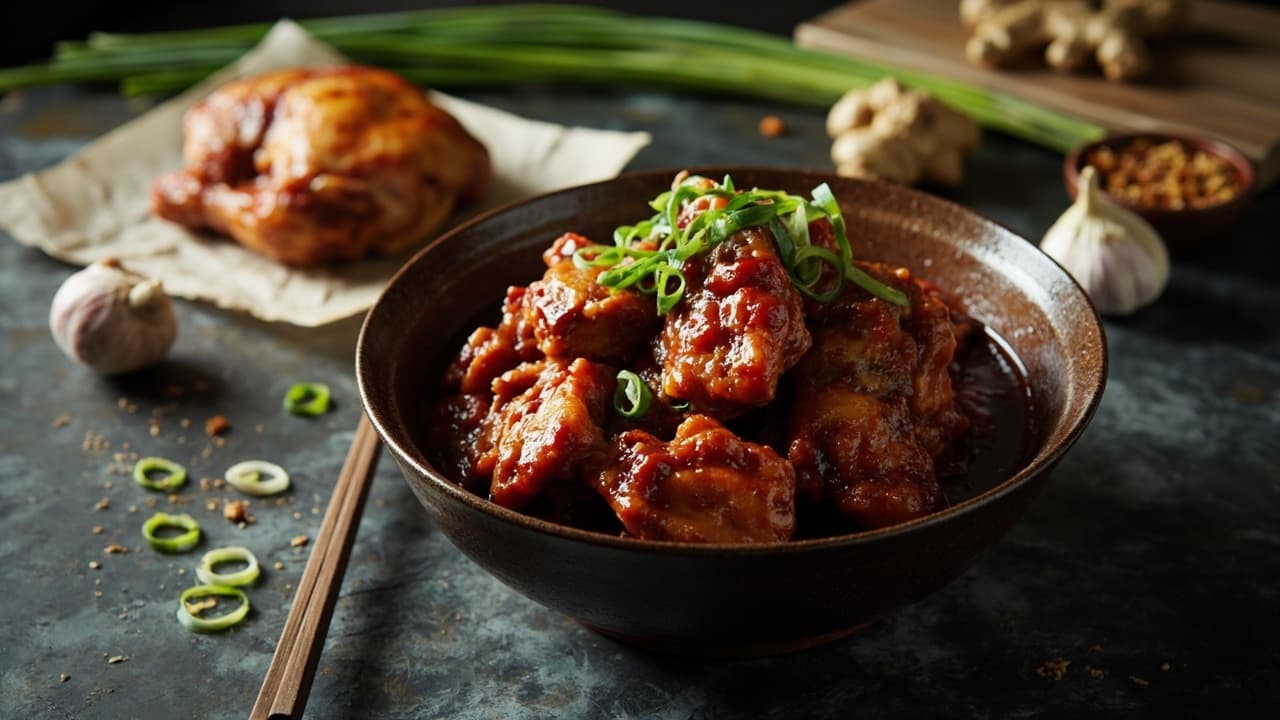
Crispy Sichuan Chicken Thighs
Golden crispy chicken thighs tossed in a bold Sichuan-inspired sauce with numbing heat and deep umami. This recipe delivers wok hei energy with techniques you can master at home.

Prep
15 min
Cook
30 min
Rest
5 min
Total
50 min
Method
Prep the Chicken
1
Score the chicken thighs with a cleaver or knife for better marinade penetration. Pat dry with paper towels.
2
Season generously with salt and black pepper. Let sit at room temperature for 10 minutes while you prepare the coating.
Build the Crispy Coating
3
Combine all-purpose flour, cornstarch, and sesame seeds in a shallow bowl. Mix well until evenly distributed.
4
Dredge each seasoned chicken thigh through the flour mixture, pressing firmly to adhere. Coat all sides thoroughly. Set aside on a wire rack.
Fry to Crispy Perfection
5
Heat sunflower oil in a wok over high heat until shimmering, about 2 minutes. The oil should be hot enough that a drop of water sizzles immediately.
6
Carefully place coated chicken thighs in the wok. Fry undisturbed for 4-5 minutes until deeply golden and crispy.
7
Flip and fry the other side for 3-4 minutes until internal temperature reaches 165°F and the skin is shatteringly crisp.
8
Transfer to a cutting board. Rest 2 minutes, then chop into bite-sized pieces.
Build the Sichuan Sauce and Finish
9
Mince garlic and ginger. Heat sesame oil in the same wok over medium-high heat.
11
Add soy sauce, hot sauce, cayenne, and white pepper. Stir vigorously to combine. Cook for 1 minute until sauce bubbles and darkens slightly.
12
Add the chopped crispy chicken back to the wok. Toss quickly to coat every piece in the glossy Sichuan sauce.
13
Slice scallions and scatter over the top. Serve immediately while the contrast between crispy coating and saucy glaze is at its peak.
C
Nutri-Score
Fair balance
A–E · lower is better · score 4
Calories
991
per serving
Calorie-dense · 991 kcalSource of protein · 35gLow sugar · 2g
Protein
35g
Carbs
32g
Fat
81g
Sat. fat
10g
Fiber
3g
Sugar
2g
Sodium
815mg
Non VegetarianHigh SodiumHigh FatHigh ProteinLow Fiber
Nutri-Score is a general nutritional-balance guide, not medical or dietary advice.
C
Environmental impact
Moderate impact
A–E · lower is better · includes estimates
kg CO2e
1.4
per serving
CCarbonAEU all-round· carbon sets the grade
Water
0.4m³
Land
75Pt
Runoff
0.2g P
Chicken Thighs drives 79% of this recipe’s estimated footprint.
Carbon from Poore & Nemecek 2018; water, land & runoff from Agribalyse — modelled averages for comparing recipes, not a measurement of your groceries.
Flavor Profile
7
Umami
2
Sweet
5
Salty
1
Sour
1
Bitter
6
Spicy
Textures
CrispyTenderSaucy
Aromas
HerbalPungentNutty
Kitchen Equipment
Primary Tool
WokWokStoveChef KnifeCutting BoardShallow BowlWire RackMeasuring CupsMeasuring SpoonsTongsSpatulaPaper TowelsPlastic Wrap
Counter FootprintMedium
Techniques
Safety & Storage
Cooking Temperature
Fry chicken in wok oil preheated until shimmering (approximately 350°F/175°C). Ensure internal temperature reaches 165°F (74°C) before consumption using a calibrated meat thermometer.
High Risk Population
Chicken must be fully cooked to 165°F. Older adults, pregnant individuals, and immunocompromised persons should verify proper internal temperature as undercooked poultry poses serious health risks.
Cross Contamination
Use separate cutting boards and utensils for raw chicken. Wash hands, tools, and surfaces with hot soapy water after handling raw poultry before contact with other ingredients.
Equipment Safety
Deep frying at high temperatures creates splatter and burn hazards. Use long-handled tongs or a wok spatula with extended reach. Never leave hot oil unattended. Keep a tight-fitting lid nearby to smother flames if oil ignites.
Handling
Pat chicken completely dry before coating and frying. Moisture on the coating causes violent oil splattering. Score chicken carefully with a sharp cleaver, directing blade away from your body.
Storage
Refrigerate leftover fried chicken in airtight containers within 2 hours of cooking. Consume within 3-4 days. Reheat to 165°F before serving. Do not leave at room temperature for more than 2 hours total.
Allergen Warning
This dish contains wheat (flour coating), soy (soy sauce), and sesame (seeds and oil). Verify all ingredients and sauces are free from cross-contact with other allergens. Read all product labels for allergen statements.
Pro Tips
Technique
Stop being afraid of high heat! Wok hei is born from 400°F+ temperatures. Your home stove cannot match a commercial wok station, but cranking it to maximum and preheating your wok until it barely begins to smoke will get you 80% of the way there. The oil is ready when a drop of water hits it and explodes immediately—that sizzle is your signal to cook.
Substitution
No Sichuan peppercorns? No problem. Double your cayenne and add a half teaspoon of Chinese five-spice powder. It will not be authentic mala, but it delivers that signature numbing warmth that defines this cuisine. I always keep ground Sichuan peppercorns in my pantry for this exact reason.
Time Saver
Score your chicken thighs the night before and season them. Store them on a rack in the refrigerator uncovered—this dries out the skin and renders the fat better during frying. When dinner comes, the only step is the coating and the fry.
Equipment
Never use a non-stick pan for wok cooking. You need carbon steel or cast iron. The slight seasoning layer that builds over time actually contributes to that elusive wok hei flavor, and high heat will ruin non-stick coatings anyway.
From the chef
Every time I make this dish in my home kitchen, I am reminded of the street vendors in Chengdu who taught me that true wok hei does not require a commercial burner—just fearless heat and respect for your ingredients. These crispy Sichuan chicken thighs capture everything I love about my homeland's cooking: that glorious double-texture where shatteringly crisp skin meets a glossy, numbing-spicy sauce that makes your lips dance. This is the dish I make when friends doubt that restaurant-quality wok flavor is possible without leaving home.
TagsCrispySpicyWok CookedChickenWeeknight Dinner
AllergensWheatSoySesame
Source: generated · June 10, 2026