 Japanese
Medium · Cold
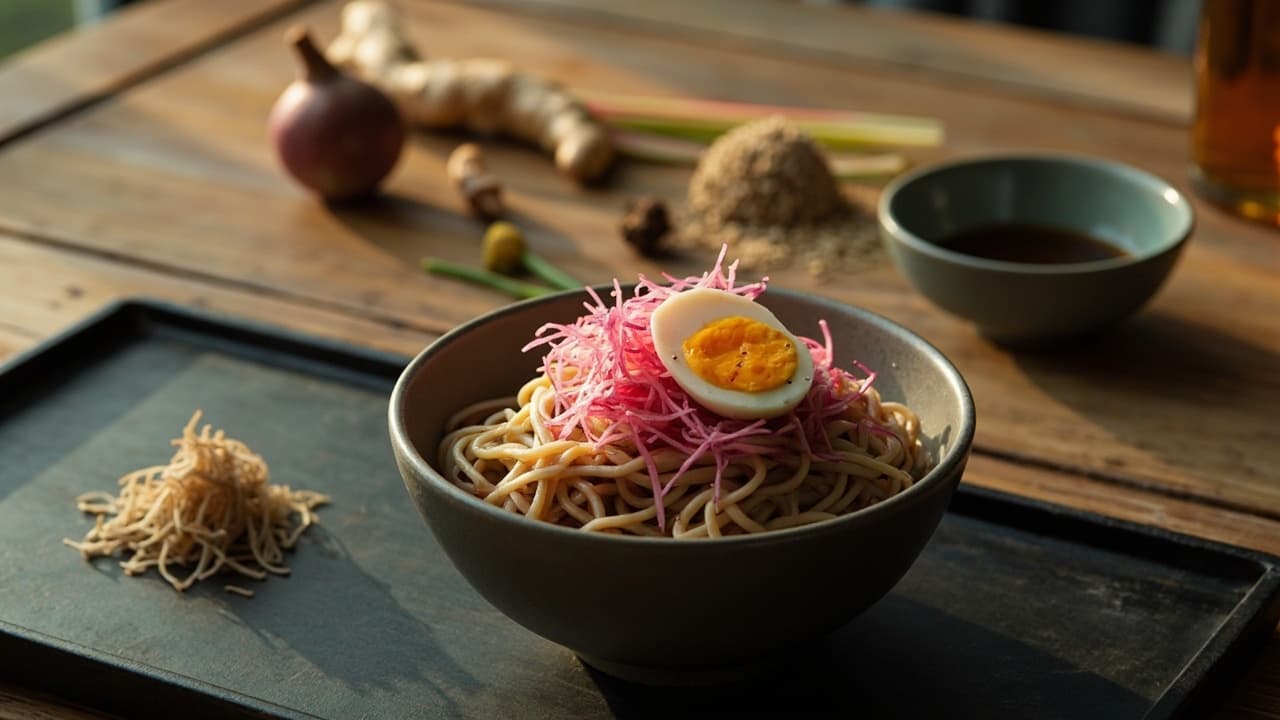
Sesame Buckwheat Soba with Pickled Radish
A cold soba dish with nutty buckwheat noodles dressed in a rich sesame tare, topped with crisp quick-pickled radish and a soft-boiled egg.

Prep
25 min
Cook
15 min
Total
40 min
Method
1
Slice radishes into thin rounds, about 3mm thick. Place in a small bowl.
2
In a small saucepan, combine 3 tbsp rice vinegar, 1 tbsp white sugar, and 0.5 tsp salt. Heat over medium, stirring until sugar dissolves, about 1 minute. Let cool for 2 minutes.
3
Pour the warm pickle liquid over the radish slices. Toss to coat. Cover and refrigerate for at least 20 minutes, or up to 2 days. Drain before serving.
4
In a dry skillet over medium-low heat, toast 3 tbsp sesame seeds, stirring frequently, until golden and fragrant, 3-4 minutes. Watch carefully — they burn quickly. Transfer to a plate to cool.
5
Grate the ginger (1 tsp) and mince the garlic clove (1 tsp) very finely.
6
In a bowl, combine the toasted sesame seeds, sesame oil, soy sauce, 1 tbsp rice vinegar, grated ginger, and minced garlic. Stir vigorously until emulsified. Set aside.
7
Bring a large pot of water to a rolling boil. Add a pinch of salt.
8
9
Drain immediately and rinse thoroughly under cold running water for 30 seconds to stop cooking and remove excess starch.
10
11
Slice scallions thinly on the diagonal.
12
Divide the cold noodles between 2 bowls. Spoon the sesame tare over each portion and toss gently to coat.
13
14
Serve immediately, or keep noodles and tare separate until ready to eat for best texture.
A
Nutri-Score
Excellent balance
A–E · lower is better · score -2
Calories
746
per serving
Source of protein · 27gSource of fibre · 17gLow sugar · 16g
Protein
27g
Carbs
94g
Fat
34g
Sat. fat
8g
Fiber
17g
Sugar
16g
Sodium
1959mg
Dairy FreeGluten FreeAnti InflammatoryHeart HealthyHigh CholesterolHigh ProteinLow Saturated FatWeight Management
Nutri-Score is a general nutritional-balance guide, not medical or dietary advice.
B
Environmental impact
Low impact
A–E · lower is better · includes estimates
kg CO2e
0.7
per serving
BCarbonAEU all-round· carbon sets the grade
Water
0.2m³
Land
35Pt
Runoff
0.1g P
Egg drives 36% of this recipe’s estimated footprint.
Carbon from Poore & Nemecek 2018; water, land & runoff from Agribalyse — modelled averages for comparing recipes, not a measurement of your groceries.
Flavor Profile
6
Umami
4
Sweet
5
Salty
4
Sour
2
Bitter
0
Spicy
Textures
ChewyCrispySilkyTender
Aromas
EarthyFresh GreenNuttyPungent
Kitchen Equipment
Primary Tool
Small SaucepanSafety & Storage
Cross Contamination
Thoroughly clean all utensils, cutting boards, and containers that contact sesame seeds or eggs when serving allergen-sensitive individuals. Use separate prep areas if available.
Cooking Temperature
Toast sesame seeds over medium-low heat, stirring constantly. They transition from golden to burnt quickly—remove from heat immediately when fragrant and lightly browned.
Handling
When soft-boiling eggs, use room temperature eggs and lower them gently into boiling water. Cook exactly 7 minutes for jammy center, then transfer to ice water immediately to stop carryover cooking.
Storage
Refrigerate pickled radish within 2 hours of preparation. Store in a sealed container for up to 2 days. Discard if odor changes or mold appears.
Allergen Warning
Sesame is a potent allergen and allergenicity can increase when seeds are ground or toasted. For individuals with severe sesame allergies, omit sesame seeds entirely and use alternative seasonings.
High Risk Population
Serve soft-boiled eggs fully cooked for young children, elderly, pregnant individuals, or immunocompromised persons. Extend cooking time to 10-12 minutes for fully set yolks.
Shelf Life
Cooked soba noodles degrade quickly after cooling. If not serving immediately, toss with a small amount of sesame oil to prevent sticking and refrigerate for no more than 24 hours. Reheat briefly before serving.
Equipment Safety
When pouring hot pickle liquid over radish, use a heat-resistant container. Allow liquid to cool slightly before pouring to prevent splashing and burns.
Pro Tips
Technique
Toast your sesame seeds low and slow. When you hear the first pop and smell that nutty fragrance rising, they are ready—remove them from the heat immediately to prevent bitterness from developing.
Time Saver
The pickled radish can be prepared up to 2 days ahead. Store in the refrigerator and drain before serving. This way, the flavors deepen while you focus on the rest of the meal.
From the chef
In autumn, when the air turns crisp and the body craves something grounding yet refreshing, I return to this dish. The buckwheat carries the earth of the season, while the sesame tare—dark, rich, and deeply savory—wraps each strand in warmth. The pickled radish offers brightness, a small reminder that even in cooling months, we can find light.
TagsCold NoodlesPickledSesameBuckwheatSoft Boiled Egg
AllergensSesameSoyEggsGlutenWheat
Source: generated · June 13, 2026