 Japanese
Medium · Hot
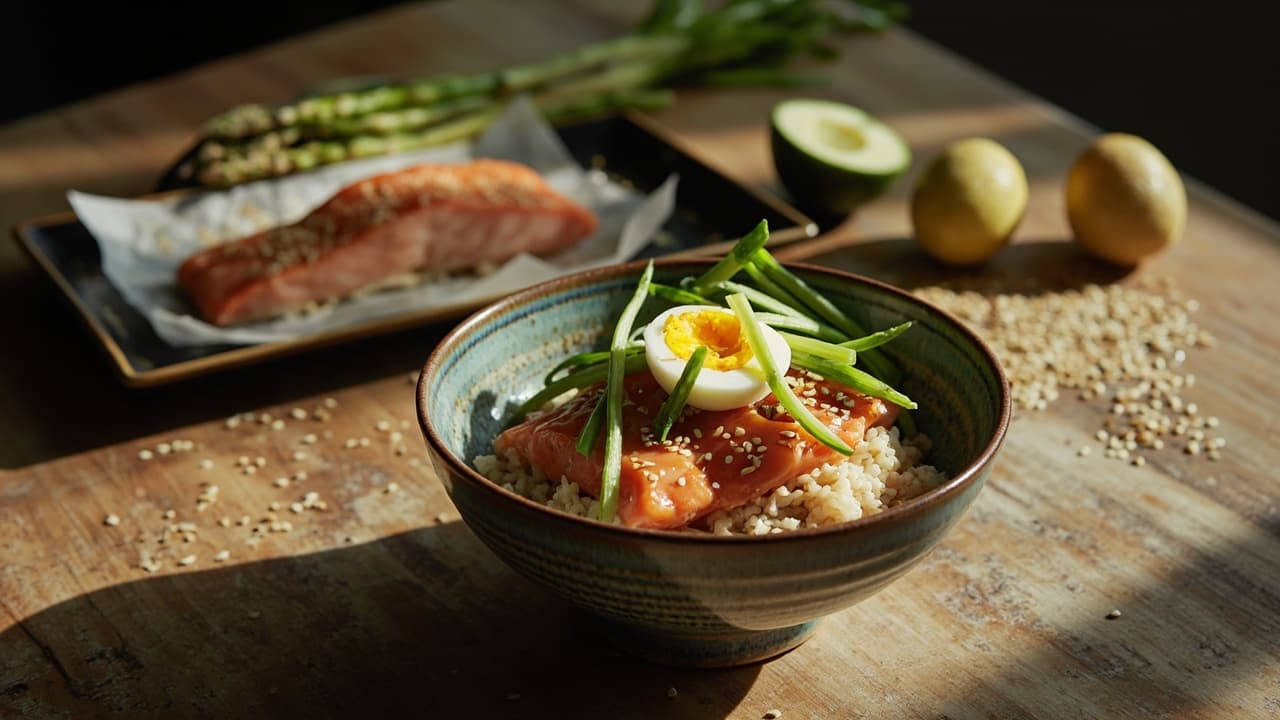
Spring Salmon Sesame Rice Bowl
A harmonious spring bowl featuring tender glazed salmon over steamed rice, dressed in toasted sesame and finished with crisp seasonal vegetables. Clean, umami-rich, and seasonal.

Prep
15 min
Cook
30 min
Rest
10 min
Total
55 min
Method
Prepare the Rice
1
Rinse rice until water runs clear. Combine with water and salt in rice cooker. Cook on white-rice setting.
2
Let steamed rice rest 5 minutes, then portion into bowls.
Toast the Sesame
6
In a dry pan over medium heat, toast sesame seeds, stirring constantly, until fragrant and golden, about 2 minutes. Set aside half for garnish.
Make the Sesame Dressing
7
In a small bowl, combine toasted sesame seeds, sesame oil, rice vinegar, and soy sauce. Stir until well emulsified.
Blanch the Vegetables
Assemble the Bowls
9
Place steamed rice in bowls. Arrange glazed salmon pieces on one side.
11
Drizzle sesame dressing generously over the bowl. Garnish with reserved toasted sesame seeds and sliced scallions.
12
If desired, place a soft-boiled egg atop the bowl. Serve immediately.
A
Nutri-Score
Excellent balance
A–E · lower is better · score -1
Calories
808
per serving
Source of protein · 32gLow sugar · 7gLow saturated fat · 4g
Protein
32g
Carbs
107g
Fat
27g
Sat. fat
4g
Fiber
4g
Sugar
7g
Sodium
686mg
PescatarianDairy FreeGluten SensitiveHeart HealthyBlood Sugar ConsciousWeight ManagementHigh ProteinBalanced Meal
Nutri-Score is a general nutritional-balance guide, not medical or dietary advice.
D
Environmental impact
High impact
A–E · lower is better · includes estimates
kg CO2e
1.9
per serving
DCarbonAEU all-round· carbon sets the grade
Water
1.8m³
Land
47Pt
Runoff
0.2g P
Fresh Salmon Fillet drives 71% of this recipe’s estimated footprint.
Carbon from Poore & Nemecek 2018; water, land & runoff from Agribalyse — modelled averages for comparing recipes, not a measurement of your groceries.
Flavor Profile
8
Umami
4
Sweet
6
Salty
3
Sour
1
Bitter
2
Spicy
Textures
TenderCrispCreamySilky
Aromas
NuttyPungentHerbalUmami Rich
Kitchen Equipment
Primary Tool
SkilletCounter FootprintMedium
Safety & Storage
Cooking Temperature
Cook salmon pieces to an internal temperature of at least 63°C (145°F) to eliminate parasites and bacteria. Ensure the center is opaque and flakes easily when tested with a fork.
High Risk Population
Raw salmon poses a parasitic infection risk (Anisakis). Vulnerable populations including pregnant individuals, young children, elderly, and immunocompromised persons should ensure salmon is cooked to proper temperature rather than consumed raw or undercooked.
Cross Contamination
Use separate cutting boards and utensils for raw salmon and ready-to-eat ingredients like vegetables and rice to prevent cross-contamination. Never place cooked salmon on surfaces that held raw fish.
Storage
Refrigerate leftover salmon within 2 hours of cooking. Store in airtight containers at 4°C (39°F) or below. Consume leftovers within 2 days. Reheat to 74°C (165°F) before consuming.
Allergen Warning
This dish contains fish, eggs, soy, and sesame allergens. Clearly label any leftovers for allergen awareness. When serving guests, inquire about food allergies before preparation.
Handling
When blanching asparagus, immediately plunge into ice water after cooking to stop the cooking process and prevent bacterial growth. Maintain the ice bath until vegetables are cooled.
Shelf Life
Soft-boiled eggs should be consumed the same day they are prepared. Do not store soft-boiled eggs for later use as the membrane integrity degrades rapidly.
Equipment Safety
When toasting sesame seeds in a dry pan, use medium heat and stir constantly. Sesame seeds can go from golden to burnt quickly due to their high oil content. Never leave unattended.
Pro Tips
Technique
When searing the salmon, resist the urge to move it. Let it develop a golden crust for 2 minutes before turning — this creates the texture contrast that makes each bite interesting.
Substitution
If fresh salmon is not available, sablefish or sea trout fillet works beautifully. The key is a high-fat fish that can hold the glaze without falling apart.
Seasonal
In early spring, snap peas or young fava beans make lovely substitutes for asparagus. Let the season guide you — the vegetables are never just decoration here.
Equipment
A rice cooker is your friend for this dish. The fuzzy logic of modern cookers produces rice with the slight stickiness needed to hold the sesame dressing, something even a pot struggles to replicate.
From the chef
In spring, the first wild salmon returns to northern waters, its flesh still rich with ocean memory. This bowl honors that journey — a quick ginger-honey glaze letting the fish speak for itself, while toasted sesame dressing binds everything together like a quiet conversation between land and sea. It is washoku in its simplest form: seasonal, balanced, complete.
TagsSalmonSesameRice BowlSpringHealthyHigh ProteinOmega 3Dairy FreeWeeknight DinnerSeasonalGluten Free Adaptable
AllergensFishEggsSoySesame
Source: generated · June 10, 2026