 Caribbean
Medium · Hot
Pan-Fried Trout with Mango Salsa
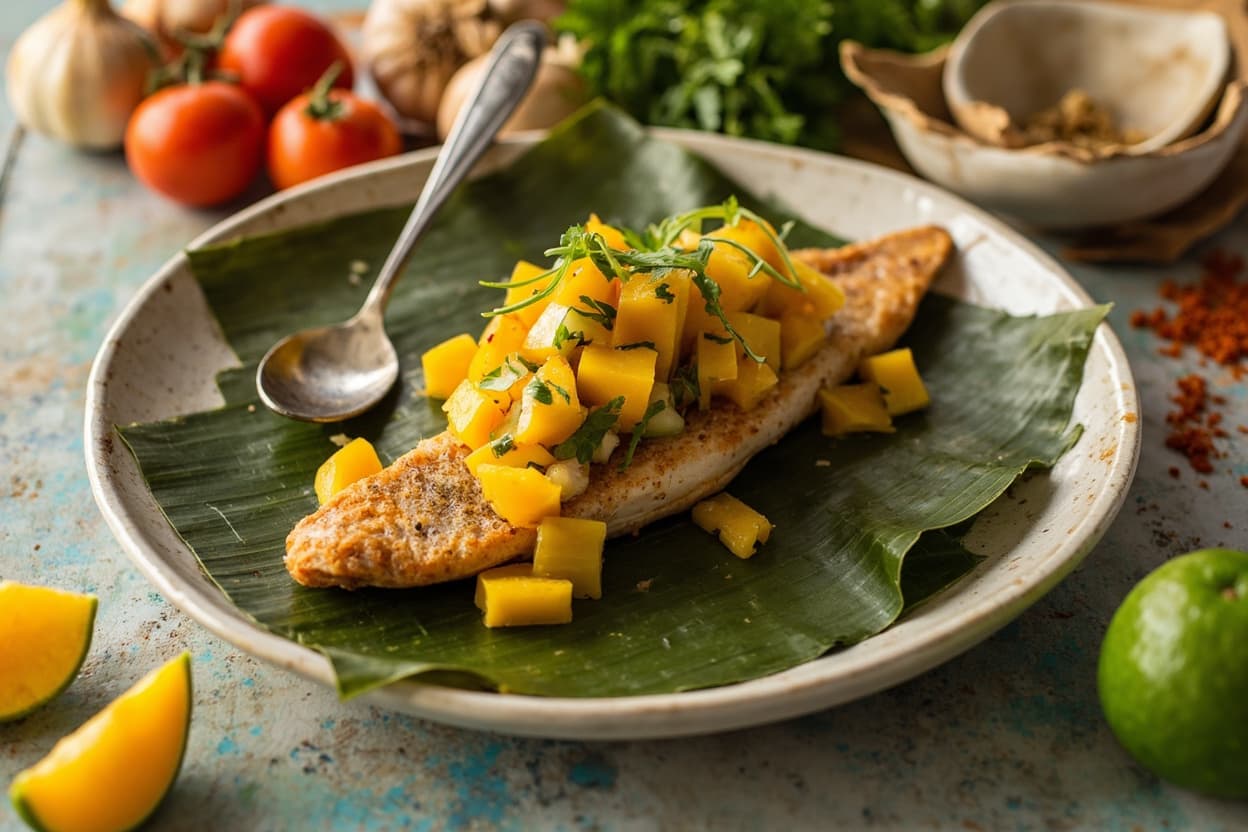
Trout goes into a hot pan skin-side down and crisps up while mango, cilantro, cayenne, and lime come together into something between a salsa and a celebration. The fish is flaky and mild, which means the salsa does the talking — sweet, fiery, sharp, and fresh all at once. It's the kind of plate that makes people ask what's in it before they've even finished the first bite.

Prep
15 min
Cook
15 min
Total
30 min
Method
Make the Mango Salsa
1
Dice the mango and tomato into small, uniform chunks. Finely dice the yellow onion. Chop the cilantro roughly — you want it present, not buried.
B
Nutri-Score
Good balance
A–E · lower is better · score 2
Calories
376
per serving
High in protein · 27g
Protein
27g
Carbs
25g
Fat
20g
Sat. fat
12g
Fiber
4g
Sugar
19g
Sodium
943mg
Gluten FreeDairy FreeWhole30High ProteinLow Carb
Nutri-Score is a general nutritional-balance guide, not medical or dietary advice.
E
Environmental impact
Very high impact
A–E · lower is better · includes estimates
kg CO2e
3.4
per serving
ECarbonBEU all-round· carbon sets the grade
Water
8.2m³
Land
32Pt
Runoff
4.5g P
Trout drives 92% of this recipe’s estimated footprint.
Carbon from Poore & Nemecek 2018; water, land & runoff from Agribalyse — modelled averages for comparing recipes, not a measurement of your groceries.
Flavor Profile
5
Umami
6
Sweet
4
Salty
5
Sour
1
Bitter
5
Spicy
Textures
CrispyTenderFresh
Aromas
HerbalCitrusTropical
Kitchen Equipment
Primary Tool
Heavy SkilletHeavy SkilletCast Iron Frying PanChef KnifeCutting BoardCitrus JuicerMicroplane ZesterSilicone SpatulaMixing BowlPaper Towels
Counter FootprintMedium
Techniques
Safety & Storage
High Risk Population
Children, elderly individuals, pregnant women, and immunocompromised persons face elevated risk from fishborne parasites and histamine formation. Ensure fish is sourced from reputable suppliers and cooked to safe temperature.
Cooking Temperature
Cook trout to an internal temperature of at least 145°F (63°C) as measured at the thickest part of the flesh. Use a calibrated food thermometer to verify doneness — flesh should flake easily and appear opaque throughout.
Handling
Pat trout completely dry before seasoning and cooking. Residual surface moisture causes oil splattering and prevents crispy skin formation, increasing the risk of burns from hot oil contact.
Cross Contamination
Use separate cutting boards and utensils for raw trout and fresh salsa ingredients. Clean and sanitize all surfaces that contact raw fish before preparing the mango salsa to prevent bacterial transfer.
Equipment Safety
Heat coconut oil gradually over medium-high heat. Do not leave hot oil unattended. If oil begins to smoke heavily, remove pan from heat immediately — overheated oil presents both a fire hazard and produces harmful compounds.
Storage
Refrigerate leftover trout and salsa separately in sealed containers. Fish component should be consumed within 1–2 days. Reheat salsa briefly; do not leave prepared dish at room temperature for more than 2 hours total.
Pro Tips
Technique
Getting that skin crispy is all about patience and heat. Don't touch that fish for the full 4-5 minutes before flipping. If the skin sticks, it isn't ready yet — let it cook until it releases on its own.
Substitution
No fresh trout around? Snook, red snapper, or even tilapia work beautifully here. Just adjust your cooking time — thinner fillets need less time skin-side down.
Flavor Boost
For extra island heat, swap in a Scotch Bonnet instead of cayenne in the salsa. Just mince it fine and go easy — that pepper carries serious fire.
From the chef
Trout skin down into a hot pan with coconut oil — you press it gently and let it go untouched for four or five minutes until it releases clean and golden. The mango salsa is already built by then: mango, tomato, onion, cilantro, cayenne, lime juice all sitting together getting acquainted. That salsa does the talking here — sweet, fiery, sharp, and fresh against the mild, flaky flesh. Spoon it over generously and eat it right away while the contrast between hot fish and cool salsa is at its best.
TagsPan Fried
AllergensFish
Source: generated · May 30, 2026