 Mediterranean
Medium · Hot
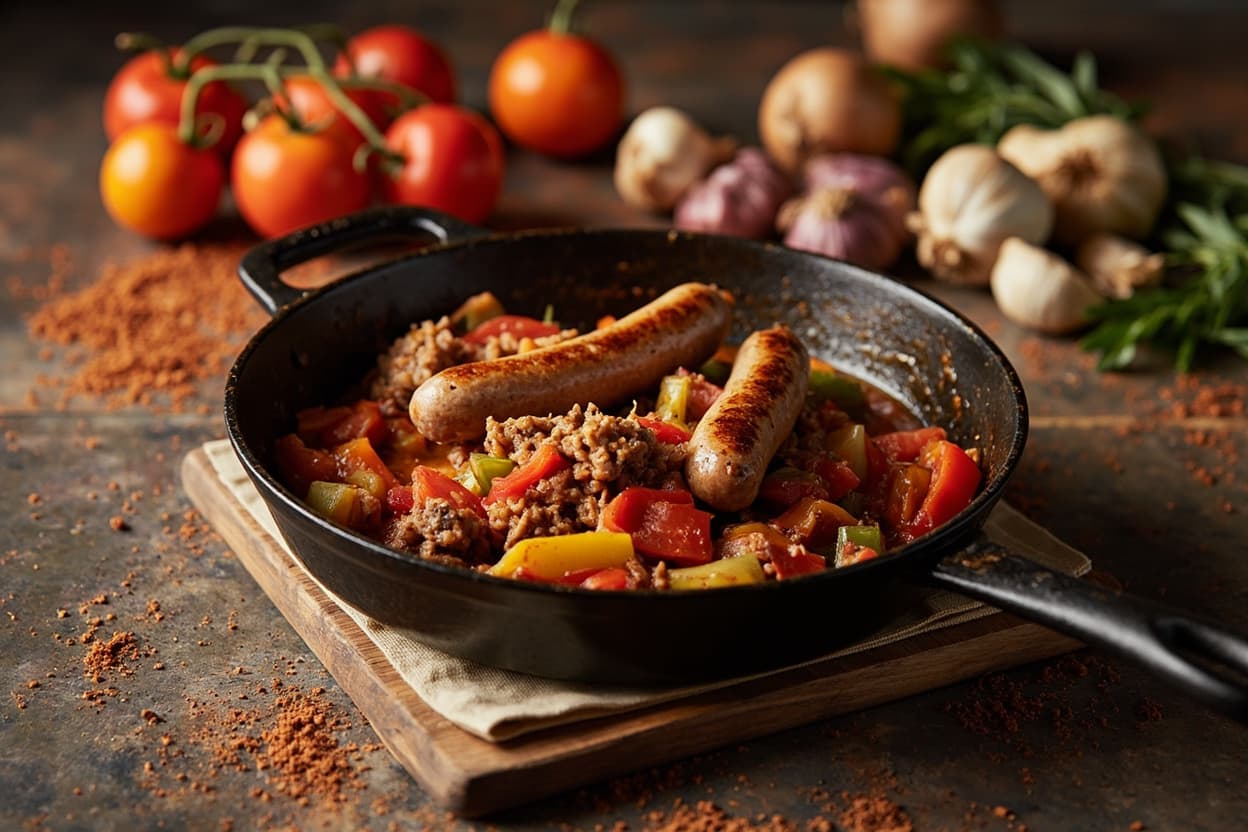
Smoky Cumin Sausage Skillet with Tomato
Sausage renders into the pan first, giving off fat that carries garlic, cumin, and smoked paprika as they bloom — a sequence that moves from sharp to warm to deep before the tomato arrives to round everything out. Bell pepper softens into the sauce, adding sweetness that counterbalances the smoke, and the whole skillet settles into something satisfying and direct. A one-pan meal that announces itself clearly from across the kitchen.

Prep
10 min
Cook
30 min
Total
40 min
Method
Mise en Place
1
Dice the yellow-onion. Mince the garlic. Slice the bell-pepper into strips. Roughly chop the tomatoes. Snip the parsley leaves from their stems.
Bloom the Spices
2
Warm the olive-oil in a large heavy skillet over medium heat. Once the oil shimmers, throw in the cumin and smoked-paprika—watch them sizzle and release their fragrance for about 30 seconds, just until the oil turns amber and fragrant.
Build the Base
3
Add the yellow-onion to the spiced oil and cook, stirring occasionally, until softened and lightly golden, about 5 minutes. Push the onions to the edges and scatter in the garlic and bell-pepper strips, cooking another 2 minutes until the peppers soften slightly.
Brown the Sausage
4
Work in batches if needed to avoid crowding.
Simmer with Tomato
5
Use an instant-read thermometer to verify sausage reaches minimum 145°F internal temperature (165°F if poultry-based). Check thickest part of link away from bone.
B
Nutri-Score
Good balance
A–E · lower is better · score 2
Calories
459
per serving
Source of protein · 15gLow sugar · 7g
Protein
15g
Carbs
16g
Fat
38g
Sat. fat
10g
Fiber
5g
Sugar
7g
Sodium
1411mg
Gluten FreeDairy FreePaleoWhole30Diabetes FriendlyAnti InflammatoryLow CarbHeart ConsciousHigh ProteinNutrient Dense
Nutri-Score is a general nutritional-balance guide, not medical or dietary advice.
C
Environmental impact
Moderate impact
A–E · lower is better · includes estimates
kg CO2e
1.6
per serving
CCarbonAEU all-round· carbon sets the grade
Water
0.9m³
Land
39Pt
Runoff
0.1g P
sausage drives 79% of this recipe’s estimated footprint.
Carbon from Poore & Nemecek 2018; water, land & runoff from Agribalyse — modelled averages for comparing recipes, not a measurement of your groceries.
Flavor Profile
8
Umami
4
Sweet
5
Salty
3
Sour
2
Bitter
5
Spicy
Textures
CrispyTenderSaucy
Aromas
SmokyHerbalPungentSpicy
Kitchen Equipment
Techniques
Safety & Storage
Cooking Temperature
Use instant-read thermometer to verify sausage reaches minimum 145°F internal temperature (165°F for poultry varieties). Check thickest part of link away from bone if applicable.
Oil temperature for blooming spices should reach approximately 350°F. Drop a few cumin seeds into oil - they should sizzle immediately upon contact.
Cross Contamination
Designate separate cutting boards for raw sausage and fresh vegetables. Never allow raw meat juices to contact prepared ingredients or cooked items.
Wash hands thoroughly with soap for 20 seconds after handling raw sausage before touching any other ingredients or kitchen surfaces.
Storage
Store raw sausage on lowest refrigerator shelf to prevent drips onto other foods. Use within 1-2 days of purchase or freeze for longer storage.
Leftover skillet dish must be refrigerated within 2 hours of cooking. Consume within 3-4 days or freeze for up to 2 months. Reheat to 165°F before serving.
[" If sausage type is unknown, default to 165°F (74°C) to ensure safety of all varieties."]
Handling
Allow refrigerated sausage to rest at room temperature for no more than 20 minutes before cooking. Leaving perishables in temperature danger zone (40°F-140°F) beyond this window promotes bacterial growth.
When searing sausage, ensure skillet is not overcrowded. Cooking in batches maintains proper searing temperature and ensures sausage cooks evenly without steaming.
Pro Tips
Technique
When you bloom the cumin and smoked paprika in olive oil, wait until you can smell them—that amber color means the flavor is unlocked, not burned. This is the foundation your entire skillet rests upon.
Substitution
If you cannot find good sausage links, merguez or even spiced lamb patties work beautifully here. The dish asks only for something that can hold its own against the bold cumin and paprika.
From the chef
Along the coast road between Oran and Tlemcen, small roadside grills once served travelers cumin-dusted merguez with ripened tomatoes—simple fuel for the journey. I have adapted this rustic skillet to honor those old roads, blooming the spices until the oil turns amber with promise, then letting the tomatoes and lemon lift everything bright and clean. This is weeknight couscous-country cooking, mapped back to a time when flavor was built slowly, one layer at a time.
TagsSmokySpicedRusticWeeknight DinnerCitrus FinishBloom Spices
AllergensGlutenMilkSoyEggs
Source: generated · May 30, 2026