 Indonesian
Medium · Hot
Slow Beef with Toasted Chile, Ginger and Turmeric
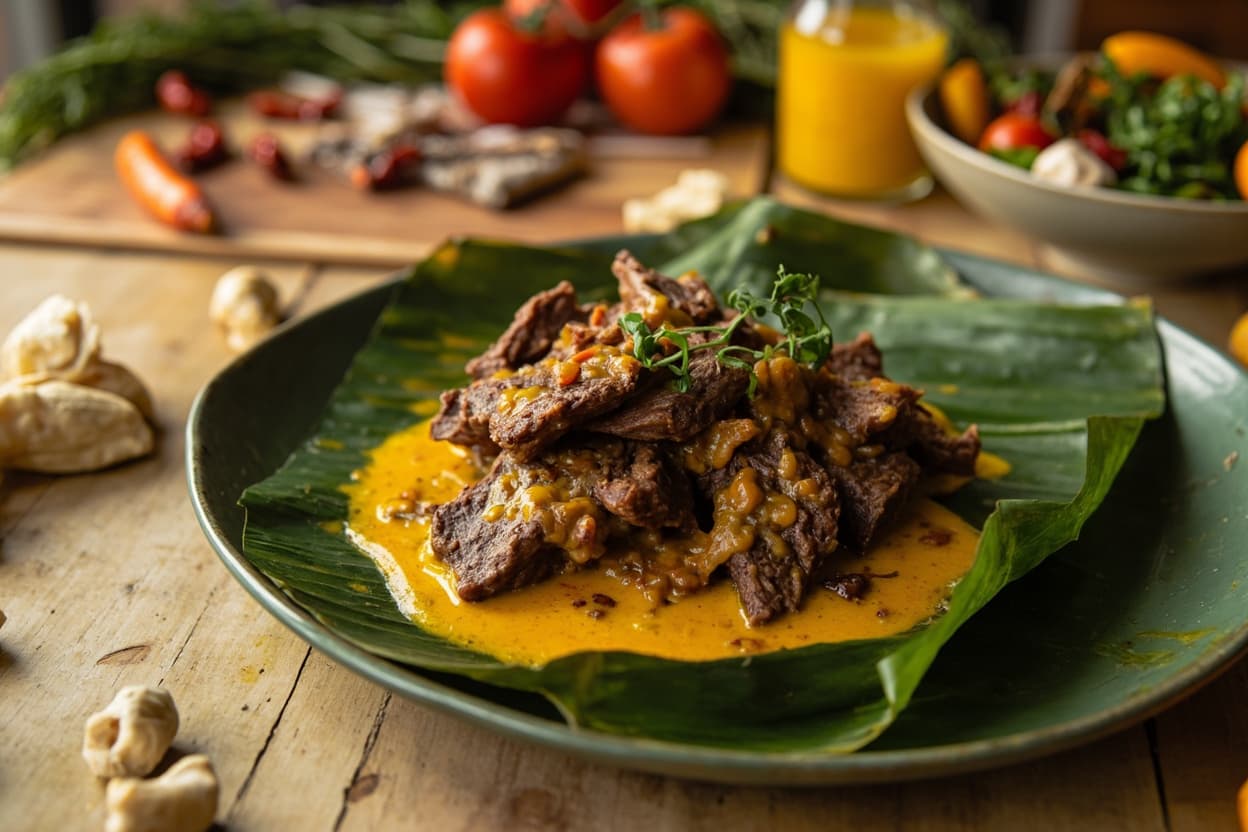
Dry-toasting the cayenne and turmeric in coconut oil before adding garlic and ginger unlocks a deeper, more complex heat than anything you get from adding them raw — then the beef goes in and braises low and slow until the spice paste and the meat become one thing. This is the technique that makes Indonesian cooking transformative. Do not rush it.

Prep
20 min
Cook
3h
Rest
10 min
Total
3h 30m
Method
Prepare the Aromatics and Spice Paste
1
2
Peel and roughly chop the yellow onion, garlic cloves, and ginger. Add the toasted chiles to your mortar and pound or mince together with the onion, garlic, and ginger until you have a coarse, fragrant paste.
3
In a small bowl, mix the turmeric, salt, and black pepper with 2 tablespoons of water to create a spice slurry.
Brown the Beef
4
Cut the beef steak into large cubes (about 5cm pieces). Season lightly with salt.
5
Heat the coconut oil in a large, heavy-bottomed pot or Dutch oven over high heat until shimmering. Add the beef in batches, being careful not to crowd the pot, and sear until deeply browned on all sides, about 3-4 minutes per side. Transfer to a plate. This step is crucial for building flavor.
Build the Braise
6
Reduce heat to medium. Add the aromatic spice paste to the same pot and cook, stirring constantly, for 3-4 minutes until the paste darkens and becomes incredibly fragrant.
7
Stir in the turmeric spice slurry and cook for another 2 minutes.
8
Pour in the soy sauce and stir to combine.
9
Roughly chop the tomatoes and add them to the pot, stirring to incorporate.
Slow Cook
10
Return the browned beef to the pot, nestling the pieces into the sauce. Pour in the remaining water — the liquid should come about halfway up the beef.
11
Bring to a gentle simmer, then reduce heat to the lowest setting. Cover tightly and cook for 2.5 to 3 hours, until the beef is fork-tender and falling apart. Check occasionally and add a splash of water if the sauce thickens too much.
Finish and Serve
13
14
Serve over steamed white rice with the rich, glossy sauce spooned over the top. Garnish with fresh lime wedges if desired.
Grade pending
Nutri-Score
Estimated nutrition
Grade pending · 100% ingredient coverage
Calories
798
per serving
Protein
65g
Carbs
13g
Fat
55g
Sat. fat
14g
Fiber
3g
Sugar
6g
Sodium
984mg
Gluten FreeDairy FreePaleoAnti InflammatoryHeart HealthyLow CarbHigh ProteinZinc RichIron Rich
Nutri-Score is a general nutritional-balance guide, not medical or dietary advice.
Grade pending
Environmental impact
Estimated footprint
Grade pending · 100% ingredient coverage
kg CO2e
25
per serving
Water
0.9m³
Land
478Pt
Runoff
0.3g P
Beef Steak drives 99% of this recipe’s estimated footprint.
Carbon from Poore & Nemecek 2018; water, land & runoff from Agribalyse — modelled averages for comparing recipes, not a measurement of your groceries.
Flavor Profile
8
Umami
4
Sweet
6
Salty
3
Sour
2
Bitter
6
Spicy
Textures
TenderSilkySaucyFork Tender
Aromas
SmokyEarthyPungentSavoryCitrus
Kitchen Equipment
Primary Tool
Dutch OvenWokDutch OvenMortar And PestleChef KnifeCutting BoardMeasuring SpoonsCitrus JuicerPlastic WrapAluminum Foil
Counter FootprintLarge
Techniques
Safety & Storage
Cooking Temperature
Sear beef cubes at high heat until deeply browned (3-4 minutes per side) to ensure proper Maillard reaction and food safety. Internal beef temperature must reach 145°F for medium-rare, 160°F for medium doneness.
Maintain gentle simmer during slow cooking phase (2.5-3 hours) at lowest heat setting to safely break down collagen without risk of evaporation or burning.
Handling
Toast dried cayenne peppers in a dry wok over medium heat for 2 minutes only until fragrant and slightly darkened. Do not over-toast as burnt chiles can produce acrid compounds and smoke hazards.
Cross Contamination
Use separate cutting boards for raw beef and ready-to-eat aromatics. Sanitize surfaces and utensils after handling raw meat to prevent bacterial cross-contamination.
Storage
Refrigerate leftover braise within 2 hours of cooking. The dish improves in flavor when stored overnight and can be kept refrigerated for up to 4 days or frozen for 3 months.
Equipment Safety
Heat coconut oil in heavy-bottomed pot until shimmering before adding beef. Add beef in batches to avoid overcrowding which causes temperature drop and steaming instead of searing.
High Risk Population
The slow-cooked beef may remain slightly pink even when fully tender. Vulnerable populations (immunocompromised, elderly, pregnant) should ensure beef reaches 160°F internal temperature throughout.
Allergen Warning
Store soy sauce separately or label clearly if serving to guests with soy or gluten allergies. Consider tamari or coconut aminos as allergen-free substitutes.
Pro Tips
Technique
Never skip toasting your chiles — this step is what gives the braise its deep, smoky soul. Watch them carefully and let them darken slightly in that dry wok until the fragrance fills your kitchen. That's the moment you know the magic is starting.
Substitution
If you want more authentic Indonesian flavor, swap the soy sauce for kecap manis — that sweet soy sauce is the heart of so many of our braises. And if you can find fresh galangal, it makes a wonderful partner to the ginger in your spice paste.
From the chef
The first step here is not the beef — it is dry-toasting the cayenne until the whole kitchen shifts into a deeper register, then pounding it with yellow onion, garlic, and fresh ginger into a coarse paste that smells like nothing else. The turmeric slurry goes in next, the beef gets seared in batches until properly browned, and then everything braises together at the lowest possible heat for two and a half to three hours. That slow cook is non-negotiable: it is what lets the spice paste and the meat become one thing, the sauce thickening, the beef collapsing into tenderness. Do not rush it. Patience is the technique here.
TagsSlow CookedSpicyBeefBraiseIndonesianOne PotWeeknight DinnerRice Accompaniment
AllergensSoyGluten
Source: generated · May 30, 2026