 Greek
GreekMedium · Hot
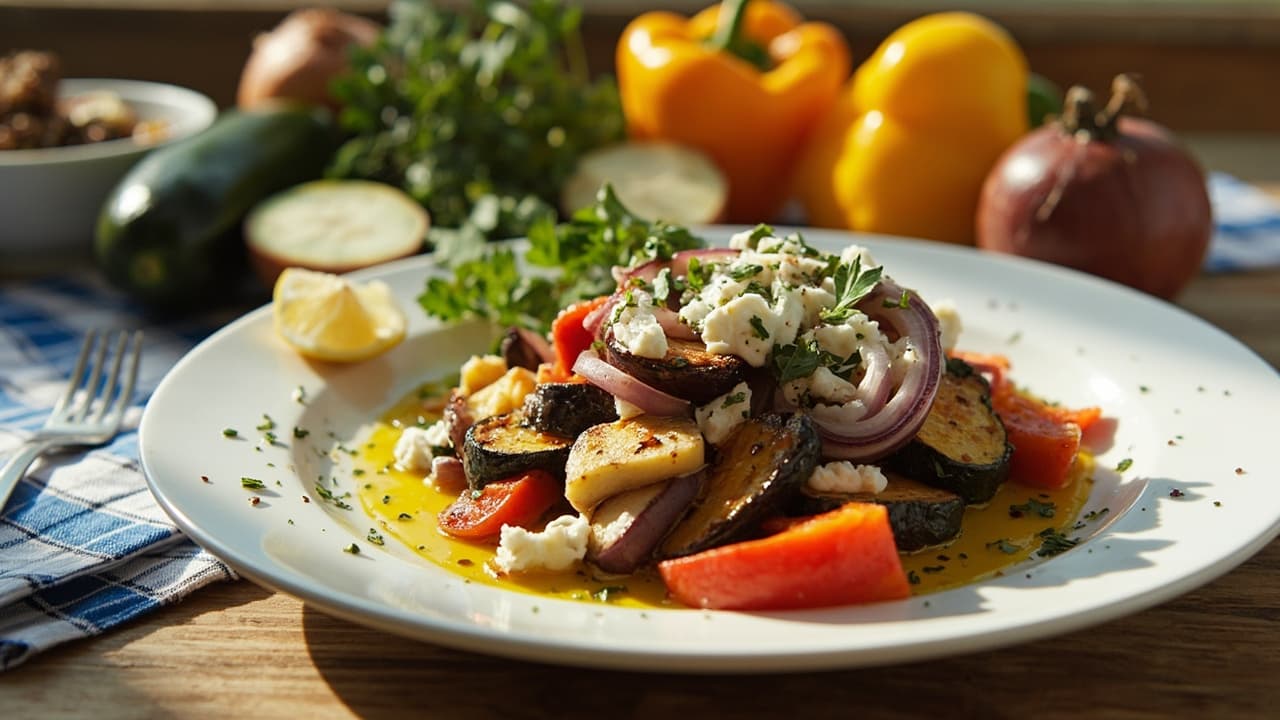
Roasted Vegetable Medley with Feta and Oregano
A colorful assortment of roasted vegetables finished with creamy feta, fragrant oregano, and a bright squeeze of lemon — simple Greek taverna cooking at its finest.

Prep
20 min
Cook
40 min
Total
1h
Method
Preparation
1
Preheat the oven to 200°C (400°F). Line two baking sheets with parchment paper.
Roasting
3
In a large bowl, toss all prepared vegetables with olive oil, salt, black pepper, and oregano until evenly coated.
4
Spread vegetables across the prepared baking sheets in a single layer, ensuring they have space — overcrowding will steam rather than roast.
Serving
6
Transfer the roasted vegetables to a large serving platter or shallow dish.
7
Crumble the feta cheese generously over the hot vegetables and let it soften slightly from the residual heat.
A
Nutri-Score
Excellent balance
A–E · lower is better · score -4
Calories
337
per serving
Low sugar · 12g
Protein
8g
Carbs
25g
Fat
25g
Sat. fat
7g
Fiber
7g
Sugar
12g
Sodium
1390mg
Gluten FreeVegetarianMediterraneanLow MeatHeart HealthyAnti InflammatoryWeight ManagementHigh FiberLow Processed FoodPlant Forward
Nutri-Score is a general nutritional-balance guide, not medical or dietary advice.
B
Environmental impact
Low impact
A–E · lower is better · includes estimates
kg CO2e
0.8
per serving
BCarbonAEU all-round· carbon sets the grade
Water
0.9m³
Land
33Pt
Runoff
0.07g P
Feta cheese drives 36% of this recipe’s estimated footprint.
Carbon from Poore & Nemecek 2018; water, land & runoff from Agribalyse — modelled averages for comparing recipes, not a measurement of your groceries.
Flavor Profile
6
Umami
5
Sweet
5
Salty
3
Sour
2
Bitter
1
Spicy
Textures
CrispyTenderCrumbly
Aromas
HerbalSmokyCitrusSavory
Kitchen Equipment
Primary Tool
OvenCounter FootprintMedium
Techniques
Safety & Storage
Allergen Warning
This recipe contains milk from feta cheese. Ensure all servings are aware of dairy content and check for milk allergies before serving.
Cross Contamination
Use separate utensils and cutting boards for raw vegetables and feta cheese to prevent cross-contamination. Clean all prep surfaces thoroughly between handling different ingredient groups.
Storage
Refrigerate any leftovers within 2 hours. Store cooked vegetables separate from feta or keep feta sealed in an airtight container. Consume within 3-4 days.
Handling
Add feta cheese only after vegetables are fully cooked and slightly cooled. Do not leave crumbled feta at room temperature for more than 2 hours during serving.
High Risk Population
This dish contains dairy. Elderly individuals, young children, and immunocompromised persons should only consume dishes containing feta cheese that have been properly refrigerated and heated to safe temperatures.
Leftover vegetables may be stored separately from feta for longer shelf life. Reheat vegetables to 165°F (74°C) before combining with fresh or previously refrigerated feta.
Pro Tips
Technique
Give your vegetables proper space on that baking sheet — overcrowding turns this into a steaming disaster, and we want caramelization, not mush. The Maillard reaction is your friend here, my friend.
Substitution
If you cannot find good feta, kefalotyri works in a pinch, though honestly, finding proper Greek feta is worth the extra trip to the import shop.
Flavor Boost
Use the best extra virgin olive oil you have — this dish is 80% olive oil, so if you use the cheap stuff, you are wasting perfectly good vegetables.
Equipment
A heavy baking sheet or stone works better than a flimsy one — you want even heat distribution for those beautiful golden edges.
From the chef
Eggplant, zucchini, bell pepper, tomato, and carrot roast together until they caramelize at the edges and turn sweet and golden — then comes a shower of feta that softens into all the crevices, a squeeze of lemon that wakes everything up, and a drizzle of olive oil that ties it together. This is Greek taverna cooking at its most honest: vegetables that the earth gives you, treated with respect, done without complication. Never complicate what the earth gives you. This dish is the proof.
TagsVegetarianMediterraneanRoastedGreekFetaOreganoSimpleTaverna StyleHerbaceousOlive Oil RichBright
AllergensMilk
Source: generated · June 10, 2026