 Indonesian
Medium · Hot
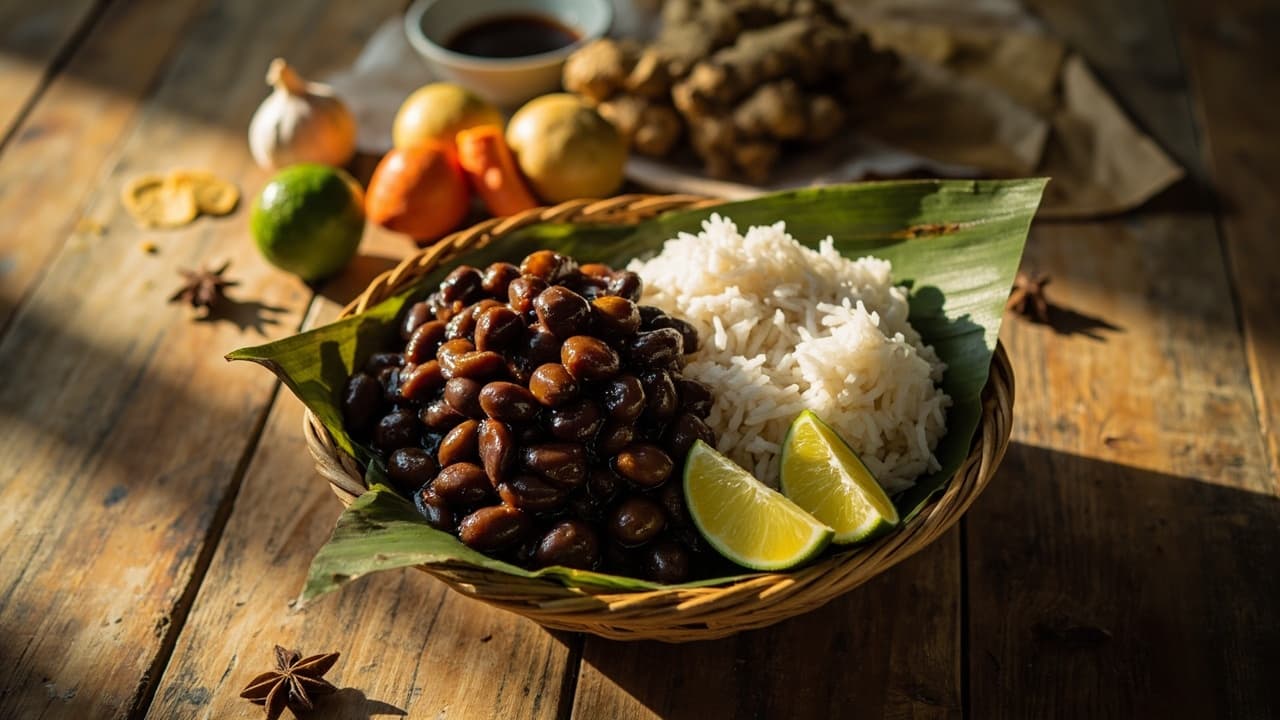
Semur Kedelai — Braised Soybeans in Sweet Soy
A rich Indonesian braise of tender soybeans simmered in sweet soy sauce with aromatic spices, caramelized shallots and a hint of lime. Hearty, savory and deeply satisfying.

Prep
15 min
Cook
1h 15m
Total
1h 30m
Method
Prep the Soybeans
1
Rinse soybeans thoroughly and soak in cold water for at least 8 hours or overnight. Drain and rinse again.
2
Build the Spice Paste
4
Using a mortar and pestle (or a blender if preferred), pound the shallots, garlic, and ginger into a rough paste.
5
Add cayenne pepper, star anise, and cloves to the mortar. Continue pounding until everything is well combined into a fragrant bumbu.
Braise the Soybeans
6
Heat coconut oil in a wok or heavy-bottomed pot over medium heat.
7
Add the spice paste and fry for 3-4 minutes, stirring constantly, until fragrant and slightly darkened.
8
Pour in soy sauce and add brown sugar. Stir and let it bubble for 1-2 minutes until the sugar dissolves and the sauce caramelizes slightly.
9
Add the cooked soybeans and water. Stir gently to combine everything.
Add Vegetables
Finish and Serve
13
14
Squeeze lime juice over the semur and season with salt and white pepper. Taste and adjust seasoning as needed.
15
Remove from heat. Serve hot over steamed white rice with extra lime wedges on the side.
A
Nutri-Score
Excellent balance
A–E · lower is better · score -8
Calories
497
per serving
High in protein · 26gSource of fibre · 16g
Protein
26g
Carbs
57g
Fat
20g
Sat. fat
8g
Fiber
16g
Sugar
20g
Sodium
616mg
High ProteinHigh FiberPlant Based
Nutri-Score is a general nutritional-balance guide, not medical or dietary advice.
A
Environmental impact
Very low impact
A–E · lower is better · includes estimates
kg CO2e
0.2
per serving
ACarbonAEU all-round· both agree
Water
0.4m³
Runoff
0.04g P
Soybeans (dried) drives 40% of this recipe’s estimated footprint.
Carbon from Poore & Nemecek 2018; water, land & runoff from Agribalyse — modelled averages for comparing recipes, not a measurement of your groceries.
Flavor Profile
7
Umami
5
Sweet
4
Salty
3
Sour
2
Bitter
4
Spicy
Textures
TenderCreamySaucySoft
Aromas
SpicedCaramelizedAromaticPungentHerbal
Kitchen Equipment
Primary Tool
WokCounter FootprintMedium
Safety & Storage
Cooking Temperature
Bring soybeans to a full boil and simmer for 60-90 minutes until completely tender. Test by pressing a bean — it should mash easily without resistance. Ensure the braise reaches a gentle boil before reducing to low heat and covering.
Handling
Soak dried soybeans for at least 8 hours or overnight before cooking. Discard soaking water and rinse thoroughly before boiling to remove anti-nutrients.
Cross Contamination
Use separate utensils and cutting boards for raw soybeans. Wash hands thoroughly after handling raw legumes before touching other ingredients.
Storage
Refrigerate leftover semur within 2 hours of cooking in an airtight container. Consume within 3-4 days for best quality.
Shelf Life
Cooked soybeans lose texture quality after 2-3 days. The dish can be frozen for up to 2 months but may affect vegetable texture.
Allergen Warning
Soy is a major allergen present throughout this dish. Use gluten-free soy sauce if avoiding gluten.
High Risk Population
Ensure soybeans are cooked thoroughly. Individuals with soy allergies should avoid this dish entirely. Young children and elderly should consume only properly stored leftovers.
Pro Tips
Technique
Always pound your bumbu in a mortar and pestle — the roughness creates texture and releases essential oils that a blender simply cannot. This is where the soul of your semur lives!
Substitution
If kecap manis is unavailable, add an extra tablespoon of brown sugar to regular soy sauce, but trust me — finding the real thing transforms this dish into something truly authentic.
Flavor Boost
Add a tiny pinch of terasi (shrimp paste) to your spice paste if you have it — it deepens the umami in ways that will make you close your eyes and smile.
Equipment
Use a wok or heavy-bottomed pot for this braise — the broad surface helps the sauce reduce and caramelize evenly, coating every soybean beautifully.
From the chef
Growing up in Yogyakarta, my grandmother made semur at least once a week, and the way she built that bumbu — slow and patient, with love in every pound of the mortar — taught me that Indonesian cooking is never rushed. This semur kedelai holds a special place in my heart because soybeans are so beautifully underrated; when simmered low and slow in kecap manis with all those warm spices, they become these little flavor-packed bites that make you wonder why you ever overlooked them.
TagsSemur
AllergensSoyGluten
Source: generated · June 10, 2026