 Moroccan
Medium · Hot
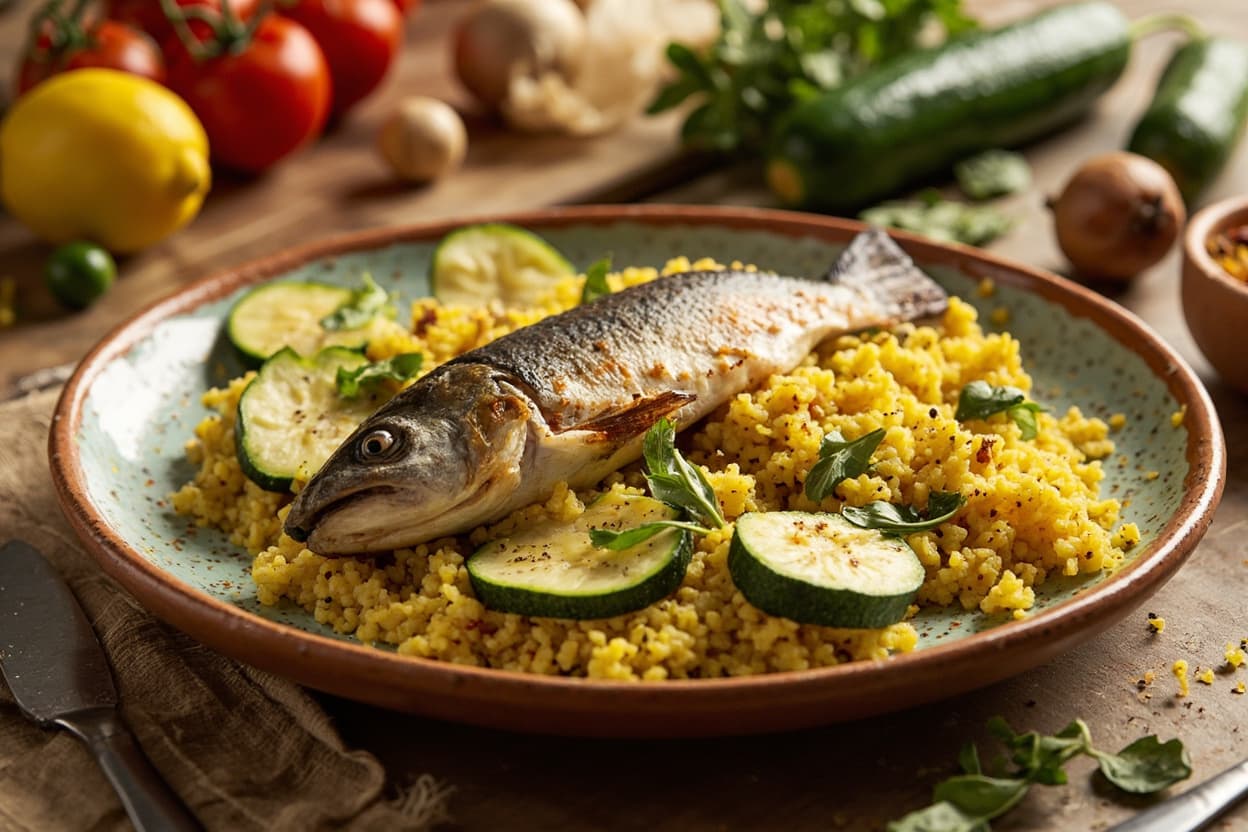
Saffron Trout Couscous with Zucchini
Saffron steeps into the olive oil and then into the couscous, turning every grain a faint shade of gold and giving the whole dish a subtle, honeyed perfume that pairs naturally with the delicate flesh of trout. Zucchini cooks until just tender, and lemon cuts through with brightness at the end. It is an elegant, restrained dish — sophisticated without asking anything complicated of the cook.

Prep
15 min
Cook
30 min
Total
45 min
Method
Prepare Saffron
1
Combine saffron threads with 1/4 cup warm water. Let steep for 10 minutes until the water turns a deep amber-gold color. This blooming is essential — never rush it.
Prepare Vegetables
2
Wash zucchini and slice into 1/2-inch rounds. Place on a lined baking sheet.
Cook Zucchini
Prepare Couscous
5
Bring 1.5 cups of salted water to a boil in a medium saucepan. Remove from heat.
6
7
Uncover and fluff couscous gently with a fork. Cover to keep warm.
Sear Trout
8
Season trout fillets generously with salt and black pepper on both sides.
10
11
Flip carefully and cook for 2 minutes more until the flesh is opaque and just flakes. Do not overcook — trust your eye.
Plate and Serve
14
Surround with golden zucchini rounds.
A
Nutri-Score
Excellent balance
A–E · lower is better · score -2
Calories
738
per serving
High in protein · 39gLow sugar · 10g
Protein
39g
Carbs
81g
Fat
29g
Sat. fat
10g
Fiber
7g
Sugar
10g
Sodium
533mg
Heart HealthyLow SodiumDiabetes FriendlyHigh ProteinBalanced MacrosOmega 3 Rich
Nutri-Score is a general nutritional-balance guide, not medical or dietary advice.
E
Environmental impact
Very high impact
A–E · lower is better · includes estimates
kg CO2e
3.5
per serving
ECarbonBEU all-round· carbon sets the grade
Water
8.4m³
Land
55Pt
Runoff
4.5g P
Trout fillets drives 90% of this recipe’s estimated footprint.
Carbon from Poore & Nemecek 2018; water, land & runoff from Agribalyse — modelled averages for comparing recipes, not a measurement of your groceries.
Flavor Profile
6
Umami
5
Sweet
5
Salty
4
Sour
2
Bitter
4
Spicy
Textures
CrispyTenderFluffy
Aromas
HerbalFloralWarmNutty
Kitchen Equipment
Safety & Storage
Cooking Temperature
Trout must be cooked to at least 145°F internal temperature. The recipe indicates cooking until flesh is opaque and flakes, which aligns with safe doneness. Avoid serving any fish that appears translucent or undercooked in the center.
Cross Contamination
Raw trout juices can contaminate other ingredients. Use separate cutting boards and utensils for raw fish. Sanitize all surfaces after handling raw trout before preparing the couscous or zucchini.
If serving honey to infants under 12 months, omit the honey drizzle as it poses botulism risk to young children. Adult consumption is safe for those without honey allergies.
Handling
Saffron steeping requires warm (not boiling) water at approximately 95-105°F. Water that is too hot can degrade the saffron's flavor compounds and color extraction. Do not use boiling water directly on saffron threads.
High Risk Population
Pregnant individuals, young children, elderly, and immunocompromised persons should consume only fully cooked fish. Raw or undercooked trout poses increased risk of microbial contamination including parasites.
Storage
Raw trout should be stored at 40°F or below and used within 1-2 days of purchase. Leftover cooked dish should be refrigerated within 2 hours of cooking and consumed within 3 days. Reheat to 165°F before consuming leftovers.
Pro Tips
Technique
Never rush the saffron — bloom it in warm water for a full 10 minutes until the liquid turns deep amber-gold. This is where the magic begins, and a rushed saffron will give you only pale echoes instead of that glorious rose-gold perfume.
Substitution
If you cannot find preserved lemon, a fresh lemon zest with an extra squeeze of juice will serve, though the depth of a preserved lemon is something special if you can find it at your Moroccan grocer.
From the chef
Saffron needs time — steep it a full ten minutes until the water turns deep amber and you can smell the honeyed warmth before a single grain of couscous has touched the pot. That patience pays out across the whole dish: golden grains perfumed with cumin, trout crisped skin-side down without moving it until the flesh turns opaque and just flakes, zucchini roasted until the edges catch. Lemon at the end cuts through cleanly. It is restrained cooking, but nothing here is accidental — each step earns the next.
TagsSaffronSeafoodCouscousFishZucchiniHoneyLemonRoasted VegetablesWeeknight DinnerMedium Difficulty
AllergensFishMilkGluten
Source: generated · May 30, 2026